Have you ever read a sentence like “I need to brake from work” or “My car will break suddenly” and felt unsure if it is correct? You are not alone. Many English learners confuse brake or break because they sound the same but have completely different meanings.
This confusion happens in:
- School grammar 📚
- Driving lessons 🚗
- Workplace messages 💼
- Social media captions 📱
- Texting 💬
- Online writing 🌐
- Daily conversations 🗣️
People usually search for:
- brake or break meaning
- difference between brake and break
- brake vs break examples
- how to use brake in a sentence
- grammar rules brake and break
- correct spelling confusion
The problem is simple: English has homophones (words that sound the same but mean different things). “Brake” and “break” are one of the most common confusing pairs.
Emotionally, learners often feel embarrassed when corrected, especially in writing or exams. But this mistake is very normal and easy to fix.
In this guide, you’ll learn the meaning, pronunciation, examples, usage, grammar rules, common mistakes, expert tips, and simple explanations in easy English.
⭐ Brake or Break – Quick Answer
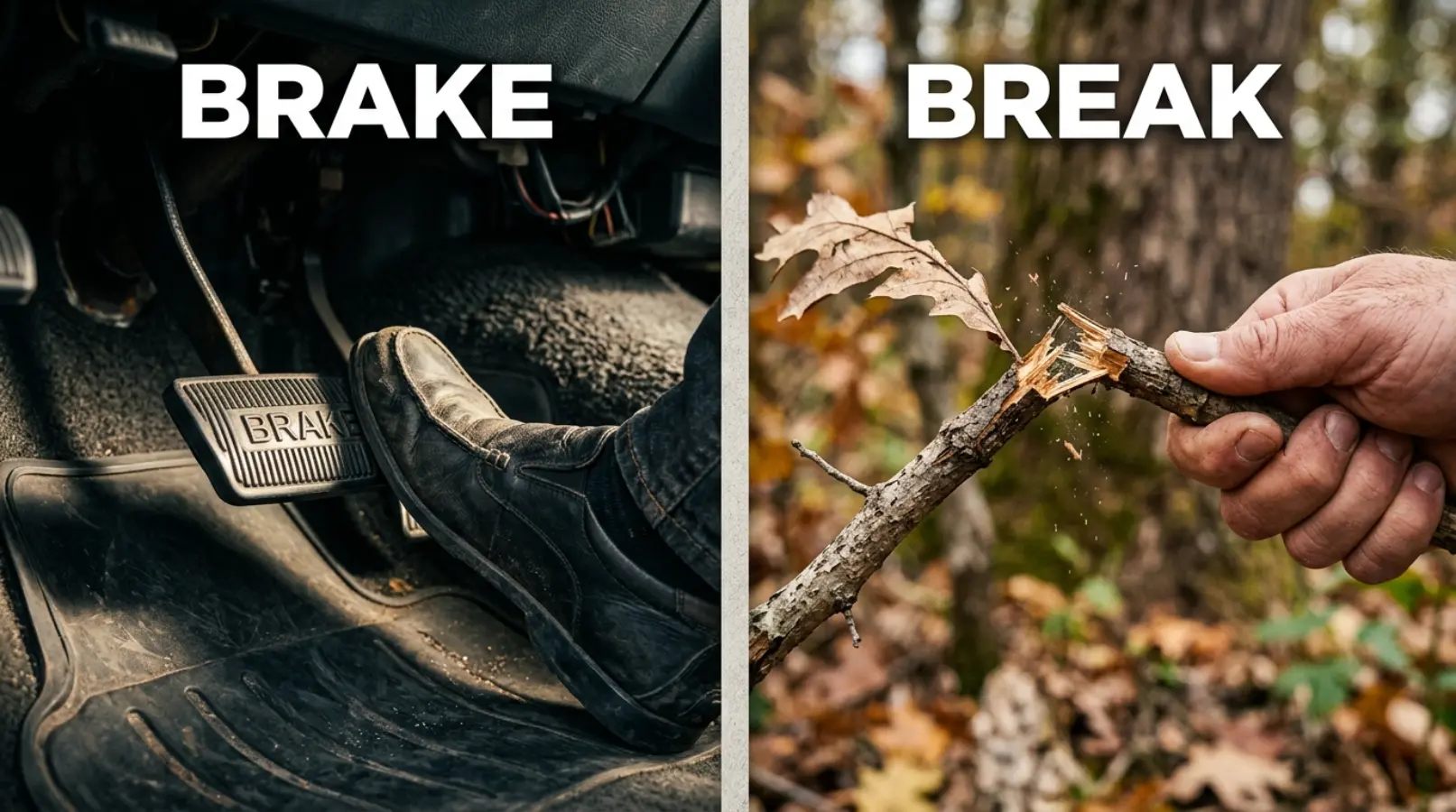
👉 Brake = to stop or slow down (usually a vehicle) 🚗
👉 Break = to damage, stop, or rest 💥
Examples:
- I brake the car at the signal. 🚗
- Don’t break the glass. 💥
- My phone will break if I drop it.
- I need a break from work. 😌
Simple Rule:
👉 If it means “stop a vehicle” → brake
👉 If it means “damage or rest” → break
🧠 Easy memory trick:
“Brake = stop car 🚗 | Break = break things 💥”
📖 What Does Brake or Break Mean?
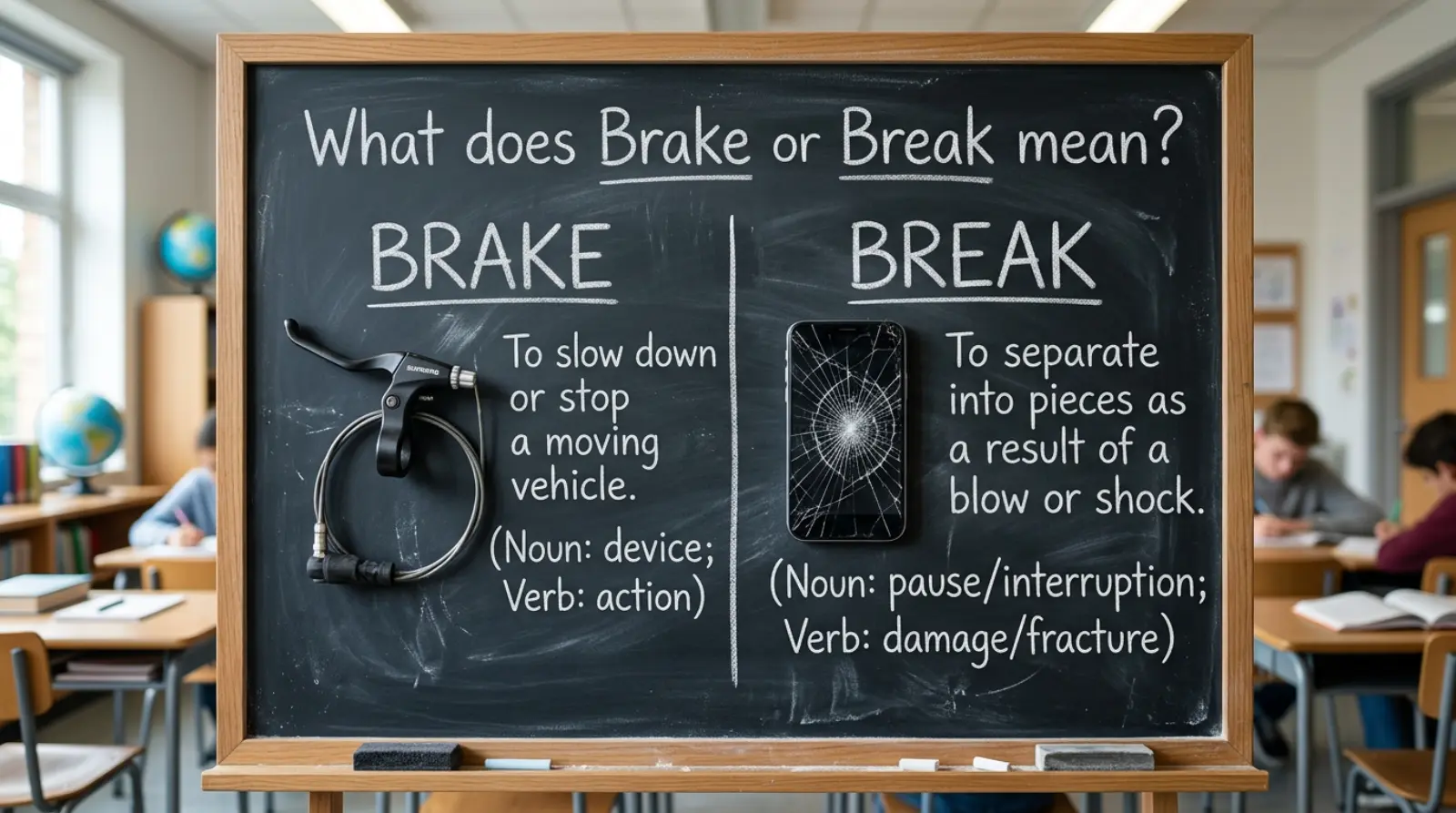
👉 Brake
Means to slow down or stop movement, especially in vehicles.
Example:
- I braked suddenly to avoid an accident.
👉 Break
Has many meanings:
- to damage something 💥
- to stop working
- to rest 😌
- to separate into pieces
Example:
- I broke my phone.
- Let’s take a break.
🔁 Synonyms
Brake:
- stop
- slow down
- halt
Break:
- damage
- destroy
- pause
- rest
🔄 Opposites
Brake:
- accelerate
- speed up
Break:
- fix
- repair
- continue
🔗 Related Terms
- car brake
- break time
- breaking point
- emergency brake
🕰️ Origin of Brake or Break
👉 Brake
Comes from an old word meaning to stop movement, especially mechanical stopping systems.
👉 Break
Comes from Old English “brecan,” meaning to separate or destroy.
Over time:
- brake → mechanical stopping
- break → physical + emotional actions
🔊 How to Pronounce Brake or Break
👉 Brake
- Pronunciation: brayk
- Sounds like: “cake” with BR
👉 Break
- Pronunciation: brayk
- Same sound!
🧠 Easy Trick:
They sound identical, so meaning depends on context only.
🇬🇧 British vs American English Usage
Both British and American English use brake and break the same way.
| Feature | British English | American English | Notes |
|---|---|---|---|
| Brake | same | same | vehicle stop |
| Break | same | same | damage/rest |
| Pronunciation | same | same | homophones |
✅ Which One Should You Use?
👉 Use “brake” when:
- talking about driving 🚗
- vehicles stopping
- machines slowing down
👉 Use “break” when:
- talking about damage 💥
- taking rest 😌
- stopping something
Examples:
- I brake the car at the signal.
- I need a break from studying.
❌ Common Mistakes with Brake or Break
Mistake 1
❌ I need to brake from work
✔ I need a break from work
👉 “break” = rest
Mistake 2
❌ Don’t break the car suddenly
✔ Don’t brake the car suddenly
👉 driving action uses “brake”
Mistake 3
❌ I broke the car to stop it
✔ I braked the car to stop it
👉 correct verb is “brake”
Mistake 4
❌ Let’s take a brake
✔ Let’s take a break
👉 rest = break
Mistake 5
❌ My leg will brake if I fall
✔ My leg will break if I fall
👉 damage = break
Mistake 6
❌ I break the car at red light
✔ I brake the car at red light
👉 driving rule
Mistake 7
❌ The machine will brake down
✔ The machine will break down
👉 phrase uses break
🌍 Brake or Break in Everyday Examples
🚗 Work / Driving
- I brake at traffic lights.
- Always check your brakes.
🎓 School
- I need a study break.
- Don’t break the lab equipment.
📱 Social Media
- Taking a mental break 😌
- Don’t break my trust 💔
🏠 Daily Life
- The glass will break easily.
- I need a short break.
📧 Emails
- Let’s take a short break in meeting.
- Please break tasks into steps.
💬 Text Messages
- “I need a break 😩”
- “Brake carefully while driving 🚗”
🧠 Brake or Break in Different Contexts
📚 Education
Used in grammar and vocabulary lessons.
💼 Business
- break time
- break schedule
- project breakpoints
🚗 Transportation
- car brake system
- emergency brake
🧠 Psychology
- mental break
- emotional break
📱 Internet Slang
- “I need a break lol 😭”
- “Don’t break my vibe”
🎮 Gaming
- break shields
- brake movement in racing games
📈 Brake or Break – Google Trends
People search this because:
- pronunciation confusion
- spelling mistakes in writing
- driving learning rules
- school grammar tests
Popular countries:
- US 🇺🇸
- UK 🇬🇧
- India 🇮🇳
- Pakistan 🇵🇰
- Canada 🇨🇦
- Australia 🇦🇺
Long-tail searches:
- brake or break difference
- how to use brake in sentence
- break vs brake examples
- is brake and break same
📊 Comparison Table: Brake or Break
| Feature | Brake | Break |
|---|---|---|
| Meaning | stop vehicle | damage / rest |
| Pronunciation | brayk | brayk |
| Grammar role | verb/noun | verb/noun |
| Popularity | medium | very common |
| Driving use | yes | no |
| Academic use | yes | yes |
| Internet use | rare | very common |
| Common mistake | using instead of break | using instead of brake |
💼 Brake or Break in Professional Life
Using correct words is important in:
- driving instructions 🚗
- workplace communication 💼
- safety reports ⚠️
- emails 📧
Examples:
- Always brake at red signals.
- Take a short break during work.
Wrong usage can create confusion, especially in safety-related writing.
🎓 Brake or Break for Students
Beginners struggle because:
- words sound identical
- spelling is very similar
- context is confusing
Easy trick:
👉 Driving = brake
👉 Rest/damage = break
🔍 Signs and Uses of Brake or Break
Brake:
- brake pedal
- braking system
- emergency brake
- brake lights
Break:
- break time
- break rules
- break heart 💔
- break glass 💥
🧩 Simple Trick to Remember Brake or Break
👉 Brake = car + stop 🚗
👉 Break = rest or damage 💥
Think of it this way:
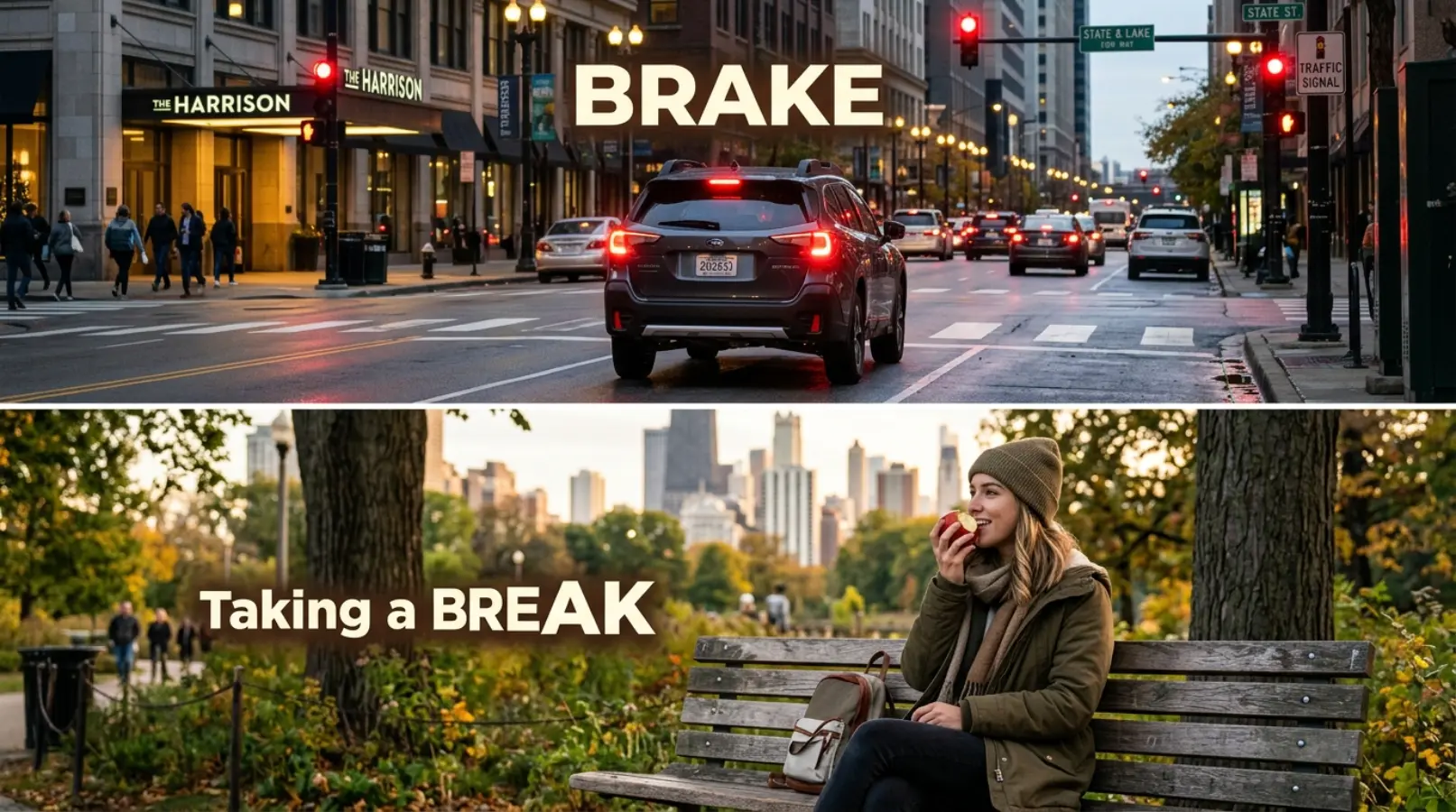
- You press brake in a car
- You take a break from work
🧠 Memory shortcut:
👉 “Brake stops cars, Break stops work”
🏆 Expert Tips
- Always check context (driving or rest?)
- Learn homophones in pairs
- Practice 5 sentences daily
- Watch car vs daily-life usage difference
- Use memory association (car = brake)
🌐 Related Searches (People Also Ask)
- What is the difference between brake and break?
- How to use brake in a sentence
- Break vs brake examples
- Is brake used for stopping cars?
- What does break mean in English?
- Brake spelling meaning
- Break meaning in grammar
- Why are brake and break confusing
- Simple explanation of brake vs break
- Can brake mean rest?
❓ FAQs
1. What is the difference between brake and break?
Brake means stop a vehicle, break means damage or rest.
2. Is “break” used for cars?
No, cars use “brake.”
3. What is a brake?
A system used to stop vehicles.
4. What is a break?
A pause or rest.
5. Why are brake and break confusing?
Because they sound the same.
6. Can I say take a brake?
No, correct phrase is “take a break.”
7. What is brake in driving?
It is the pedal used to stop the car.
8. What is break in emotion?
It means emotional or physical pause.
9. Are brake and break homophones?
Yes.
10. How to remember them easily?
Brake = car, Break = rest/damage.
🏁 Final Verdict
👉 Brake = stop vehicle 🚗
👉 Break = rest or damage 💥
👉 Never mix them
🧠 Easy rule:
“Brake stops cars, Break stops time”
✅ Conclusion
The confusion between brake or break is very common, but the rule is simple. “Brake” is always used for stopping vehicles, while “break” is used for rest or damage.
If you remember one thing, remember this:
👉 Brake = driving | Break = life pause or damage
That’s all you need for perfect English usage.

Camila Green is an English language writer who specializes in confusing word comparisons and spelling explanations. She creates simple, beginner-friendly guides on topics like “niece or neice” and other common English mistakes. Her writing focuses on clarity, real-life examples, and easy learning. At VerrsaPick, she helps readers improve their English with practical and engaging content.