Have you ever read a sentence like “I can’t bare this pain” or “A bear with me” and felt confused? You’re not alone. Many English learners mix up bare or bear because they sound the same but have very different meanings.
This confusion is very common in:
- School grammar 📚
- Workplace emails 💼
- Social media captions 📱
- Text messages 💬
- Online writing 🌐
- Daily conversations 🗣️
People usually search for:
- bare or bear meaning
- difference between bare and bear
- bear vs bare examples
- how to use bear in a sentence
- grammar rules bare and bear
- pronunciation and usage
The problem happens because English has homophones (words that sound the same but have different meanings). “Bare” and “bear” are one of the most confusing pairs.
Emotionally, many learners feel embarrassed when corrected, but this mistake is completely normal.
In this guide, you’ll learn the meaning, pronunciation, examples, usage, grammar rules, common mistakes, expert tips, and simple explanations in easy English.
⭐ Bare or Bear – Quick Answer
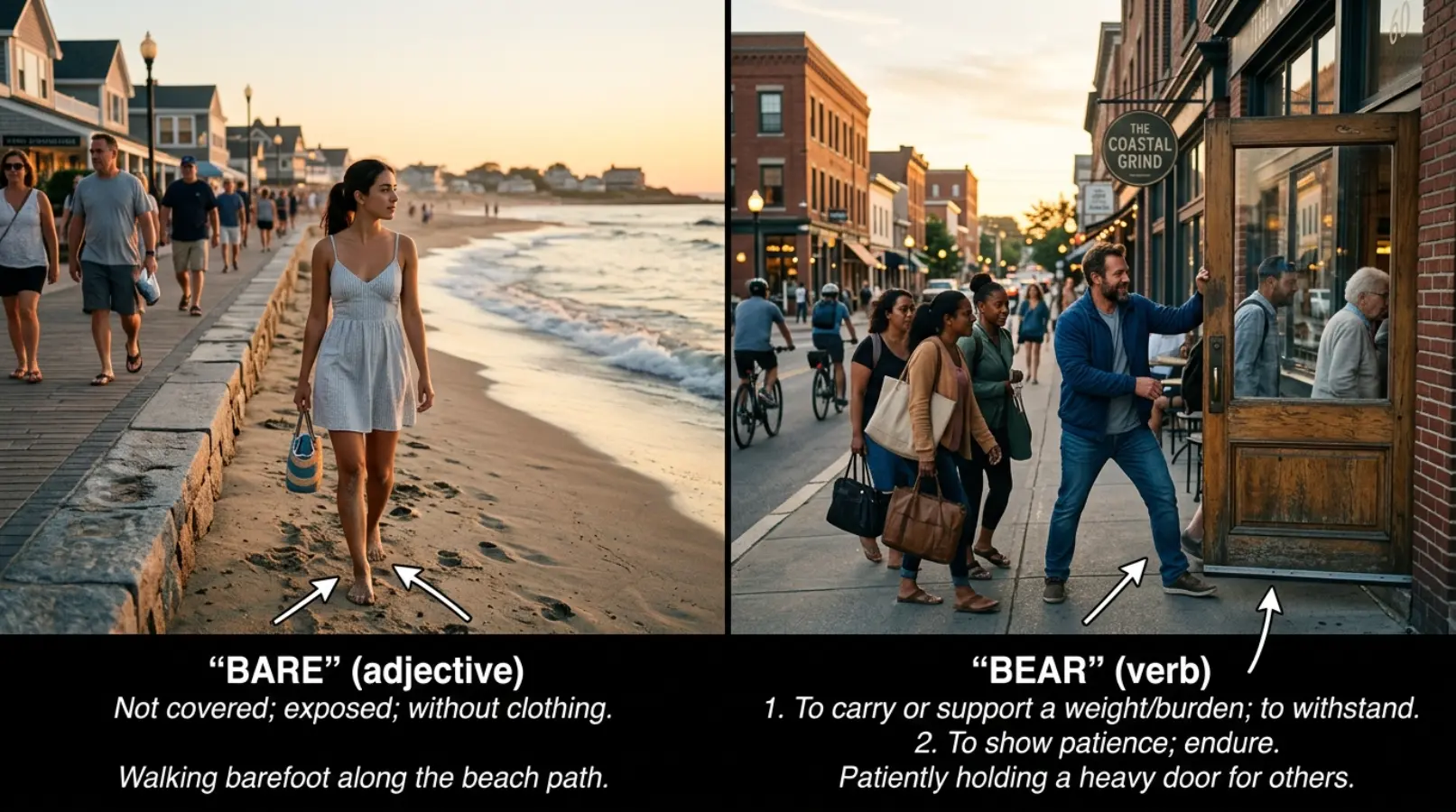
👉 Bare = uncovered / empty / without something
👉 Bear = an animal OR to تحمل / tolerate something
Examples:
- The room was bare. (empty)
- She walked with bare feet.
- I can’t bear the pain.
- A bear is in the forest. 🐻
Simple Rule:
👉 If it means “empty or uncovered” → bare
👉 If it means “animal or tolerate” → bear
🧠 Easy memory trick:
“Bear = animal + emotions
Bare = basic / empty”
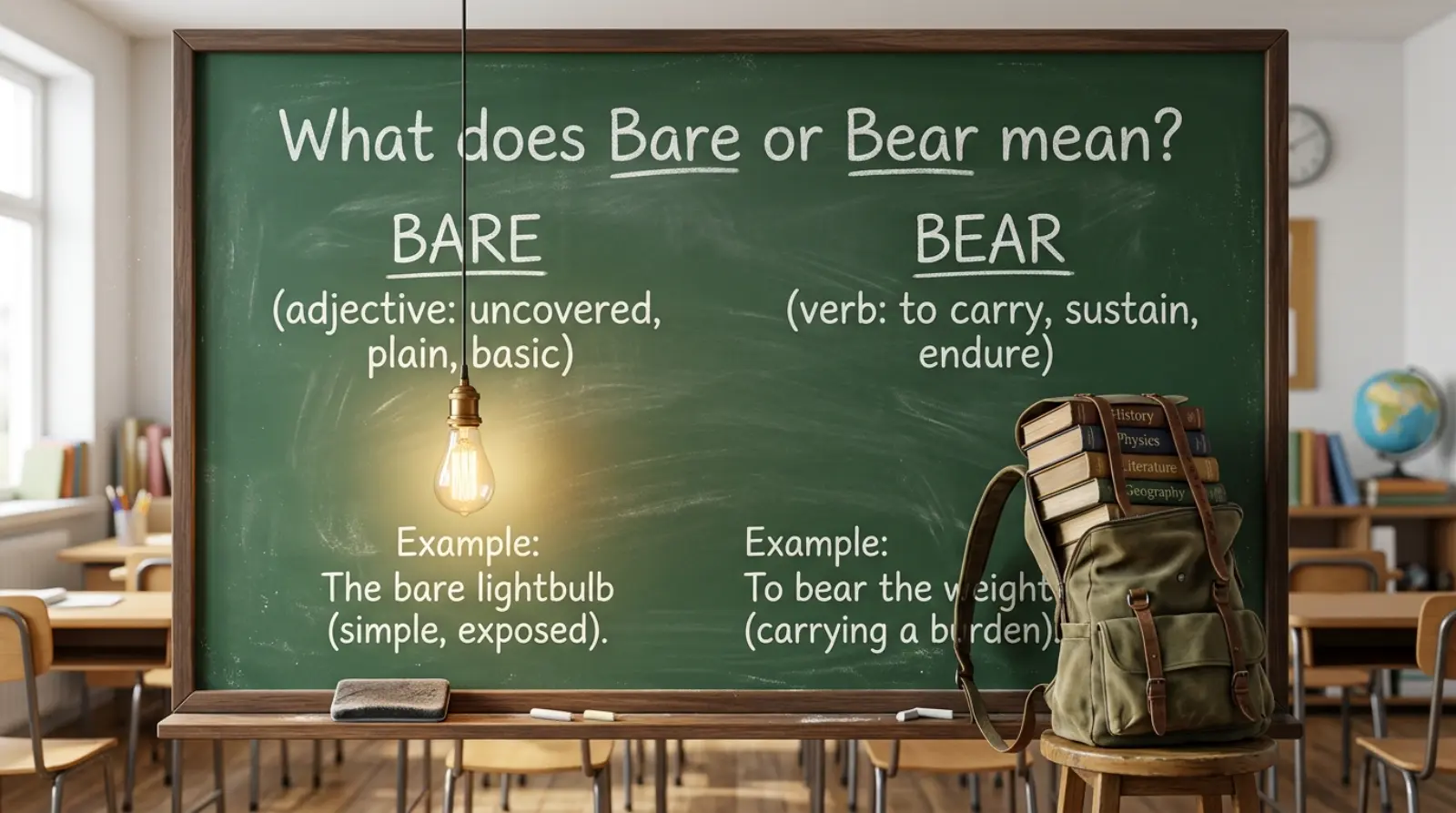
📖 What Does Bare or Bear Mean?
👉 Bare
Means something is empty, uncovered, or plain.
Example:
- bare hands = no protection
- bare wall = no decoration
👉 Bear
Has 3 main meanings:
- Animal 🐻
- To carry or tolerate
- To give birth (formal use)
Example:
- I can’t bear the noise.
- A bear lives in the forest.
🔁 Synonyms
Bare:
- empty
- uncovered
- plain
Bear:
- tolerate
- carry
- support
🔄 Opposites
Bare:
- covered
- filled
- decorated
Bear:
- avoid
- reject
- refuse
🔗 Related Terms
- barefoot
- unbearable
- bare minimum
- teddy bear
🕰️ Origin of Bare or Bear
👉 Bare
Comes from Old English “bær” meaning uncovered or naked.
👉 Bear
Comes from Old English “bera,” meaning the animal bear, and also evolved into meaning “carry or endure.”
Over time:
- bare → physical emptiness
- bear → animal + emotional strength
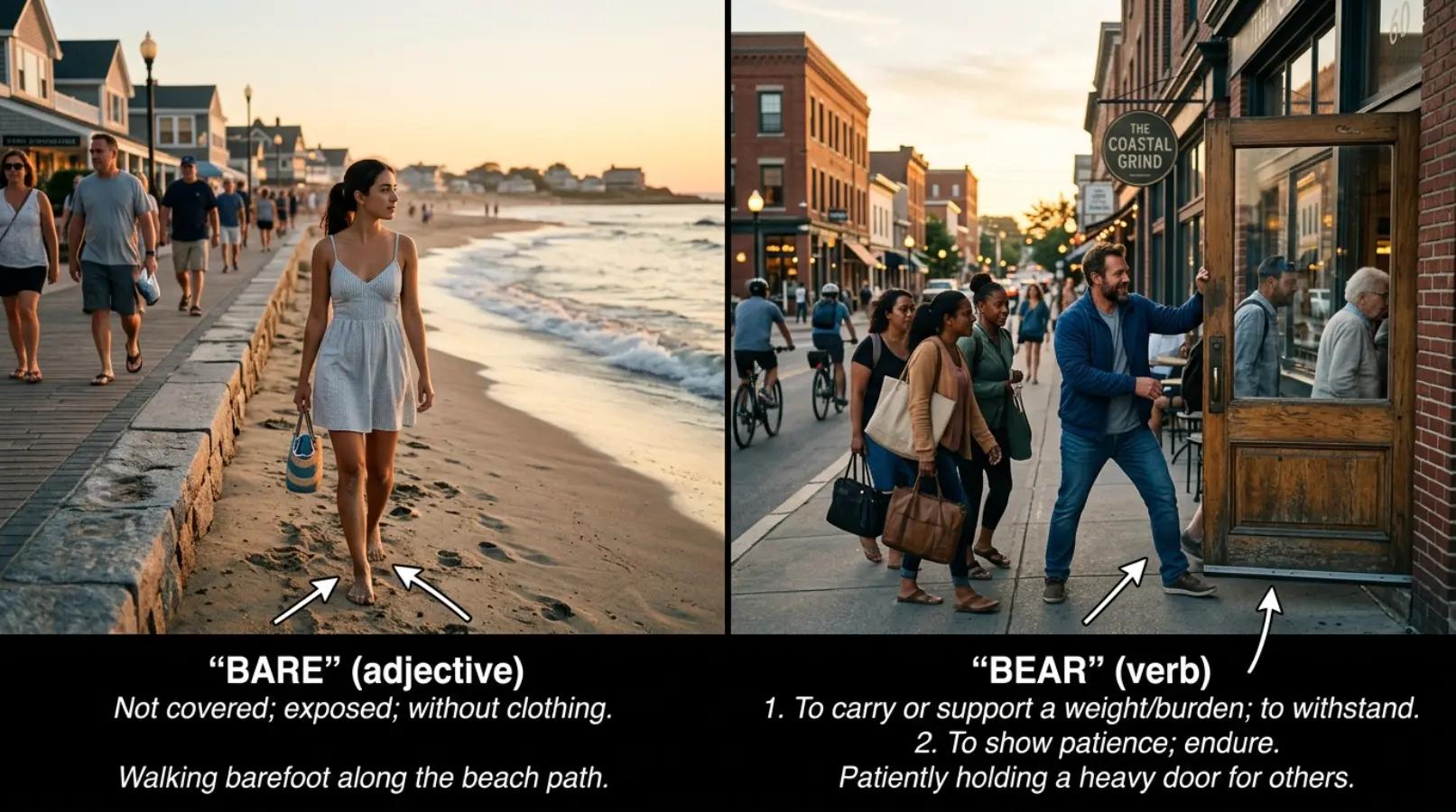
🔊 How to Pronounce Bare or Bear
👉 Bare
- Pronunciation: bair
- Sounds like: “air” with B
👉 Bear
- Pronunciation: bair
(same sound!)
🧠 Easy Trick:
They sound the same, so focus on meaning, not sound.
❌ Common mistake:
- thinking they are interchangeable
🇬🇧 British vs American English Usage
Both British and American English use bare and bear the same way.
| Feature | British English | American English | Notes |
|---|---|---|---|
| Bare | same | same | uncovered meaning |
| Bear | same | same | animal + tolerate |
| Pronunciation | same | same | homophones |
✅ Which One Should You Use?
👉 Use “bare” when:
- talking about empty things
- describing uncovered objects
- writing descriptions
👉 Use “bear” when:
- talking about animals 🐻
- expressing emotions
- saying “can’t tolerate”
Examples:
- bare floor, bare hands
- bear pain, bear hug, polar bear
❌ Common Mistakes with Bare or Bear
Mistake 1
❌ I can’t bare the pain
✔ I can’t bear the pain
👉 “bear” = tolerate
Mistake 2
❌ A bare is in the forest
✔ A bear is in the forest
👉 animal spelling is “bear”
Mistake 3
❌ She walked bear feet
✔ She walked bare feet
👉 bare = uncovered
Mistake 4
❌ I can’t bare this situation
✔ I can’t bear this situation
👉 emotional meaning uses bear
Mistake 5
❌ The room was bear
✔ The room was bare
👉 bare = empty
Mistake 6
❌ He has a bare toy
✔ He has a bear toy
👉 teddy bear = animal form
Mistake 7
❌ Bare with me
✔ Bear with me
👉 correct phrase uses bear
🌍 Bare or Bear in Everyday Examples
💼 Work
- The office was bare after renovation.
- Please bear with me during delay.
🎓 School
- My notebook page is bare.
- I can’t bear exam pressure.
📱 Social Media
- Bare vibes today 😎
- Bear hugs 🐻❤️
🏠 Daily Life
- Bare room, no furniture
- I can’t bear loud noise
📧 Emails
- Please bear with us for updates
- The document is bare of details
💬 Text Messages
- “Bare minimum effort 😂”
- “I can’t bear this anymore 😩”
🧠 Bare or Bear in Different Contexts
📚 Education
Used in grammar lessons for homophones.
💼 Business
- bare report (simple report)
- bear costs (carry expenses)
🧠 Psychology
- “I can’t bear stress”
- emotional tolerance
📱 Internet Slang
- “bare people came” = many people (UK slang)
❤️ Relationships
- bear feelings
- bear emotions
🎮 Gaming
- bear attacks 🐻
- bare minimum gear
📈 Bare or Bear – Google Trends
People search this because:
- pronunciation confusion
- spelling mistakes in writing
- exam preparation
- social media slang
Popular countries:
- US 🇺🇸
- UK 🇬🇧
- India 🇮🇳
- Pakistan 🇵🇰
- Canada 🇨🇦
- Australia 🇦🇺
Long-tail searches:
- bare or bear difference
- bear vs bare examples
- how to use bear in sentence
- bare meaning in English
📊 Comparison Table: Bare or Bear
| Feature | Bare | Bear |
|---|---|---|
| Meaning | empty / uncovered | animal / tolerate |
| Pronunciation | bair | bair |
| Grammar role | adjective/verb | noun/verb |
| Popularity | common | very common |
| Academic use | yes | yes |
| Internet use | slang + normal | normal |
| Common mistake | using in emotion | spelling confusion |
💼 Bare or Bear in Professional Life
Correct usage is important in:
- emails 📧
- reports 📊
- presentations 🎤
- communication 💬
Examples:
- Please bear with us (correct)
- The data is bare (simple/empty format)
Wrong usage can confuse meaning in business writing.
🎓 Bare or Bear for Students
Beginners struggle because:
- both sound the same
- spelling is very similar
- emotional vs physical meanings differ
Easy trick:
👉 “Bare = basic”
👉 “Bear = feelings + animal”
🔍 Signs and Uses of Bare or Bear
Bare:
- bare minimum
- bare hands
- bare wall
- bare facts
Bear:
- bear pain
- bear weight
- bear hug
- teddy bear
🧩 Simple Trick to Remember Bare or Bear
👉 Bare = “nothing extra”
👉 Bear = “something living or emotional”
Think of it this way:
- Bare room = empty room
- Bear = big animal + big emotions
🧠 Memory shortcut:
👉 “Bare = empty, Bear = emotional/animal”
🏆 Expert Tips
- Focus on meaning, not sound
- Learn homophones in pairs
- Practice daily sentences
- Read English captions carefully
- Watch context words (pain, animal, empty)
🌐 Related Searches (People Also Ask)
- What is the meaning of bare?
- What is the meaning of bear?
- Bear vs bare difference simple
- Can I say bare with me?
- What is bear in grammar?
- Bare feet meaning
- Bear animal facts
- Why are bare and bear confusing
- How to remember bear vs bare
- Bare minimum meaning
❓ FAQs
1. What is the difference between bare and bear?
Bare means empty, bear means animal or tolerate.
2. Is “bare with me” correct?
No, correct phrase is “bear with me.”
3. What does bear mean?
It means animal or to tolerate something.
4. What does bare mean?
It means uncovered or empty.
5. Why are bare and bear confusing?
Because they sound the same.
6. Is bear used in emotions?
Yes, like “I can’t bear pain.”
7. What is bare minimum?
It means smallest possible amount.
8. Can bare be a verb?
Yes, like “to bare something” (rare).
9. Is bear formal or informal?
It is used in both.
10. How to remember bare vs bear?
Bare = empty, Bear = emotional/animal.
🏁 Final Verdict
👉 Bare = empty / uncovered
👉 Bear = animal / tolerate
👉 Never mix them in writing
🧠 Easy rule:
“Bare = basic, Bear = feelings + animal”
✅ Conclusion
The confusion between bare or bear is normal, but the rule is simple. “Bare” describes emptiness or something uncovered, while “bear” describes animals or emotional tolerance.
If you remember one thing, remember this:
👉 Bare = empty, Bear = emotional or animal
That’s all you need for correct English.

Camila Green is an English language writer who specializes in confusing word comparisons and spelling explanations. She creates simple, beginner-friendly guides on topics like “niece or neice” and other common English mistakes. Her writing focuses on clarity, real-life examples, and easy learning. At VerrsaPick, she helps readers improve their English with practical and engaging content.