If your vision suddenly becomes blurry, your eyes feel uncomfortable, or you simply need a new pair of glasses, you may wonder who you should see. Should you visit an optometrist or ophthalmologist? The two names sound similar, and both work with eye health, but their training and roles are different.
This is a common question for people who are booking an eye exam, dealing with vision problems, or searching online for an eye doctor. You may also hear these terms at school, at work, in healthcare conversations, on social media, or when looking up information about glasses, contact lenses, cataracts, or eye surgery.
People usually search for: optometrist or ophthalmologist meaning, optometrist vs ophthalmologist difference, optometrist or ophthalmologist for eye problems, who performs eye surgery, who can prescribe glasses, and which eye doctor should I see?
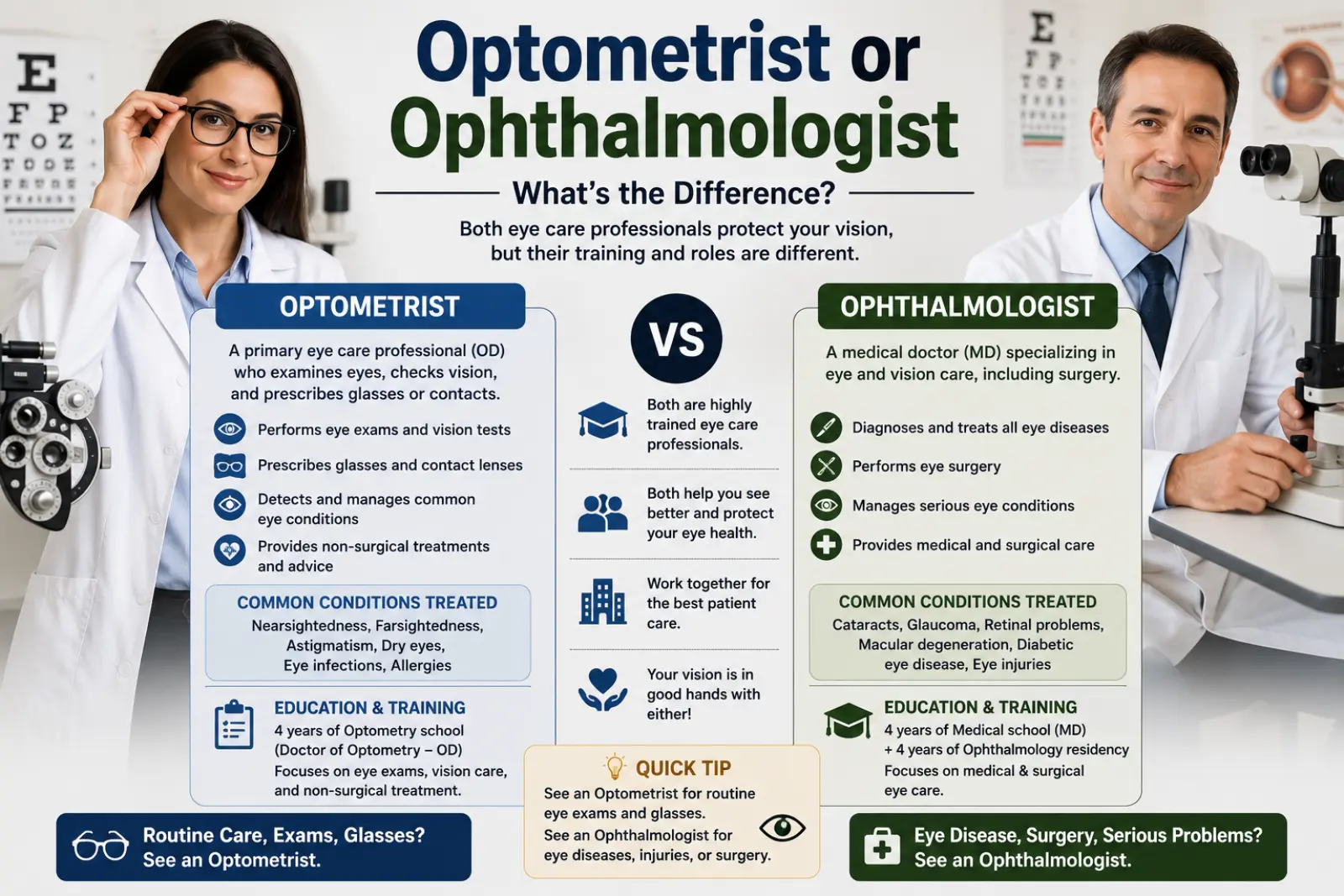
The simple answer is that an optometrist provides primary eye care, including vision exams and treatment of many eye conditions. An ophthalmologist is a medical doctor who specializes in eye care and can perform eye surgery. Both can play an important role in protecting your vision.
Knowing the difference can save you time and help you choose the right professional. However, the exact services each professional provides can vary based on local laws, licensing, and training.
In this guide, you’ll learn the meaning, pronunciation, examples, usage, grammar rules, common mistakes, expert tips, and simple explanations in easy English.
⭐ Optometrist or Ophthalmologist – Quick Answer
👉 Optometrist = An eye care professional who examines vision, prescribes glasses and contact lenses, and provides primary eye care.
👉 Ophthalmologist = A medical doctor who specializes in eye health and can diagnose and treat eye diseases, prescribe medication, and perform eye surgery.
Examples
- You need a routine eye exam → Optometrist
- You need a glasses prescription → Optometrist
- You have a serious eye disease → Ophthalmologist
- You need cataract surgery → Ophthalmologist
- You have a complex eye condition → Ophthalmologist
Simple Rule
👉 Optometrist = routine eye care and vision
👉 Ophthalmologist = medical eye care and surgery
Both professionals can provide important eye care, and an optometrist may refer you to an ophthalmologist when specialist treatment or surgery is needed.
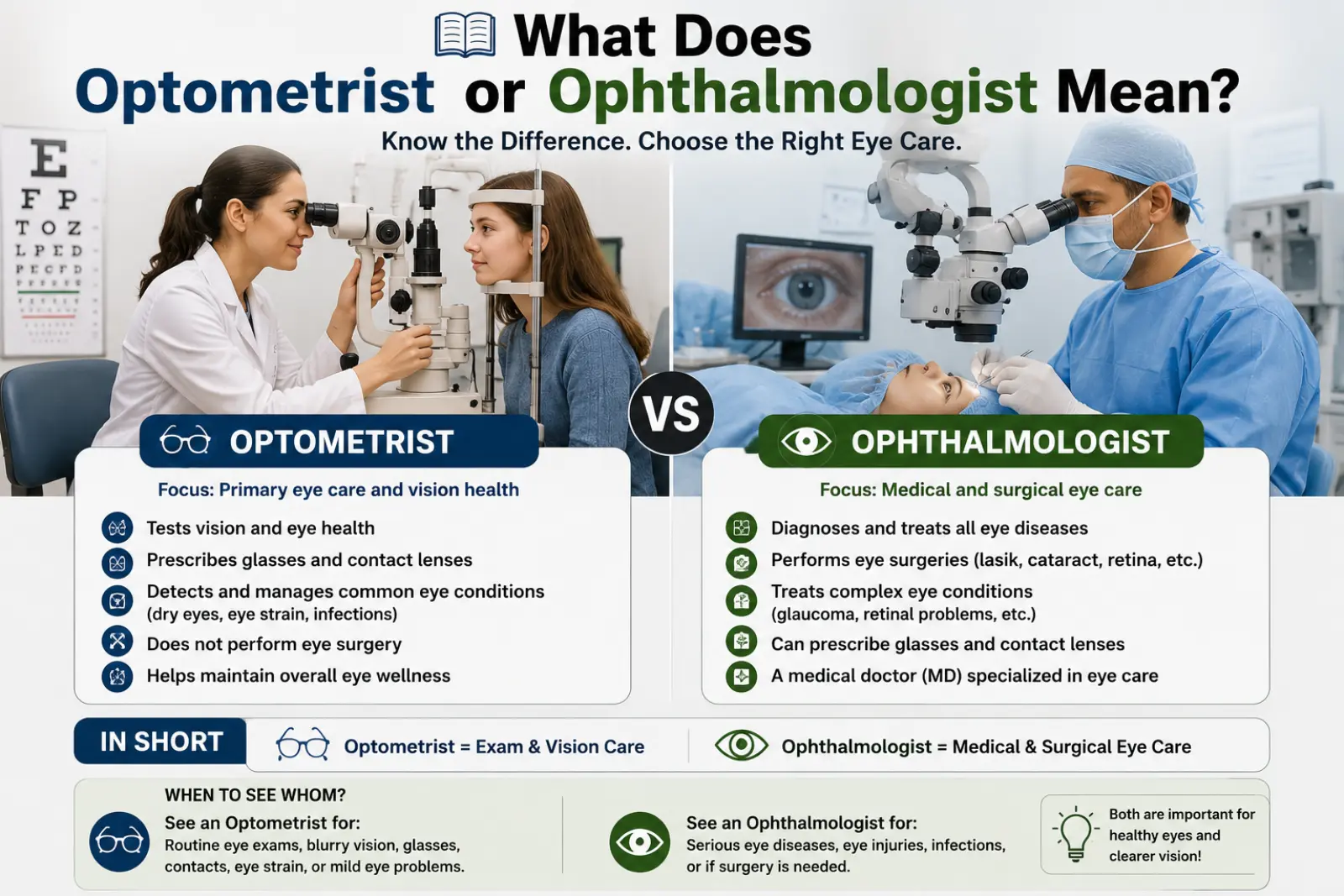
📖 What Does Optometrist or Ophthalmologist Mean?
An optometrist is trained to provide primary eye care. This often includes eye exams, checking vision, prescribing corrective lenses, and identifying or managing many eye conditions.
An ophthalmologist is a physician who has specialized in eye and vision care. Ophthalmologists can provide medical and surgical treatment for eye conditions.
Related Terms
- Eye doctor
- Eye exam
- Vision test
- Glasses prescription
- Contact lenses
- Eye disease
- Eye surgery
- Cataracts
- Glaucoma
- Retinal conditions
Common Variations
You may see these phrases online:
- Optometrist vs ophthalmologist
- Ophthalmologist vs optometrist
- Optometrist or ophthalmologist for glasses
- Optometrist or ophthalmologist for cataracts
- Eye doctor vs ophthalmologist
- Who should I see for an eye exam?
🕰️ The Origin of Optometrist or Ophthalmologist
The word optometrist is connected to the measurement of vision and the eye. The term combines roots related to sight and measurement.
The word ophthalmologist comes from Greek roots connected to the eye and the study of the eye.
As eye care developed, different professional roles became more specialized. Optometry became strongly associated with vision testing and primary eye care, while ophthalmology developed as a medical specialty involving diagnosis, treatment, and eye surgery.
Today, both professions are important parts of modern eye care.
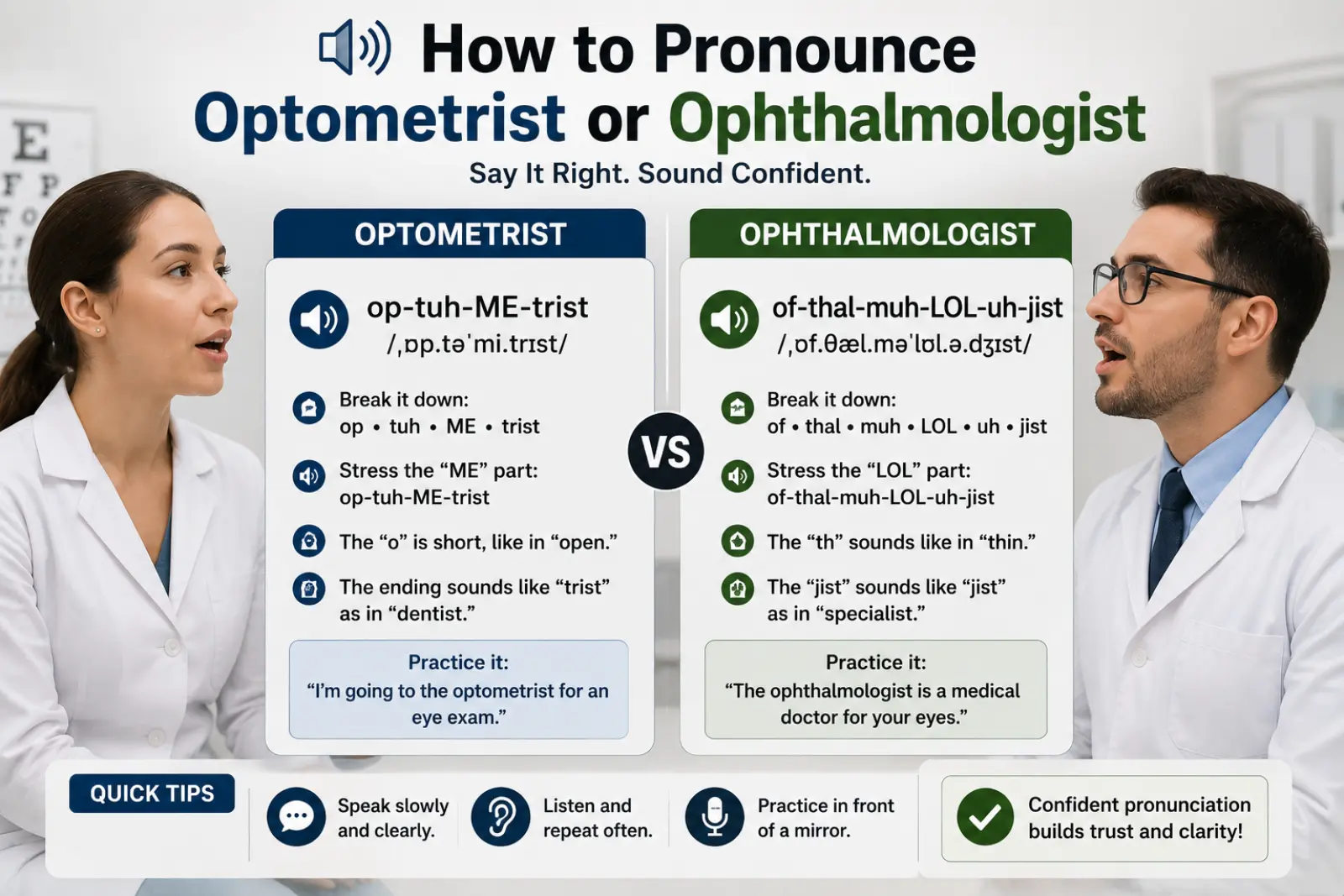
🔊 How to Pronounce Optometrist or Ophthalmologist
Optometrist
Pronunciation: op-TOM-uh-trist
Break it down:
op + TOM + uh + trist
Ophthalmologist
Pronunciation: off-thal-MOL-uh-jist
The spelling can look difficult, so many beginners struggle with this word.
Easy Speaking Trick
Remember:
- Optometrist → op-TOM-uh-trist
- Ophthalmologist → off-thal-MOL-uh-jist
Do not worry if the words feel difficult at first. The pronunciation becomes easier with practice.
🇬🇧 British English vs American English Usage
The spelling of optometrist and ophthalmologist is generally the same in British and American English.
| Feature | British English | American English | Notes |
|---|---|---|---|
| Optometrist | Optometrist | Optometrist | Same spelling |
| Ophthalmologist | Ophthalmologist | Ophthalmologist | Same spelling |
| Meaning | Similar | Similar | Professional roles may vary |
| Usage | Common | Common | Both terms are widely used |
| Eye doctor | Common | Common | General everyday phrase |
The main differences are related to healthcare systems, professional licensing, and the scope of practice in each country.
✅ Which One Should You Use?
Choose the professional based on your needs.
| Your Need | Possible Choice |
|---|---|
| Routine eye exam | Optometrist |
| Glasses prescription | Optometrist |
| Contact lens fitting | Optometrist |
| General vision problem | Optometrist |
| Complex eye disease | Ophthalmologist |
| Eye surgery | Ophthalmologist |
| Cataract surgery | Ophthalmologist |
| Serious eye injury | Ophthalmologist or emergency care |
If you are unsure, starting with an optometrist can be a practical option for many routine vision concerns. They may refer you to an ophthalmologist if specialized medical or surgical care is needed.
❌ Common Mistakes With Optometrist or Ophthalmologist
Mistake 1
❌ An optometrist and ophthalmologist are exactly the same.
✔ They are different eye care professions with different training and responsibilities.
Tip: Remember that ophthalmologists are medical doctors who can perform eye surgery.
Mistake 2
❌ Only an ophthalmologist can check your vision.
✔ Optometrists commonly perform comprehensive eye exams and vision checks.
Tip: Routine vision care often starts with an optometrist.
Mistake 3
❌ Optometrists only sell glasses.
✔ Optometrists provide eye exams and may diagnose and manage many eye conditions.
Tip: Think beyond glasses and contact lenses.
Mistake 4
❌ You always need an ophthalmologist for a regular eye exam.
✔ Many routine eye exams can be performed by an optometrist.
Tip: Specialist care is not always needed for basic vision care.
Mistake 5
❌ Ophthalmologists only perform surgery.
✔ Ophthalmologists can provide medical eye care, diagnose eye diseases, prescribe treatment, and perform surgery.
Tip: Surgery is one part of their broader medical role.
🌍 Optometrist or Ophthalmologist in Everyday Examples
Work:
“I need an eye exam because I’ve been having trouble reading my computer screen.”
School:
“The student was referred for an eye exam after struggling to see the board.”
Daily Life:
“I’m going to an optometrist to get my vision checked.”
Text Message:
“Should I see an optometrist or ophthalmologist?”
Online Content:
“This guide explains the difference between an optometrist and ophthalmologist.”
Conversation:
“My optometrist found something unusual and referred me to an ophthalmologist.”
🧠 Optometrist or Ophthalmologist in Different Contexts
For Glasses
An optometrist commonly performs a vision exam and provides a prescription for glasses.
For Contact Lenses
Optometrists commonly help with contact lens prescriptions and fittings.
For Eye Disease
An ophthalmologist may be involved when a person has a complex or serious eye condition requiring medical or surgical care.
For Eye Surgery
Ophthalmologists are medical doctors trained to perform eye surgery, including procedures for conditions such as cataracts.
For Routine Eye Care
Many people visit an optometrist for regular eye exams and ongoing vision care.
📊 Optometrist vs Ophthalmologist Comparison Table
| Feature | Optometrist | Ophthalmologist |
|---|---|---|
| Eye exams | Yes | Yes |
| Vision testing | Yes | Yes |
| Glasses prescriptions | Yes | Yes |
| Contact lens care | Yes | Yes |
| Medical doctor | No | Yes |
| Treats many eye conditions | Yes | Yes |
| Eye surgery | Generally no | Yes |
| Complex eye disease | May refer | Yes |
| Primary eye care | Common | Yes |
| Medical and surgical eye care | Limited by scope | Yes |
📈 Optometrist or Ophthalmologist – Search Trends and Usage
The search phrase optometrist or ophthalmologist is popular because many people are unsure which eye care professional they need.
Common searches include:
- Should I see an optometrist or ophthalmologist?
- Is an optometrist a doctor?
- Who is better for an eye exam?
- Who treats cataracts?
- Can an optometrist diagnose eye disease?
- Who performs eye surgery?
- What is the difference between an eye doctor and an ophthalmologist?
These questions appear among users in the US, UK, India, Pakistan, Canada, and Australia. Professional roles can vary by country, so local healthcare rules should always be considered.
💼 Optometrist or Ophthalmologist in Professional Life
Both professionals work in healthcare settings, but their roles can differ.
You may find them working in:
- Eye clinics
- Hospitals
- Private practices
- Vision centers
- Medical offices
- Research settings
- Community healthcare
In professional writing, use the correct title.
✔ “The patient visited an optometrist for a routine eye exam.”
✔ “The patient was referred to an ophthalmologist for surgical evaluation.”
Using the correct term makes health information clearer and more accurate.
🎓 Optometrist or Ophthalmologist for Students and Beginners
The biggest confusion comes from the fact that both professionals work with eyes.
Here is an easy way to understand them:
Optometrist: Think vision care and primary eye care.
Ophthalmologist: Think medical eye specialist and surgery.
Beginner Shortcut
If you need help seeing clearly, glasses, or contact lenses, an optometrist may be the right starting point.
If you have a serious eye condition or need surgery, an ophthalmologist may be involved.
🔍 Common Uses and Situations
Optometrist
Commonly associated with:
- Routine eye exams
- Vision checks
- Glasses
- Contact lenses
- Primary eye care
- Detection of eye problems
Ophthalmologist
Commonly associated with:
- Medical eye care
- Complex eye conditions
- Eye disease
- Eye surgery
- Cataract treatment
- Specialist referrals
🧩 Simple Trick to Remember Optometrist or Ophthalmologist
Think of it this way:
👉 Optometrist = “optical and vision care.”
👉 Ophthalmologist = “medical specialist for the eyes.”
Imagine needing new glasses. Think optometrist.
Imagine needing eye surgery. Think ophthalmologist.
This is a simple memory trick, but remember that real-life care can overlap.
🏆 Expert Tips
- Do not choose based only on the title. Check the professional’s services and qualifications.
- Ask what type of care you need. Routine vision care and complex medical care are different.
- Follow referrals. An optometrist may refer you to an ophthalmologist when specialist treatment is needed.
- Get regular eye exams. Eye checks can help identify vision changes and some eye health problems.
- Seek urgent care for sudden vision loss or serious eye injuries. These situations may require immediate medical attention.
- Check local rules. The scope of practice can differ between countries and regions.
🌐 Related Searches People Also Ask
- Is an optometrist a doctor?
Optometrists are licensed eye care professionals, but they are not medical doctors in the same way ophthalmologists are. - Is an ophthalmologist better than an optometrist?
Neither is automatically better. The right professional depends on your eye care needs. - Should I see an optometrist or ophthalmologist for glasses?
An optometrist is commonly a good choice for a routine vision exam and glasses prescription. - Who performs cataract surgery?
Cataract surgery is performed by ophthalmologists. - Can an optometrist diagnose eye problems?
Yes. Optometrists can identify and manage many eye conditions within their scope of practice. - Who should I see for an eye exam?
An optometrist or ophthalmologist may provide eye exams, depending on your needs.
❓ FAQs
What is the main difference between an optometrist or ophthalmologist?
An optometrist commonly provides primary eye and vision care. An ophthalmologist is a medical doctor who can provide medical and surgical eye care.
Is an optometrist a medical doctor?
No. An optometrist is an eye care professional with specialized optometry training. An ophthalmologist is a medical doctor.
Who should I see for a routine eye exam?
An optometrist is often a suitable choice for a routine eye exam.
Who should I see for cataract surgery?
An ophthalmologist performs cataract surgery.
Can an optometrist prescribe glasses?
Yes. Optometrists commonly perform vision exams and prescribe corrective lenses.
Can an ophthalmologist prescribe glasses?
Yes. Ophthalmologists can also provide prescriptions for glasses and other vision correction.
Can an optometrist treat eye diseases?
Yes. Optometrists can diagnose and manage many eye conditions within their legal scope of practice.
Who is better for serious eye problems?
An ophthalmologist may be appropriate for complex medical or surgical eye problems, but the right choice depends on the specific condition.
🏁 Final Verdict
Optometrist or ophthalmologist refers to two different types of eye care professionals.
👉 Optometrist = primary eye care, vision exams, glasses, and contact lenses.
👉 Ophthalmologist = medical eye care, complex conditions, and eye surgery.
Easiest Memory Rule
Optometrist = vision and routine eye care.
Ophthalmologist = medical and surgical eye care.
✅ Conclusion
Understanding optometrist or ophthalmologist can make choosing eye care much easier. Both professionals help protect your vision, but they have different training and areas of practice.
For routine vision care, glasses, and contact lenses, an optometrist may be a good starting point. For complex eye diseases or surgery, an ophthalmologist may be the appropriate specialist.
The most important thing is not to feel confused or embarrassed when asking for help. Your eye health matters, and getting the right care at the right time can make a real difference.
Final memory trick: Think “optometrist = vision care” and “ophthalmologist = medical and surgical eye care.”

Camila Green is an English language writer who specializes in confusing word comparisons and spelling explanations. She creates simple, beginner-friendly guides on topics like “niece or neice” and other common English mistakes. Her writing focuses on clarity, real-life examples, and easy learning. At VerrsaPick, she helps readers improve their English with practical and engaging content.