
Have you ever typed a message like “I send you the file yesterday” and felt unsure if it sounds correct? Or maybe you wrote “I sent you the file” and wondered if it’s the right form?
This is exactly why many learners search “sent or send” on Google. These two words look similar, but they are used in different time situations. One talks about the present or future, and the other talks about the past.
Students often get confused in school English exams. Office workers sometimes make mistakes in emails. Even in social media chats or texting, people mix them up without thinking.
You will also see this confusion in:
- school assignments
- workplace emails
- social media captions
- daily conversations
- business communication
- online grammar searches
People usually search for:
- keyword meaning
- correct spelling
- pronunciation
- examples
- usage
- definition
- grammar difference
This topic is important because using the wrong form can change the time meaning of a sentence. It may make your English sound incorrect or unclear.
In this guide, you’ll learn the meaning, pronunciation, examples, usage, grammar rules, common mistakes, expert tips, and simple explanations in easy English.
⭐ Sent or Send – Quick Answer
👉 Send = present or future action (base verb)
👉 Sent = past tense and past participle of “send”
Examples:
- I send emails every day. ✅
- I will send you the file tomorrow. ✅
- I sent you the file yesterday. ✅
- She sent a message last night. ✅
Simple Rule:
👉 Use SEND for now or future
👉 Use SENT for past actions
Easy Memory Trick:
Think: SEND = still happening / future, SENT = already done
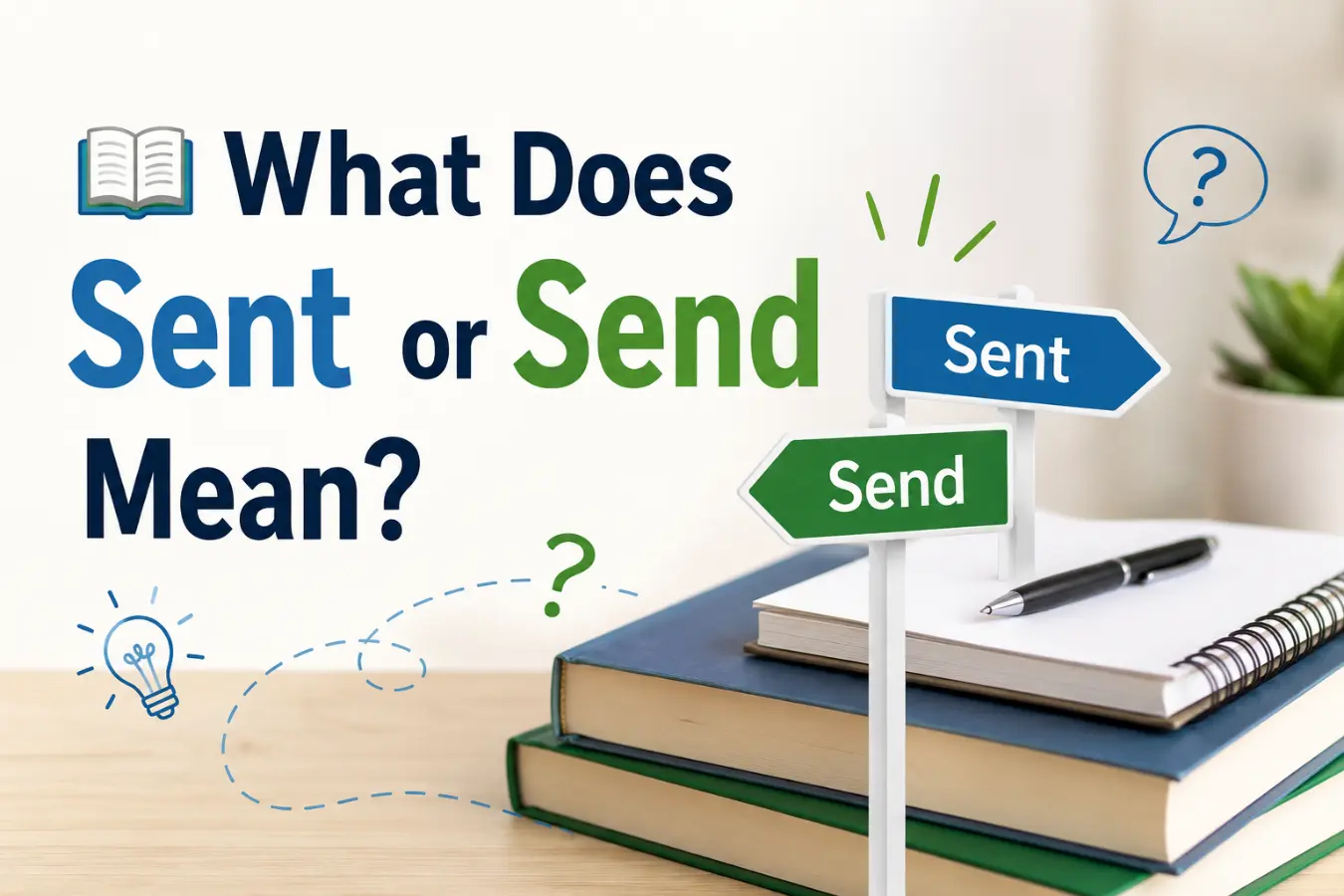
📖 What Does Sent or Send Mean?
👉 Send (Base Verb)
“Send” means to make something go from one place to another.
Example:
- I send a message.
👉 Sent (Past Form)
“Sent” means the action already happened.
Example:
- I sent a message.
Synonyms
- deliver
- forward
- transmit
- dispatch
Opposites
- receive
- get
- collect
Related Terms
- message
- delivery
- communication
Common Variations
- send (base form)
- sending (continuous form)
- sent (past form)
🕰️ Origin of Sent or Send
The word “send” comes from Old English word “sendan”, meaning “to cause to go.”
Over time, English changed:
- send = present form
- sent = past form (irregular verb)
This pattern is common in English:
- go → went
- come → came
- send → sent
That’s why “sent” does not look like “send + ed”.
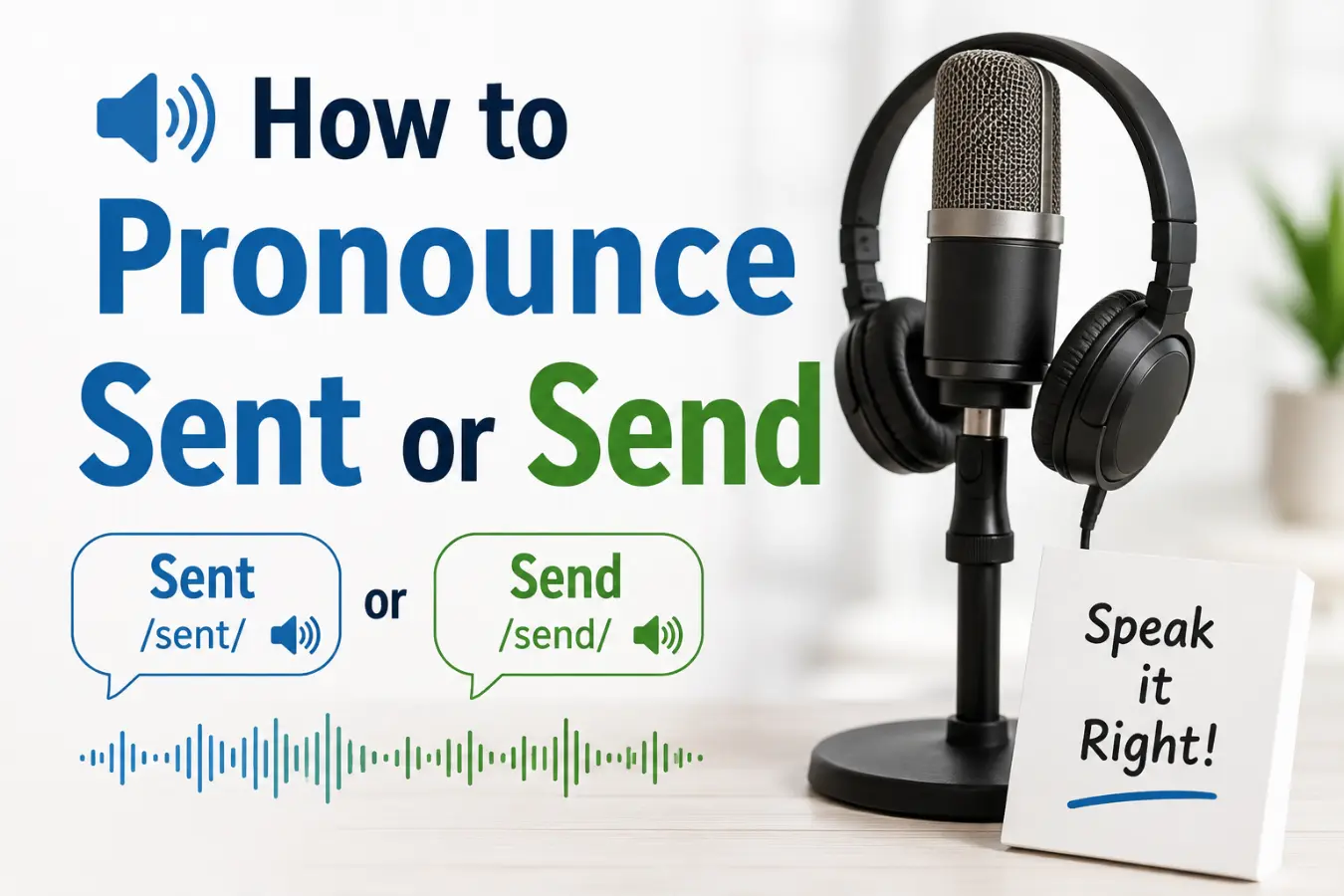
🔊 How to Pronounce Sent or Send
👉 Send = /send/ → sounds like “send”
👉 Sent = /sent/ → sounds like “sent”
Syllables:
- both are single-syllable words
Easy trick:
- “send” → ends with d sound
- “sent” → ends with t sound
Common mistake:
People mix pronunciation when speaking fast.
🇬🇧 British English vs American English Usage
Good news: no difference in meaning or spelling.
| Feature | British English | American English | Notes |
|---|---|---|---|
| Send | send | send | same |
| Sent | sent | sent | same |
| Meaning | same | same | no change |
| Usage | universal | universal | no difference |
✅ Which One Should You Use?
Use “send” when:
- talking about now or future
- writing instructions
- giving commands
Use “sent” when:
- talking about past actions
- telling stories
- reporting messages
Quick usage:
- Emails → I will send it ✔
- Past messages → I sent it ✔
- Formal writing → both ✔
- Chatting → both ✔
❌ Common Mistakes with Sent or Send
Mistake 1
❌ I sent you tomorrow.
✔ I will send you tomorrow.
👉 Wrong tense use
Mistake 2
❌ I send you yesterday.
✔ I sent you yesterday.
👉 Past needs “sent”
Mistake 3
❌ I am sent the file now.
✔ I am sending the file now.
👉 Continuous form needed
Mistake 4
❌ She send me a message.
✔ She sent me a message.
👉 Third person past correction
Mistake 5
❌ I will sent it.
✔ I will send it.
👉 Future does not use “sent”
Why people make mistakes:
- confusion with verb forms
- fast typing
- lack of grammar practice
🌍 Sent or Send in Everyday Examples
Work:
- I will send the report today.
- I sent the report yesterday.
School:
- Teacher sends homework daily.
- I sent my homework last night.
Social Media:
- I send messages every day.
- I sent a DM to my friend.
Daily Life:
- I send money online.
- I sent money yesterday.
Emails:
- I will send the email soon.
- I sent the email already.
Text Messages:
- I send voice notes.
- I sent a voice note.
Online Content:
- Creators send updates daily.
- He sent a post yesterday.
Conversations:
- Did you send it?
- Yes, I sent it.
🧠 Sent or Send in Different Contexts
Education
Used in grammar lessons for verb tense learning.
Business
Used in emails, reports, and communication.
Workplace
Used for task updates and instructions.
Technology
Used in messaging apps and email systems.
Social Media
Used in DMs, posts, and chats.
Psychology
Used in communication behavior studies.
📈 Sent or Send – Google Trends & Usage
People search this keyword because:
- English learners confuse tenses
- irregular verbs are hard
- students prepare for exams
- professionals want correct writing
Countries with high searches:
- US 🇺🇸
- UK 🇬🇧
- India 🇮🇳
- Pakistan 🇵🇰
- Canada 🇨🇦
- Australia 🇦🇺
Common searches:
- “sent or send difference”
- “when to use sent”
- “send vs sent examples”
- “grammar for send sent”
Voice searches:
- “When do I use sent or send?”
- “Is sent past tense of send?”
📊 Comparison Table: Sent or Send
| Feature | Send | Sent |
|---|---|---|
| Meaning | action now/future | action in past |
| Grammar role | base verb | past tense |
| Pronunciation | send | sent |
| Usage | present/future | past |
| Academic use | yes | yes |
| Professional use | yes | yes |
| Common mistake | mixing tense | wrong future use |
💼 Sent or Send in Professional Life
In workplaces, correct tense is very important.
✔ Correct:
- I will send the file.
✔ Correct:
- I sent the file.
❌ Wrong:
- I send the file yesterday.
Using correct forms improves:
- professionalism
- clarity
- communication trust
🎓 Sent or Send for Students or Beginners
Beginners struggle because:
- irregular verbs are confusing
- English tenses feel complicated
- similar words look the same
Easy trick:
- send = now/future
- sent = past
🔍 Signs & Common Uses
- Email writing
- Messaging apps
- School grammar
- Business communication
- Daily conversation
- Social media posts
🧩 Simple Trick to Remember Sent or Send
👉 Think like this:
SEND = Still Not Done
SENT = Something Ended
Memory shortcut:
- send → happening or future
- sent → already finished
🏆 Expert Tips
- Always check time words (yesterday, today, tomorrow)
- Learn irregular verbs list
- Practice daily sentences
- Use apps like Grammarly for correction
- Read English conversations often
🌐 Related Searches People Also Ask
- difference between send and sent
- when to use sent in a sentence
- send vs sent grammar rules
- examples of send and sent
- is sent past tense of send
- how to use send correctly
- irregular verbs list English
- common grammar mistakes
- email writing grammar tips
- English tense guide for beginners
❓ FAQs
1. Is “sent” past tense of send?
Yes, “sent” is the past form.
2. Can I say “I send yesterday”?
No, correct form is “I sent yesterday.”
3. What is “send” used for?
It is used for present and future actions.
4. Is “send” a verb?
Yes, it is a verb.
5. What is the meaning of “sent”?
It means something already done.
6. Can I use “send” in past tense?
No, use “sent” for past.
7. Is “send” formal or informal?
It is both.
8. Why is English irregular?
Because verbs change over time in language history.
🏁 Final Verdict
👉 “Send” = present/future
👉 “Sent” = past
Easy memory rule:
Send = still going, Sent = already finished
✅ Conclusion
Understanding sent or send is easy once you learn the time rule. One is for present/future, and the other is for the past. This small grammar difference can make your English clearer and more professional.
Whenever you are confused, just ask:
👉 “Is it happening now or already done?”
That will always guide you to the correct answer.

Camila Green is an English language writer who specializes in confusing word comparisons and spelling explanations. She creates simple, beginner-friendly guides on topics like “niece or neice” and other common English mistakes. Her writing focuses on clarity, real-life examples, and easy learning. At VerrsaPick, she helps readers improve their English with practical and engaging content.