Have you ever heard someone say Hispanic while another person says Latino, and wondered if they mean the same thing? You’re not alone. Many people feel confused because these words often appear in schools, workplaces, government forms, news reports, social media, and everyday conversations.
People usually search for Hispanic vs Latino meaning, Hispanic vs Latino difference, which term is correct, examples, and when to use Hispanic or Latino. Understanding these terms is important because they describe identity, culture, and language. Using the right word also shows respect for how people identify themselves.
In this guide, you’ll learn the meaning, examples, usage, common mistakes, and simple explanations in easy English.
Hispanic vs Latino – Quick Answer
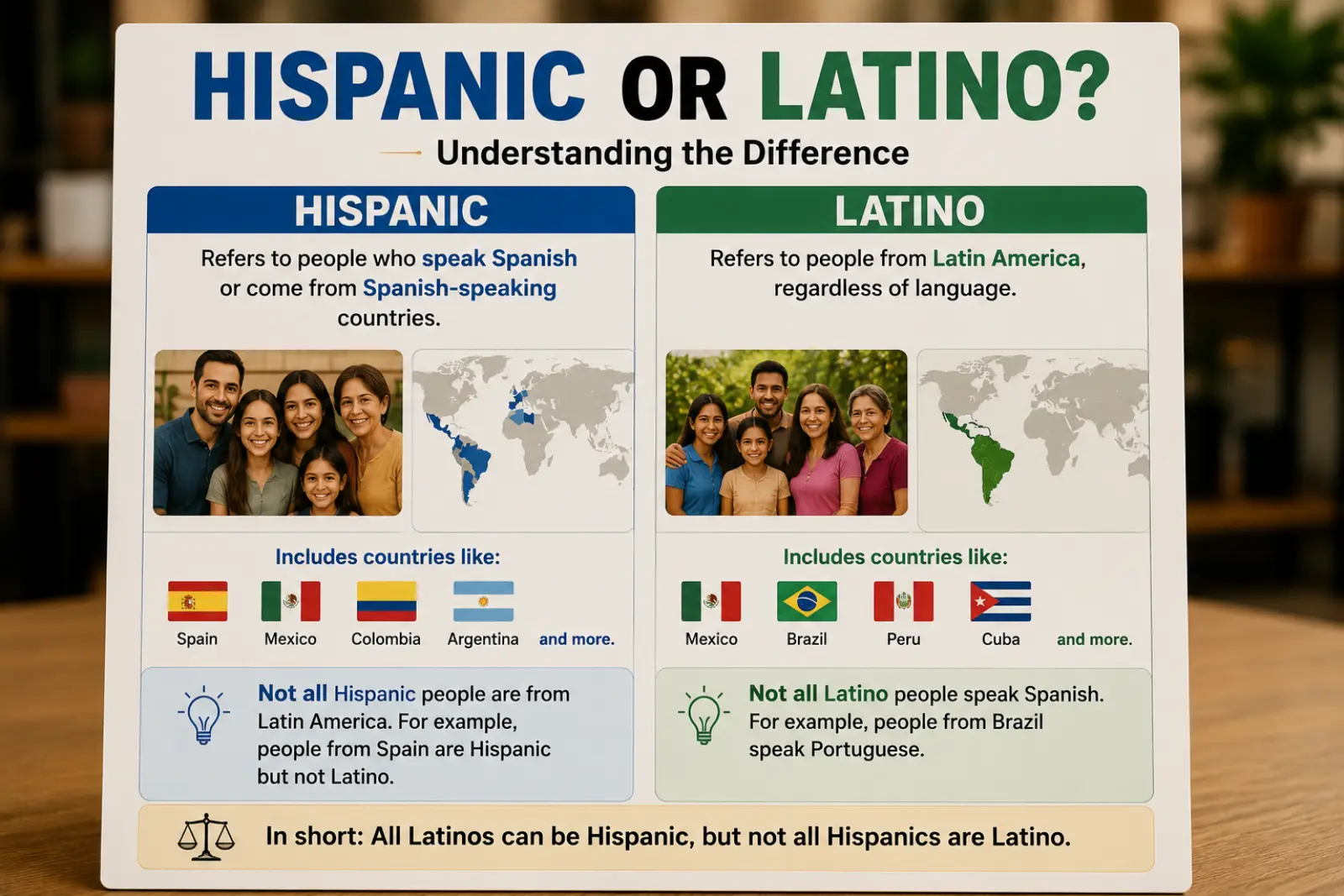
👉 Hispanic = A person from, or whose family comes from, a Spanish-speaking country.
👉 Latino = A person from, or whose family comes from, Latin America, regardless of language.
Examples
- ✅ A person from Mexico is both Hispanic and Latino.
- ✅ A person from Spain is Hispanic but not Latino.
- ✅ A person from Brazil is Latino but usually not Hispanic because Brazil speaks Portuguese.
- ✅ A person from Argentina is both Hispanic and Latino.
Simple Memory Trick
- Hispanic = Spanish language
- Latino = Latin America
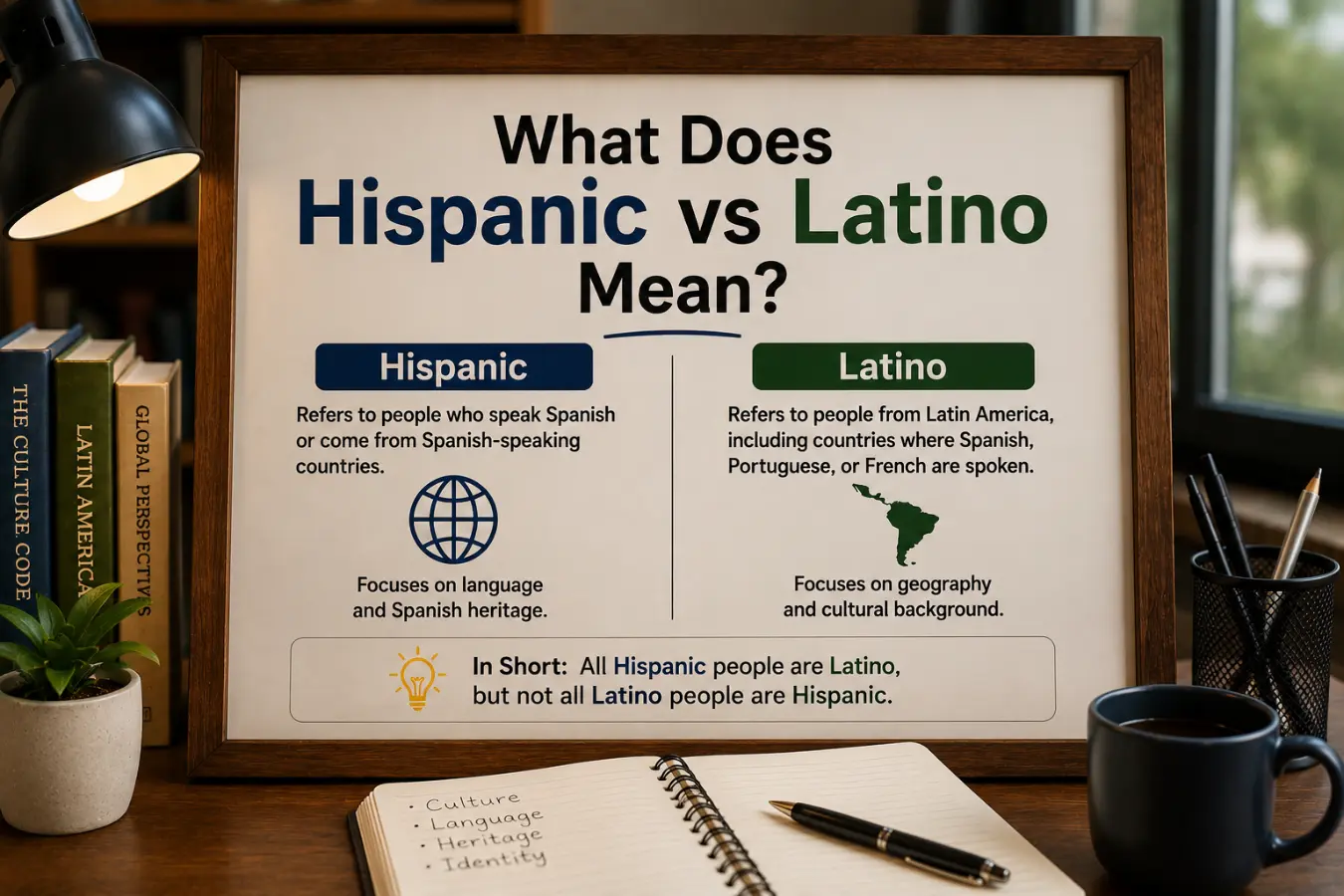
What Does Hispanic vs Latino Mean?
Although many people use these terms together, they are not identical.
Hispanic
“Hispanic” focuses on a connection to the Spanish language or Spanish-speaking countries.
Examples include:
- Spain
- Mexico
- Colombia
- Peru
- Chile
Latino
“Latino” focuses on geography. It refers to people from Latin America, including countries where Spanish, Portuguese, or French may be spoken.
Countries include:
- Mexico
- Brazil
- Argentina
- Chile
- Colombia
Related Terms
- Latina
- Latinx
- Latine
- Latin American
- Spanish-speaking
The Origin of Hispanic vs Latino
The word Hispanic comes from the Latin word Hispania, the ancient Roman name for the Iberian Peninsula, which includes modern Spain.
The word Latino comes from Latin America, a region in North, Central, and South America influenced by Romance languages such as Spanish and Portuguese.
Today, both terms are widely used in government, education, media, and everyday conversations.
Which One Should You Use?
The best choice depends on the situation and how a person identifies themselves.
| Situation | Best Choice |
|---|---|
| Talking about Spanish language | Hispanic |
| Talking about Latin America | Latino |
| Referring to someone from Spain | Hispanic |
| Referring to someone from Brazil | Latino |
| Personal identity | Use the person’s preferred term |
Common Mistakes with Hispanic vs Latino
Mistake 1
❌ All Hispanics are Latinos.
✔ People from Spain are Hispanic but not Latino.
Mistake 2
❌ All Latinos are Hispanic.
✔ Brazilians are generally Latino but not Hispanic.
Mistake 3
❌ The words always mean the same thing.
✔ They overlap but have different meanings.
Mistake 4
❌ Guessing someone’s identity.
✔ Ask politely or respect how they identify.
Mistake 5
❌ Using the terms without understanding.
✔ Learn the difference before using them.
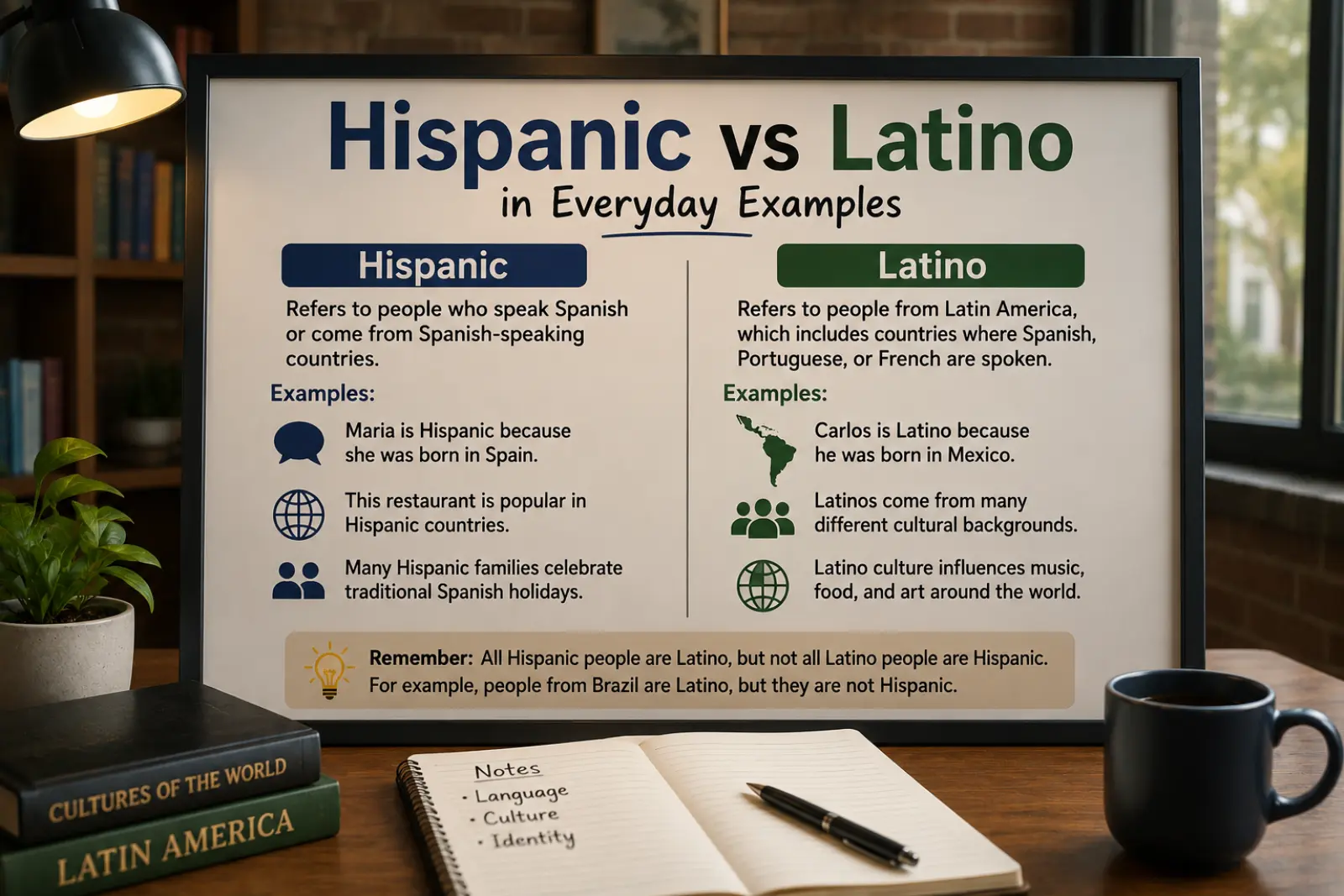
Hispanic vs Latino in Everyday Examples
School
“Our history class studied Hispanic cultures.”
Workplace
“Our company celebrates Latino Heritage Month.”
Social Media
“Many Latino creators share their traditions online.”
Daily Conversation
“My friend is Hispanic because her family is from Spain.”
“Our office welcomes employees from many Hispanic and Latino communities.”
Hispanic vs Latino in Different Contexts
Education
Schools use these terms when discussing geography, language, and culture.
Government
Many official forms include Hispanic or Latino as ethnicity categories.
Media
News organizations use these words when reporting on culture, sports, politics, and communities.
Business
Companies use these terms to understand audiences and create inclusive marketing.
Comparison Table
| Feature | Hispanic | Latino |
|---|---|---|
| Based on | Spanish language | Latin America |
| Includes Spain | ✅ Yes | ❌ No |
| Includes Brazil | ❌ Usually No | ✅ Yes |
| Geography | Not always | Yes |
| Language focus | Yes | No |
Professional Life
Knowing the difference helps in:
- Professional communication
- Marketing campaigns
- Customer service
- Diversity and inclusion
- Academic writing
Using the correct term shows cultural awareness and respect.
Easy Trick to Remember
Think of it this way:
- Hispanic = Speaks Spanish or comes from a Spanish-speaking country.
- Latino = Comes from Latin America.
Remember:
- Spain → Hispanic ✔
- Brazil → Latino ✔
- Mexico → Both ✔
Expert Tip
If you’re unsure which word to use, it’s perfectly acceptable to ask someone how they identify. Many people prefer Hispanic, Latino, Latina, Latinx, Latine, or simply their nationality, such as Mexican, Colombian, or Brazilian.
Respecting personal identity is always the best choice.
People Also Ask
Is Hispanic the same as Latino?
No. Hispanic relates to the Spanish language, while Latino relates to Latin America.
Is someone from Spain Latino?
No. People from Spain are Hispanic but not Latino.
Is Brazil Hispanic?
No. Brazil speaks Portuguese, so it is generally Latino but not Hispanic.
Can someone be both Hispanic and Latino?
Yes. People from Mexico, Colombia, Argentina, and many other Latin American countries are both.
Which term is more respectful?
Use the term a person prefers whenever possible.
FAQs
What does Hispanic mean?
A person connected to a Spanish-speaking country.
What does Latino mean?
A person connected to Latin America.
Is Mexican Hispanic or Latino?
Both.
Is Brazilian Latino?
Yes.
Is Spanish the same as Hispanic?
No. Spanish refers to Spain or the language, while Hispanic is a broader cultural and language-based identity.
Why do people confuse these terms?
Because many countries fit both categories.
Final Verdict
The difference is simple:
- Hispanic = Spanish language
- Latino = Latin America
Many people are both, but not everyone is. Understanding this distinction helps you communicate accurately and respectfully.
Conclusion
Knowing the difference between Hispanic vs Latino makes conversations more accurate and inclusive. While the two terms often overlap, they describe different aspects of identity—one focuses on the Spanish language, and the other on Latin American geography. When in doubt, respect the way people identify themselves.
Easy memory trick: Hispanic = Spanish. Latino = Latin America. Mexico = Both. Spain = Hispanic only. Brazil = Latino only.

Camila Green is an English language writer who specializes in confusing word comparisons and spelling explanations. She creates simple, beginner-friendly guides on topics like “niece or neice” and other common English mistakes. Her writing focuses on clarity, real-life examples, and easy learning. At VerrsaPick, she helps readers improve their English with practical and engaging content.