Have you ever looked at an unpaid bill, late assignment, or missed deadline and wondered whether to write “past due” or “passed due”? This is a very common English confusion.
You may see these words in emails, invoices, school notices, workplace messages, bank statements, and online accounts. They sound almost the same when spoken, but only one is normally correct when you mean that something is late.
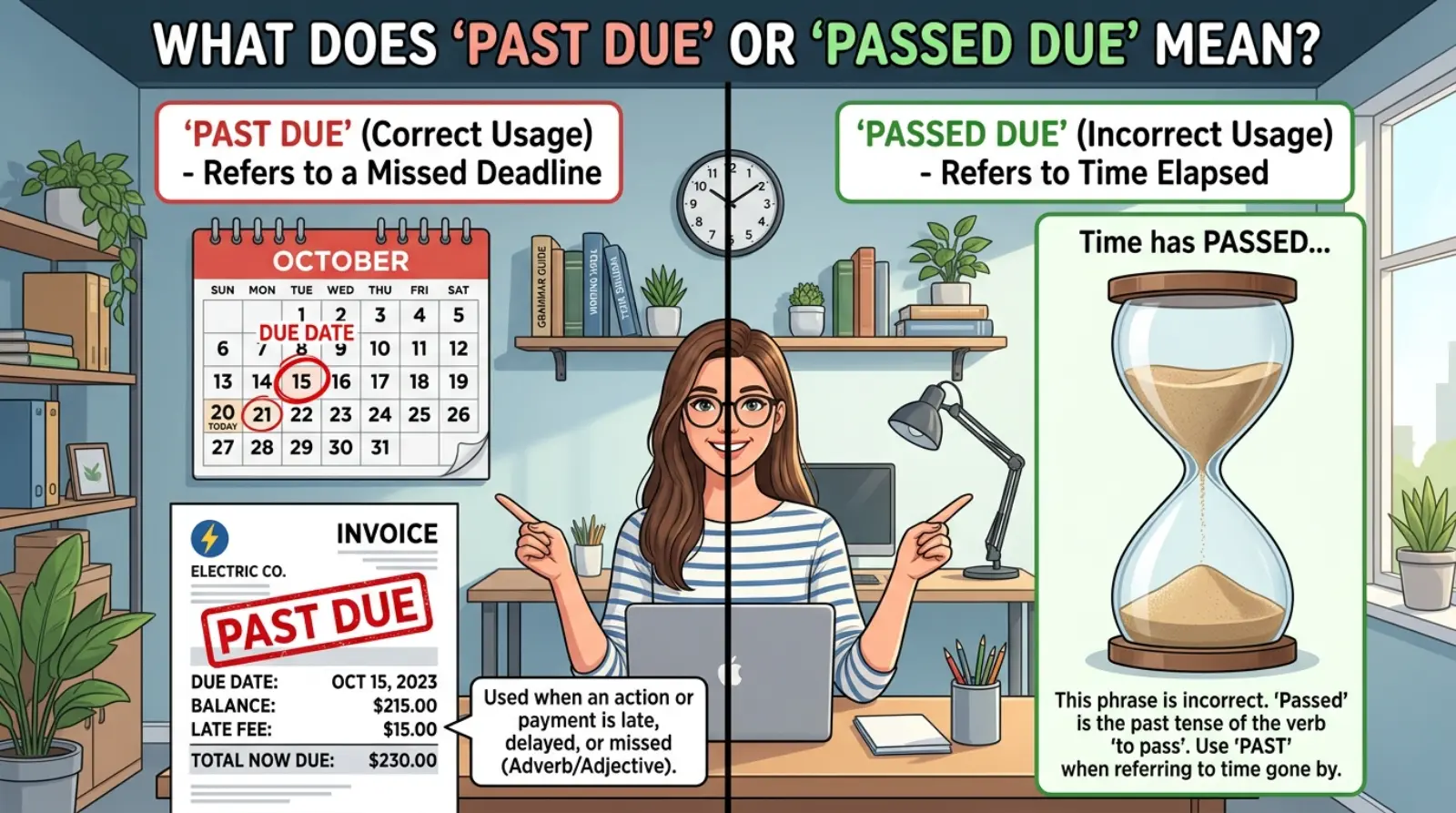
The correct phrase is past due.
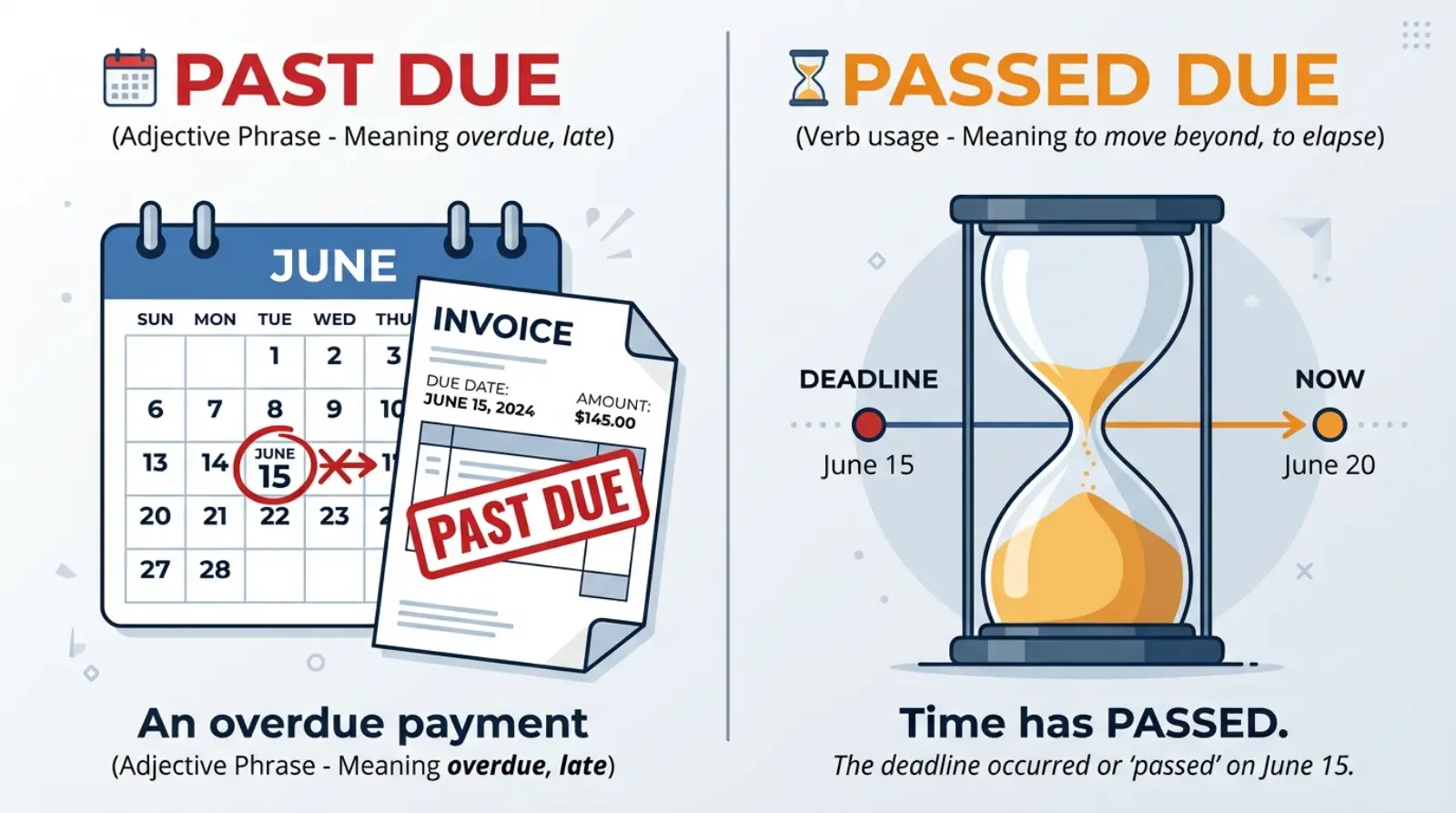
Past due means something is late or has not been completed, paid, or handled by its required deadline. Passed due is generally incorrect when used with this meaning.
The confusion happens because past and passed sound alike. However, they have different grammar roles. Past can describe something that has gone beyond a time or deadline, while passed is usually the past tense of the verb pass.
People usually search for:
- past due or passed due meaning
- past due definition
- is it past due or passed due?
- past due meaning in a bill
- past due vs passed due
- how to use past due in a sentence
- past due pronunciation
- correct grammar for past due
- is passed due correct English?
- past due payment meaning
In this guide, you’ll learn the meaning, pronunciation, examples, usage, grammar rules, common mistakes, expert tips, and simple explanations in easy English.
Past Due or Passed Due – Quick Answer
👉 Past due = correct when something is late or beyond its deadline.
👉 Passed due = usually incorrect for this meaning.
Past due is an adjective phrase commonly used for bills, payments, assignments, deadlines, and other obligations that were not completed on time.
Examples
- My electricity bill is past due.
- The payment is now past due.
- Your assignment is past due.
- The account has a past-due balance.
- This invoice became past due last week.
Simple Rule
👉 Use past due when something has gone beyond its required time.
Think of it as:
Past the due date = past due.
What Does Past Due or Passed Due Mean?
What Does “Past Due” Mean?
Past due means that a required date has already gone by.
For example, if your rent was due on September 1 and today is September 5, the rent is past due.
The phrase is especially common with:
- bills
- invoices
- loans
- rent
- taxes
- assignments
- payments
- deadlines
- applications
- documents
What Does “Passed Due” Mean?
Passed is the past tense of pass.
For example:
She passed the exam.
Here, passed is a verb.
But in the phrase past due, the word past refers to time that has gone by.
So:
❌ The bill is passed due.
✔ The bill is past due.
Related Terms
- overdue
- late
- delayed
- unpaid
- outstanding
- deadline
- due date
- payment deadline
- past-due balance
Synonyms for Past Due
Depending on context, you can use:
- overdue
- late
- unpaid
- outstanding
- delayed
For example:
Your payment is past due.
can also become:
Your payment is overdue.
The Origin of Past Due
The word past is connected to the idea of something that has gone by or moved beyond a point.
The word pass means to move from one place, state, or point to another. Its past-tense form is passed.
That explains why these words can sound confusing.
Compare:
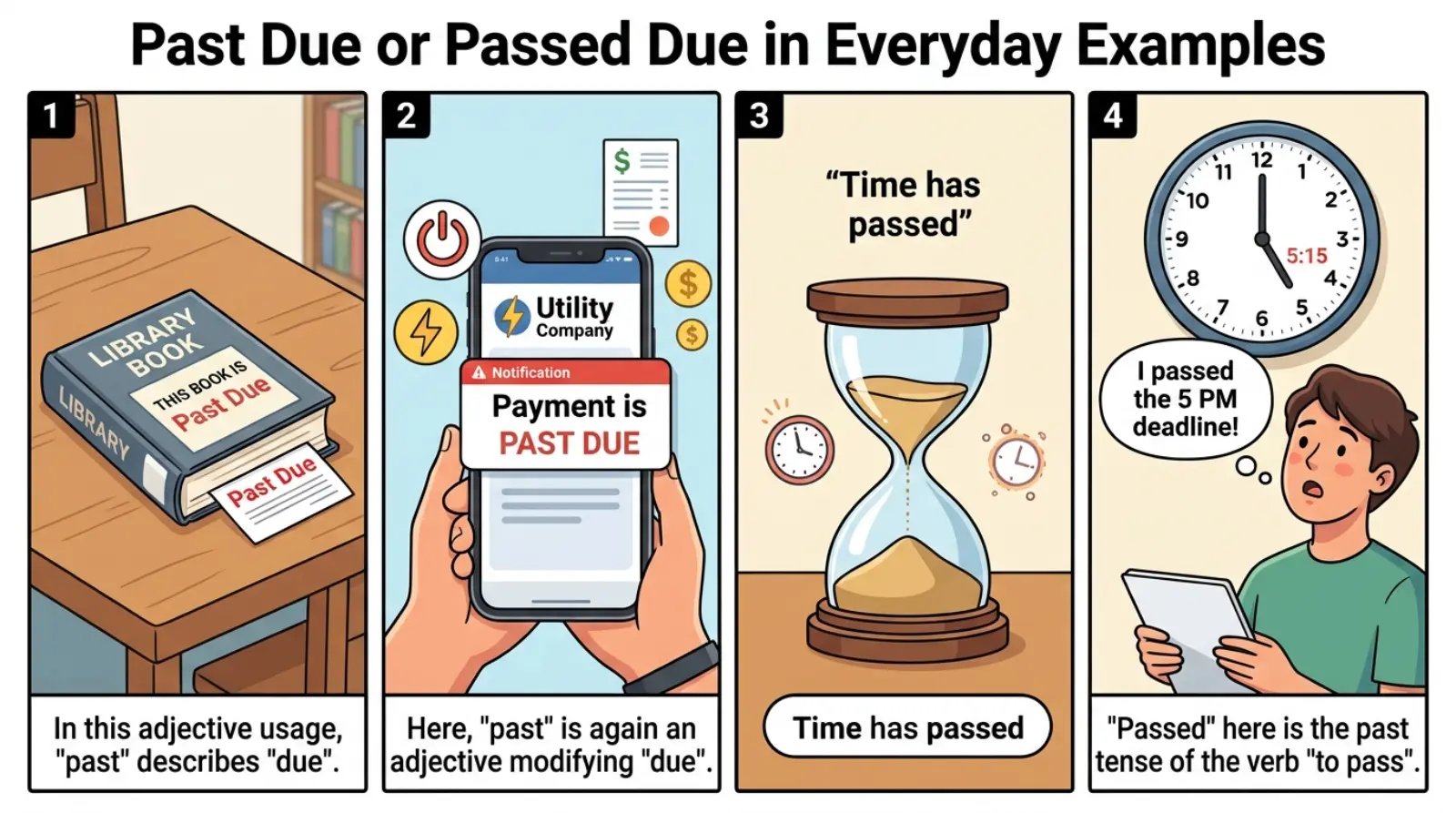
The deadline has passed.
Here, passed is a verb.
The payment is past due.
Here, past describes the payment’s relationship to the due date.
The two expressions are related in meaning, but they do different jobs in the sentence.
How to Pronounce Past Due or Passed Due
Past due is commonly pronounced:
past DOO
Passed due sounds very similar:
past DOO
This is why people often confuse the spelling when writing.
The best solution is not to rely on pronunciation. Remember the grammar.
Speaking Trick
Say the longer idea:
“The payment is past the due date.”
Then shorten it:
“The payment is past due.”
This makes the correct phrase easier to remember.
British English vs American English Usage
There is no major British-American spelling difference in this phrase.
| Feature | British English | American English | Notes |
|---|---|---|---|
| Past due | Used | Used | Correct phrase |
| Passed due | Generally incorrect | Generally incorrect | Not the normal expression |
| Overdue | Common | Common | Strong synonym |
| Past-due balance | Used | Used | Common in financial writing |
| Due date | Used | Used | Same basic meaning |
Both British and American speakers understand past due.
In everyday English, overdue is also very common.
Which One Should You Use?
Use past due when you mean that something has gone beyond its deadline.
Formal writing
Your account has a past-due balance.
Workplace communication
The invoice is now past due.
School
Your assignment is past due.
Banking
The payment became past due on Monday.
Texting
Sorry, my payment is past due. I’ll handle it today.
Professional tip
For business writing, past due and overdue are both natural.
| Situation | Best choice |
|---|---|
| Unpaid invoice | Past due |
| Late assignment | Past due / overdue |
| Late payment | Past due / overdue |
| Missed deadline | Overdue |
| Financial account | Past due |
| Casual conversation | Overdue |
Common Mistakes With Past Due or Passed Due
Mistake 1
❌ My bill is passed due.
✔ My bill is past due.
Why?
You are describing a bill that has gone beyond its due date.
Tip:
Remember past the due date.
Mistake 2
❌ The assignment is passed due.
✔ The assignment is past due.
Why?
The deadline has gone by, so past is correct.
Mistake 3
❌ I received a passed-due notice.
✔ I received a past-due notice.
Why?
The notice concerns something that is beyond its due date
Mistake 4
❌ My rent passed due yesterday.
✔ My rent became past due yesterday.
Or:
✔ My rent was due yesterday and is now overdue.
Why?
“Passed due” does not work as the normal adjective phrase.
Mistake 5
❌ This invoice is passed.
✔ This invoice is past due.
Why?
“Passed” alone does not mean “late.”
Mistake 6
❌ The due date is past by two days.
✔ The payment is two days past due.
Why?
The payment, assignment, or obligation becomes past due after the deadline.
Past Due or Passed Due in Everyday Examples
Work
The client’s invoice is past due.
School
My homework is past due because I missed the deadline.
This is a reminder that your payment is past due.
Text Message
I forgot to pay the bill, and now it’s past due.
Daily Conversation
The library book is overdue.
Business
Please contact us if you have questions about your past-due account.
Online Account
Your payment is past due. Please update your payment method.
Past Due or Passed Due in Different Contexts
Bills and Payments
This is one of the most common uses.
Your credit card payment is past due.
It means the required payment date has already passed.
School and Education
Teachers may describe unfinished work as past due.
Three assignments are currently past due.
Business and Invoices
Businesses often use past due for unpaid invoices.
Invoice #204 is now past due.
Deadlines
For deadlines, overdue is often more natural.
The report is overdue.
But past due can still be understood when the context involves a specific due date.
Past Due – Common Uses and Patterns
You will often see these expressions:
- past due payment
- past due bill
- past due invoice
- past due account
- past due balance
- past due notice
- past due amount
- past due assignment
- past due date
- past due loan
A useful grammar pattern is:
subject + be + past due
Examples:
The bill is past due.
The payment is past due.
The invoice is past due.
Comparison Table: Past Due or Passed Due
| Feature | Past Due | Passed Due |
|---|---|---|
| Correct expression | ✅ Yes | ❌ Usually no |
| Meaning | Beyond the due date | Not normally used this way |
| Grammar | Adjective phrase | Incorrect phrase in this context |
| Bills | ✅ Common | ❌ |
| Payments | ✅ Common | ❌ |
| Assignments | ✅ Possible | ❌ |
| Business writing | ✅ Common | ❌ |
| Financial writing | ✅ Very common | ❌ |
| Pronunciation | “past doo” | Sounds similar |
| Easy synonym | Overdue | — |
Past Due in Professional Life
Correct wording matters in business because financial communication needs to be clear.
Companies commonly use phrases such as:
Your account has a past-due balance.
This invoice is now past due.
Please submit payment for the past-due amount.
We noticed that your payment is past due.
These expressions sound professional and are widely understood.
If you are writing a formal notice, past due is usually much better than passed due.
Past Due for Students and Beginners
English learners often confuse these words because past and passed have almost the same pronunciation.
The easiest method is to learn them by function.
Past = related to time or position.
We walked past the store.
Passed = usually a verb.
She passed the store.
Now apply the same idea:
The payment is past due.
The payment has gone beyond its due date.
Signs and Common Uses Related to Past Due
You may see something described as past due when:
- a payment deadline has passed
- an invoice remains unpaid
- a bill was not paid on time
- an assignment missed its deadline
- a required document was not submitted
- an account has an unpaid balance
- a loan payment was missed
- a business invoice remains outstanding
In financial settings, past due can sometimes have specific meanings related to payment status and account records.
Simple Trick to Remember Past Due or Passed Due
Here is the easiest memory trick:
👉 Past due = past the due date.
The word past connects directly with time.
Think of it this way:
Imagine a deadline on a calendar.
Due date → today → deadline goes by → past due
So if a bill was due yesterday, it is now past due.
You can also replace it with overdue:
The bill is past due.
The bill is overdue.
Both communicate that the deadline has been missed.
Expert Tips
- Remember the phrase “past the due date.”
- Use past due for late bills and payments.
- Use overdue when you want a simple alternative.
- Do not choose passed just because it sounds right.
- Check whether the word is acting as a verb or describing time.
- In professional writing, use the standard phrase past due.
- Read the complete sentence instead of relying only on pronunciation.
Related Searches People Also Ask
Is it past due or passed due?
Past due is the correct phrase when something is late or beyond its deadline.
What does past due mean?
It means something was not completed, paid, or handled by its required due date.
Is past due the same as overdue?
Usually, yes. Both can describe something that has gone beyond its deadline.
What does past due mean on a bill?
It means the bill was not paid by the required payment date.
Can I say “passed due”?
Generally, no. Passed due is not the standard phrase for something that is late.
Is past due one word?
Usually, past due is written as two words. In some compound forms, you may see past-due, such as “a past-due payment.”
What is an example of past due?
My electricity bill is past due.
Is past due formal?
Yes. It is common in professional, financial, educational, and business writing.
What is another word for past due?
Overdue is the most common simple alternative.
Why do people confuse past and passed?
They sound alike but have different meanings and grammar roles.
Final Verdict
👉 Past due = correct
👉 Passed due = generally incorrect
Use past due when a payment, bill, assignment, invoice, or other obligation has gone beyond its required deadline.
The easiest memory rule is:
Past due = past the due date.
Conclusion
The difference between past due or passed due becomes much easier once you focus on meaning instead of sound.
Past due is the standard phrase for something that is late or beyond its due date. It is common in financial documents, business emails, school assignments, payment notices, and everyday conversations.
Passed is normally the past tense of pass, so it does not replace past in this expression.
If you ever feel unsure, use this quick test:
Can you say “past the due date”?
If yes, choose past due.
The payment is past due. ✅
Remember: Past the deadline = past due.

Camila Green is an English language writer who specializes in confusing word comparisons and spelling explanations. She creates simple, beginner-friendly guides on topics like “niece or neice” and other common English mistakes. Her writing focuses on clarity, real-life examples, and easy learning. At VerrsaPick, she helps readers improve their English with practical and engaging content.