
Every Halloween, families look for fun and safe ways to celebrate with their children. While traditional trick-or-treating is still popular, many parents, schools, churches, and community groups now choose trunk or treats as a safer and more organized alternative. If you’ve recently heard someone mention a trunk or treat event, you may be wondering what it means, how it works, and why it has become so popular.
People usually search for trunk or treats to learn the meaning, history, pronunciation, examples, and how these events are different from regular trick-or-treating. Many parents also want ideas for decorating their car trunks, choosing costumes, or planning a successful community event.
You’ll often see the term on school flyers, church announcements, Facebook events, neighborhood groups, community websites, and local Halloween celebrations. Because the phrase has become more common over the past few years, beginners are often confused about whether it’s the same as trick-or-treating or a completely different tradition.
The good news is that trunk or treats are simple, family-friendly, and enjoyable for people of all ages. They offer children a chance to collect candy, wear costumes, and play games in a controlled environment where parents can easily supervise them.
In this guide, you’ll learn the meaning, pronunciation, examples, usage, history, safety tips, and simple explanations about trunk or treats in easy English.
Trunk or Treats – Quick Answer
Trunk or Treats are community Halloween events where people decorate the trunks of their cars and hand out candy to children in a parking lot instead of going door to door.
Simple Definition
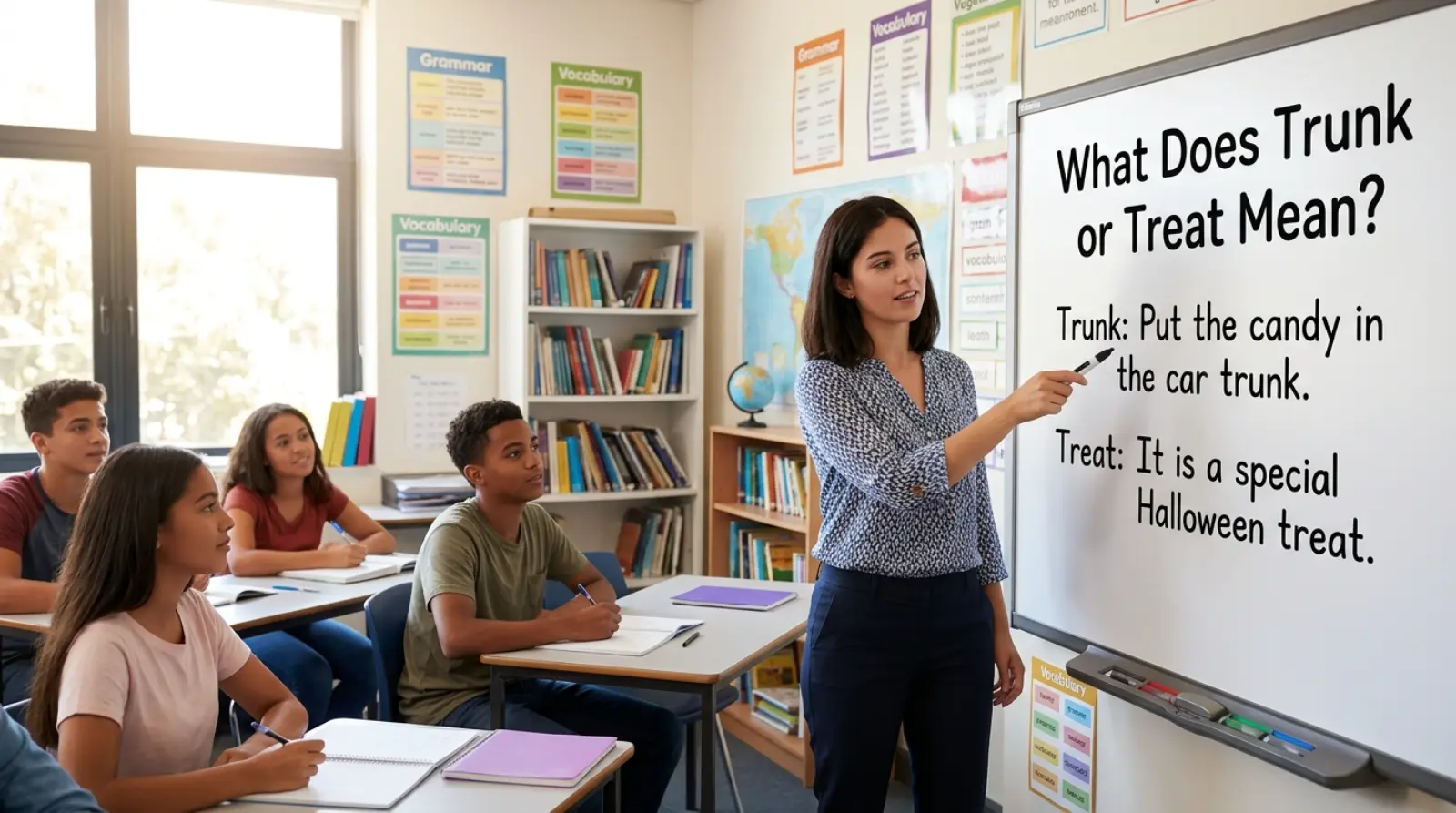
👉 Trunk = The storage space at the back of a car.
👉 Treat = Candy or a small gift given to children on Halloween.
Together, trunk or treat means children walk from one decorated car trunk to another to collect candy, just like traditional trick-or-treating.
Examples
- The church organized a trunk or treat for local families.
- Our school is hosting a trunk or treat this Saturday.
- We decorated our car trunk like a pirate ship.
- The children collected candy from more than 40 decorated vehicles.
- Everyone wore creative Halloween costumes.
Easy Memory Trick
Think of it this way:
Trunk + Treat = Candy from decorated cars instead of houses.
If children are visiting decorated vehicles rather than neighborhood homes, they’re probably attending a trunk or treat event.
What Does Trunk or Treats Mean?
A trunk or treat is a Halloween celebration where families decorate the trunks of their cars and park them together in a safe location, such as:
- School parking lots
- Church parking lots
- Community centers
- Parks
- Recreation centers
- Shopping center parking lots
Children visit each decorated vehicle to receive candy, toys, stickers, or other small prizes.
Unlike traditional trick-or-treating, families stay in one organized area rather than walking through neighborhoods after dark.
Why Is It So Popular?
Many communities prefer trunk or treats because they are:
- Safer for young children
- Easy for parents to supervise
- Less walking
- More community-focused
- Fun for schools and churches
- Great for themed decorations
Many events also include:
- Costume contests
- Music
- Food trucks
- Pumpkin decorating
- Face painting
- Carnival games
- Photo booths
- Family activities
Because everything happens in one location, families can enjoy Halloween without worrying about traffic or visiting unfamiliar neighborhoods.
Synonyms
Although they are not exactly the same, these related terms are often used:
- Community Halloween event
- Halloween festival
- Family Halloween celebration
- Church Halloween event
- Safe trick-or-treat event
- Parking lot Halloween party
Opposites
- Traditional door-to-door trick-or-treating
- Private Halloween celebration
- Indoor Halloween party
Related Terms
- Trick-or-treating
- Halloween candy
- Costume contest
- Pumpkin decorating
- Haunted house
- Fall festival
- Community event
- Harvest festival
The Origin of Trunk or Treats
The idea of trunk or treats began in the United States during the late 20th century. Churches and local community groups wanted to create a fun Halloween activity where families could celebrate together in a safer and more organized setting.
Instead of children walking from house to house, volunteers parked their cars in a large parking lot, opened and decorated their trunks, and handed out candy from each vehicle.
As the idea spread, schools, charities, recreation centers, businesses, and neighborhoods started organizing their own events. Today, trunk or treats are held across the United States and have also inspired similar celebrations in Canada and other countries.
Several factors helped increase their popularity:
- Growing interest in family-friendly Halloween events
- Easier supervision for parents
- Better accessibility for young children
- Strong community involvement
- Creative car decorating competitions
- Social media sharing of themed trunks
Today, decorating car trunks has become almost as exciting as choosing a Halloween costume.

How to Pronounce Trunk or Treats
Pronunciation:
Trunk → truhnk
or → or
Treats → treets
Combined pronunciation:
TRUHNK or TREETS
Syllables
- Trunk (1 syllable)
- Or (1 syllable)
- Treats (1 syllable)
Easy Speaking Tip
Say it slowly:
Trunk… or… Treats
Then gradually speed up until it sounds natural.
Common Pronunciation Mistakes
❌ “Trunk and Treat”
✔ “Trunk or Treat”
❌ “Truck or Treat”
✔ “Trunk or Treat”
Remember that the phrase refers to the trunk of a car, not a truck.
British English vs American English Usage
Although trunk or treat started in the United States, people in other English-speaking countries also understand the phrase.
| Feature | British English | American English | Notes |
|---|---|---|---|
| Phrase | Trunk or Treat | Trunk or Treat | Same wording is commonly used. |
| Car storage term | Boot | Trunk | Americans say “trunk,” while Britons usually say “boot.” |
| Popularity | Less common | Very common | The tradition is mainly associated with the U.S. |
| Halloween events | Community events | Community events | Similar family activities may exist under different names. |
Even though British English usually uses the word boot for the back of a car, the event is still widely recognized by its American name: Trunk or Treat.
Which One Should You Use?
If you’re talking about a Halloween event where children collect candy from decorated cars, the correct phrase is Trunk or Treat (or Trunk or Treats when referring to multiple events).
Best Uses
- Schools: “Our school is hosting a trunk or treat.”
- Churches: “Join us for our annual trunk or treat event.”
- Community Centers: “Families are invited to a free trunk or treat.”
- Social Media: “Can’t wait for tonight’s trunk or treat!”
- Workplaces: “Employees are welcome to bring their children to our company trunk or treat.”
| Situation | Recommended Usage |
|---|---|
| School event | ✅ Trunk or Treat |
| Church event | ✅ Trunk or Treat |
| Community festival | ✅ Trunk or Treat |
| Social media post | ✅ Trunk or Treat |
| Halloween invitation | ✅ Trunk or Treat |
Common Mistakes with Trunk or Treats
Mistake 1: Confusing It with Trick-or-Treating
❌ “A trunk or treat is the same as going door to door.”
✔ Correct: A trunk or treat takes place in a parking lot with decorated cars.
Tip: Remember—cars replace houses.
Mistake 2: Thinking It’s Only for Churches
❌ “Only churches organize trunk or treats.”
✔ Correct: Schools, businesses, neighborhoods, parks, and community groups also host them.
Mistake 3: Forgetting to Decorate the Car
❌ Bringing candy without decorating the trunk.
✔ Decorations make the event more exciting and memorable.
Mistake 4: Arriving Too Late
❌ Coming after most candy has been handed out.
✔ Arrive early to enjoy all the activities.
Mistake 5: Ignoring Safety Rules
❌ Letting children run through moving vehicles.
✔ Follow event rules and supervise young children at all times.
Trunk or Treats in Everyday Examples
At School
“Our elementary school is organizing a trunk or treat before Halloween.”
At Church
“The church parking lot was filled with decorated cars and smiling children.”
On Social Media
“Our superhero-themed trunk won first prize! 🎃”
Daily Conversation
“Are you taking the kids to the trunk or treat this weekend?”
In an Email
“We invite all families to attend our annual trunk or treat event on October 28.”
Text Message
“Don’t forget your costume. See you at the trunk or treat tonight!”
Trunk or Treats in Different Contexts
Education
Many schools organize trunk or treat events to encourage family participation and create a safe Halloween celebration for students.
Community Events
Local organizations use trunk or treats to bring neighbors together while promoting a fun and welcoming atmosphere.
Churches
Many churches host trunk or treats as free family events with games, music, and refreshments.
Businesses
Shopping centers and local businesses often sponsor trunk or treat events to connect with families and support the community.
Social Media
Photos of creative car decorations are widely shared on Facebook, Instagram, and TikTok, inspiring others with new decoration ideas.
Google Trends & Popularity
Interest in trunk or treats continues to grow every October as Halloween approaches. Parents often search for:
- What is a trunk or treat?
- Trunk or treat ideas
- Best trunk decorating themes
- Trunk or treat games
- Trunk or treat candy ideas
- DIY trunk or treat decorations
- Church trunk or treat ideas
- School trunk or treat activities
Searches are especially popular in the United States, while interest is also increasing in Canada, the United Kingdom, Australia, India, and Pakistan as people discover American Halloween traditions online.
Comparison Table
| Feature | Trunk or Treat | Traditional Trick-or-Treat |
| Location | Parking lot | Neighborhood |
| Candy Source | Decorated cars | Houses |
| Safety | High | Depends on neighborhood |
| Parent Supervision | Easy | More difficult |
| Walking Distance | Short | Longer |
| Community Activities | Often included | Usually not |
| Decorations | Car trunks | Houses |
Trunk or Treats in Professional Life
Many organizations use trunk or treat events to strengthen relationships with employees and the local community.
Examples include:
- Company family nights
- School fundraising events
- Community outreach programs
- Church volunteer activities
- Business-sponsored Halloween celebrations
These events help create positive community connections while offering a safe experience for children.
Trunk or Treats for Students and Beginners
If you’ve never attended a trunk or treat before, don’t worry.
Here’s what usually happens:
- Wear a Halloween costume.
- Bring a candy bag or bucket.
- Walk from car to car.
- Say “Trick or Treat!”
- Collect candy.
- Enjoy games and activities.
- Take photos with friends and family.
It’s simple, fun, and suitable for children of all ages.
Common Uses Related to Trunk or Treats
People commonly use trunk or treats for:
- Halloween celebrations
- School events
- Church festivals
- Community gatherings
- Family-friendly entertainment
- Safe candy collecting
- Costume contests
- Charity fundraising
- Volunteer activities
- Local festivals
Simple Trick to Remember Trunk or Treats
Think of it this way:
House = Trick-or-Treat
Car Trunk = Trunk or Treat
If candy comes from decorated cars instead of houses, you’re attending a trunk or treat.
Expert Tips
Here are a few tips to make any trunk or treat more enjoyable:
- Choose a fun decoration theme.
- Use battery-powered lights for safety.
- Offer individually wrapped candy.
- Decorate your vehicle before guests arrive.
- Keep walkways clear.
- Wear comfortable costumes.
- Bring extra candy—you’ll probably need it.
- Encourage children to say “Thank you.”
Related Searches People Also Ask
People also search for:
- What happens at a trunk or treat?
- Is trunk or treat safer than trick-or-treating?
- Who started trunk or treat events?
- What decorations are best for a trunk or treat?
- Can adults participate in trunk or treats?
- What candy should I hand out?
- Are trunk or treat events free?
- What games can be included?
- How do schools organize trunk or treats?
- What are the best trunk decorating themes?
These questions show that families are interested in planning, attending, and making the most of these Halloween events.
Frequently Asked Questions
What is a trunk or treat?
It’s a Halloween event where children collect candy from decorated car trunks instead of going door to door.
Is a trunk or treat only for children?
No. Parents, volunteers, teachers, and community members also participate.
Why are trunk or treats popular?
They provide a safe, organized, and family-friendly way to celebrate Halloween.
Who hosts trunk or treat events?
Schools, churches, businesses, community groups, and neighborhood organizations.
Do you wear costumes?
Yes. Most participants wear Halloween costumes.
Is there an entrance fee?
Many events are free, although some may raise money for charity or school programs.
What should I bring?
Bring a costume and a bag or bucket for collecting candy.
Can businesses organize trunk or treat events?
Yes. Many businesses sponsor these events to support their communities.
Final Verdict
A trunk or treat is a fun and safe Halloween tradition where children visit decorated car trunks to collect candy instead of walking from house to house. It combines the excitement of trick-or-treating with the convenience of a community event, making it a favorite choice for families, schools, churches, and local organizations.
Conclusion
Trunk or treats have become one of the most popular ways to celebrate Halloween in many communities. They offer a safe environment, encourage creativity through themed car decorations, and bring families together for an evening of fun.
Whether you’re attending your first event, organizing one for your school, or looking for creative decorating ideas, understanding how trunk or treats work helps you enjoy the experience with confidence.
Easy Memory Trick: If candy comes from decorated car trunks, it’s a Trunk or Treat. If it comes from houses, it’s traditional Trick-or-Treating.

Camila Green is an English language writer who specializes in confusing word comparisons and spelling explanations. She creates simple, beginner-friendly guides on topics like “niece or neice” and other common English mistakes. Her writing focuses on clarity, real-life examples, and easy learning. At VerrsaPick, she helps readers improve their English with practical and engaging content.