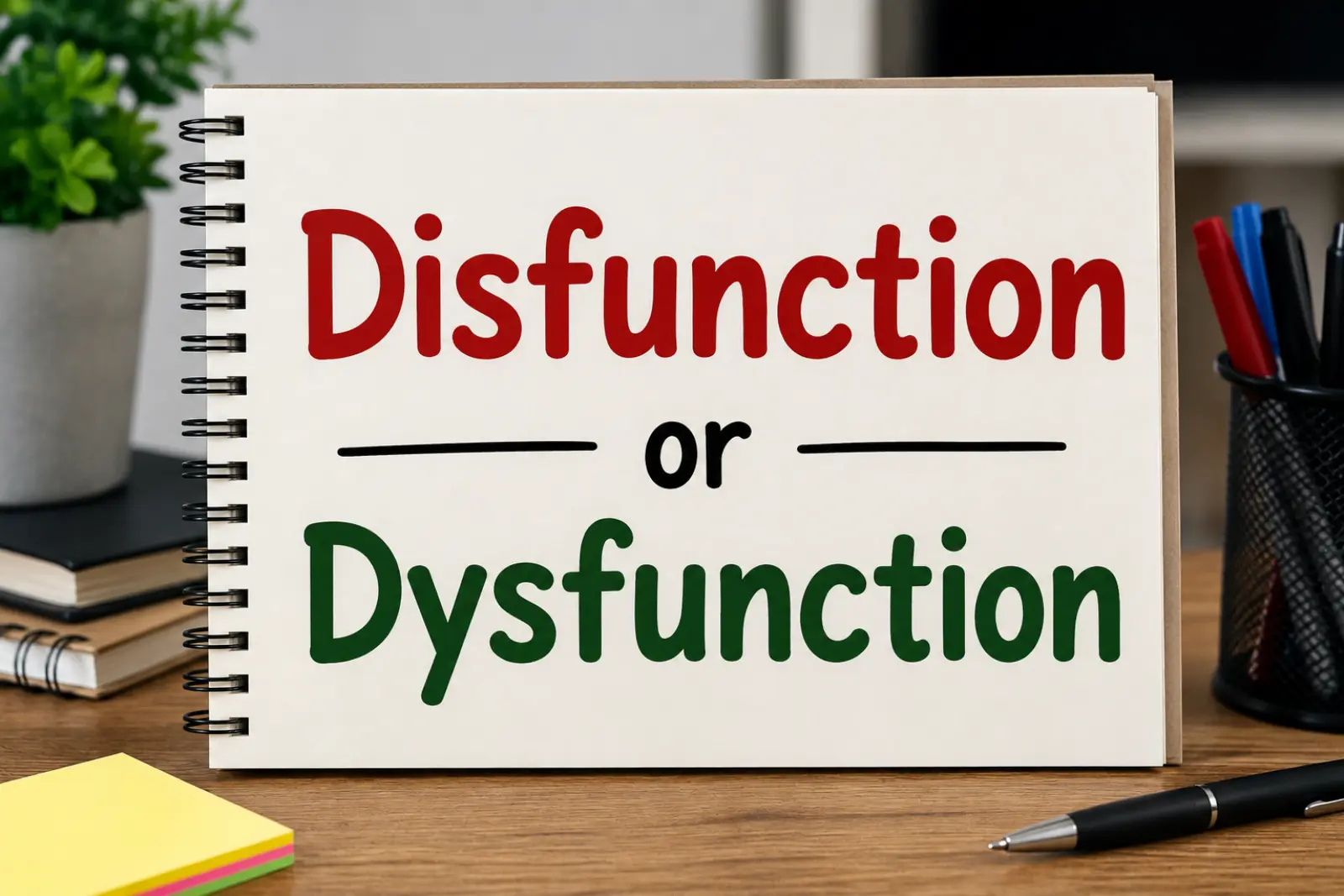
Have you ever typed disfunction into Google or seen someone use it on social media? Many people wonder if disfunction and dysfunction mean the same thing or if one spelling is wrong.
This confusion is very common because both words look similar and sound almost alike. Students, writers, professionals, and English learners often search for the correct spelling before using it in emails, school assignments, reports, or online posts.
People usually search for:
- Disfunction or dysfunction meaning
- Correct spelling of dysfunction
- Dysfunction pronunciation
- Disfunction vs dysfunction examples
- Is disfunction a real word?
The good news is that the answer is simple. Once you understand one small spelling rule, you’ll never mix them up again.
In this guide, you’ll learn the meaning, pronunciation, examples, usage, grammar rules, common mistakes, expert tips, and simple explanations in easy English.
Dysfunction or Disfunction – Quick Answer
✅ Correct Word: Dysfunction
Meaning: A problem that stops something from working normally.
❌ Incorrect Word: Disfunction
This is a common misspelling and is not accepted in standard English dictionaries.
Examples
- ✅ The washing machine has a dysfunction.
- ✅ Family dysfunction can affect children.
- ✅ Brain dysfunction may need medical treatment.
- ❌ The printer has a disfunction.
Easy Memory Trick
Think:
DYS + FUNCTION = DYSFUNCTION
Many medical words begin with dys-, such as:
- Dyslexia
- Dysphagia
- Dysplasia
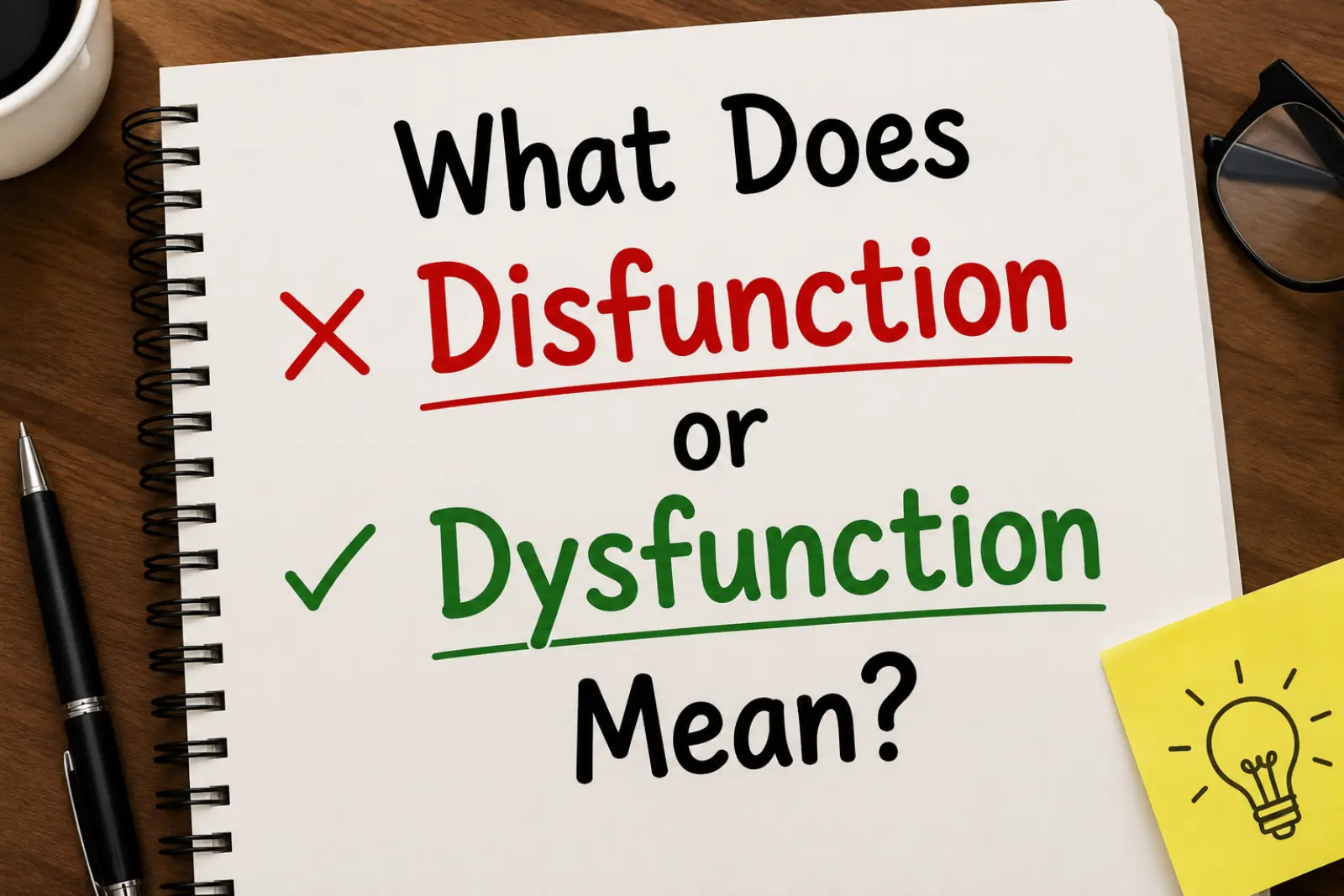
What Does Disfunction or Dysfunction Mean?
Dysfunction means something is not working properly or normally.
It can describe people, body parts, machines, families, businesses, or systems.
Common Uses
- Medical conditions
- Mental health
- Family relationships
- Technology
- Business operations
Synonyms
- Malfunction
- Disorder
- Impairment
- Breakdown
- Failure
Opposites
- Function
- Efficiency
- Health
- Stability
- Success
Related Terms
- Function
- Malfunction
- Disorder
- Disability
- Impairment
The Origin of Dysfunction
The word dysfunction comes from the Greek prefix dys-, meaning:
- bad
- difficult
- abnormal
- impaired
It combines with function, meaning how something works.
Together, dysfunction literally means:
Abnormal or poor functioning.
How to Pronounce Dysfunction
Pronunciation
dis-FUNK-shun
Phonetic: /dɪsˈfʌŋkʃən/
Easy Speaking Tip
Break it into three parts:
- dis
- funk
- shun
Say them together:
dis-funk-shun
British English vs American English Usage
| Feature | British English | American English | Notes |
|---|---|---|---|
| Correct spelling | Dysfunction | Dysfunction | Same spelling |
| Disfunction | Incorrect | Incorrect | Misspelling |
| Pronunciation | Similar | Similar | Very small accent differences |
| Meaning | Same | Same | No difference |
Which One Should You Use?
Always choose dysfunction.
Use It In
- ✅ School writing
- ✅ Academic papers
- ✅ Medical reports
- ✅ Business documents
- ✅ News articles
- ✅ Social media
- ✅ Everyday conversations
| Situation | Correct Word |
|---|---|
| Essay | Dysfunction |
| Workplace | Dysfunction |
| Medical report | Dysfunction |
| Text message | Dysfunction |
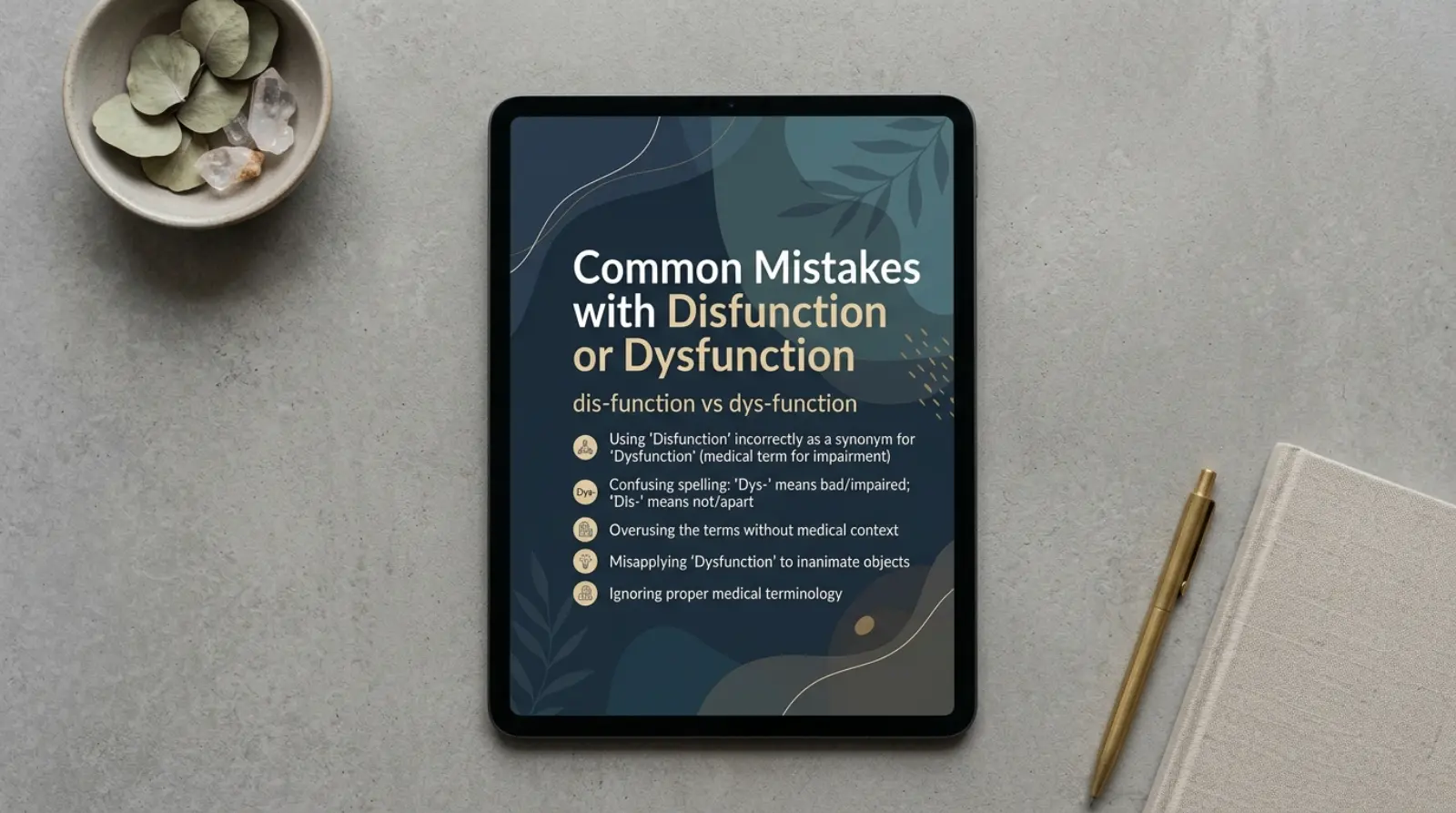
Common Mistakes with Disfunction or Dysfunction
Mistake 1
❌ The engine has a disfunction.
✔ The engine has a dysfunction.
Why? “Disfunction” is not the standard spelling.
Mistake 2
❌ Family disfunction is common.
✔ Family dysfunction is common.
Mistake 3
❌ Brain disfunction affects memory.
✔ Brain dysfunction affects memory.
Mistake 4
❌ Emotional disfunction
✔ Emotional dysfunction
Mistake 5
❌ Computer disfunction
✔ Computer dysfunction
Dysfunction in Everyday Examples
Work
“The company’s payment system has a dysfunction.”
School
“The student was learning about brain dysfunction.”
Social Media
“People often discuss family dysfunction online.”
Daily Life
“The dishwasher stopped because of a mechanical dysfunction.”
“We identified a system dysfunction that needs repair.”
Text Message
“My phone has some weird dysfunction today.”
Dysfunction in Different Contexts
Medical
Doctors use dysfunction to describe organs or body parts that do not work normally.
Example:
- Kidney dysfunction
- Liver dysfunction
Psychology
It can describe unhealthy thinking or behaviour.
Example:
- Emotional dysfunction
Family
A dysfunctional family often has unhealthy communication or conflict.
Technology
A software dysfunction may cause an app to crash.
Business
Operational dysfunction can reduce productivity and customer satisfaction.
Google Trends & Usage Data
Many people search disfunction or dysfunction because:
- They hear the word but are unsure of the spelling.
- Spell check suggests “dysfunction.”
- They see it in medical articles.
- They need the correct spelling for work or school.
This search is popular in countries including the United States, United Kingdom, Canada, Australia, India, and Pakistan.
Common related searches include:
- dysfunction meaning
- dysfunction pronunciation
- family dysfunction
- organ dysfunction
- is disfunction correct?
Comparison Table
| Feature | Disfunction | Dysfunction |
|---|---|---|
| Correct spelling | ❌ No | ✅ Yes |
| Dictionary word | No | Yes |
| Meaning | Misspelling | Abnormal functioning |
| Professional writing | Never | Always |
| Academic writing | No | Yes |
| Medical use | No | Yes |
| Internet popularity | Low | Very High |
Dysfunction in Professional Life
Using the correct spelling helps you appear more professional.
Examples:
- Medical reports
- Business presentations
- Research papers
- Technical documents
- Workplace emails
Correct spelling improves clarity and credibility.
Dysfunction for Students or Beginners
Many learners confuse the word because they think the opposite of function should begin with dis-.
Remember:
The correct prefix is dys-, not dis-.
Beginner Tip
Whenever you see a medical or scientific word starting with dys-, keep the same spelling pattern.
Common Uses of Dysfunction
- Body organs
- Brain function
- Family relationships
- Business systems
- Computer software
- Machines
- Mental health
- Communication problems
Simple Trick to Remember Dysfunction
Remember this sentence:
DYS means something isn’t working properly.
Think of:
- Dyslexia
- Dysphagia
- Dysfunction
They all begin with dys- because they describe a difficulty or abnormal condition.
Expert Tips
- Proofread carefully before submitting school or work documents.
- Use spell check, but also learn common prefixes.
- Remember that dys- is common in medical vocabulary.
- Read quality books and articles to reinforce the correct spelling.
Related Searches People Also Ask
Is disfunction a real word?
No. It is a misspelling of dysfunction.
Why is dysfunction spelled with dys?
Because it uses the Greek prefix dys-, meaning abnormal or difficult.
What does dysfunction mean in medicine?
It means an organ or body system is not working properly.
Can dysfunction describe families?
Yes. It refers to unhealthy family relationships or behaviour patterns.
Is dysfunction only a medical word?
No. It is also used in business, technology, psychology, and everyday life.
FAQs
Is disfunction correct?
No. The correct spelling is dysfunction.
What does dysfunction mean?
It means something is not working normally.
How do you pronounce dysfunction?
dis-FUNK-shun.
Why do people spell it as disfunction?
Because dis- is a more familiar English prefix, leading to confusion.
Is dysfunction used in business?
Yes. It can describe problems in systems or processes.
Is dysfunction a noun?
Yes.
Can dysfunction refer to technology?
Yes. Software, hardware, and systems can experience dysfunction.
How can I remember the correct spelling?
Remember that many medical words begin with dys-, including dysfunction.
Final Verdict
The correct spelling is dysfunction.
Disfunction is a common spelling mistake and should be avoided in school, work, professional writing, and everyday communication.
Easy Memory Rule:
DYS = Difficulty → Dysfunction = Something does not work properly.
Conclusion
The confusion between disfunction and dysfunction is easy to understand, but the correct choice is always dysfunction. This word is widely used in medicine, psychology, technology, business, and daily conversations to describe something that is not working as it should.
Whenever you are unsure, remember one simple trick: words that describe abnormal or difficult conditions often begin with the prefix “dys-“. Keeping this rule in mind will help you avoid spelling mistakes and write with confidence in every situation.

Camila Green is an English language writer who specializes in confusing word comparisons and spelling explanations. She creates simple, beginner-friendly guides on topics like “niece or neice” and other common English mistakes. Her writing focuses on clarity, real-life examples, and easy learning. At VerrsaPick, she helps readers improve their English with practical and engaging content.