Have you ever typed stoping while writing an email, homework, or social media post and wondered if it was correct? This is a very common spelling question, especially for English learners.
The confusion happens because many English verbs change their spelling before adding -ing. Some words double the final letter, while others do not. If you are unsure whether to write stoping or stopping, you’re not alone.
People usually search for:
- stoping or stopping
- correct spelling of stopping
- why is stopping spelled with two p’s?
- stopping meaning
- stopping examples
- grammar rule for stopping
You’ll see this word in school, business emails, online chats, books, road signs, and daily conversations. Learning the correct spelling helps you write clearly and confidently.
In this guide, you’ll learn the meaning, pronunciation, examples, usage, grammar rules, common mistakes, expert tips, and simple explanations in easy English.
Stoping or Stopping – Quick Answer
👉 Stopping = Correct
👉 Stoping = Usually incorrect in everyday English writing.
Meaning:
Stopping is the -ing form of the verb stop, meaning to end an action or come to a halt.
Examples
- ✅ She is stopping at the traffic light.
- ✅ We are stopping for lunch.
- ✅ The rain is stopping.
- ❌ She is stoping at the traffic light.
Simple Rule
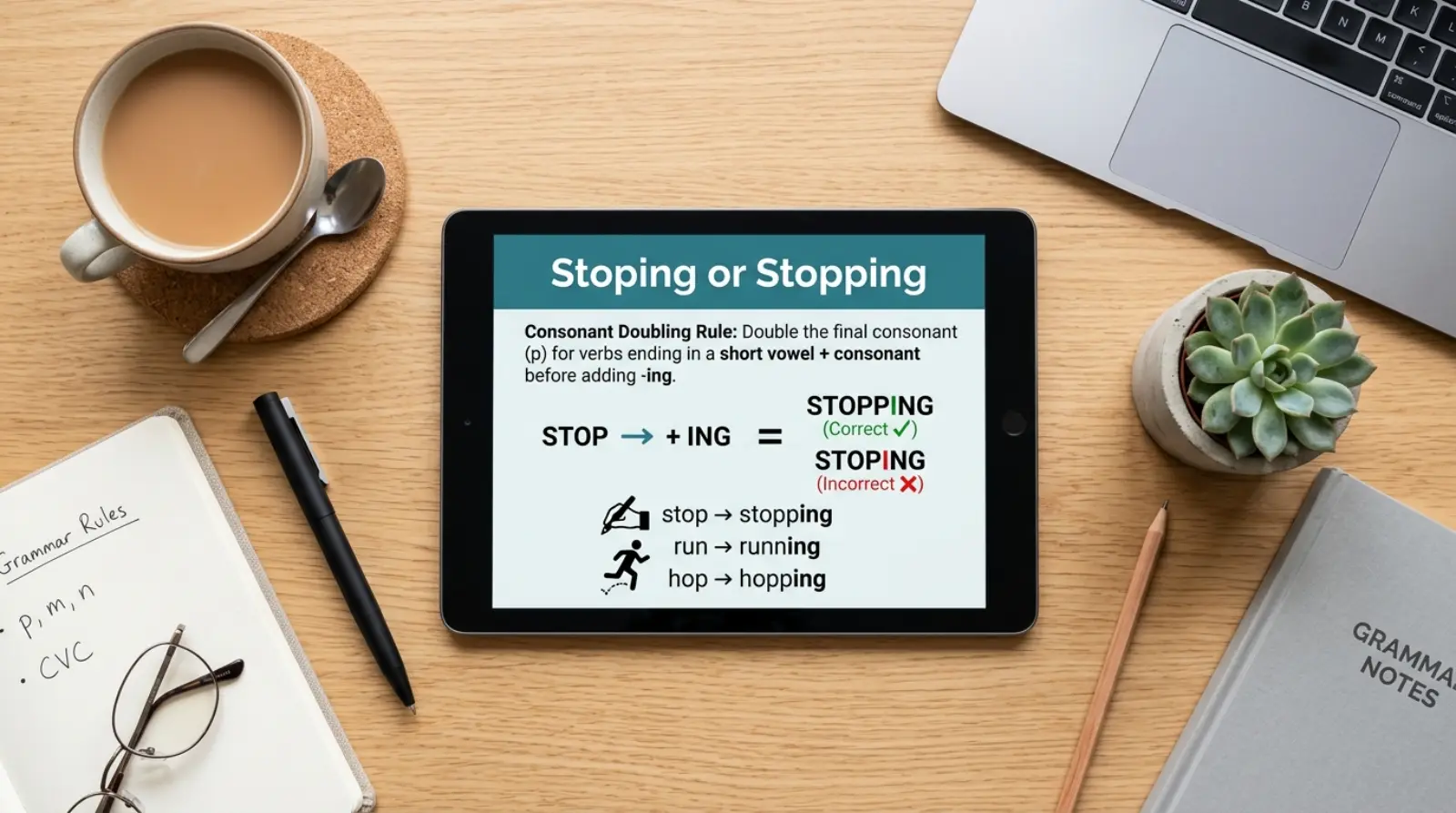
When a one-syllable verb ends with a consonant-vowel-consonant (CVC) pattern, double the final consonant before adding -ing.
Stop → Stopping
What Does Stoping or Stopping Mean?
Stopping
Stopping means:
- Ending an action
- Coming to a halt
- Preventing something from continuing
Examples:
- The bus is stopping.
- Please stop talking.
- He is stopping the machine.
Stoping
In general English, stoping is considered a spelling mistake.
However, “stoping” is a real technical mining term. In mining, stoping refers to the process of removing ore from underground rock. This specialised meaning is rare and unrelated to the everyday verb stop.
Synonyms
- Halting
- Ending
- Pausing
- Ceasing
Opposites
- Continuing
- Starting
- Beginning
- Proceeding
Related Terms
- Stop
- Stopped
- Stops
- Halt
- Pause
- Cease
The Origin of Stopping
The verb stop comes from Old English and has been used for centuries to mean ending movement or preventing an action.
When adding -ing, English spelling rules require doubling the final p, creating stopping.
The word stoping has a separate history in mining and should not replace stopping in everyday writing.
How to Pronounce Stopping
Pronunciation:
STOP-ing
Phonetic: /ˈstɒpɪŋ/
Speaking Tip
Break it into two parts:
- STOP
- ing
Say them together:
STOP-ing
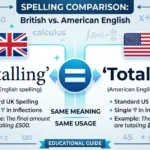
British English vs American English Usage
| Feature | British English | American English | Notes |
|---|---|---|---|
| Stopping | ✅ Correct | ✅ Correct | Standard spelling |
| Stoping (everyday writing) | ❌ Incorrect | ❌ Incorrect | Avoid for the verb “stop” |
| Stoping (mining) | ✅ Technical term | ✅ Technical term | Used in mining only |
Which One Should You Use?
Always use stopping when you mean the verb stop.
Use stoping only if you are writing about underground mining.
Quick Guide
| Situation | Correct Word |
|---|---|
| School essay | Stopping |
| Business email | Stopping |
| Social media | Stopping |
| Daily conversation | Stopping |
| Mining industry | Stoping |
Common Mistakes with Stoping or Stopping
Mistake 1
❌ She is stoping the car.
✔ She is stopping the car.
Why? Double the p before adding -ing.
Mistake 2
❌ We are stoping here.
✔ We are stopping here.
Mistake 3
❌ Stoping is the normal spelling.
✔ Stopping is the standard spelling for the verb.
Mistake 4
❌ Stoping is always wrong.
✔ It is correct only in the specialised field of mining.
Mistake 5
❌ Stop → Stoping
✔ Stop → Stopping
Stopping in Everyday Examples
Work
“We are stopping production for maintenance.”
School
“The teacher is stopping the lesson for a short break.”
Social Media
“I’m stopping my screen time early today.”
Daily Life
“The train is stopping at the next station.”
“We are stopping the service at 6 p.m.”
Conversation
“I’m stopping by your house this evening.”
Stopping in Different Contexts
Grammar
Stopping is the present participle and gerund form of stop.
Education
Students learn this word while studying spelling rules for doubled consonants.
Business
Companies may talk about stopping a project, service, or production line.
Transport
Drivers stop at traffic lights, bus stops, and railway crossings.
Google Trends & Usage Data
Many people search stoping or stopping because English spelling rules can be confusing.
This topic is popular in the US, UK, Canada, Australia, India, and Pakistan, especially among students and English learners.
Common related searches include:
- stopping spelling
- why double the p in stopping
- stoping meaning
- stopping grammar rule
- stop vs stopping
Comparison Table
| Feature | Stoping | Stopping |
|---|---|---|
| Correct for “stop” | ❌ No | ✅ Yes |
| Dictionary word | ✅ Yes (mining) | ✅ Yes |
| Everyday English | Rare | Very common |
| Grammar | Technical noun/verb | Present participle of stop |
| Professional writing | Mining only | Recommended |
Stopping in Professional Life
Correct spelling is important in reports, emails, and presentations.
Examples:
- “We are stopping the project temporarily.”
- “Production is stopping for scheduled maintenance.”
Using stopping instead of stoping helps your writing appear accurate and professional.
Stopping for Students or Beginners
Many learners forget to double the p.
Remember this spelling rule:
One syllable + consonant-vowel-consonant + -ing = double the last consonant.
Examples:
- Stop → Stopping
- Run → Running
- Sit → Sitting
Common Uses of Stopping
- Ending an activity
- Traffic and transport
- Sports
- Business operations
- Daily conversations
- School writing
- News reports
Simple Trick to Remember Stopping
Remember:
Short word + short vowel = double the last consonant.
Think of it this way:
Just as run becomes running, stop becomes stopping.
If you hear a short vowel sound before the last consonant, you usually double it before adding -ing.
Expert Tips
- Learn common verbs that double the final consonant.
- Read your writing before sending emails.
- Use a dictionary when you’re unsure.
- Remember that stoping is mainly a mining term, not the normal spelling of the verb.
Related Searches People Also Ask
- Is stopping spelled with one or two p’s?
- Why do we double the p in stopping?
- Is stoping a real word?
- What does stoping mean in mining?
- What is the grammar rule for stopping?
- How do you spell stopping correctly?
- Is stopping a verb?
- What is the present participle of stop?
- What are other words like stopping?
- How can I remember the spelling of stopping?
FAQs
Which spelling is correct: stoping or stopping?
Stopping is correct for the verb stop.
Is stoping a real word?
Yes, but only as a specialised mining term.
Why does stopping have two p’s?
Because English spelling rules double the final consonant before adding -ing.
What does stopping mean?
It means ending an action or coming to a halt.
Is stopping a verb?
It is the -ing form of the verb stop.
Can I use stoping in everyday writing?
No. Use stopping instead.
Is the spelling the same in British and American English?
Yes. Both use stopping.
What’s the easiest way to remember?
Think: Stop → Stopping, just like Run → Running.
Final Verdict
If you are writing about ending an action or coming to a halt, stopping is the correct spelling.
Stoping is not the correct form of the verb stop in everyday English. It is only used as a specialised term in mining.
Easy Memory Rule:
Stop + ing = Stopping (double the “p”).
Conclusion
The difference between stoping and stopping is simple once you know the spelling rule. For everyday English, always use stopping with two p’s. The doubled consonant follows a common grammar pattern used in many short verbs.
Whenever you’re unsure, remember this easy trick: if “run” becomes “running,” then “stop” becomes “stopping.” This simple rule will help you spell the word correctly in school, at work, and in everyday writing.

Camila Green is an English language writer who specializes in confusing word comparisons and spelling explanations. She creates simple, beginner-friendly guides on topics like “niece or neice” and other common English mistakes. Her writing focuses on clarity, real-life examples, and easy learning. At VerrsaPick, she helps readers improve their English with practical and engaging content.