Have you ever seen someone described as Salvadoran in one article and Salvadorian in another? If so, you’re not alone. Many English learners, students, writers, and even native speakers wonder which word is correct when referring to a person or something from El Salvador.
People usually search for “Salvadoran or Salvadorian” because they want to know the correct word, pronunciation, grammar, meaning, and real-life usage. This question often appears in school assignments, travel blogs, news articles, social media posts, immigration discussions, and workplace communication.
The confusion happens because both words refer to the same country, but they are not equally common in modern English. One is the standard demonym recognized by dictionaries and style guides, while the other is considered a less common alternative.
Understanding the difference helps you write clearly and respectfully in academic papers, business writing, journalism, and everyday conversations.
In this guide, you’ll learn the meaning, pronunciation, examples, usage, grammar rules, common mistakes, expert tips, and simple explanations in easy English.
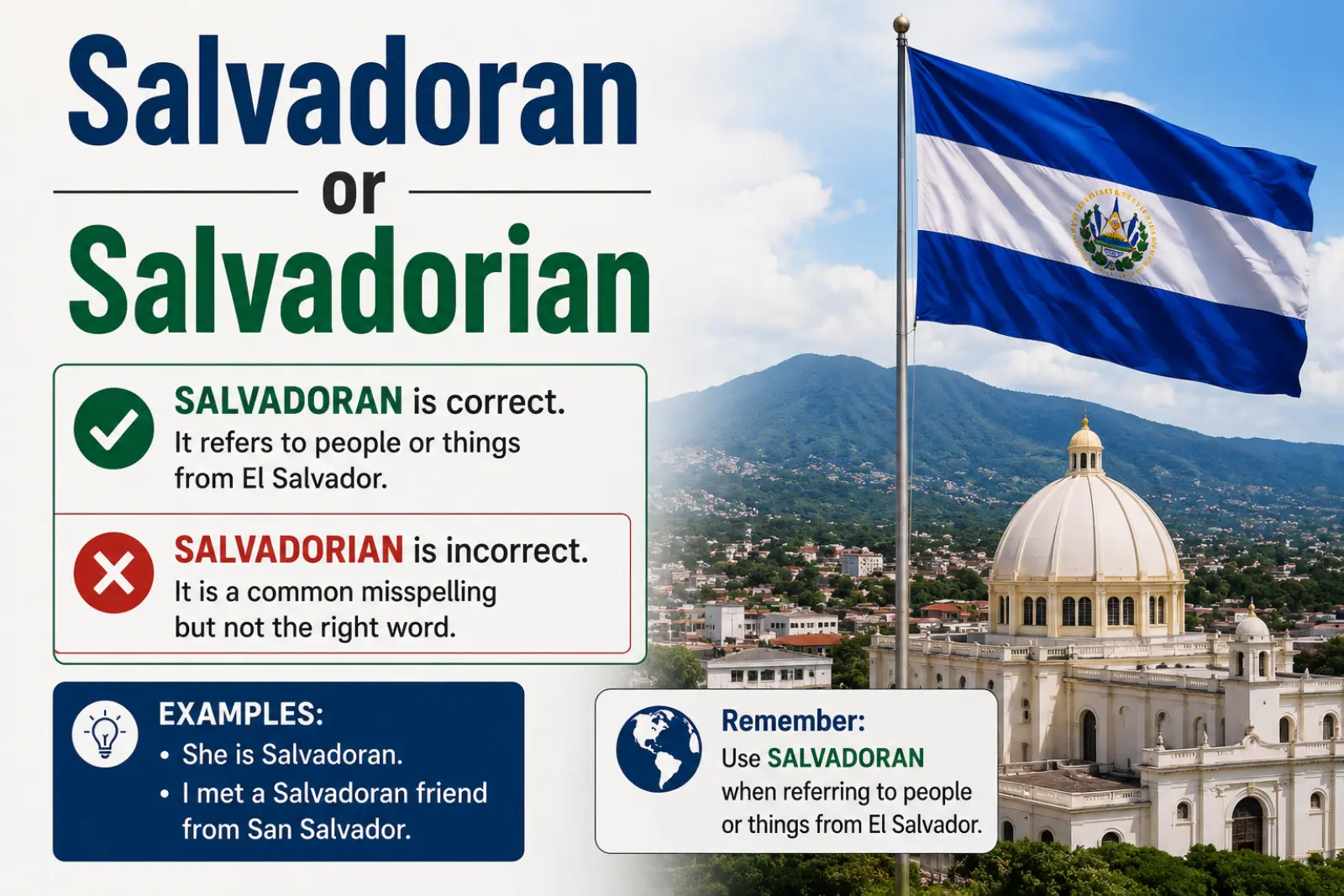
Salvadoran or Salvadorian – Quick Answer
✅ Preferred term: Salvadoran
✅ Less common but understandable: Salvadorian
Simple explanation
- 👉 Salvadoran = The standard English word for a person or thing from El Salvador.
- 👉 Salvadorian = An alternative form that some people use, but it is much less common.
Examples
- ✅ She is Salvadoran.
- ✅ Salvadoran culture is rich and colorful.
- ✅ He enjoys Salvadoran food.
- ✔ Some older sources may use Salvadorian, but Salvadoran is preferred today.
Easy Memory Trick
Think:
The country is El Salvador, so the standard adjective is Salvadoran.
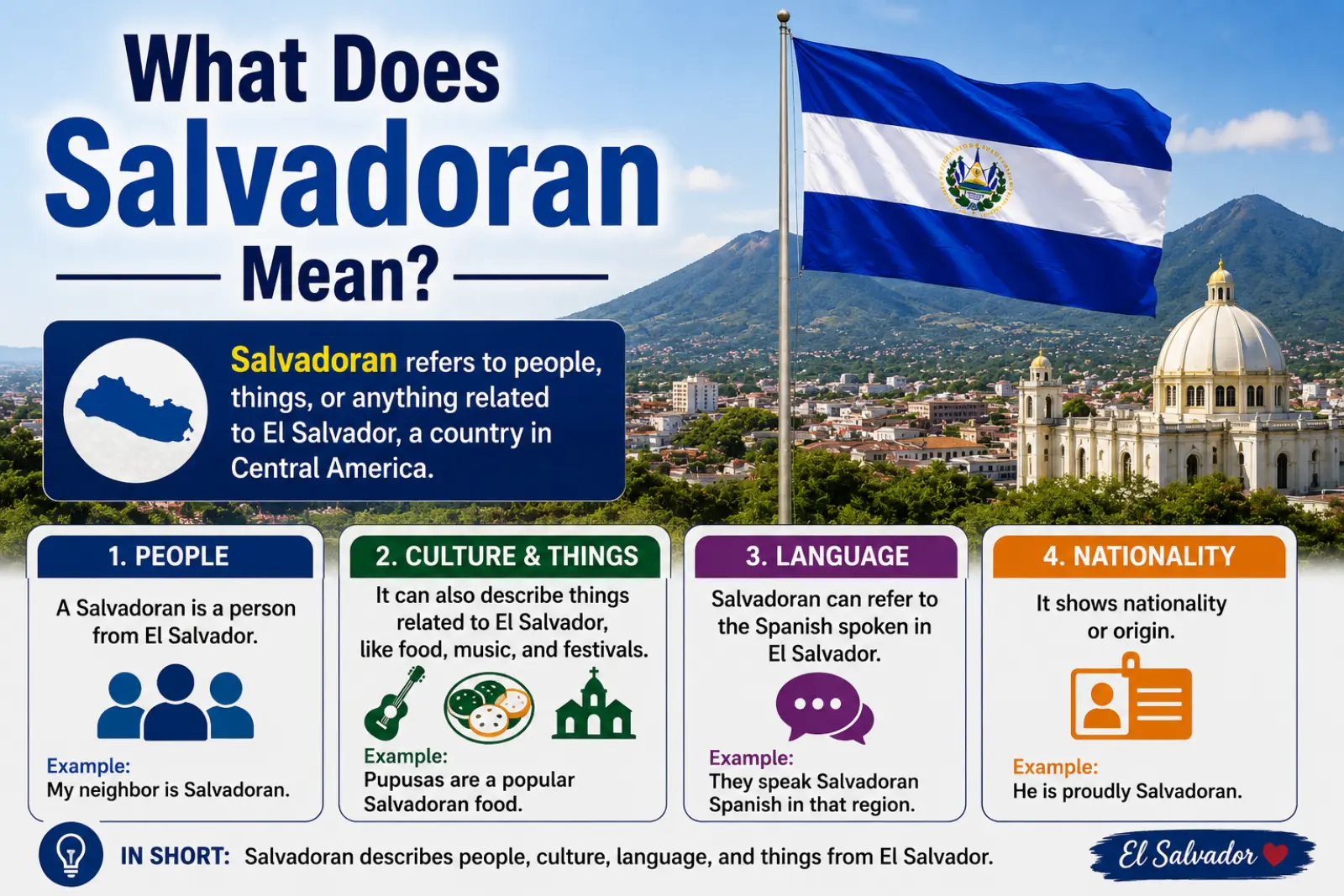
What Does Salvadoran Mean?
Salvadoran is the official English demonym for people, culture, language, food, or anything connected with El Salvador.
Examples
- Salvadoran citizen
- Salvadoran traditions
- Salvadoran coffee
- Salvadoran cuisine
- Salvadoran community
Synonyms
- Person from El Salvador
- Citizen of El Salvador
Related Terms
- El Salvador
- Central America
- Salvadoran culture
- Salvadoran Spanish
- Salvadoran cuisine
The Origin of Salvadoran
The word Salvadoran comes from the country’s name, El Salvador, meaning “The Savior” in Spanish. English adopted Salvadoran as the standard demonym over time. While Salvadorian has appeared occasionally in writing, Salvadoran is the preferred form in modern English dictionaries, journalism, and academic writing.
How to Pronounce Salvadoran
Pronunciation:
sal-vuh-DORE-un
Speaking Tip
Stress the third syllable:
sal-vuh-DORE-un
Common Mistake
Some learners add an extra “i” sound because they are familiar with words ending in -ian, leading them to say or write Salvadorian.
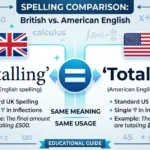
British English vs American English Usage
| Feature | British English | American English | Notes |
|---|---|---|---|
| Preferred term | Salvadoran | Salvadoran | Same usage |
| Alternative | Salvadorian | Salvadorian | Less common |
| Meaning | Same | Same | Refers to El Salvador |
There is no major spelling difference between British and American English.
Which One Should You Use?
Always choose Salvadoran in formal and everyday writing.
Use it for:
- ✅ School assignments
- ✅ News articles
- ✅ Academic writing
- ✅ Workplace communication
- ✅ Travel writing
- ✅ Social media
| Situation | Best Choice |
|---|---|
| Essay | Salvadoran |
| News | Salvadoran |
| Business | Salvadoran |
| Travel Blog | Salvadora |
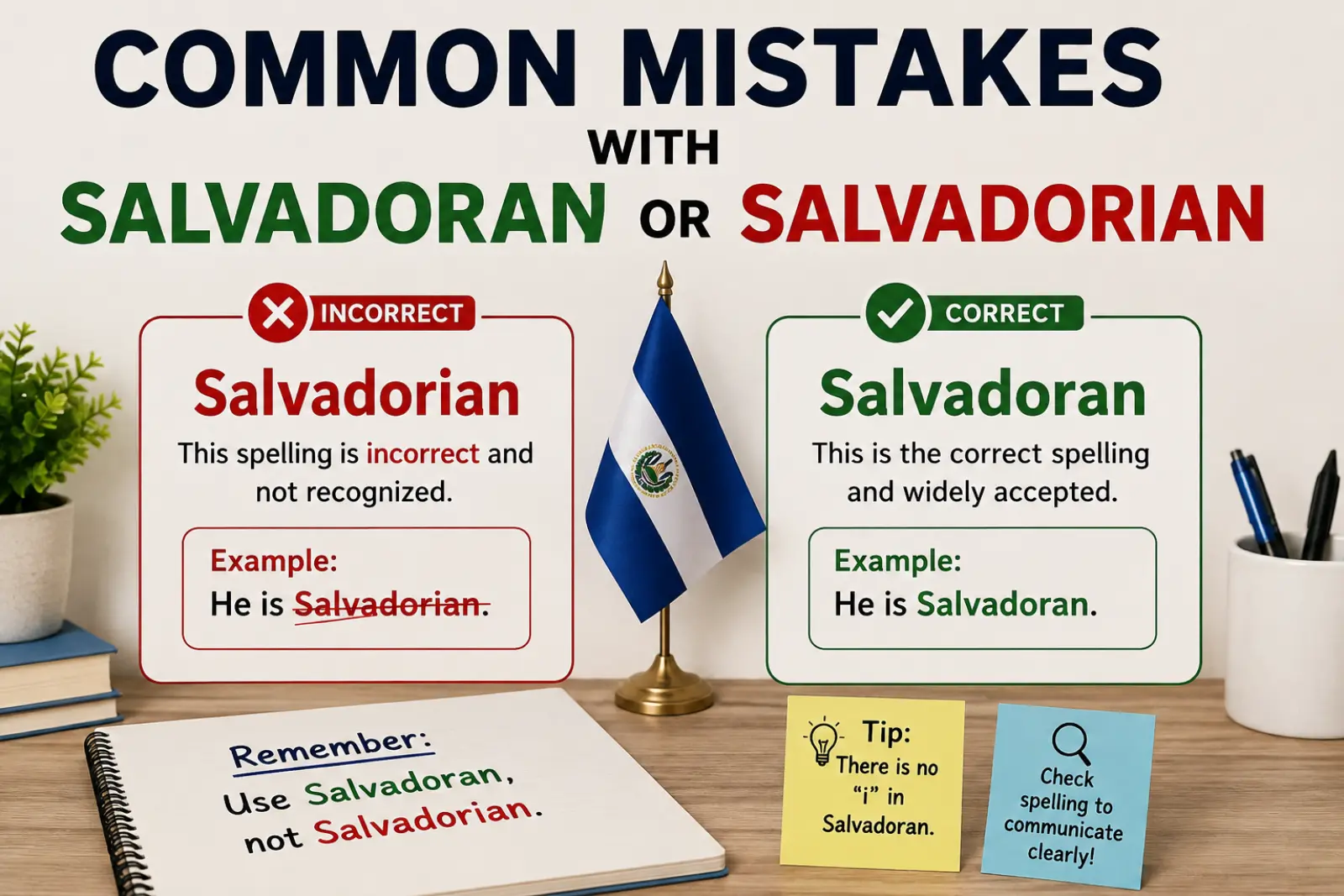
Common Mistakes With Salvadoran or Salvadorian
Mistake 1
❌ She is Salvadorian.
✔ She is Salvadoran.
Tip: Salvadoran is the standard choice.
Mistake 2
❌ Salvadorian culture
✔ Salvadoran culture
Mistake 3
❌ Salvadorian food festival
✔ Salvadoran food festival
Mistake 4
❌ Assuming both forms are equally common.
✔ Salvadoran is much more widely used.
Mistake 5
❌ Mixing the terms within one article.
✔ Stay consistent and use Salvadoran throughout.
Salvadoran in Everyday Examples
School
“Our class learned about Salvadoran history.”
Work
“My coworker is Salvadoran.”
Social Media
“I love Salvadoran food!”
Daily Life
“We visited a Salvadoran restaurant.”
“The conference welcomed Salvadoran business leaders.”
Conversation
“My friend is Salvadoran and taught me some local traditions.”
Salvadoran in Different Contexts
Education
Teachers use Salvadoran when discussing geography, history, and culture.
Business
Companies use Salvadoran when referring to markets, products, or employees from El Salvador.
Travel
Travel guides describe Salvadoran beaches, volcanoes, and local cuisine.
Culture
You’ll often hear about Salvadoran festivals, music, art, and traditional dishes like pupusas.
Google Trends & Usage Data
Many people search “Salvadoran or Salvadorian” because they are unsure which word is correct.
Common searches include:
- Salvadoran meaning
- Salvadorian vs Salvadoran
- How to pronounce Salvadoran
- Is Salvadorian correct?
- Salvadoran nationality
- Salvadoran adjective
These searches are common in the United States, United Kingdom, Canada, Australia, India, and Pakistan, especially among students, travelers, and writers.
Comparison Table
| Feature | Salvadoran | Salvadorian |
|---|---|---|
| Standard English | ✅ Yes | Less common |
| Dictionary acceptance | Yes | Sometimes listed as a variant |
| Meaning | Person from El Salvador | Same meaning |
| Academic writing | Preferred | Rare |
| News writing | Preferred | Rare |
| Professional writing | Preferred | Not recommended |
Salvadoran in Professional Life
Using the standard term shows accuracy and respect.
Examples:
- Salvadoran employees
- Salvadoran businesses
- Salvadoran exports
- Salvadoran embassy
- Salvadoran community leaders
Salvadoran for Students or Beginners
Many learners assume every nationality ends in -ian, but English has many exceptions.
Easy Tips
- Remember Mexican, not Mexicanian.
- Remember Salvadoran, not usually Salvadorian.
- Read reliable news articles to see the preferred form.
Common Uses of Salvadoran
People commonly use the word for:
- Nationality
- Culture
- Food
- Music
- History
- Art
- Tourism
- Sports
- Language
- Community
Simple Trick to Remember Salvadoran
Think of it this way:
The country ends with Salvador, and English simply adds -an.
El Salvador → Salvadoran
No extra “i” is needed.
Expert Tips
- Use Salvadoran in formal writing.
- Stay consistent throughout your article.
- Follow major dictionaries and style guides.
- Double-check nationality words when writing professionally.
Related Searches People Also Ask
- Is Salvadoran the correct word?
- Is Salvadorian wrong?
- What do you call someone from El Salvador?
- How do you pronounce Salvadoran?
- Is Salvadoran a nationality?
- Why do some people say Salvadorian?
- What language do Salvadorans speak?
- Is Salvadoran used in American English?
- What is Salvadoran culture?
- How do you use Salvadoran in a sentence?
FAQs
Is Salvadoran the correct term?
Yes. It is the standard English demonym.
Is Salvadorian wrong?
Not completely, but it is much less common than Salvadoran.
What do you call someone from El Salvador?
A Salvadoran.
Which term should I use in school?
Use Salvadoran.
Is Salvadoran used worldwide?
Yes. It is widely accepted in English.
Is there a British spelling?
No. British and American English both prefer Salvadoran.
Can Salvadoran describe food?
Yes. For example, Salvadoran coffee or Salvadoran cuisine.
Is Salvadoran a noun and an adjective?
Yes. It can describe both a person and something related to El Salvador.
Final Verdict
The best and most widely accepted choice is Salvadoran. While Salvadorian may occasionally appear, Salvadoran is the preferred spelling in dictionaries, journalism, education, and professional writing.
Easy rule: El Salvador → Salvadoran.
Conclusion
If you’ve been wondering about Salvadoran or Salvadorian, the answer is simple. Salvadoran is the standard and recommended English term for a person or anything related to El Salvador. Using it helps your writing sound accurate, natural, and professional.
A final memory trick: Think of the country name, El Salvador, and simply add “-an” to remember Salvadoran every time.

Camila Green is an English language writer who specializes in confusing word comparisons and spelling explanations. She creates simple, beginner-friendly guides on topics like “niece or neice” and other common English mistakes. Her writing focuses on clarity, real-life examples, and easy learning. At VerrsaPick, she helps readers improve their English with practical and engaging content.