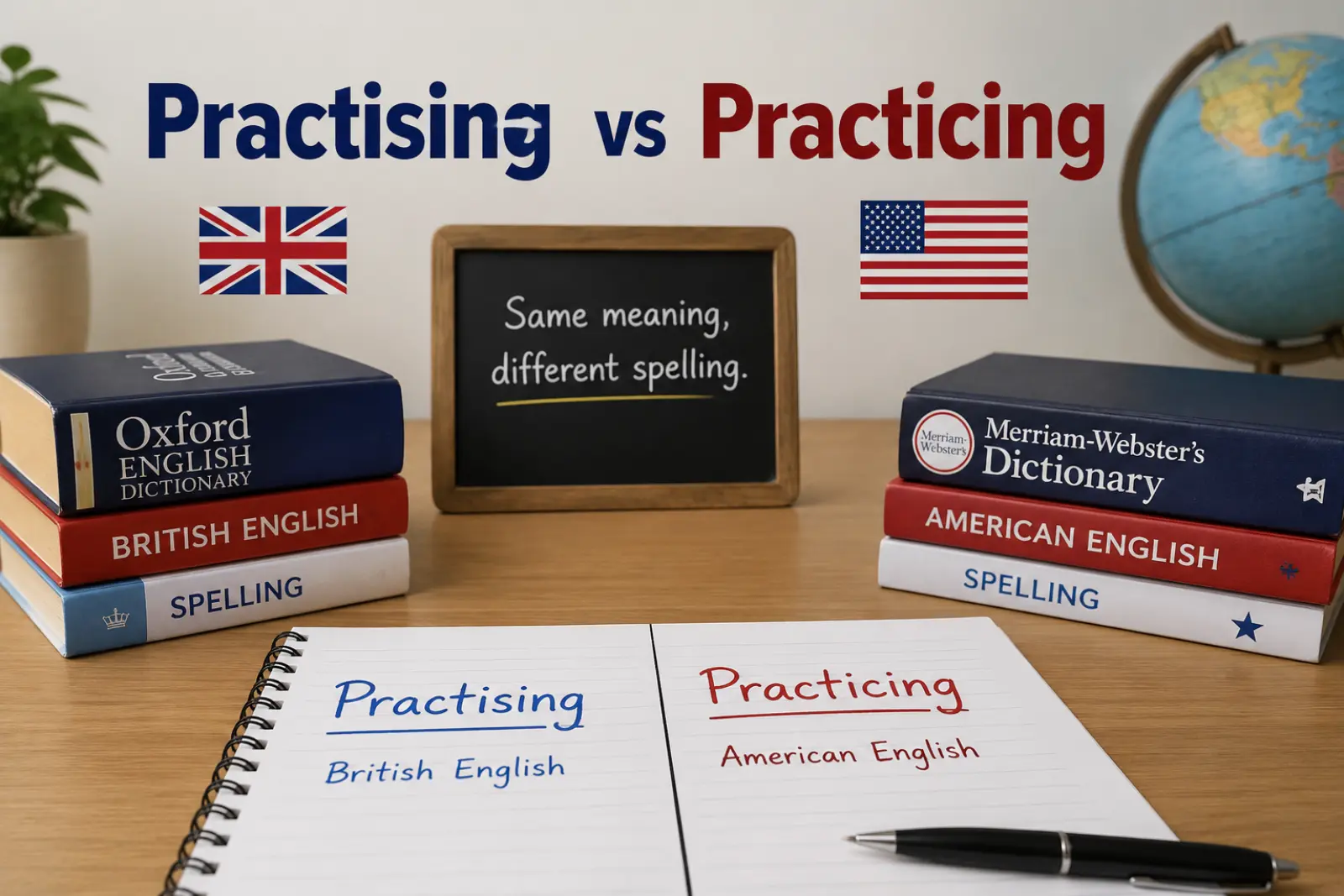
Have you ever written practising in an email and your spell checker changed it to practicing? Or maybe you saw both spellings online and wondered if one of them was wrong. This is a very common question because the answer depends on whether you’re using British English or American English.
Many students, English learners, writers, and professionals search for practising vs practicing when writing essays, business emails, blog posts, social media captions, or job applications. Choosing the correct spelling helps your writing look natural and professional.
People usually search for:
- Practising vs practicing
- Is practising correct?
- Is practicing correct?
- Practice or practise difference
- Practising meaning
- Practicing examples
- British vs American English
The good news is that both spellings are correct, but they follow different English writing styles.
In this guide, you’ll learn the meaning, pronunciation, examples, usage, grammar rules, common mistakes, expert tips, and simple explanations in easy English.
Practising vs Practicing – Quick Answer
👉 Practising = ✅ Correct in British English as the verb form.
👉 Practicing = ✅ Correct in American English.
Both words mean repeating an activity to improve a skill.
Examples
- 🇬🇧 She is practising the piano every day.
- 🇺🇸 She is practicing the piano every day.
- 🇬🇧 He is practising his English.
- 🇺🇸 They are practicing for the game.
Simple Rule
👉 UK = Practising
👉 US = Practicing
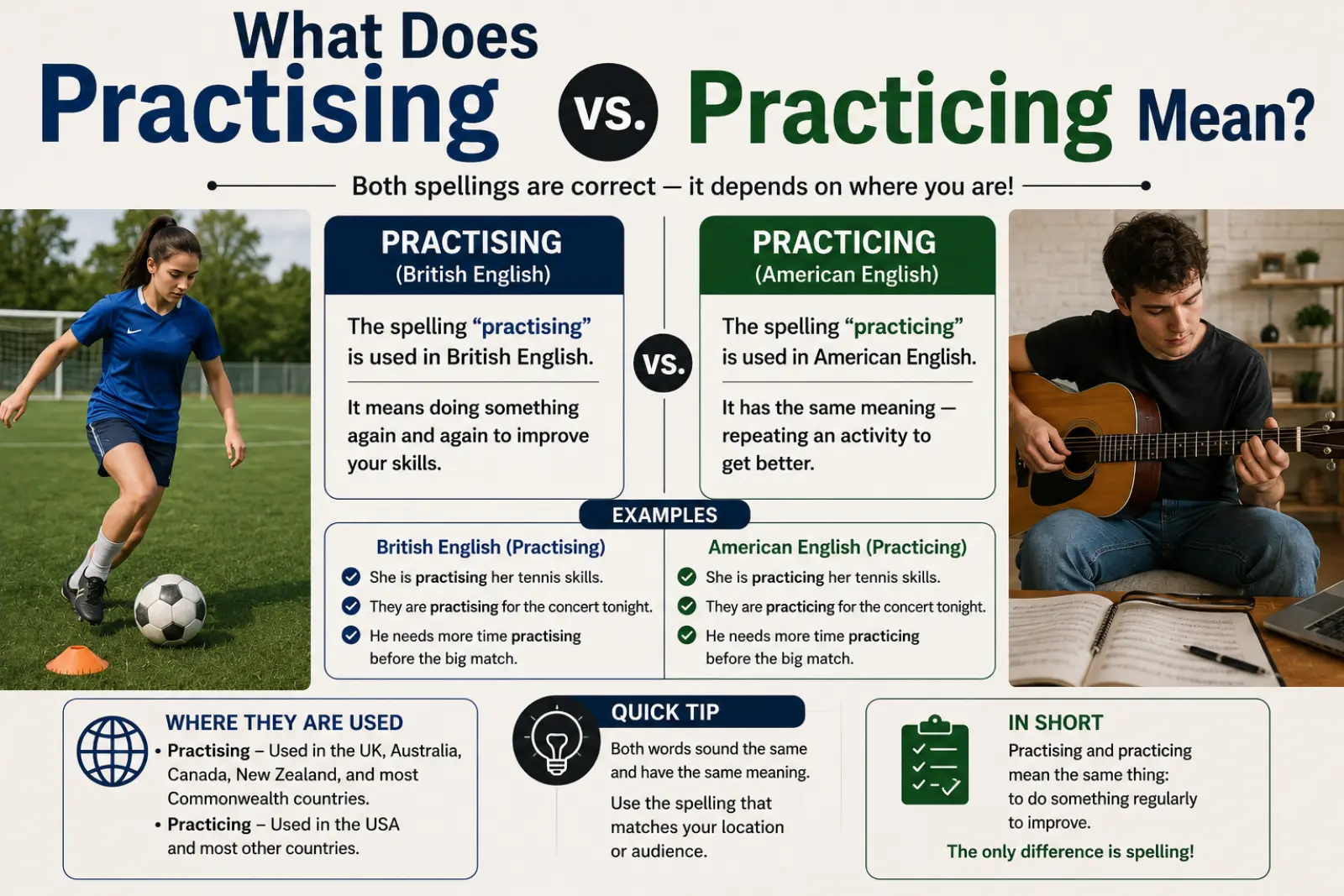
What Does Practising vs Practicing Mean?
Both practising and practicing mean doing something repeatedly to become better at it.
Examples:
- Practising a language
- Practicing football
- Practising a speech
- Practicing the guitar
Synonyms
- Training
- Rehearsing
- Learning
- Exercising
- Improving
Opposites
- Ignoring
- Forgetting
- Neglecting
- Stopping
Related Terms
- Practice
- Practise
- Training
- Exercise
- Rehearsal
- Skill development
The Origin of Practising vs Practicing
The word comes from the Greek word praktikos, meaning “active” or “fit for action.” It later entered English through Latin and French.
Over time, British and American English developed different spelling rules.
In British English, the noun is usually practice, while the verb is practise. Therefore, the -ing form becomes practising.
In American English, practice is used as both the noun and the verb, so the -ing form is practicing.
How to Pronounce Practising and Practicing
Both words have the same pronunciation.
Phonetic: PRAK-tuh-sing
Syllables
Prac-ti-sing
The spelling changes, but the pronunciation stays the same.
British English vs American English Usage
| Feature | British English | American English | Notes |
|---|---|---|---|
| Verb (-ing) | Practising | Practicing | Different spelling |
| Pronunciation | Same | Same | Very similar |
| Meaning | Same | Same | No difference |
| Professional writing | Practising | Practicing | Follow your audience |
Which One Should You Use?
Choose the spelling that matches your readers.
Use Practising for:
- United Kingdom
- Australia
- New Zealand
- British schools
- UK publications
Use Practicing for:
- United States
- American schools
- US businesses
- American websites
Quick Usage Table
| Audience | Correct Spelling |
|---|---|
| UK | Practising |
| USA | Practicing |
| Australia | Practising |
| Canada | Depends on style guide |
| International | Match your audience |
Common Mistakes with Practising vs Practicing
Mistake 1
❌ Mixing both spellings in one article.
✅ Choose one style and use it consistently.
Mistake 2
❌ Using practicing in British academic writing.
✅ Use practising.
Mistake 3
❌ Using practising in American business writing.
✅ Use practicing.
Mistake 4
❌ Thinking one spelling is incorrect.
✅ Both are correct in different English varieties.
Mistake 5
❌ Confusing practice with practise.
✅ In British English, practice is the noun and practise is the verb.
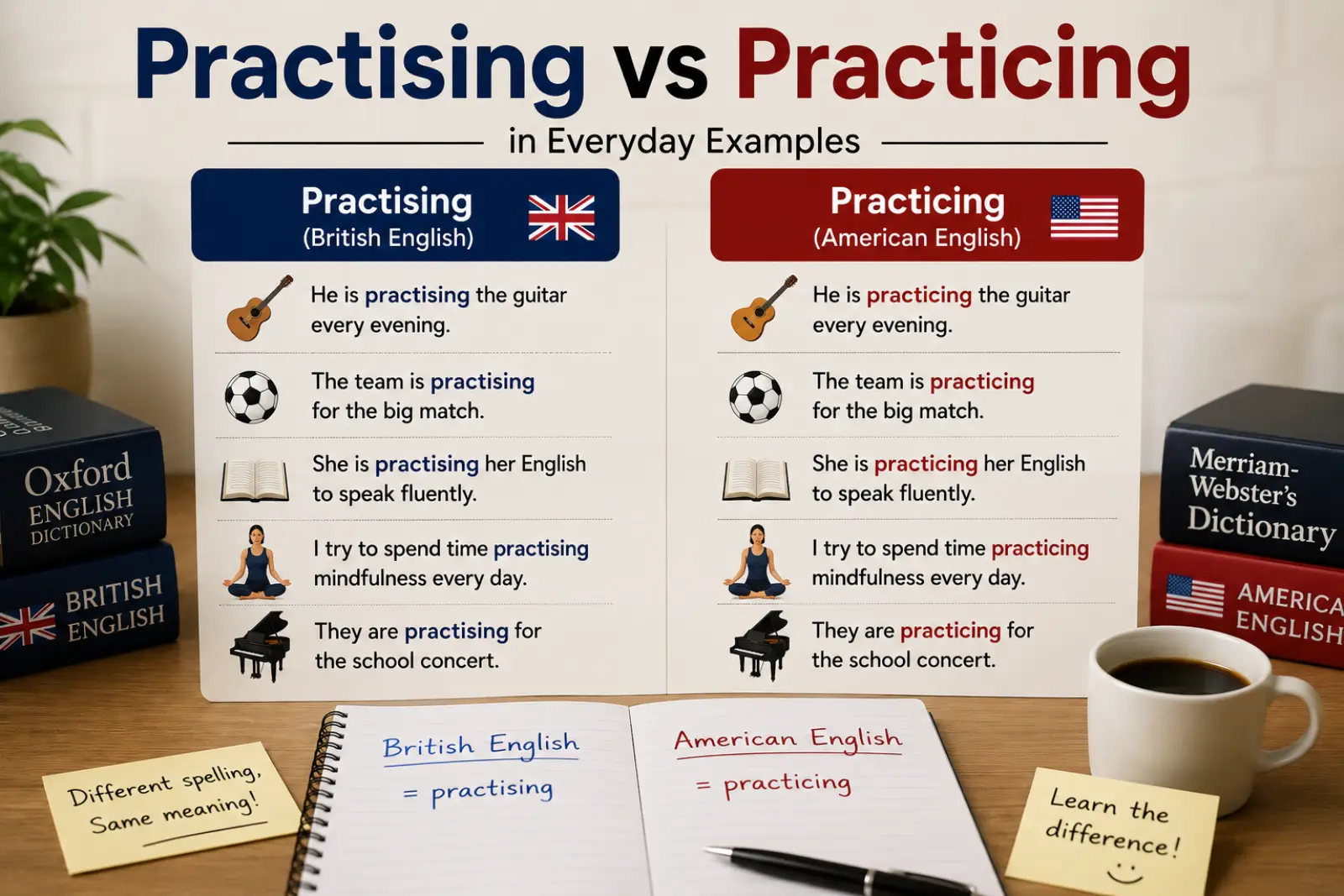
Practising vs Practicing in Everyday Examples
School
She is practising for her music exam. (UK)
She is practicing for her music exam. (US)
Workplace
Our team is practising presentation skills. (UK)
Our team is practicing presentation skills. (US)
Social Media
I’ve been practicing photography every weekend.
Daily Life
He enjoys practising yoga every morning.
Emails
We are practicing the new software before launch.
Text Messages
I’m practising my driving today.
Practising vs Practicing in Different Contexts
Education
Students practise or practice subjects to improve their knowledge.
Sports
Athletes practice daily to improve performance.
Music
Musicians spend hours practising their instruments.
Workplace
Employees practice presentations, interviews, and communication skills.
Language Learning
Regular practice helps learners speak English more confidently.
Practising vs Practicing – Google Trends & Usage Data
People search practising vs practicing because they often see both spellings online.
Popular searches include:
- Practising meaning
- Practicing meaning
- Practice vs practise
- Is practising correct?
- British vs American spelling
This topic is especially popular in the United States, United Kingdom, Canada, Australia, India, and Pakistan, where English learners often compare spelling styles.
Comparison Table
| Feature | Practising | Practicing |
|---|---|---|
| Correct spelling | ✅ UK | ✅ US |
| Meaning | Same | Same |
| Pronunciation | Same | Same |
| Professional writing | UK | US |
| Academic writing | UK | US |
| Everyday use | Common | Common |
Practising vs Practicing in Professional Life
Using the correct spelling makes your writing look polished.
Examples:
- UK company: We are practising new safety procedures.
- US company: We are practicing new safety procedures.
Always match your company’s preferred English style.
Practising vs Practicing for Students or Beginners
Many beginners become confused because British and American English follow different spelling rules.
Easy Tips
- UK: Practise → Practising
- US: Practice → Practicing
Choose one style and stay consistent.
Common Uses of Practising and Practicing
These words are commonly used in:
- Schools
- Sports
- Music
- Healthcare
- Business
- Public speaking
- Language learning
- Driving lessons
Simple Trick to Remember Practising vs Practicing
Memory Rule
Think of it this way:
- 🇬🇧 British English loves “s” → Practising
- 🇺🇸 American English prefers “c” → Practicing
This follows the same spelling pattern as practise/practice.
Expert Tips
- Decide whether you’re writing in British or American English before you begin.
- Keep the same spelling throughout your document.
- Set your word processor to the correct English version.
- Learn the British rule: practice (noun), practise (verb).
Related Searches People Also Ask
- Is practising correct?
- Is practicing correct?
- What is the difference between practice and practise?
- Which spelling is used in the UK?
- Which spelling is used in the US?
- Is the pronunciation different?
- Can I mix both spellings?
- Which spelling should I use for academic writing?
- How can I remember the difference?
- Does Google accept both spellings?
FAQs
Is practising correct?
Yes. It is correct in British English.
Is practicing correct?
Yes. It is correct in American English.
Do they have different meanings?
No. Both mean improving a skill through repetition.
Which spelling is used in Britain?
Practising.
Which spelling is used in America?
Practicing.
Is the pronunciation different?
No. They sound the same.
Can I use both spellings in one article?
No. Choose one style and stay consistent.
Which spelling is better for SEO?
Use the spelling that matches your target audience and keep it consistent throughout your content.
Final Verdict
Both practising and practicing are correct.
- 🇬🇧 Practising = British English
- 🇺🇸 Practicing = American English
The meaning and pronunciation are the same. The only difference is the regional spelling.
Conclusion
The difference between practising and practicing is simple once you know which English style you’re using. If you’re writing for readers in the UK or other countries that follow British English, use practising. If your audience is in the United States, use practicing.
Neither spelling is more correct than the other. The key is to stay consistent throughout your writing.
Final memory trick: British English uses practising, while American English uses practicing. Match your spelling to your audience.

Camila Green is an English language writer who specializes in confusing word comparisons and spelling explanations. She creates simple, beginner-friendly guides on topics like “niece or neice” and other common English mistakes. Her writing focuses on clarity, real-life examples, and easy learning. At VerrsaPick, she helps readers improve their English with practical and engaging content.