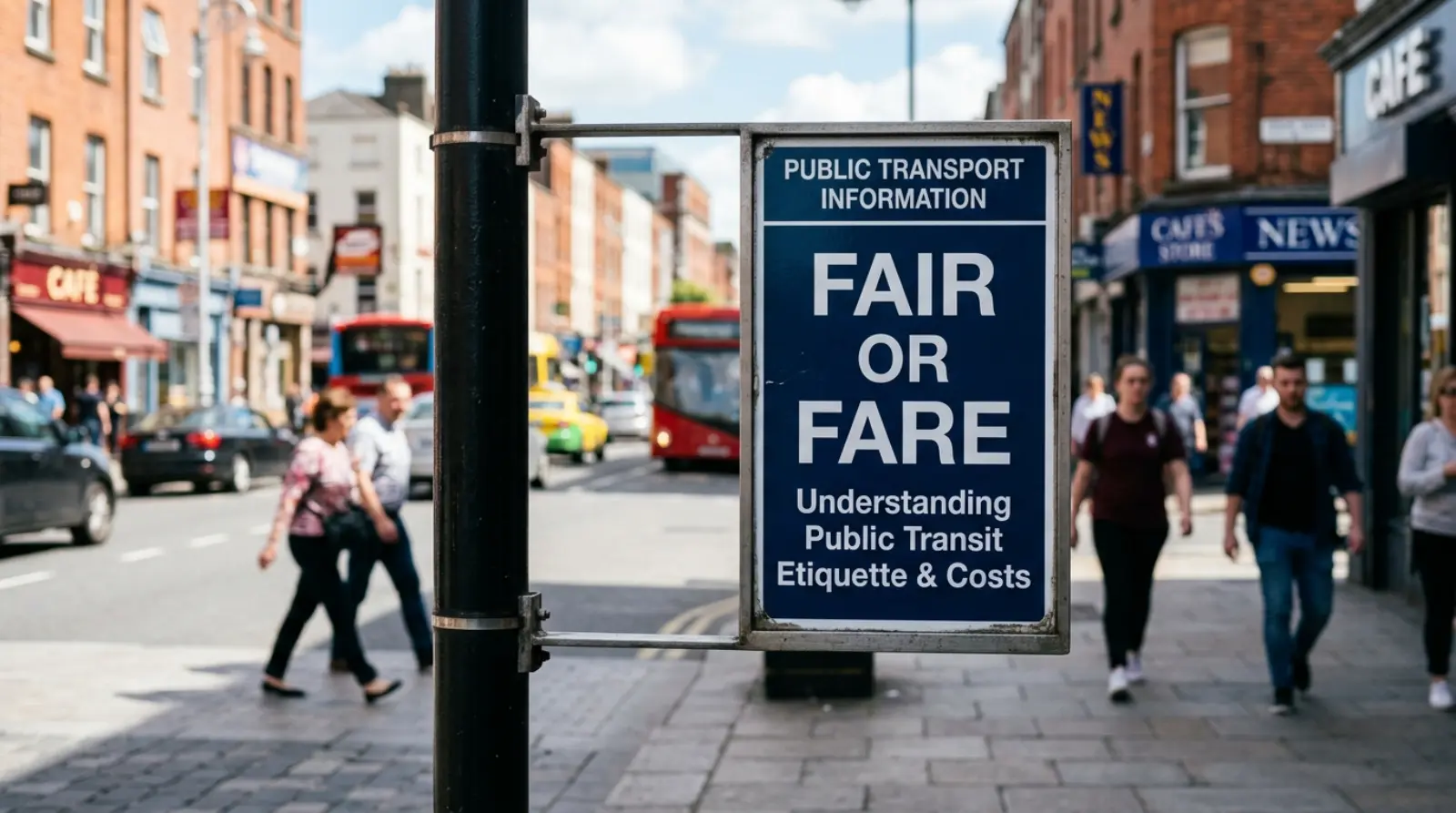
Have you ever stopped while writing a sentence because you couldn’t decide whether to use fair or fare? You’re not alone. These two words sound exactly the same, but they have very different meanings. That makes them one of the most common English word pairs that confuse students, writers, professionals, and even native speakers.
People often search for fair or fare meaning, fair vs fare examples, correct spelling, pronunciation, grammar difference, and when to use fair or fare because choosing the wrong word can completely change the meaning of a sentence.
You might see these words at school, in emails, on social media, in travel apps, in business writing, or during everyday conversations. For example, a bus ticket has a fare, but a teacher should be fair when grading exams.
Learning the difference is easier than it seems. Once you understand the meaning of each word and see a few real-life examples, you’ll rarely confuse them again.
In this guide, you’ll learn the meaning, pronunciation, examples, usage, grammar rules, common mistakes, expert tips, and simple explanations in easy English.
Fair or Fare – Quick Answer
| Word | Meaning |
|---|---|
| Fair | Just, honest, reasonable, or light in color. |
| Fare | The price paid for travel or the way someone performs. |
Examples
- ✅ The teacher was fair to every student.
- ✅ The taxi fare was $18.
- ✅ It isn’t fair to blame him.
- ✅ Air fares are cheaper in winter.
- ✅ She fared well in the competition.
Easy Memory Trick
- Fair = Fairness
- Fare = Fee for travel

What Does Fair or Fare Mean?
Although fair and fare sound alike, they are used in completely different situations.
Fair Meaning
Fair is usually an adjective.
It describes something that is:
- Honest
- Equal
- Reasonable
- Light-colored
- Average in quality
Examples
- Everyone deserves a fair chance.
- She has fair hair.
- That’s a fair decision.
Synonyms
- Honest
- Equal
- Just
- Reasonable
- Impartial
Opposites
- Unfair
- Biased
- Unequal
- Dishonest
Fare Meaning
Fare is mainly a noun.
It usually means:
- Money paid for transportation
- Food (less common)
- How someone performs (as a verb)
Examples
- The train fare increased this year.
- Bus fares are affordable.
- She fared well in her new job.
Synonyms
- Ticket price
- Cost
- Charge
- Travel fee
The Origin of Fair or Fare
Both words come from Old English but developed differently.
- Fair comes from fæger, meaning beautiful, pleasant, or just.
- Fare comes from faran, meaning to travel, journey, or go.
Over time, fair became connected with justice and equality, while fare became linked to travel costs and journeys.
How to Pronounce Fair or Fare
Both words have exactly the same pronunciation.
IPA: /feər/
Simple pronunciation:
Fair = “fair”
Fare = “fair”
Because they sound identical, they are called homophones.
British English vs American English Usage
| Feature | British English | American English | Notes |
|---|---|---|---|
| Spelling | Fair | Fair | Same |
| Spelling | Fare | Fare | Same |
| Pronunciation | Similar | Similar | Nearly identical |
| Meaning | Same | Same | No difference |
There are no spelling differences between British and American English.
Which One Should You Use?
Choose Fair when talking about:
- Justice
- Equality
- Honest treatment
- Light color
- Reasonable behavior
Choose Fare when talking about:
- Bus tickets
- Taxi costs
- Airplane tickets
- Train prices
- Someone’s performance (“fare well”)
Quick Examples
| Situation | Correct Word |
|---|---|
| Fair treatment | ✅ Fair |
| Bus ticket price | ✅ Fare |
| Honest judge | ✅ Fair |
| Taxi cost | ✅ Fare |
| Fair competition | ✅ Fair |
Common Mistakes With Fair or Fare
Mistake 1
❌ The bus fair is expensive.
✅ The bus fare is expensive.
Why? Fare means travel cost.
Mistake 2
❌ Please be fare to everyone.
✅ Please be fair to everyone.
Fair means just or honest.
Mistake 3
❌ Airline fairs
✅ Airline fares
Use fare for ticket prices.
Mistake 4
❌ That’s not fare.
✅ That’s not fair.
Use fair when talking about justice.
Mistake 5
❌ She paid the taxi fair.
✅ She paid the taxi fare.
Fare refers to transportation charges.
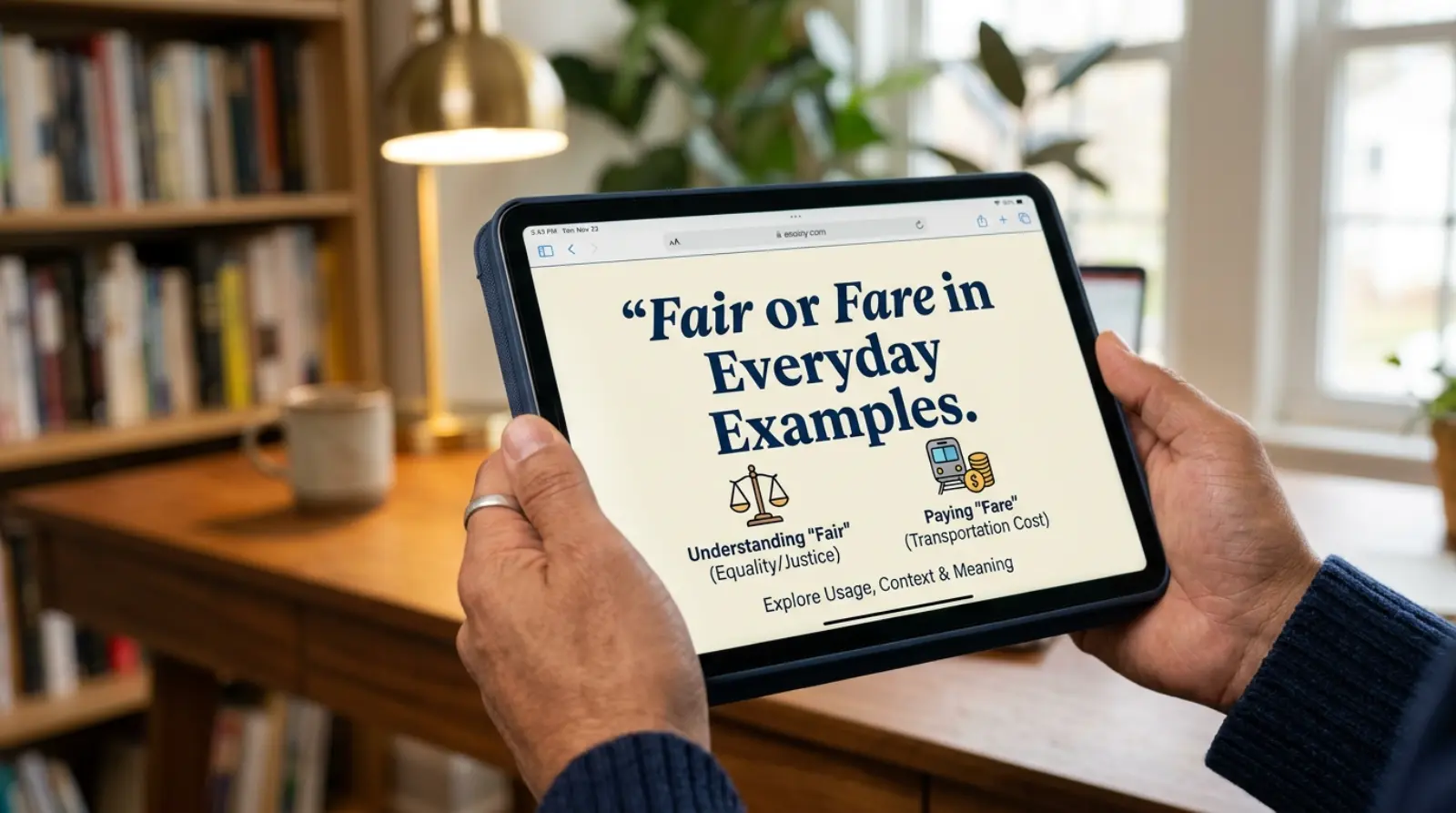
Fair or Fare in Everyday Examples
School
“The teacher gave everyone a fair grade.”
Work
“Our manager is always fair.”
Travel
“The train fare is cheaper online.”
Social Media
“Life isn’t always fair.”
Emails
“Please confirm the flight fare before booking.”
Conversations
“That wasn’t fair!”
Fair or Fare in Different Contexts
Education
Teachers should be fair when grading students.
Business
Companies should use fair hiring practices.
Travel
Passengers compare bus, train, and airline fares before booking.
Writing
Using the wrong word changes the sentence’s meaning.
Daily Communication
Fair is used much more often in everyday conversations, while fare appears mostly in travel-related situations.
Google Trends & Usage
Many people search for fair or fare because they are homophones.
Popular searches include:
- Fair vs fare
- Fair or fare difference
- Fair meaning
- Fare meaning
- Fair pronunciation
- Fare examples
- Is it bus fair or bus fare?
- Fair in a sentence
- Fare in English
This topic is especially popular among learners in the US, UK, India, Pakistan, Canada, and Australia.
Comparison Table: Fair vs Fare
| Feature | Fair | Fare |
|---|---|---|
| Part of Speech | Mostly adjective | Mostly noun |
| Main Meaning | Honest or equal | Travel cost |
| Pronunciation | Fair | Fair |
| Common Usage | Justice, equality | Transportation |
| Professional Writing | Very common | Common in travel |
| Student Confusion | High | High |
Fair or Fare in Professional Life
Using the correct word improves your writing.
Examples:
- A company should have fair policies.
- Please check the flight fare before approval.
- Employees expect fair treatment.
- Travel departments compare airline fares.
Correct word choice helps emails, reports, and business communication look professional.

Fair or Fare for Students
Students often confuse these words because they sound identical.
Easy Learning Tips
- Fair = Fairness
- Fare = Fee
- Read example sentences daily.
- Think about the meaning before writing.
Common Uses of Fair and Fare
Fair
- Fair competition
- Fair decision
- Fair chance
- Fair treatment
- Fair weather
Fare
- Bus fare
- Taxi fare
- Train fare
- Airfare
- Ferry fare
Simple Trick to Remember Fair or Fare
Think of it this way:
- Fair has “air.” Everyone deserves fair air to breathe equally.
- Fare has “fee.” You pay a fee to travel.
Memory shortcut:
Fair = Fairness
Fare = Fee for transportation
Expert Tips
- Ask yourself: Am I talking about justice or money?
- If it’s about honesty or equality, use fair.
- If it’s about paying to travel, use fare.
- Read your sentence aloud and check the meaning, not the sound.
- Learn common phrases like fair play and bus fare to remember them naturally.
Related Searches People Also Ask
- What is the difference between fair and fare?
- Is it bus fair or bus fare?
- What does fair mean in English?
- What is fare in transportation?
- Why do fair and fare sound the same?
- How do you use fair in a sentence?
- How do you use fare in a sentence?
- Is airfare one word?
- What are common homophones in English?
- How can I remember fair vs fare?
FAQs
Is it fair or fare for a taxi?
Fare is correct because it means the amount you pay.
Is fair an adjective?
Yes. It usually describes something honest, equal, or reasonable.
Can fare be a verb?
Yes. It can mean to perform or get along, as in “She fared well.”
Why do people confuse fair and fare?
Because they are homophones—they sound the same but have different meanings.
Is airfare spelled as one word?
Yes. Airfare is one word.
Which word is used more often?
Fair is generally used more often in everyday English.
Is “fair treatment” correct?
Yes. It means honest and equal treatment.
Is “bus fair” ever correct?
No. The correct phrase is bus fare.
Final Verdict
The difference is simple:
- Fair = honest, equal, reasonable.
- Fare = travel cost or how someone performs.
The easiest way to remember is:
Fair = Fairness
Fare = Fee
Conclusion
Understanding fair or fare becomes easy once you connect each word to its meaning instead of its pronunciation. Use fair whenever you talk about honesty, equality, or justice. Use fare when referring to transportation costs or someone’s performance.
A final memory trick: If you’re paying for a ride, it’s a fare. If you’re treating someone equally, it’s fair. Keeping this simple rule in mind will help you choose the correct word every time.

Camila Green is an English language writer who specializes in confusing word comparisons and spelling explanations. She creates simple, beginner-friendly guides on topics like “niece or neice” and other common English mistakes. Her writing focuses on clarity, real-life examples, and easy learning. At VerrsaPick, she helps readers improve their English with practical and engaging content.