Have you ever seen the words curtsy and curtsey and wondered which one is correct? This is a common question, especially for students, writers, and English learners. You might find these spellings in books, historical stories, dance lessons, or online articles. Because both words look almost the same, many people are unsure which version they should use.
People usually search for curtsy or curtsey meaning, correct spelling, pronunciation, examples, usage, and grammar difference. The confusion becomes even greater because dictionaries accept both spellings.
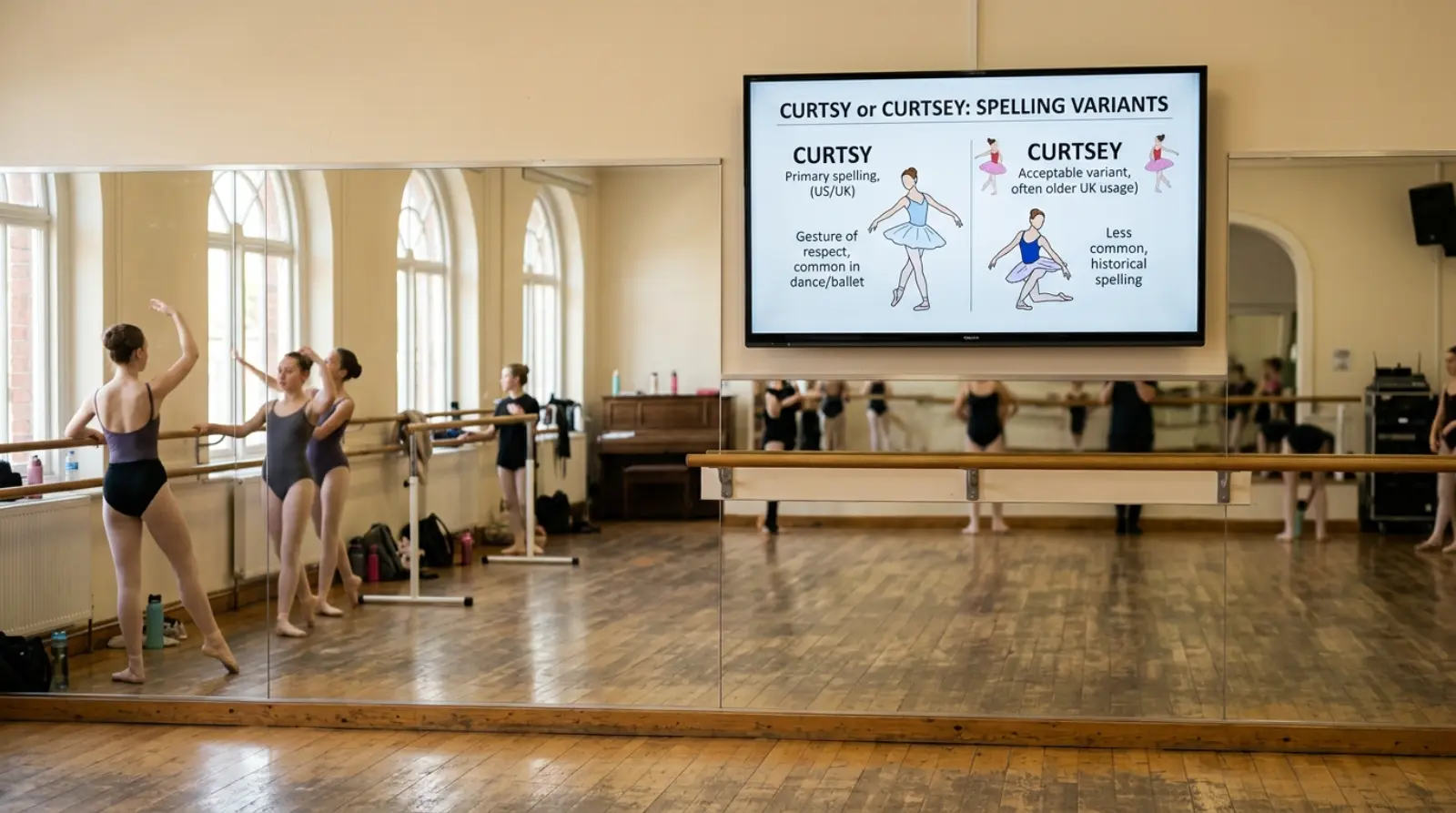
The good news is that both curtsy and curtsey are correct English words. They have the same meaning and pronunciation. The only real difference is spelling preference.
In this guide, you’ll learn the meaning, pronunciation, examples, usage, grammar rules, common mistakes, expert tips, and simple explanations in easy English.
Curtsy or Curtsey – Quick Answer
👉 Curtsy = A respectful bow made by bending the knees, commonly used by girls and women.
👉 Curtsey = An alternative spelling of curtsy with exactly the same meaning.
Examples
- ✅ The princess gave a graceful curtsy.
- ✅ She learned how to curtsey before meeting the queen.
- ✅ Every dancer practiced a perfect curtsy.
- ✅ The children smiled and gave a small curtsey.
Simple Rule:
Use curtsy if you want the more common modern spelling. Curtsey is also correct but is seen less often.
What Does Curtsy or Curtsey Mean?
A curtsy (or curtsey) is a polite gesture made by bending the knees while keeping the upper body straight. It is often used to show respect, greeting, or thanks.
Synonyms
- Bow
- Greeting
- Respectful gesture
- Salute
Related Terms
- Etiquette
- Royal protocol
- Formal greeting
- Dance tradition
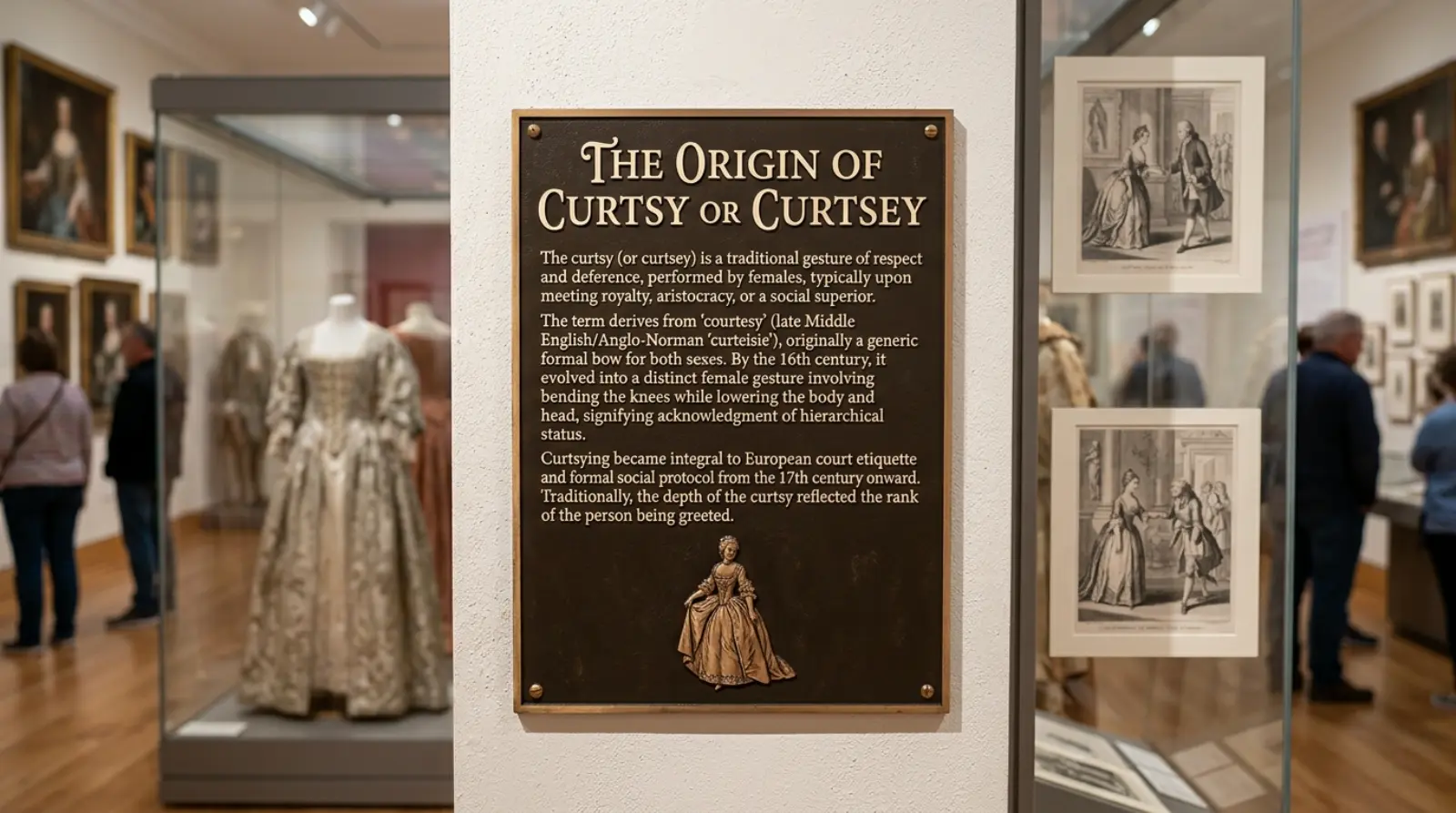
The Origin of Curtsy or Curtsey
The word comes from courtesy, which means politeness and respect. Over time, people shortened the word to curtsy, while curtsey developed as another accepted spelling. Today, both forms appear in dictionaries and literature.
How to Pronounce Curtsy or Curtsey
Pronunciation: KURT-see
Phonetic: /ˈkɝːt.si/
Easy Trick
Think of the word court without the “o” sound, then add see.
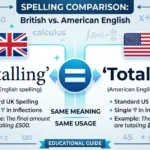
British English vs American English
| Feature | British English | American English |
|---|---|---|
| Preferred spelling | Curtsey or Curtsy | Curtsy |
| Pronunciation | Same | Same |
| Meaning | Same | Same |
Which One Should You Use?
Choose curtsy if:
- You write for an international audience.
- You create online content.
- You write school or business documents.
Choose curtsey if:
- You prefer traditional British spelling.
- You are quoting historical texts.
Common Mistakes
Mistake 1
❌ She made a courtesy.
✅ She made a curtsy.
Mistake 2
❌ Curtsy means bowing only for men.
✅ A curtsy is traditionally performed by girls and women.
Mistake 3
❌ Curtsy and curtsey have different meanings.
✅ They mean exactly the same thing.

Curtsy or Curtsey in Everyday Examples
School
“The students practiced a curtsy for the play.”
Work
“The performer ended the show with a graceful curtsy.”
Daily Life
“The little girl gave her grandmother a sweet curtsy.”
Social Media
“Her royal-style curtsy went viral.”
Google Trends and Usage
People often search for:
- Curtsy or curtsey difference
- How to spell curtsy
- Curtsy meaning
- Curtsey pronunciation
- Curtsy examples
The spelling curtsy is more common in the United States, Canada, and online content, while curtsey appears more often in some British publications.
Comparison Table
| Feature | Curtsy | Curtsey |
| Correct spelling | ✅ Yes | ✅ Yes |
| Meaning | Same | Same |
| Pronunciation | Same | Same |
| Modern popularity | Higher | Lower |
| Academic writing | Preferred | Accepted |
| Everyday writing | Common | Less common |
Curtsy or Curtsey in Professional Life
These words appear in:
- Dance schools
- Theater scripts
- Royal ceremonies
- History books
- Etiquette guides
Using the correct spelling helps keep your writing clear and professional.
For Students and Beginners
Many learners think one spelling is wrong, but both are accepted.
Easy Memory Trick
Curtsy = Common today
Curtsey = Traditional spelling
Common Uses
- Royal greetings
- Ballet performances
- Historical novels
- School plays
- Etiquette lessons
- Formal ceremonies
Expert Tips
- Use curtsy for blogs, websites, and modern writing.
- Stay consistent with one spelling throughout your document.
- If writing about British history, curtsey also fits naturally.
Related Searches
People also search for:
- What is a curtsy?
- Curtsy meaning in English
- Curtsey vs curtsy
- How do you pronounce curtsy?
- Curtsy examples
- Why do people curtsy?
- Curtsy etiquette
- Royal curtsy rules
- Curtsy in ballet
- Curtsy spelling guide
FAQs
Is curtsy correct?
Yes. It is the most common modern spelling.
Is curtsey also correct?
Yes. It is an accepted alternative spelling.
Do they mean different things?
No. They have the same meaning.
Which spelling is more common?
Curtsy is more widely used today.
How do you pronounce curtsy?
It is pronounced KURT-see.
Is curtsy used in formal writing?
Yes, especially in history, etiquette, and dance.
Can I use curtsey in British English?
Yes. Many British writers still use it.
Is one spelling wrong?
No. Both are correct.
Final Verdict
Both curtsy and curtsey are correct spellings. They share the same meaning and pronunciation. However, curtsy is the more common choice in modern English, while curtsey is a traditional alternative.
Conclusion
The confusion between curtsy and curtsey is easy to understand because both spellings are accepted. If you’re writing for a general audience, choose curtsy since it is the more popular modern form. If you’re reading classic British literature, you may also see curtsey. The easiest way to remember is: both are correct, but curtsy is used more often today.

Camila Green is an English language writer who specializes in confusing word comparisons and spelling explanations. She creates simple, beginner-friendly guides on topics like “niece or neice” and other common English mistakes. Her writing focuses on clarity, real-life examples, and easy learning. At VerrsaPick, she helps readers improve their English with practical and engaging content.