Have you ever wanted to write “complimentary” but suddenly wondered if it should be “complementary”? You are not alone. These two words look almost identical, sound very similar, and share the same word root. That makes complimentary or complementary a common spelling and vocabulary confusion.
The tricky part is that both words are correct, but they have different meanings.
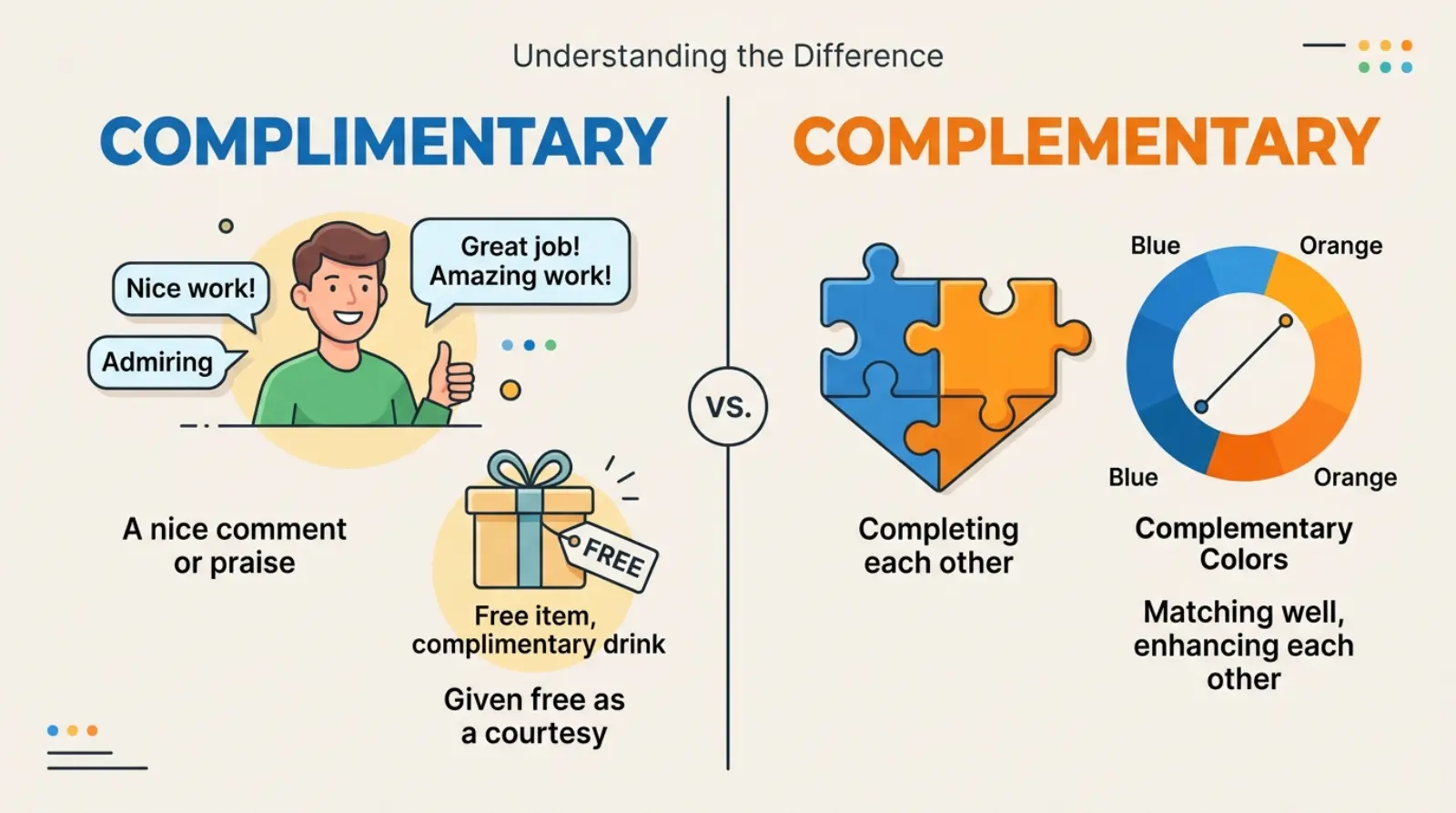
For example, a hotel may offer complimentary breakfast, meaning the breakfast is free. But two colors can be complementary, meaning they work well together or complete each other.
This difference matters in everyday English, school assignments, workplace emails, business writing, marketing, fashion, design, food, and conversations. Using the wrong word can completely change your meaning. A sentence about giving praise is different from a sentence about two things working well together.
People usually search for:
- complimentary or complementary meaning
- complimentary vs complementary
- is it complimentary or complementary?
- how to spell complimentary
- how to spell complementary
- complimentary meaning
- complementary meaning
- complimentary examples
- complementary examples
- difference between complimentary and complementary
- complimentary pronunciation
- complementary pronunciation
If you have ever stopped while writing an email or sentence and thought, “Which one is correct?”, this guide will make the difference easy to remember.
In this guide, you’ll learn the meaning, pronunciation, examples, usage, grammar rules, common mistakes, expert tips, and simple explanations in easy English.
Complimentary or Complementary – Quick Answer
👉 Complimentary = free or expressing praise
👉 Complementary = completing, matching, or going well together
Examples
The hotel provides complimentary breakfast. ✅
Here, complimentary means free.
She gave me a complimentary comment about my work. ✅
Here, complimentary means praising.
The blue and orange colors are complementary. ✅
Here, complementary means they work well together.
The two skills are complementary. ✅
They complete or support each other.
Simple Rule
👉 Complimentary = free or praise
👉 Complementary = complete or match
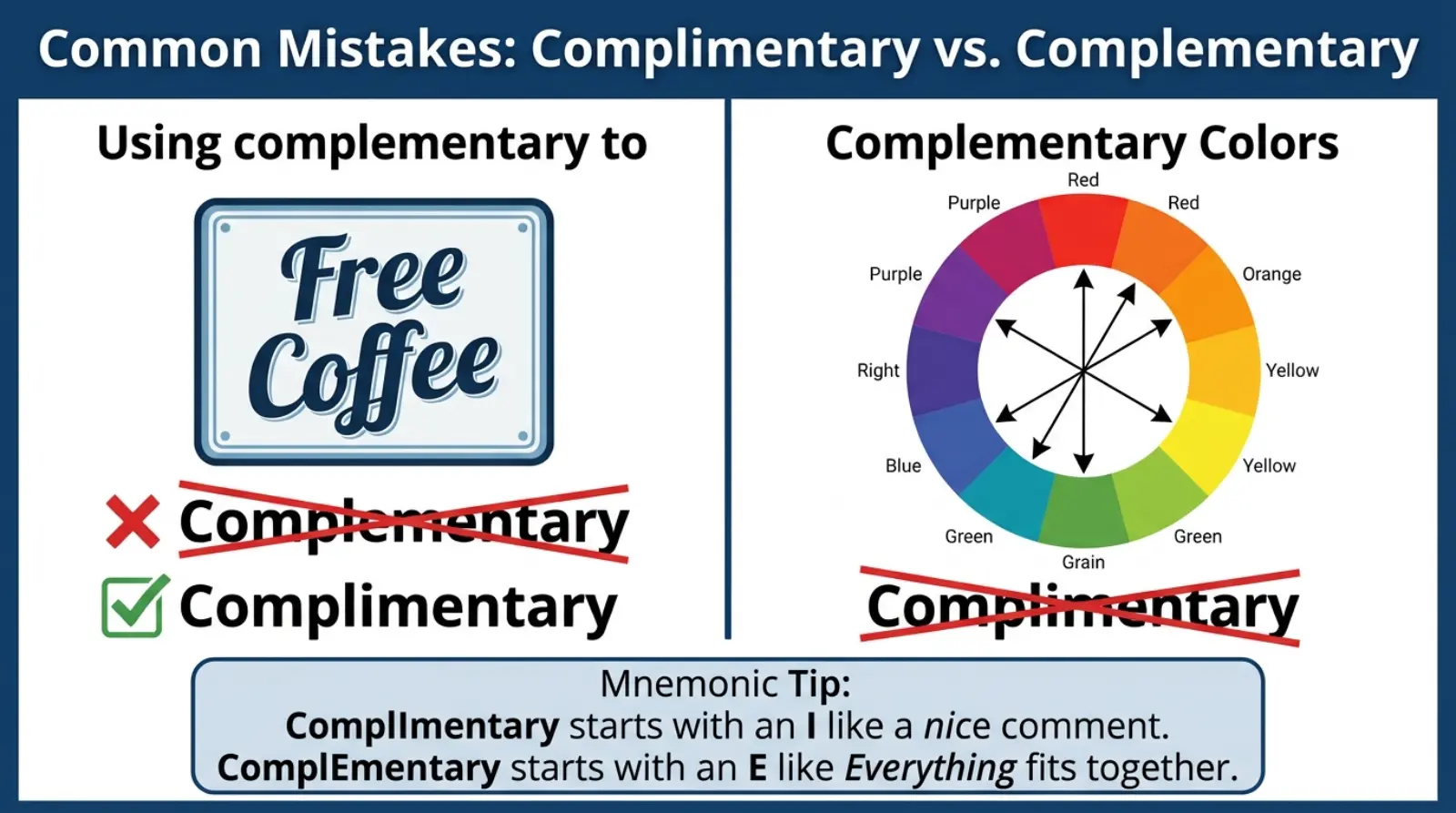
Memory trick:
Complimentary has “I” → think “I give you praise” or “it costs nothing.”
Complementary has “E” → think “complete.”
What Does “Complimentary or Complementary” Mean?
The phrase complimentary or complementary refers to choosing between two similar-looking English words.
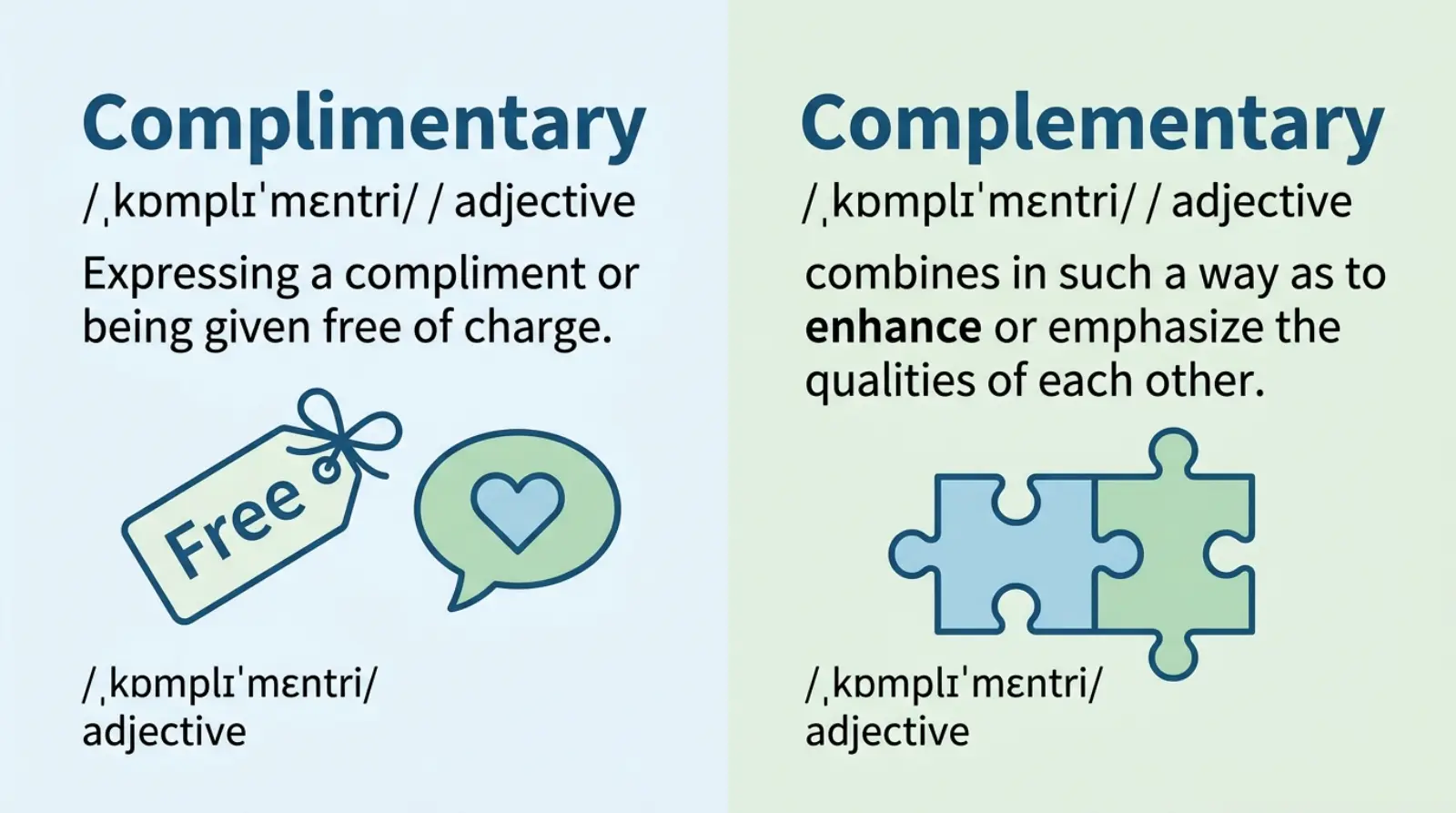
Complimentary Meaning
Complimentary has two main meanings.
First, it can mean given for free.
- complimentary drinks
- complimentary breakfast
- complimentary tickets
- complimentary Wi-Fi
- complimentary parking
Example:
“The airline offered complimentary snacks.”
Second, it can mean expressing praise or approval.
Example:
“She was very complimentary about my presentation.”
In simple English, complimentary = free or praising.
Complementary Meaning
Complementary means something that completes, supports, or works well with something else.
Examples include:
- complementary colors
- complementary skills
- complementary products
- complementary flavors
- complementary ideas
Example:
“The two designers have complementary skills.”
In simple English, complementary = matching, completing, or supporting.
Synonyms
Complimentary:
- free
- praising
- admiring
- flattering
- approving
Complementary:
- matching
- compatible
- supporting
- completing
- corresponding
Opposites
Depending on context:
Complimentary (free):
- paid
- charged
Complimentary (praising):
- critical
- insulting
- negative
Complementary:
- conflicting
- incompatible
- contrasting
Common Variations
You may see:
- complimentary service
- complimentary gift
- complimentary ticket
- complimentary remarks
- complementary colors
- complementary skills
- complementary products
- complementary relationship
The Origin of Complimentary and Complementary
These words are closely related because they come from the same Latin root connected with the idea of completing.
Complement means something that completes or improves another thing.
Over time, complementary developed the meaning of things that complete, balance, or work well together.
Complimentary, meanwhile, developed from a different path involving compliment, meaning an expression of praise. It also gained the meaning of something provided free of charge.
This shared history helps explain why the words look so similar even though their modern meanings are different.
A useful way to separate them is:
compliment → complimentary → praise
complement → complementary → complete
How to Pronounce Complimentary and Complementary
The two words are pronounced very similarly.
Complimentary
Complimentary: kom-pluh-MEN-tuh-ree
It is related to compliment.
Complementary
Complementary: kom-pluh-MEN-tuh-ree
It is related to complement.
The pronunciation may be very difficult to distinguish in normal conversation, so spelling and context are especially important.
Common Pronunciation Mistake
Some learners think the similar pronunciation means the words have the same meaning.
They do not.
When speaking, focus on the context. When writing, make sure you choose the correct spelling.
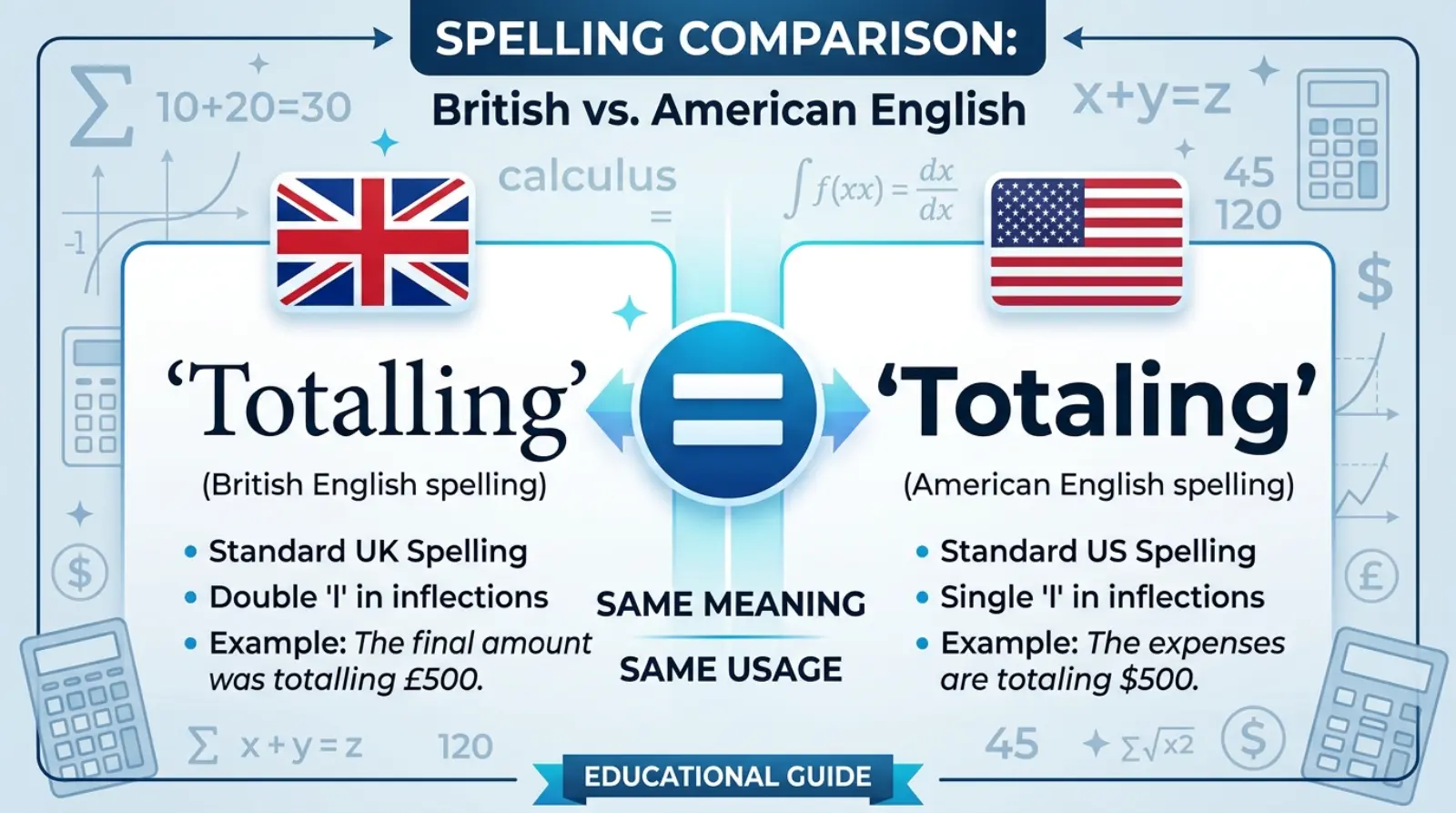
British English vs American English Usage
There is no major difference in the basic meaning or spelling of these words between British and American English.
| Feature | British English | American English | Notes |
|---|---|---|---|
| Complimentary | Same | Same | Free or praising |
| Complementary | Same | Same | Matching or completing |
| Spelling | Same | Same | No major spelling change |
| Pronunciation | Very similar | Very similar | Context helps |
| Formal writing | Common | Common | Same meanings |
| Business use | Common | Common | Same distinction |
Whether you are writing for readers in the UK, US, Canada, Australia, India, or Pakistan, the basic difference remains the same.
Which One Should You Use?
Use complimentary when you mean free or full of praise.
Use complementary when you mean matching, supporting, or completing.
| Situation | Correct word | Example |
|---|---|---|
| Free breakfast | Complimentary | Complimentary breakfast |
| Praise | Complimentary | A complimentary review |
| Matching colors | Complementary | Complementary colors |
| Supporting skills | Complementary | Complementary skills |
| Free service | Complimentary | Complimentary Wi-Fi |
| Things that complete each other | Complementary | Complementary features |
Formal and Academic Writing
Both words are perfectly suitable for formal writing.
Complimentary:
“The manager was complimentary about the employee’s performance.”
Complementary:
“The two theories provide complementary explanations.”
Texting and Social Media
The same meanings apply online.
“They gave us complimentary tickets.”
“Those colors look complementary.”
The spelling does not change simply because the conversation is informal.
Common Mistakes With Complimentary or Complementary
Mistake 1: Using “complimentary” for matching colors
❌ “Blue and orange are complimentary colors.”
✔ “Blue and orange are complementary colors.”
Why?
The colors work together, so they are complementary.
Tip: Think complete/match → complementary.
Mistake 2: Using “complementary” for free food
❌ “The hotel offers complementary breakfast.”
✔ “The hotel offers complimentary breakfast.”
Why?
The breakfast is free.
Tip: Free service → complimentary.
Mistake 3: Confusing praise with completion
❌ “She was very complementary about my presentation.”
✔ “She was very complimentary about my presentation.”
Why?
She praised the presentation.
Mistake 4: Assuming one word is incorrect
❌ “Complementary is the wrong spelling of complimentary.”
✔ Both words are correct.
They simply have different meanings.
Mistake 5: Forgetting the noun connection
❌ “He gave me complementary.”
✔ “He gave me a compliment.”
Why?
The noun for praise is compliment.
The noun complement means something that completes or improves something else.
Mistake 6: Mixing up “compliment” and “complement”
❌ “Her scarf compliments her dress.”
✔ “Her scarf complements her dress.”
The scarf matches or enhances the dress, so complements is correct.
Complimentary or Complementary in Everyday Examples
Work
Complimentary:
“The client was complimentary about our team’s work.”
Complementary:
“The two employees have complementary skills.”
School
Complimentary:
“The teacher made complimentary comments about his essay.”
Complementary:
“The two ideas are complementary.”
Social Media
Complimentary:
“Everyone was complimentary about her new photos.”
Complementary:
“Those colors are beautifully complementary.”
Daily Life
Complimentary:
“The restaurant gave us complimentary dessert.”
Complementary:
“Her shoes are complementary to her outfit.”
Emails
Complimentary:
“Thank you for your complimentary feedback.”
Complementary:
“The two services are complementary.”
Text Messages
Complimentary:
“Dinner is complimentary tonight!”
Complementary:
“Your jacket and shoes look complementary.”
Online Content
A review can be complimentary if it gives strong praise.
A product can be complementary to another product if the two work well together.
Conversations
“The hotel gave us complimentary drinks.”
“Their personalities are complementary.”
Complimentary or Complementary in Different Contexts
Business and Marketing
Businesses often use complimentary to describe free services:
- complimentary consultation
- complimentary trial
- complimentary upgrade
- complimentary gift
- complimentary delivery
Example:
“New customers receive a complimentary consultation.”
Businesses also use complementary when two products or services work together.
Example:
“These two software tools provide complementary features.”
Fashion and Design
Complementary is common when talking about colors, styles, shapes, and design elements.
Example:
“The designer chose complementary colors for the room.”
Food
Complimentary can mean food or drinks are provided free.
Example:
“Guests receive complimentary coffee.”
Complementary can describe flavors that work well together.
Example:
“Lemon and garlic are complementary flavors.”
Workplace Communication
A manager might be complimentary about an employee’s work.
Example:
“The supervisor was complimentary about Maria’s performance.”
Two employees can have complementary skills.
Example:
“Their complementary skills helped the project succeed.”
Complimentary vs Complementary Comparison Table
| Feature | Complimentary | Complementary |
|---|---|---|
| Main meaning | Free or praising | Completing or matching |
| Related noun | Compliment | Complement |
| Free service | ✅ | ❌ |
| Praise | ✅ | ❌ |
| Matching colors | ❌ | ✅ |
| Supporting skills | ❌ | ✅ |
| Common phrase | Complimentary breakfast | Complementary colors |
| Business use | Free offers/praise | Products or services that work together |
| Easy memory | Compliment = praise | Complete = complement |
Complimentary or Complementary in Professional Life
Choosing the right word matters in professional communication.
Imagine a hotel advertisement saying:
“Enjoy complementary breakfast.”
A reader may wonder what the hotel means. The intended word is probably complimentary, because the breakfast is free.
Likewise, a business report might say:
“The departments have complimentary skills.”
If the writer means the departments support each other, complementary is correct.
These small spelling differences can affect the clarity and professionalism of emails, reports, websites, advertisements, product descriptions, and presentations.
Complimentary or Complementary for Students and Beginners
Beginners often struggle because the words:
- look almost the same
- sound very similar
- share a historical connection
- have only one letter that clearly separates them
The easiest solution is to learn them as word families.
Family 1: Compliment
Compliment → complimentary → praise
Example:
“She complimented my work.”
“She was complimentary about my work.”
Family 2: Complement
Complement → complementary → complete or match
Example:
“The colors complement each other.”
“They are complementary colors.”
Once you remember these two families, the spelling becomes much easier.
Common Uses and Patterns
Look for these clues:
Complimentary often appears with:
- breakfast
- drinks
- tickets
- parking
- Wi-Fi
- service
- upgrade
- remarks
- comments
- review
Complementary often appears with:
- colors
- skills
- products
- services
- flavors
- ideas
- roles
- features
- treatments
- designs
This is not a strict grammar rule, but it is a very useful vocabulary pattern.
Simple Trick to Remember Complimentary or Complementary
Here is the easiest trick:
Think of “compliment”
A compliment is praise.
So:
compliment → complimentary → praise
Example:
“The customer was complimentary about the service.”
Think of “complete”
A complement helps complete something.
So:
complement → complementary → complete or match
Example:
“The two colors complement each other.”
Think of It This Way:
Imagine a hotel giving you a free cup of coffee.
It is complimentary.
Now imagine adding milk and sugar to coffee because they work well together.
They are complementary.
Free or praise = complimentary.
Match or complete = complementary.
Expert Tips for Never Mixing Them Up
- Check for “free.”
If something costs nothing, choose complimentary. - Check for praise.
If someone is admiring something, choose complimentary. - Check for “complete.”
If two things work together or complete each other, choose complementary. - Remember the nouns.
Compliment = praise.
Complement = complete. - Learn common phrases as groups.
Memorize “complimentary breakfast” and “complementary colors” rather than learning the words alone. - Proofread business writing carefully.
A single letter can change the meaning.
Related Searches People Also Ask
Is it complimentary or complementary breakfast?
It is complimentary breakfast when the breakfast is free.
Is it complimentary or complementary colors?
It is complementary colors because the colors work well together.
Is complimentary a synonym for free?
Yes, when complimentary means something is provided at no cost.
Does complimentary mean praise?
Yes. Someone can be complimentary when they express praise or admiration.
What does complementary mean?
It means completing, supporting, or working well with something else.
What is the difference between compliment and complement?
A compliment is praise. A complement is something that completes or improves something else.
Is complimentary breakfast free?
Yes. In this common phrase, complimentary means provided free of charge.
Are complementary and complimentary pronounced the same?
They are pronounced very similarly, and in many varieties of English they may sound nearly identical.
Are both complimentary and complementary correct spellings?
Yes. Both are correct words with different meanings.
How do I remember the difference?
Use compliment = praise/free and complement = complete/match.
FAQs
What is the main difference between complimentary and complementary?
Complimentary means free or praising. Complementary means completing, matching, or supporting.
Which is correct: complimentary breakfast or complementary breakfast?
Complimentary breakfast is correct when the breakfast is free.
Which is correct: complimentary colors or complementary colors?
Complementary colors is correct because the colors work well together.
Can complimentary mean “free”?
Yes. For example, “complimentary drinks” means drinks provided for free.
Can complimentary mean “praising”?
Yes. For example, “She was complimentary about my work” means she praised your work.
What does complementary mean in simple English?
It means two things work well together or help complete each other.
How do you spell complimentary?
The correct spelling is complimentary when you mean free or praising.
How do you spell complementary?
The correct spelling is complementary when you mean matching, completing, or supporting.
What is an easy memory trick?
Compliment = praise. Complement = complete.
Is “complimentary” formal English?
Yes. It is commonly used in professional, business, academic, and everyday English.
Final Verdict
Complimentary and complementary are both correct words, but they do different jobs.
👉 Complimentary = free or praising
👉 Complementary = completing, matching, or supporting
The easiest memory rule is:
Compliment → praise → complimentary
Complement → complete → complementary
If a hotel gives you something for free, it is complimentary. If two things work well together, they are complementary.
Conclusion
The difference between complimentary or complementary becomes much easier when you connect each word to its related noun.
Complimentary is used for something free or something that expresses praise. You might receive complimentary breakfast, complimentary tickets, or a complimentary review.
Complementary describes things that complete, support, or work well together. You can have complementary colors, complementary skills, complementary products, or complementary ideas.
When you are unsure, stop and ask one simple question:
“Do I mean praise/free, or do I mean complete/match?”
Praise or free = complimentary.
Complete or match = complementary.
That one memory trick can save you from one of the most common vocabulary mix-ups in English.

Camila Green is an English language writer who specializes in confusing word comparisons and spelling explanations. She creates simple, beginner-friendly guides on topics like “niece or neice” and other common English mistakes. Her writing focuses on clarity, real-life examples, and easy learning. At VerrsaPick, she helps readers improve their English with practical and engaging content.