
Have you ever written “I’m not phased by criticism” and wondered if it should actually be “I’m not fazed”? You’re not alone. These two words sound exactly alike, but they have completely different meanings. Because they are homophones (words that sound the same), many English learners and even native speakers mix them up.
People usually search for “fazed or phased” because they want to know the correct spelling, meaning, pronunciation, grammar rules, and real-life examples. This confusion often appears in emails, social media posts, school assignments, workplace communication, and online discussions.
The good news is that the difference is easy to remember once you understand what each word means. Fazed is about being disturbed or bothered, while phased is about completing something in stages or phases.
In this guide, you’ll learn the meaning, pronunciation, examples, usage, grammar rules, common mistakes, expert tips, and simple explanations in easy English.
Fazed or Phased – Quick Answer
Both words are correct, but they have different meanings.
- 👉 Fazed = disturbed, bothered, or affected.
- 👉 Phased = done in stages or related to phases.
Examples
- ✅ She wasn’t fazed by the difficult questions.
- ✅ The project was phased over three years.
- ✅ He remained unfazed during the interview.
- ✅ The company phased in the new system gradually.
Easy Memory Trick
👉 Fazed = Feelings
👉 Phased = Phases or Steps
What Does Fazed or Phased Mean?
Fazed
Fazed is the past tense of faze, which means to disturb, upset, or worry someone.
Examples
- She wasn’t fazed by the bad weather.
- I’m not fazed by criticism.
Phased
Phased is the past tense of phase, which means to organise or complete something in separate stages.
Examples
- The construction work was phased over six months.
- The company phased out old software.
Synonyms
Fazed
- Bothered
- Upset
- Disturbed
- Shaken
Phased
- Organised
- Scheduled
- Introduced
- Divided

The Origin of Fazed or Phased
The word faze first appeared in English in the 1800s and means “to disturb or unsettle.”
The word phase comes from the Greek word for “appearance” or “stage.” It later became common in science, business, and project management.
Although they sound alike, they have different histories and meanings.
How to Pronounce Fazed or Phased
| Word | Pronunciation |
|---|---|
| Fazed | FAYZD |
| Phased | FAYZD |
Speaking Tip
Both words are pronounced exactly the same.
You must understand the sentence to know which spelling is correct.
British English vs American English Usage
| Feature | British English | American English | Notes |
|---|---|---|---|
| Fazed | ✔ Common | ✔ Common | Same spelling |
| Phased | ✔ Common | ✔ Common | Same spelling |
| Pronunciation | Same | Same | No difference |
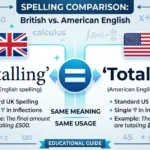
There is no spelling difference between British and American English.
Which One Should You Use?
Use fazed when talking about:
- Feelings
- Confidence
- Worry
- Fear
- Being affected
Use phased when talking about:
- Projects
- Plans
- Business changes
- Construction
- Gradual introductions
Quick Guide
| Situation | Correct Word |
|---|---|
| She wasn’t ___ by the noise. | Fazed |
| The rollout was ___ over six months. | Phased |
| He looked completely unfazed. | Fazed |
| The company ___ out old equipment. | Phased |
Common Mistakes With Fazed or Phased
Mistake 1
❌ I’m not phased by criticism.
✔ I’m not fazed by criticism.
Mistake 2
❌ The project was fazed over two years.
✔ The project was phased over two years.
Mistake 3
❌ She was phased by the bad news.
✔ She was fazed by the bad news.
Mistake 4
❌ The company fazed in the new policy.
✔ The company phased in the new policy.
Mistake 5
❌ Assuming both words mean “affected.”
✔ Only fazed means emotionally affected.
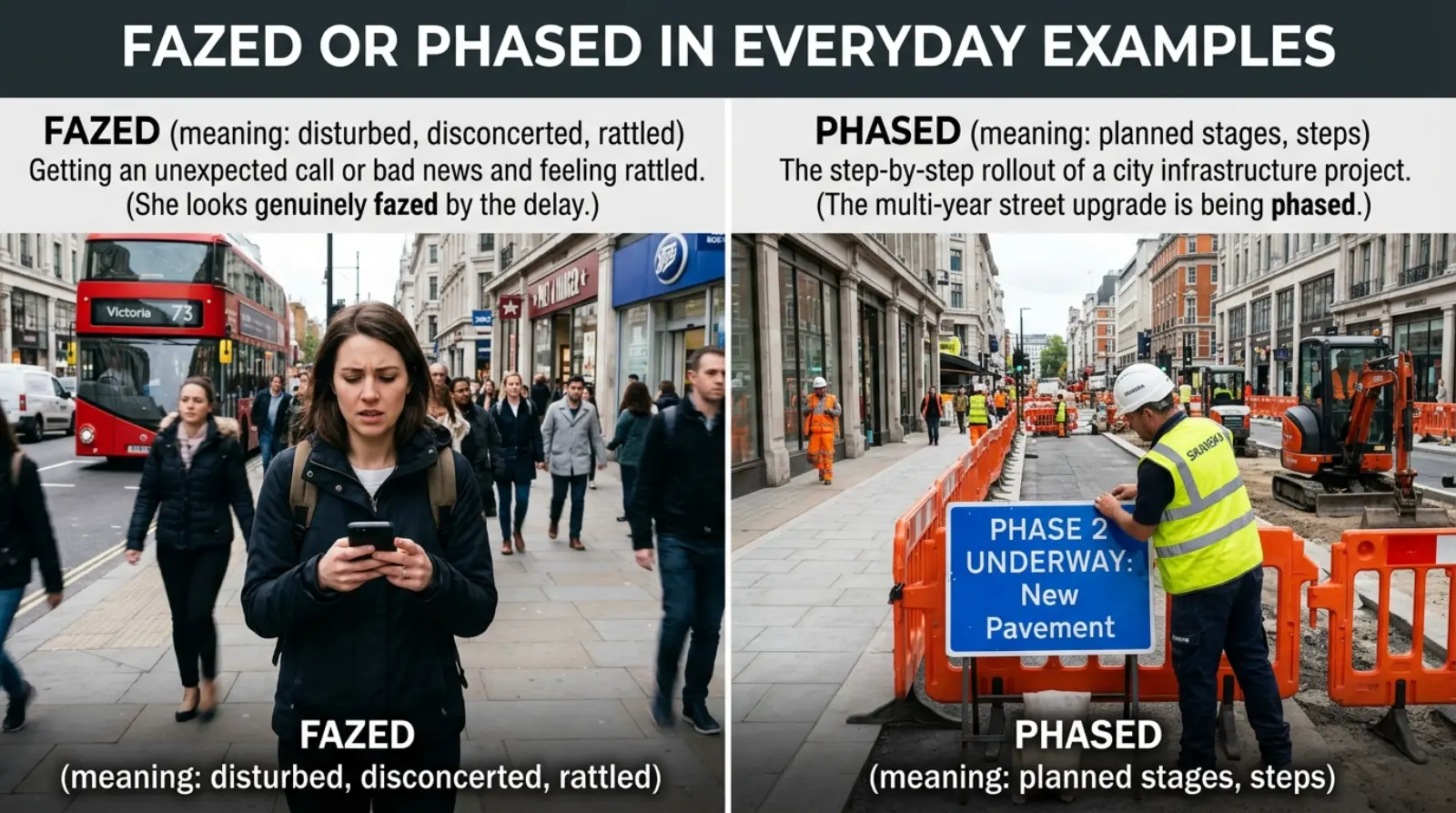
Fazed or Phased in Everyday Examples
School
“I wasn’t fazed by the difficult exam.”
Workplace
“The company phased in new working hours.”
Social Media
“She’s totally unfazed by online criticism.”
Daily Life
“The puppy wasn’t fazed by the loud thunder.”
“The software update will be phased in next month.”
Conversation
“He stayed unfazed during the competition.”
Fazed or Phased in Different Contexts
Business
Companies often phase in new products and phase out old ones.
Psychology
People use fazed to describe emotional reactions.
Project Management
Large projects are usually completed in phases.
Everyday English
The phrase “not fazed” is very common in conversations.
Google Trends & Usage
People often search:
- Fazed or phased meaning
- Is it not fazed or not phased?
- Difference between fazed and phased
- Fazed vs phased examples
- How do you spell unfazed?
This keyword is popular in the UK, US, Canada, Australia, India, and Pakistan because the words sound identical but have different meanings.
Comparison Table: Fazed vs Phased
| Feature | Fazed | Phased |
|---|---|---|
| Meaning | Disturbed | Done in stages |
| Root word | Faze | Phase |
| Pronunciation | Same | Same |
| Used with emotions | ✔ Yes | ✖ No |
| Used in projects | ✖ Rarely | ✔ Yes |
| Common mistake | Mixed with phased | Mixed with fazed |
Fazed or Phased in Professional Life
Using the correct word makes your writing clearer.
Examples:
- ✔ “Employees were not fazed by the changes.”
- ✔ “The new policy will be phased in gradually.”
Using the wrong word may confuse your readers.
Fazed or Phased for Students
Students often confuse these words because they sound the same.
Remember:
- Fazed = Feelings
- Phased = Phases or Steps
This simple rule helps you choose the correct spelling.
Common Uses
People use fazed when talking about:
- Confidence
- Stress
- Fear
- Challenges
- Emotions
People use phased when talking about:
- Business plans
- Construction
- Technology updates
- Government policies
- Long-term projects
Simple Trick to Remember
Think of it this way:
- Fazed has “F” for Feelings.
- Phased has “PH” for Phases.
If you’re talking about emotions, use fazed.
If you’re talking about stages or steps, use phased.
Expert Tips
- Remember the common phrase “not fazed.”
- Think of phase one, phase two, phase three when using phased.
- Read your sentence carefully before choosing the word.
- Spell-check won’t catch this mistake because both words are correctly spelled.
Related Searches People Also Ask
- Is it fazed or phased?
- What does unfazed mean?
- What does phased mean?
- Why do people confuse fazed and phased?
- How do you use fazed in a sentence?
- What is a phased approach?
- Is “not phased” ever correct?
- What does phase out mean?
- How do you remember fazed vs phased?
- Are fazed and phased homophones?
FAQs
Is it “not fazed” or “not phased”?
Not fazed is correct when you mean “not bothered.”
What does fazed mean?
It means disturbed, upset, or affected.
What does phased mean?
It means completed or introduced in stages.
Are fazed and phased pronounced the same?
Yes. They are homophones.
Can I say “the project was fazed”?
No. The correct word is phased.
Is “unfazed” a real word?
Yes. It means calm or not affected.
Which mistake is more common?
Many people mistakenly write “not phased” instead of “not fazed.”
How can I remember the difference?
Remember: Fazed = Feelings, Phased = Phases.
Final Verdict
The difference is simple:
- ✅ Fazed means disturbed or emotionally affected.
- ✅ Phased means completed or introduced in stages.
Easy Memory Rule:
F = Feelings = Fazed
PH = Phases = Phased
Conclusion
Understanding the difference between fazed or phased is easier once you know what each word describes. Although they sound exactly the same, fazed relates to emotions and reactions, while phased relates to stages, plans, or gradual changes.
Whenever you’re unsure, ask yourself one question: Am I talking about feelings or phases? If it’s about emotions, choose fazed. If it’s about steps or stages, choose phased.

Camila Green is an English language writer who specializes in confusing word comparisons and spelling explanations. She creates simple, beginner-friendly guides on topics like “niece or neice” and other common English mistakes. Her writing focuses on clarity, real-life examples, and easy learning. At VerrsaPick, she helps readers improve their English with practical and engaging content.