Have you ever filled out a college application, updated your LinkedIn profile, or read a university newsletter and wondered whether to use alumnus or alumni? You’re not alone. These two words often confuse students, graduates, job seekers, and even professional writers because they look similar but have different meanings.
People usually search for alumnus or alumni meaning, correct usage, pronunciation, examples, grammar difference, and when to use alumnus or alumni. These words commonly appear in school websites, university graduation ceremonies, business networking events, resumes, social media profiles, and academic publications.
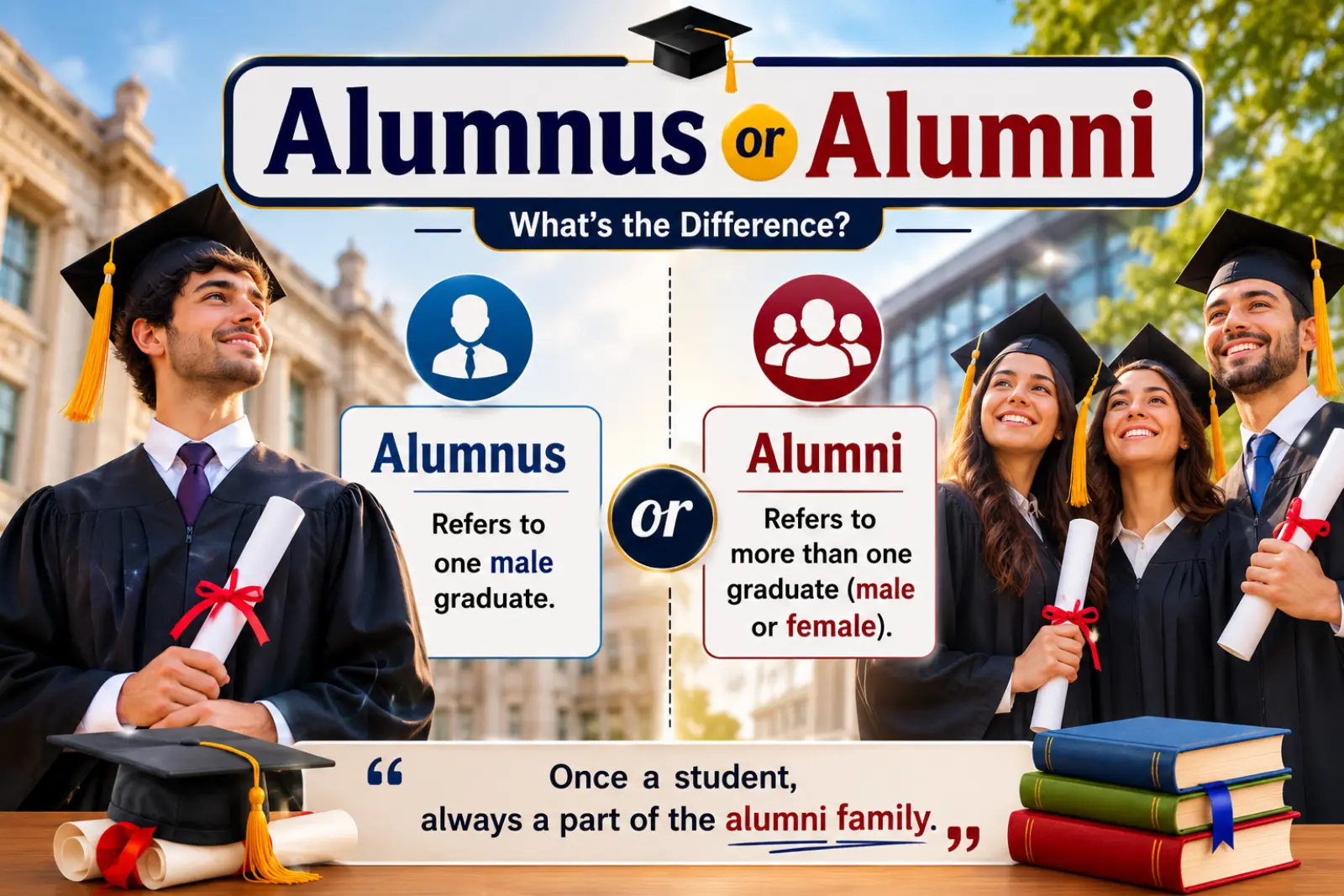
The good news is that the difference is simple. Alumnus refers to one male graduate (or sometimes one graduate in general), while alumni refers to more than one graduate, especially a group of men or a mixed group of men and women. Understanding these words will help you sound more professional and confident in both academic and workplace writing.
In this guide, you’ll learn the meaning, pronunciation, examples, usage, grammar rules, common mistakes, expert tips, and simple explanations in easy English.
Alumnus or Alumni – Quick Answer
👉 Alumnus = One male graduate (sometimes used for one graduate in general).
👉 Alumni = More than one graduate (a group of men or a mixed group).
Examples
- ✅ John is an alumnus of Harvard University.
- ✅ The alumni attended the reunion.
- ✅ Our school’s alumni support scholarships.
- ✅ Every alumnus received a certificate.
Simple Rule
One graduate = Alumnus
Many graduates = Alumni
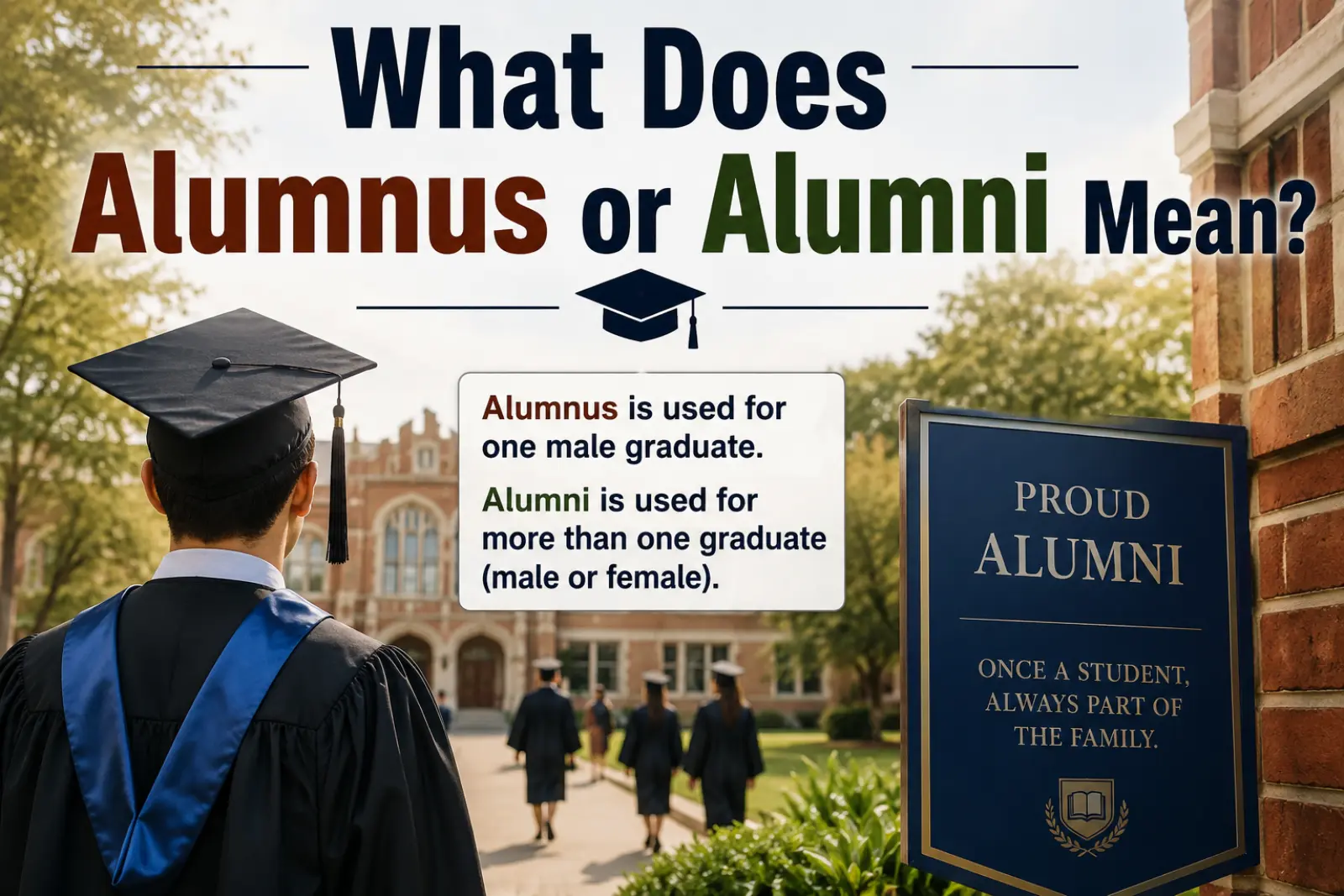
What Does Alumnus or Alumni Mean?
What Does “Alumnus” Mean?
Alumnus is a singular noun that refers to a person who has graduated from a school, college, or university. Traditionally, it refers to one male graduate.
Examples
- He is an alumnus of Oxford University.
- Every alumnus received an invitation.
Synonyms
- Graduate
- Former student
- Ex-student
Related Terms
- Alum (informal)
- Alumna
- Alumni
- Alumnae
What Does “Alumni” Mean?
Alumni is the plural form of alumnus.
It refers to multiple graduates, usually men or a mixed group of graduates.
Examples
- The university welcomed its alumni.
- Thousands of alumni donated to the school.
The Origin of Alumnus or Alumni
These words come from Latin.
- Alumnus means “foster son” or “student.”
- Alumni is the Latin plural form.
Today, universities around the world use these terms to describe former students.
How to Pronounce Alumnus or Alumni
| Word | Pronunciation | Phonetic |
|---|---|---|
| Alumnus | uh-LUM-nus | /əˈlʌm.nəs/ |
| Alumni | uh-LUM-nye | /əˈlʌm.naɪ/ |
Speaking Tip
Remember that alumni ends with the “nye” sound.
British English vs American English Usage
| Feature | British English | American English | Notes |
|---|---|---|---|
| Alumnus | Common | Common | Same meaning |
| Alumni | Common | Common | Same usage |
| Spelling | Same | Same | No difference |
Both British and American English use these words in the same way.
Which One Should You Use?
Use alumnus when talking about one graduate.
Use alumni when talking about two or more graduates.
| Situation | Correct Word |
|---|---|
| One graduate | Alumnus |
| Many graduates | Alumni |
| Reunion group | Alumni |
| University newsletter | Depends on number |
Note: For one female graduate, the traditional Latin term is alumna, and for a group of female graduates, alumnae. However, many organizations now use alumni as a gender-inclusive plural.
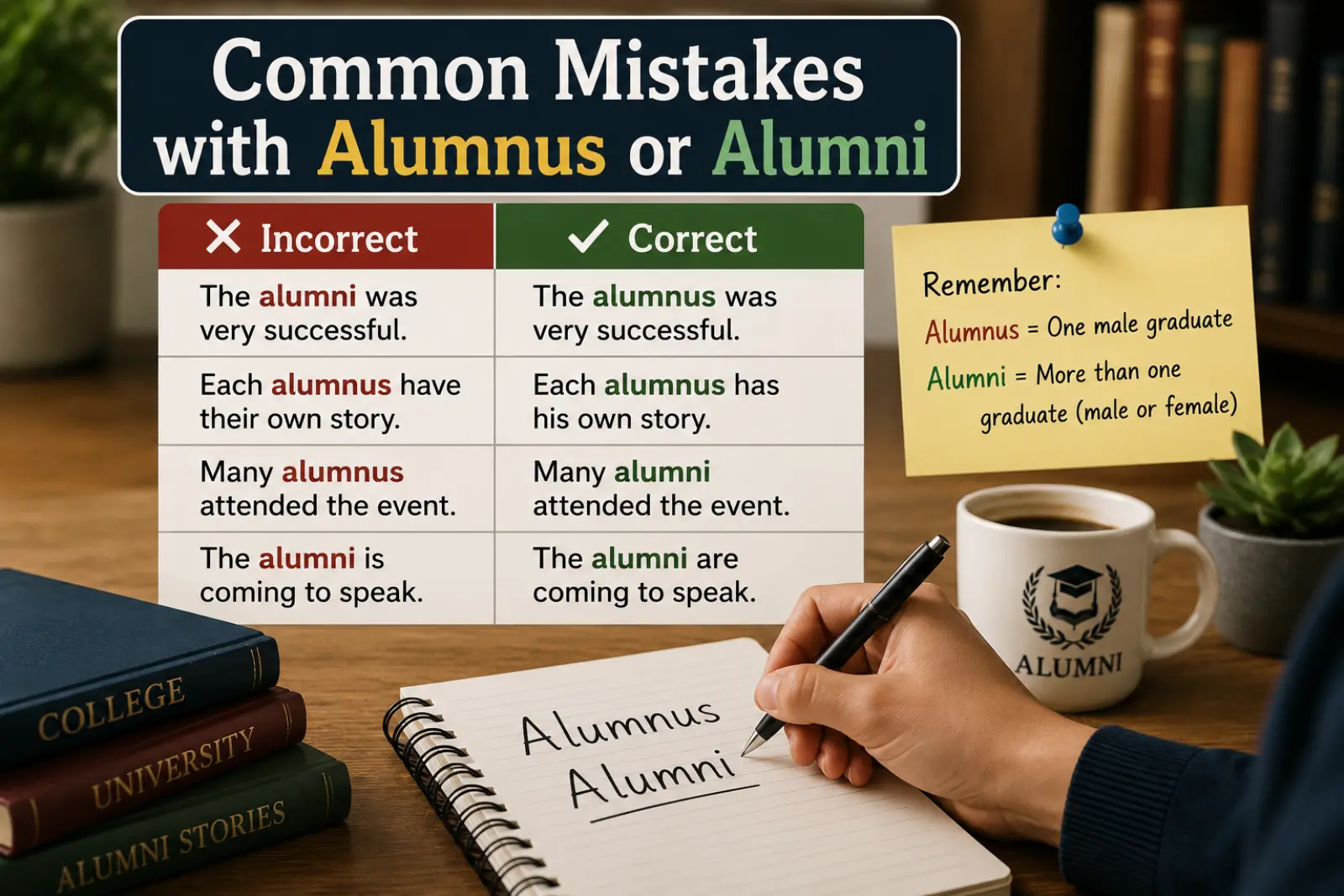
Common Mistakes with Alumnus or Alumni
Mistake 1
❌ She is an alumni.
✅ She is an alumna (traditional) or an alumnus in some modern contexts.
Mistake 2
❌ He is an alumni.
✅ He is an alumnus.
Mistake 3
❌ Every alumni received a gift.
✅ Every alumnus received a gift.
Mistake 4
❌ The alumnus attended the reunion. (Talking about hundreds of graduates.)
✅ The alumni attended the reunion.
Mistake 5
❌ Alumni is always singular.
✅ Alumni is plural.
Alumnus or Alumni in Everyday Examples
School
- Every alumnus was invited to speak.
University
- The alumni association raised money for students.
Workplace
- Our CEO is an alumnus of Stanford University.
Social Media
- Proud alumni celebrated the school’s anniversary.
- Dear Alumni, thank you for supporting our university.
Alumnus or Alumni in Different Contexts
Education
Schools use these words to describe former students.
Business
Many companies highlight employees who are alumni of well-known universities.
Networking
Alumni groups help graduates build professional connections and find career opportunities.
Google Trends & Usage Data
Searches for alumnus or alumni increase during graduation season, university admissions, and job applications. Common searches include:
- alumnus vs alumni
- alumnus meaning
- alumni meaning
- alumnus pronunciation
- alumni examples
- what is the difference between alumnus and alumni
These searches are popular in the US, UK, Canada, Australia, India, and Pakistan.
Comparison Table: Alumnus vs Alumni
| Feature | Alumnus | Alumni |
|---|---|---|
| Number | Singular | Plural |
| Meaning | One graduate | Multiple graduates |
| Part of Speech | Noun | Noun |
| Formal Writing | Yes | Yes |
| University Usage | Common | Very Common |
| Everyday Use | Common | Very Common |
Alumnus or Alumni in Professional Life
Using the correct term shows professionalism on resumes, LinkedIn profiles, and business biographies.
Examples:
- He is an alumnus of Yale University.
- Our company’s alumni network includes thousands of professionals.
Correct grammar creates a stronger professional impression.
Alumnus or Alumni for Students
Students often confuse these words because they look alike.
Easy Trick
- One graduate = Alumnus
- Many graduates = Alumni
If you are talking about a group, choose alumni.
Simple Trick to Remember Alumnus or Alumni
Think of it this way:
“US” = One person.
“I” = Many people.
- Alumnus → One graduate.
- Alumni → Many graduates.
Expert Tips
- Remember that alumni is always plural.
- For informal writing, alum is widely accepted.
- Check whether you’re talking about one person or many before choosing the word.
- On resumes and LinkedIn, use the correct term to appear more professional.
Related Searches People Also Ask
- What is the difference between alumnus and alumni?
- Is alumni singular or plural?
- Can I call myself an alumnus?
- What does alumna mean?
- Is alum acceptable?
- How do you pronounce alumni?
- What is an alumni association?
- Is alumni gender-neutral?
- When should I use alumnus?
- What is the plural of alumnus?
FAQs
Is alumnus singular?
Yes. Alumnus refers to one graduate.
Is alumni plural?
Yes. Alumni refers to more than one graduate.
What is alumna?
Alumna is the traditional term for one female graduate.
What is alumnae?
Alumnae is the traditional plural for female graduates.
Can I use alum?
Yes. Alum is a common informal alternative.
Is alumni correct for one person?
No. It is a plural word.
Are alumnus and alumni used worldwide?
Yes. They are commonly used by schools and universities around the world.
Which word should I use on LinkedIn?
Use alumnus (or alumna, traditionally) for one graduate, and alumni for groups.
Final Verdict
The difference between alumnus and alumni is based on number. Alumnus refers to one graduate, while alumni refers to a group of graduates. Choosing the correct word makes your writing clearer and more professional.
Easy memory rule:
One graduate = Alumnus. Many graduates = Alumni.
Conclusion
Understanding alumnus or alumni is simple once you remember that the difference is mainly singular versus plural. Whether you’re writing a resume, updating your LinkedIn profile, introducing yourself at a networking event, or reading a university newsletter, using the correct term shows strong grammar skills and professionalism.
Keep this quick trick in mind: Alumnus means one graduate, while alumni means many graduates. With this simple rule, you’ll use both words confidently in academic, professional, and everyday writing.

Camila Green is an English language writer who specializes in confusing word comparisons and spelling explanations. She creates simple, beginner-friendly guides on topics like “niece or neice” and other common English mistakes. Her writing focuses on clarity, real-life examples, and easy learning. At VerrsaPick, she helps readers improve their English with practical and engaging content.