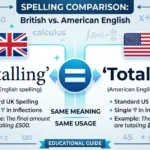

Have you ever typed behavior in a document and seen a red spell-check line, then changed it to behaviour—or the other way around? If so, you’re not alone. This is one of the most common spelling differences between American English and British English.
People usually search for “behavior vs behaviour” because they want to know which spelling is correct, whether there’s any difference in meaning, and which version they should use in school, work, or professional writing. You may also notice that books, websites, and newspapers use different spellings depending on the country.
The good news is simple: both spellings are correct. The only real difference is the variety of English you’re writing.
In this guide, you’ll learn the meaning, pronunciation, examples, usage, grammar rules, common mistakes, expert tips, and simple explanations in easy English.
Behavior vs Behaviour – Quick Answer
Both words have the same meaning.
- 👉 Behavior = American English spelling
- 👉 Behaviour = British English spelling
Both mean the way a person, animal, or thing acts or behaves.
Examples
- ✅ His behavior was polite. (American English)
- ✅ Her behaviour impressed the teacher. (British English)
- ✅ Good behavior is rewarded at school.
- ✅ Children’s behaviour develops over time.
Easy Memory Trick
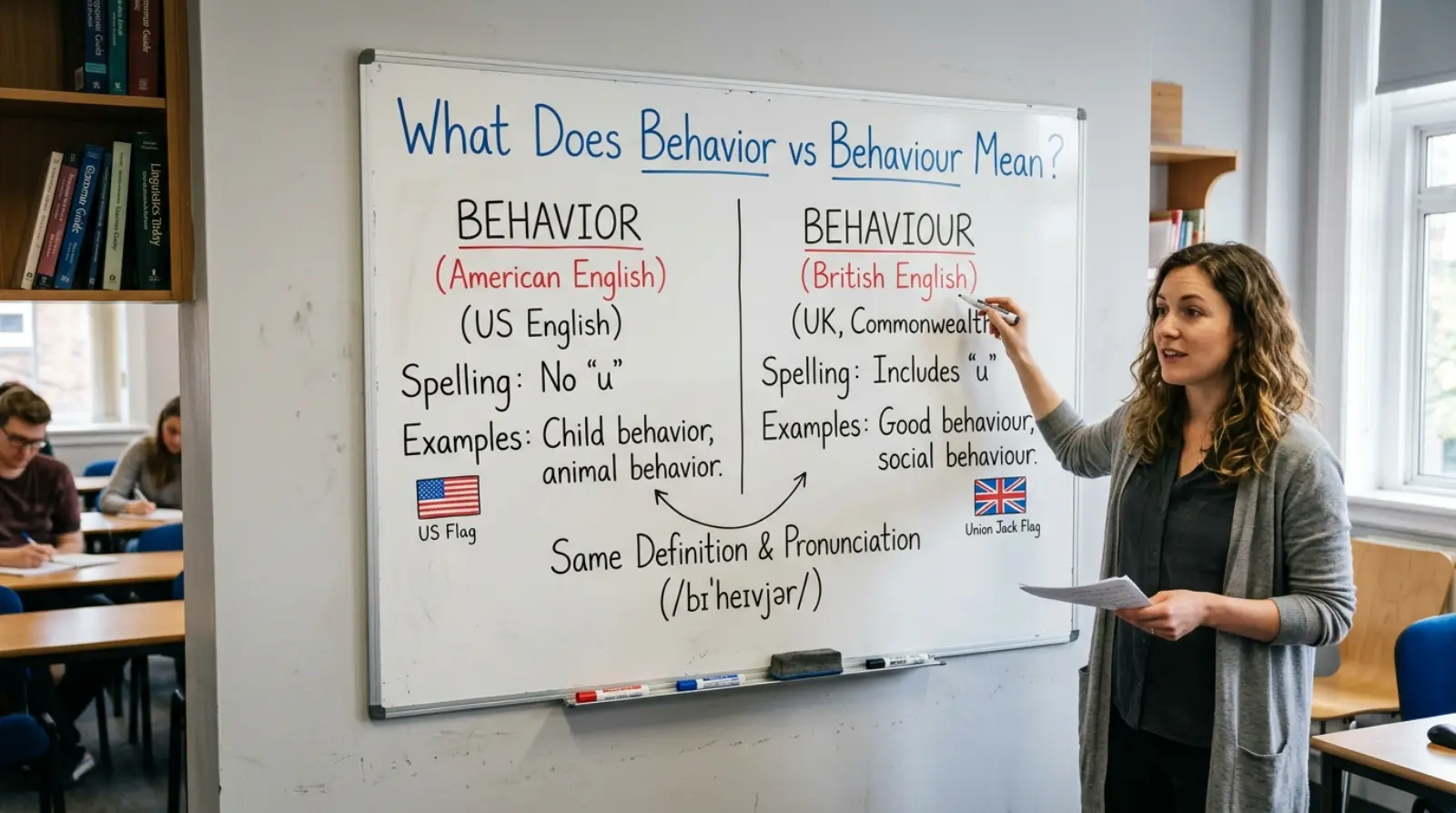
👉 American English usually drops the “u” → Behavior
👉 British English keeps the “u” → Behaviour
What Does Behavior vs Behaviour Mean?
Both words are nouns that describe how someone or something acts.
They can refer to:
- A person’s actions
- An animal’s actions
- The way objects or materials react
- Conduct in school or at work
Synonyms
- Conduct
- Actions
- Manners
- Attitude
- Response
- Habits
Opposites
- Misconduct
- Disobedience
- Disorder
Related Terms
- Behave
- Behavioural / Behavioral
- Conduct
- Personality
- Etiquette
The Origin of Behavior vs Behaviour
The word comes from the verb behave, which entered English through French influences.
Later, American English simplified many spellings by removing the letter “u” from words such as:
- Behaviour → Behavior
- Colour → Color
- Favourite → Favorite
- Honour → Honor
Today, both spellings are accepted worldwide depending on the English style being used.
How to Pronounce Behavior and Behaviour
| Word | Pronunciation |
|---|---|
| Behavior | bih-HAY-vyer |
| Behaviour | bih-HAY-vyer |
Speaking Tip
Both words are pronounced exactly the same.
The only difference is the spelling.
British English vs American English Usage
| Feature | British English | American English | Notes |
|---|---|---|---|
| Preferred spelling | Behaviour | Behavior | Same meaning |
| Pronunciation | Same | Same | No difference |
| Grammar | Same | Same | Noun |
| Formal writing | Behaviour | Behavior | Follow your style guide |
Which One Should You Use?
Choose behaviour if you’re writing for:
- UK readers
- British schools
- Australian publications
- Most Commonwealth countries
Choose behavior if you’re writing for:
- US readers
- American schools
- US businesses
- American websites
Quick Guide
| Audience | Best Choice |
|---|---|
| United Kingdom | Behaviour |
| United States | Behavior |
| Canada | Either (follow style guide) |
| Australia | Behaviour |
| International audience | Stay consistent |
Common Mistakes With Behavior vs Behaviour
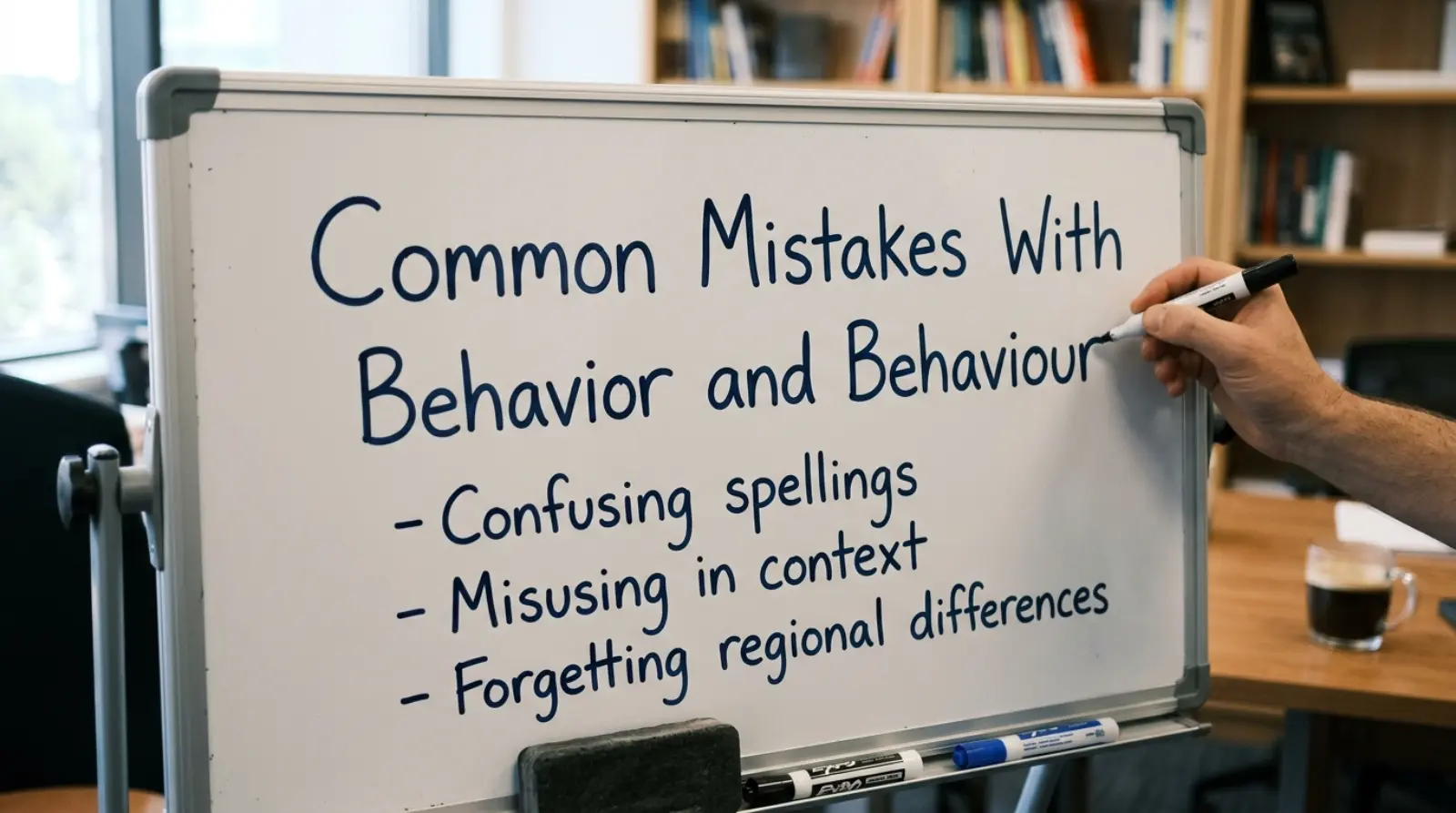
Mistake 1
❌ Mixing both spellings in one article.
✔ Use one spelling consistently.
Mistake 2
❌ Thinking one spelling is incorrect.
✔ Both are correct.
Mistake 3
❌ Using American spelling in a British assignment.
✔ Match the required English style.
Mistake 4
❌ Believing the meanings are different.
✔ They have exactly the same meaning.
Mistake 5
❌ Switching spellings in professional documents.
✔ Keep the same spelling throughout your writing.
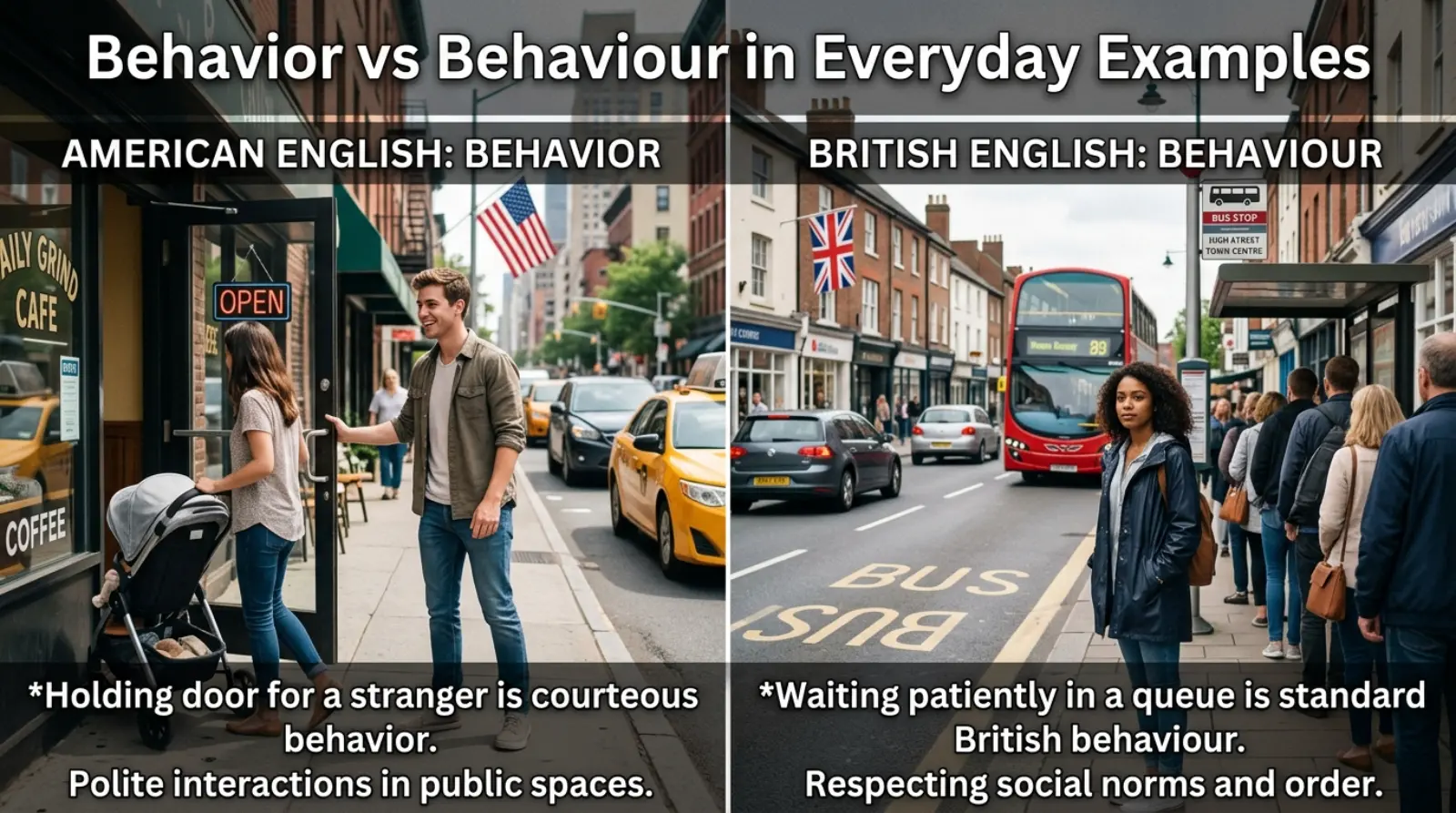
Behavior vs Behaviour in Everyday Examples
School
“Good behaviour helps students learn.”
Workplace
“Professional behavior builds trust.”
Social Media
“Kind behaviour always stands out.”
Daily Life
“His behavior surprised everyone.”
“We appreciate your professional behaviour.”
Conversation
“Children learn good behavior from adults.”
Behavior vs Behaviour in Different Contexts
Education
Teachers often discuss student behavior and classroom behaviour.
Psychology
Psychologists study human behavior, emotions, and habits.
Workplace
Employers value respectful behavior and teamwork.
Science
Scientists may describe the behavior of animals, chemicals, or machines.
Google Trends & Usage
People commonly search:
- Behavior vs behaviour difference
- Which spelling is correct?
- Is behaviour British English?
- Is behavior American English?
- Behaviour or behavior in IELTS?
This keyword is especially popular in the US, UK, Canada, Australia, India, and Pakistan among students, writers, teachers, and English learners.
Comparison Table: Behavior vs Behaviour
| Feature | Behavior | Behaviour |
|---|---|---|
| Meaning | Conduct or actions | Conduct or actions |
| Correct? | ✔ Yes | ✔ Yes |
| American English | Preferred | Less common |
| British English | Less common | Preferred |
| Pronunciation | Same | Same |
| Grammar | Noun | Noun |
| Professional writing | Yes | Yes |
Behavior vs Behaviour in Professional Life
Using the correct regional spelling makes your writing more professional.
Examples:
- US company: “Employee behavior policy.”
- UK company: “Employee behaviour policy.”
Always match the spelling to your audience or company style guide.
Behavior vs Behaviour for Students
Many students lose marks by mixing British and American spellings.
Remember:
- British English = Behaviour
- American English = Behavior
Choose one style and use it consistently throughout your assignment.
Common Uses
People use these words when talking about:
- Classroom conduct
- Workplace ethics
- Child development
- Animal behavior
- Psychology
- Customer service
- Social skills
- Personal habits
Simple Trick to Remember
Think of it this way:
- 🇬🇧 Britain loves the letter “U” → Behaviour
- 🇺🇸 America removes the “U” → Behavior
If you remember that rule, you’ll rarely make a mistake.
Expert Tips
- Check whether you’re writing in British or American English before you begin.
- Don’t switch spellings halfway through a document.
- If you’re writing for an international audience, follow your organisation’s preferred style guide.
- Spell-check settings can help you stay consistent.
Related Searches People Also Ask
- Is behavior or behaviour correct?
- Why does British English use behaviour?
- Is behavior American English?
- Do they mean the same thing?
- How do you pronounce behaviour?
- Which spelling should I use in IELTS?
- Is behavioural spelled differently in the US?
- Can I use both spellings in one essay?
- What is good behavior?
- What does behaviour mean?
FAQs
Is behavior or behaviour correct?
Both are correct. The spelling depends on the type of English you use.
Which is British English?
Behaviour is the British English spelling.
Which is American English?
Behavior is the American English spelling.
Do they have different meanings?
No. They have the same meaning.
Which spelling should students use?
Use the spelling required by your school or exam.
Is the pronunciation different?
No. Both words are pronounced the same.
Can I mix both spellings?
No. Stay consistent within the same document.
Is behavior a noun?
Yes. Both behavior and behaviour are nouns.
Final Verdict
The answer is simple:
- ✅ Behavior is the preferred spelling in American English.
- ✅ Behaviour is the preferred spelling in British English.
Easy Memory Rule:
No “U” = American English
With “U” = British English
Conclusion
The difference between behavior vs behaviour is only the spelling, not the meaning. Whether you’re writing for school, work, or online, choose the version that matches your audience and stay consistent throughout your writing.
If you remember one simple rule—British English keeps the “u,” while American English drops it—you’ll always know which spelling to use.

Camila Green is an English language writer who specializes in confusing word comparisons and spelling explanations. She creates simple, beginner-friendly guides on topics like “niece or neice” and other common English mistakes. Her writing focuses on clarity, real-life examples, and easy learning. At VerrsaPick, she helps readers improve their English with practical and engaging content.