Sudden stomach pain can be scary. You may feel bloated, uncomfortable, or have sharp pain in your belly. At that moment, it is easy to wonder, “Is this just gas, or could it be appendicitis?”
This is a common question because gas and appendicitis can sometimes cause similar symptoms. Both may involve abdominal pain, nausea, or changes in how you feel. However, appendicitis is a medical emergency, while gas is usually harmless and often improves on its own.
People usually search for appendicitis or gas to understand the difference, symptoms, causes, pain location, warning signs, and when to seek medical help. The confusion can be especially stressful because abdominal pain can change over time.
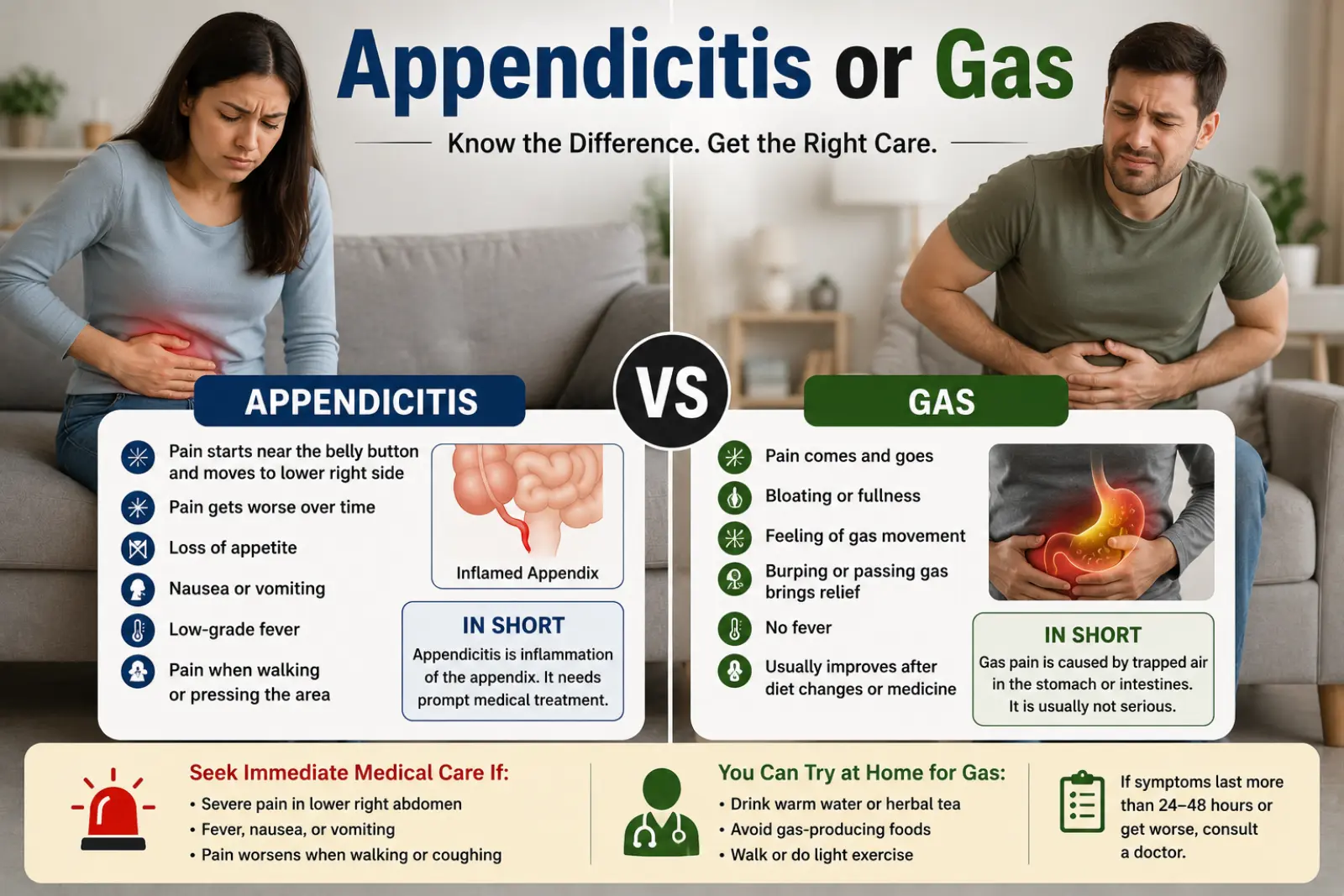
The key is to look at the pattern of symptoms, not just one sign. Gas often causes bloating, pressure, burping, or pain that moves around. Appendicitis often causes pain that becomes stronger and may settle in the lower right side of the abdomen. Other symptoms can include fever, nausea, vomiting, and loss of appetite.
Still, symptoms are not always clear. Appendicitis can look different from person to person, especially in children, older adults, and pregnant people. Only a healthcare professional can properly diagnose it.
In this guide, you’ll learn the key differences between appendicitis or gas, common symptoms, pain patterns, warning signs, simple comparisons, and when medical care may be needed.
Appendicitis or Gas – Quick Answer
👉 Gas = Usually causes bloating, pressure, burping, passing gas, and abdominal discomfort that may move around.
👉 Appendicitis = Inflammation of the appendix that often causes worsening abdominal pain and may require urgent medical treatment.
Simple Examples
- Gas pain may improve after passing gas or having a bowel movement.
- Appendicitis pain often becomes more severe over time.
- Gas can cause bloating and pressure.
- Appendicitis may cause pain that moves toward the lower right abdomen.
- Fever, vomiting, and worsening pain can be warning signs of appendicitis.
Simple Rule
👉 Gas often moves and improves. Appendicitis pain often worsens and stays more focused.
However, this is only a general guide. Do not rely on symptoms alone to rule out appendicitis.
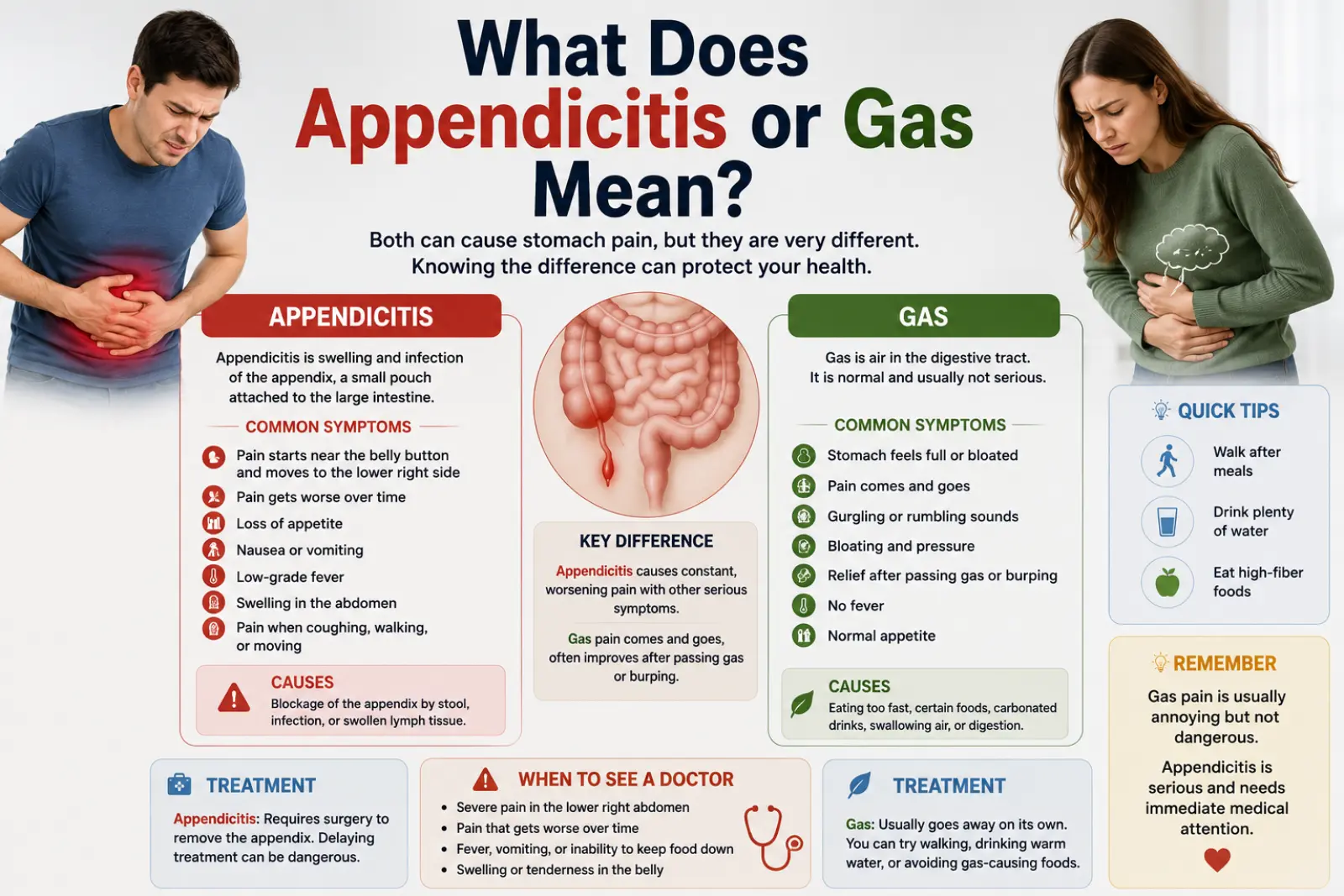
What Does Appendicitis or Gas Mean?
What Is Appendicitis?
Appendicitis happens when the appendix becomes inflamed. The appendix is a small, tube-shaped structure connected to the large intestine.
A common symptom is abdominal pain that may begin around the belly button and later become more focused in the lower right abdomen. The pain may become worse with movement or coughing.
Other symptoms may include:
- Loss of appetite
- Nausea
- Vomiting
- Fever
- Abdominal tenderness
- Constipation or diarrhea in some cases
Appendicitis needs prompt medical evaluation because an untreated appendix can rupture.
What Is Gas?
Gas is a normal part of digestion. Your digestive system naturally produces gas when you swallow air or when bacteria break down food in the intestines.
Gas can cause:
- Bloating
- Burping
- Passing gas
- Cramping
- Pressure
- Fullness
- Moving abdominal discomfort
Gas pain often improves after passing gas or using the bathroom.
Related Terms
- Abdominal pain
- Stomach pain
- Bloating
- Digestive problems
- Appendix inflammation
- Lower right abdominal pain
- Intestinal gas
- Gastrointestinal symptoms
The Origin and Medical Background of Appendicitis or Gas
The word appendicitis comes from medical terms related to the appendix and inflammation. The ending “-itis” commonly means inflammation.
The appendix itself has been studied for centuries. Modern medicine now recognizes appendicitis as a condition that can become serious if the inflamed appendix ruptures.
Gas, on the other hand, is a normal digestive process. Everyone produces some intestinal gas. The amount can change based on food, eating habits, swallowed air, and digestion.
Today, searches for appendicitis or gas are common because people often want to understand sudden abdominal pain before deciding what to do next.
How to Recognize the Pain
There is no single pain pattern that proves you have appendicitis or gas. Still, some patterns can provide useful clues.
Gas Pain
Gas pain may:
- Move from one area to another
- Feel like pressure or cramping
- Cause bloating
- Improve after passing gas
- Come and go
- Be linked to certain foods
Appendicitis Pain
Appendicitis pain may:
- Start near the belly button
- Move toward the lower right abdomen
- Become stronger over time
- Feel more constant
- Become worse with movement or coughing
- Occur with fever or nausea
Important: These symptoms can overlap with other medical conditions. Severe or worsening abdominal pain should be evaluated by a healthcare professional.
British English vs American English Usage
The medical terms appendicitis and gas have the same basic meaning in British and American English.
| Feature | British English | American English | Notes |
|---|---|---|---|
| Appendicitis | Appendicitis | Appendicitis | Same spelling |
| Gas | Gas | Gas | Same spelling |
| Meaning | Medical condition or digestive gas | Same | Meaning is generally the same |
| Common phrase | Gas pain | Gas pain | Used in both |
| Medical usage | Appendicitis | Appendicitis | Same medical term |
The main difference is not the language. It is the medical situation being described.
Which One Should You Be Concerned About?
Gas may be more likely when:
- You feel bloated.
- You have pressure or cramping.
- You are burping or passing gas.
- Pain moves around.
- Symptoms improve after passing gas or having a bowel movement.
Appendicitis may be a concern when:
- Pain keeps getting worse.
- Pain becomes focused in the lower right abdomen.
- You have fever.
- You feel nauseated or vomit.
- You lose your appetite.
- Your abdomen is very tender.
- Movement makes the pain worse.
If you have severe, worsening, or persistent abdominal pain, seek medical attention rather than trying to diagnose yourself.
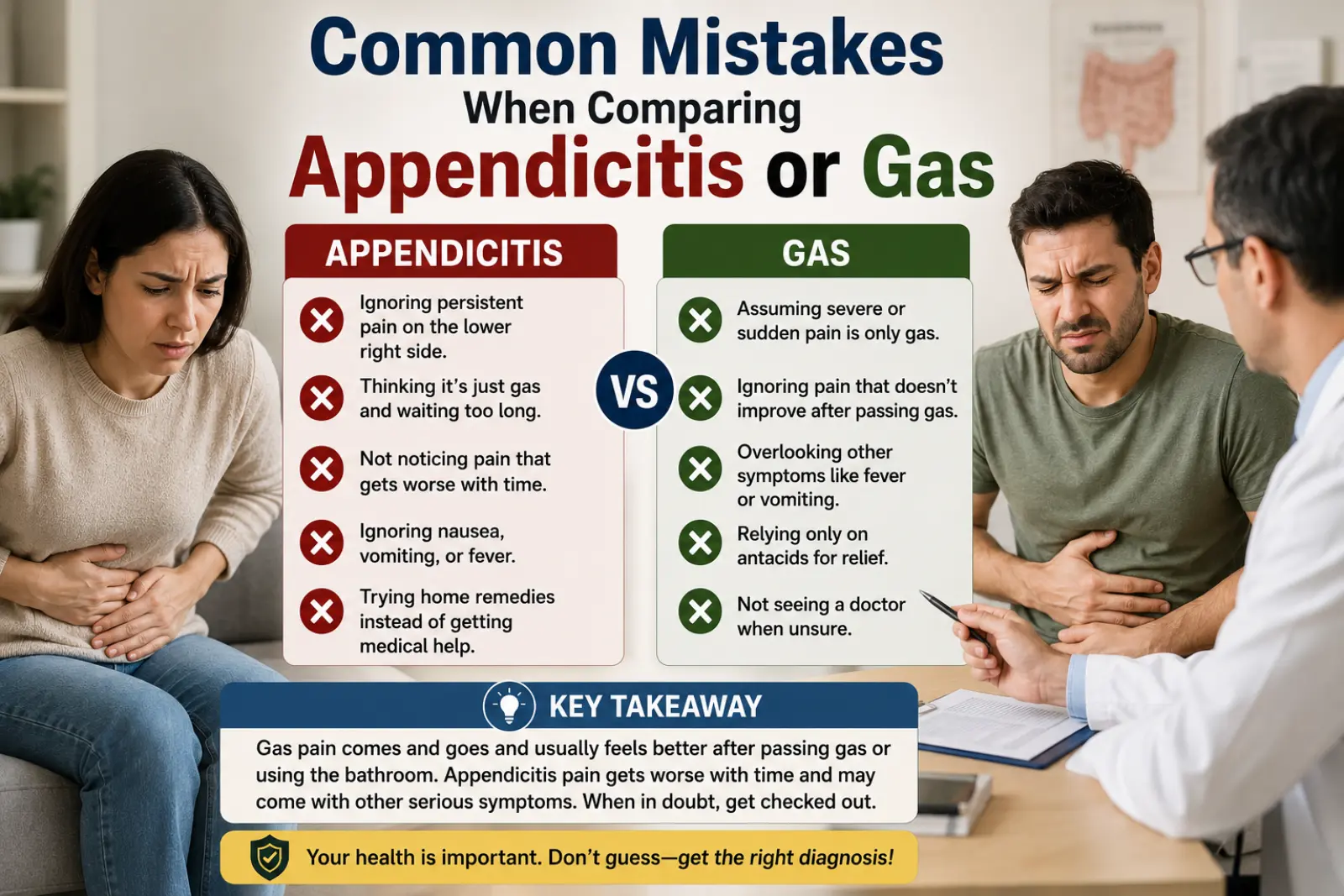
Common Mistakes When Comparing Appendicitis or Gas
Mistake 1: Assuming all stomach pain is gas
❌ “I have stomach pain, so it must be gas.”
✔ Stomach pain can have many causes.
Correction tip: Pay attention to worsening pain and other symptoms.
Mistake 2: Waiting too long with severe pain
❌ “I’ll wait several days to see if it gets better.”
✔ Severe or worsening abdominal pain deserves medical attention.
Why people make this mistake: They may hope the pain is harmless.
Mistake 3: Looking only at pain location
❌ “My pain isn’t on the lower right, so it can’t be appendicitis.”
✔ Appendicitis does not always follow the same pattern.
Correction tip: Consider the full group of symptoms.
Mistake 4: Assuming passing gas rules out appendicitis
❌ “I passed gas, so I definitely don’t have appendicitis.”
✔ Passing gas does not guarantee that appendicitis is impossible.
Mistake 5: Ignoring fever and vomiting
❌ “The pain is the only thing that matters.”
✔ Fever, nausea, and vomiting can provide important clues.
Appendicitis or Gas in Everyday Situations
Daily Life
You may feel bloated after eating a large meal. If the discomfort improves after passing gas, digestive gas may be involved.
School or Work
If you suddenly develop severe abdominal pain that continues to worsen, do not simply assume it is gas. Consider getting medical advice.
Text Messages
Someone might say, “I think I have gas pain.” However, texting cannot determine the actual cause of abdominal pain.
Online Searches
People often search phrases such as:
- “Is my stomach pain gas or appendicitis?”
- “How do I know if I have appendicitis?”
- “Can gas cause lower right abdominal pain?”
- “Where does appendicitis pain start?”
These searches can help people learn about symptoms, but they cannot replace a medical examination.
Appendicitis or Gas in Different Contexts
Food and Digestion
Gas can happen after eating certain foods or swallowing extra air. Eating quickly, drinking carbonated beverages, and some high-fiber foods can contribute to gas.
Abdominal Pain
Gas pain may come and go. Appendicitis pain often becomes more persistent and severe, but symptoms vary.
Children
Children may have difficulty explaining exactly where they hurt. Parents should take serious or worsening abdominal pain seriously.
Pregnancy
Pregnancy can change the location or presentation of abdominal pain. Pregnant people with concerning symptoms should contact a healthcare professional promptly.
Older Adults
Older adults may sometimes have less typical symptoms. This makes professional medical assessment especially important when abdominal pain is concerning.
Comparison Table: Appendicitis or Gas
| Feature | Gas | Appendicitis |
|---|---|---|
| Main cause | Digestive gas | Inflamed appendix |
| Pain pattern | Often moving or cramping | Often becomes more focused |
| Bloating | Common | May occur |
| Passing gas | May relieve symptoms | Does not reliably rule it out |
| Fever | Usually absent | May occur |
| Nausea | Possible | Common |
| Vomiting | Less common | Possible |
| Appetite | Usually normal | May decrease |
| Pain progression | Often improves | May worsen |
| Medical urgency | Usually low | Can be an emergenc |
Signs and Common Patterns to Watch
Possible Gas Patterns
- Bloating after meals
- Burping
- Passing gas
- Mild to moderate cramps
- Feeling full
- Symptoms that come and go
Possible Appendicitis Warning Signs
- Increasing abdominal pain
- Pain becoming more focused
- Fever
- Nausea or vomiting
- Loss of appetite
- Significant tenderness
- Pain that worsens with movement
Get Urgent Medical Help
Seek urgent medical care if you have severe or rapidly worsening abdominal pain, especially with fever, repeated vomiting, fainting, confusion, or a very tender or rigid abdomen.
If you are unsure, it is safer to contact a healthcare professional than to assume the pain is only gas.
Simple Trick to Remember Appendicitis or Gas
Think of it this way:
👉 Gas = digestion problem that often moves or improves.
👉 Appendicitis = inflammation that can worsen and needs medical evaluation.
A simple memory shortcut is:
Gas may pass. Appendicitis may progress.
This is only a memory tool, not a medical diagnosis.
Expert Tips
Here are some practical tips when you are trying to understand abdominal pain:
- Notice the pattern. Is the pain improving or getting worse?
- Look at the whole picture. Check for fever, vomiting, nausea, and appetite changes.
- Do not depend on one symptom. Appendicitis can present differently in different people.
- Avoid self-diagnosing severe pain. Online information cannot replace an examination.
- Take worsening pain seriously. Delaying care can be dangerous if appendicitis is present.
- Remember that other conditions can mimic appendicitis. A healthcare professional can help identify the cause.
Related Searches People Also Ask
Is it gas or appendicitis?
Gas often causes bloating and moving discomfort, while appendicitis may cause worsening, more focused abdominal pain. Symptoms can overlap, so medical evaluation may be needed.
Can gas cause pain on the lower right side?
Yes. Gas can cause pain in different areas of the abdomen. However, lower right abdominal pain can also occur with appendicitis.
Does appendicitis pain come and go?
Appendicitis pain can vary, but it often becomes more persistent and severe. Any concerning abdominal pain should be assessed by a medical professional.
Can appendicitis feel like gas?
Yes. Early appendicitis may sometimes feel like general stomach discomfort. This is one reason it can be difficult to identify at home.
Does passing gas mean I don’t have appendicitis?
No. Passing gas does not completely rule out appendicitis.
What does appendicitis pain feel like?
It often begins as abdominal discomfort and may become stronger and more focused, sometimes in the lower right abdomen.
Can bloating be a sign of appendicitis?
Bloating can occur with many conditions, including digestive problems. It is not enough by itself to diagnose appendicitis.
When should I worry about stomach pain?
Worry more when pain is severe, persistent, rapidly worsening, or accompanied by fever, repeated vomiting, fainting, or significant tenderness.
FAQs
Is appendicitis or gas more common?
Gas is much more common and is usually not dangerous. Appendicitis is less common but can be serious.
How can I tell if my pain is gas?
Gas often causes bloating, pressure, burping, passing gas, and cramping. Symptoms may improve after passing gas or using the bathroom.
How can I tell if I have appendicitis?
You cannot reliably diagnose appendicitis at home. Worsening abdominal pain, especially with fever, nausea, vomiting, or tenderness, needs medical attention.
Where does appendicitis pain usually occur?
Pain may begin around the belly button and later become more focused in the lower right abdomen. However, not everyone has the same symptoms.
Can appendicitis go away on its own?
You should not assume appendicitis will go away on its own. It can become serious and requires prompt medical evaluation.
Is gas pain usually dangerous?
Most gas is harmless. However, severe or persistent abdominal pain should not automatically be blamed on gas.
Can children have unusual appendicitis symptoms?
Yes. Children may not describe their pain clearly, and symptoms can vary. Concerning abdominal pain should be checked by a healthcare professional.
Can pregnant people have appendicitis?
Yes. Appendicitis can occur during pregnancy, but symptoms may be less typical. Prompt medical evaluation is important for concerning pain.
Final Verdict
Appendicitis or gas can sometimes feel similar, but they are very different problems.
- Gas often causes bloating, pressure, and moving discomfort.
- Appendicitis can cause worsening abdominal pain and may require urgent treatment.
- Fever, vomiting, loss of appetite, and increasing pain are important warning signs.
Easiest Memory Rule
👉 Gas often improves. Appendicitis can worsen.
When abdominal pain is severe or getting worse, do not rely only on an online symptom comparison. Seek professional medical care.
Conclusion
Knowing the difference between appendicitis or gas can help you understand your symptoms, but it cannot replace a medical diagnosis. Gas is a normal part of digestion and often causes temporary discomfort. Appendicitis, however, involves inflammation of the appendix and can become a medical emergency.
The most important thing is to watch the overall pattern. If your abdominal pain is severe, persistent, or worsening, especially with fever, vomiting, or significant tenderness, seek medical attention promptly.
Remember this simple trick: Gas may pass, but worsening abdominal pain should never be ignored.

Camila Green is an English language writer who specializes in confusing word comparisons and spelling explanations. She creates simple, beginner-friendly guides on topics like “niece or neice” and other common English mistakes. Her writing focuses on clarity, real-life examples, and easy learning. At VerrsaPick, she helps readers improve their English with practical and engaging content.