
Have you ever written a sentence like, “It makes since” or “That makes sense” and wondered which one is correct? You’re not alone. Many English learners—and even native speakers—mix up sense and since because they sound almost the same. This common confusion appears in school assignments, work emails, text messages, social media posts, and everyday conversations.
People usually search for sense or since meaning, correct spelling, grammar difference, pronunciation, examples, and when to use sense or since because choosing the wrong word can completely change the meaning of a sentence. While these words sound similar, they have different meanings and grammar roles.
Knowing the difference helps you write more clearly and avoid common mistakes. Whether you’re a student, a professional, or someone learning English, mastering these two words will improve your communication.
In this guide, you’ll learn the meaning, pronunciation, examples, usage, grammar rules, common mistakes, expert tips, and simple explanations in easy English.
Sense or Since – Quick Answer
👉 Sense = Understanding, meaning, or one of the five human abilities (such as sight or hearing).
👉 Since = A word showing time or giving a reason.
Examples
- ✅ That makes sense.
- ✅ I have lived here since 2020.
- ✅ She has a good sense of humor.
- ✅ Since you are here, let’s begin.
- ❌ It makes since. (Incorrect)
Simple Memory Trick
- Sense = Think of your senses (seeing, hearing, smelling, tasting, touching).
- Since = Think of time or because.

What Does Sense or Since Mean?
What Does “Sense” Mean?
Sense is a noun and sometimes a verb. It refers to understanding, good judgment, meaning, or the five senses of the body.
Examples
- That answer makes sense.
- She has a strong sense of responsibility.
- Dogs can sense danger.
Synonyms
- Understanding
- Meaning
- Awareness
- Judgment
Opposites
- Confusion
- Nonsense
- Misunderstanding
What Does “Since” Mean?
Since is usually a conjunction or preposition. It shows time or gives a reason.
Time Examples
- I have known him since childhood.
- She has worked here since Monday.
Reason Examples
- Since it’s raining, we’ll stay inside.
- Since you asked, I’ll explain.
Related Words
- Because
- From
- After
- Ever since

The Origin of Sense or Since
Sense
The word sense comes from the Latin word sensus, meaning “feeling,” “perception,” or “understanding.” It entered English hundreds of years ago and is still widely used today.
Since
Since comes from Old English and originally meant “after that time.” Over time, it also became a word used to explain reasons, similar to “because.”
How to Pronounce Sense or Since
| Word | Pronunciation | Easy Sound |
|---|---|---|
| Sense | sens | rhymes with “dense” |
| Since | sins | rhymes with “wins” |
Speaking Tip
Although the words sound very similar, remember their meanings instead of relying only on pronunciation.
British English vs American English Uszage
| Feature | British English | American English | Notes |
|---|---|---|---|
| Spelling | sense | since | Same |
| Spelling | sense | since | Same |
| Pronunciation | Similar | Similar | Nearly identical |
| Meaning | Same | Same | No difference |
Which One Should You Use?
Choose sense when talking about:
- Understanding
- Meaning
- Good judgment
- The five senses
Choose since when talking about:
- Time
- A starting point
- A reason
| Situation | Correct Word |
| It makes ___ | Sense |
| ___ last year | Since |
| Good judgment | Sense |
| Because of | Since |
Common Mistakes with Sense or Since
Mistake 1
❌ It makes since.
✔ It makes sense.
Why? “Makes sense” means “is understandable.”
Mistake 2
❌ I live here sense 2019.
✔ I live here since 2019.
Why? Use since for time.
Mistake 3
❌ Since of humor.
✔ Sense of humor.
Why? The correct phrase is sense of humor.
Mistake 4
❌ Sense you came, we started.
✔ Since you came, we started.
Why? Here it means “after” or “because.”
Mistake 5
❌ I can since danger.
✔ I can sense danger.
Why? Here “sense” means detect or feel.
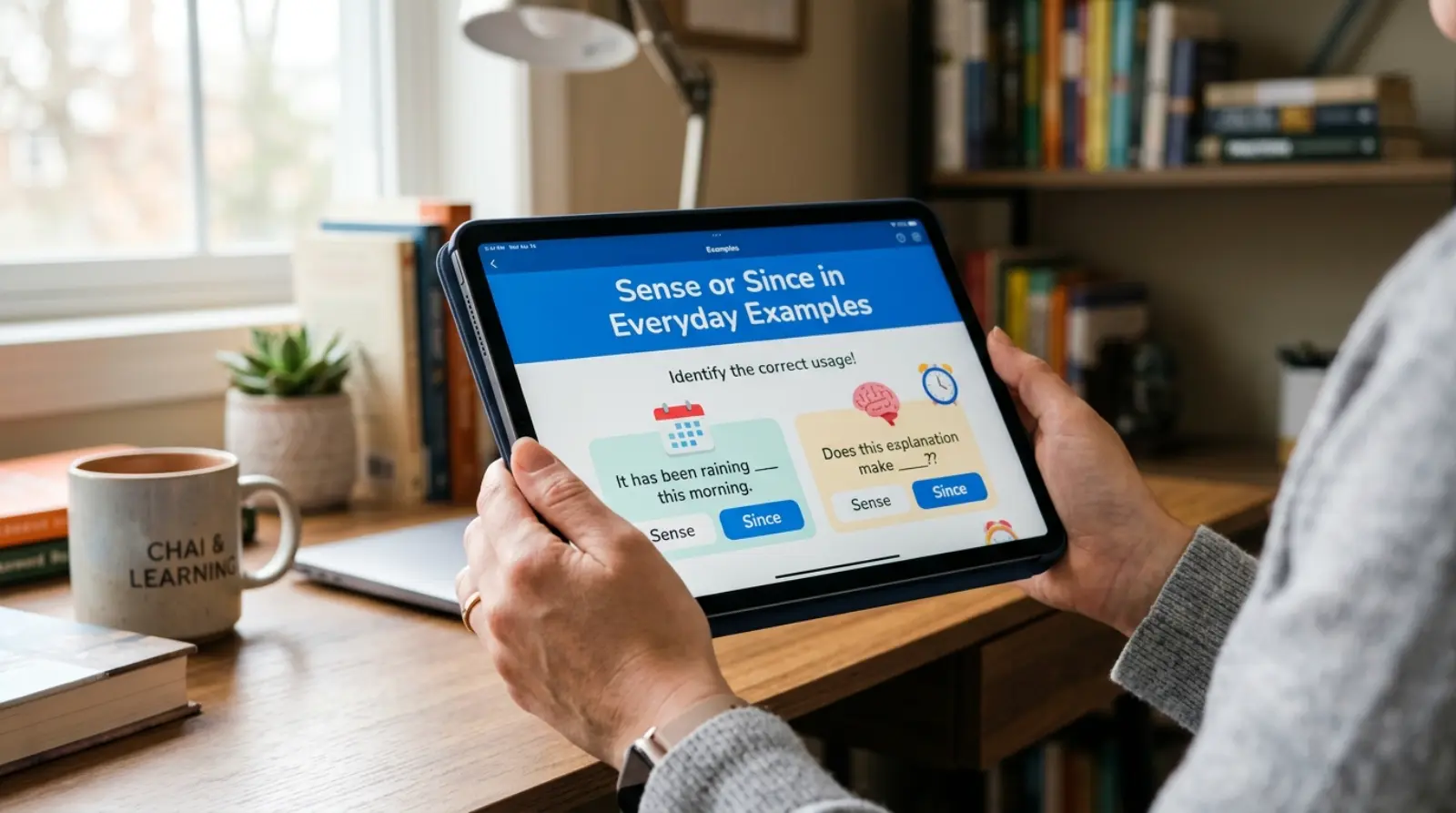
Sense or Since in Everyday Examples
At School
- This lesson makes sense.
- I’ve studied English since fifth grade.
At Work
- Your idea makes sense.
- I’ve worked here since January.
Social Media
- That post doesn’t make sense.
- I’ve followed this page since 2022.
Daily Life
- She has a great sense of direction.
- We’ve been friends since childhood.
Text Messages
- “That makes sense!”
- “Since you’re free, let’s meet.”
Sense or Since in Different Contexts
Grammar Learning
Students often confuse these words because they sound alike but have different meanings.
Business Communication
Correct usage makes emails sound professional.
Example:
- ✔ Your suggestion makes sense.
- ✔ Since our meeting was delayed, we changed the schedule.
Everyday Conversations
People frequently use both words:
- That makes sense.
- Since you’re here, help me.
Google Trends and Usage
The phrase “sense or since” is searched by thousands of English learners every year. Most searches come from the United States, United Kingdom, India, Pakistan, Canada, and Australia.
Popular searches include:
- sense vs since
- it makes sense or since
- since meaning
- sense meaning
- difference between sense and since
- when to use since
The confusion mainly happens because both words sound almost identical.
Comparison Table: Sense vs Since
| Feature | Sense | Since |
| Part of Speech | Noun / Verb | Preposition / Conjunction |
| Main Meaning | Understanding or feeling | Time or reason |
| Used in Grammar | Yes | Yes |
| Used in Speech | Very common | Very common |
| Academic Writing | Yes | Yes |
| Common Mistake | Used instead of since | Used instead of sense |
Sense or Since in Professional Life
Using the correct word improves professional writing.
Correct Examples
- Your proposal makes sense.
- Since the deadline changed, we’ll update the project.
Using the wrong word can make emails and reports look less polished.
Sense or Since for Students
Many students remember the wrong spelling because both words sound alike.
Easy Learning Tips
- Sense = understanding.
- Since = time or because.
- Read your sentence aloud and ask, “Am I talking about meaning or time?”
Common Uses of Sense and Since
Sense
- Makes sense
- Sense of humor
- Common sense
- Sense of direction
- Sense danger
Since
- Since yesterday
- Since childhood
- Since morning
- Since then
- Since you asked
Simple Trick to Remember Sense or Since
Easy Rule
- Sense = Senses (eyes, ears, nose, tongue, skin).
- Since = Starting point in time or because.
Think of It This Way
If you can replace the word with because or from that time, use since.
If you’re talking about understanding or meaning, use sense.
Expert Tips
- Learn common phrases like makes sense and sense of humor.
- Remember that since often answers when? or why?
- Proofread your writing before sending emails or assignments.
- Practice using both words in daily sentences.
Related Searches People Also Ask
- Is it “makes sense” or “makes since”? It’s always makes sense.
- Can since mean because? Yes, in many sentences.
- What does sense mean? It means understanding or perception.
- When should I use since? Use it for time or reasons.
- Why do people confuse these words? They sound almost the same.
- Is sense a verb? Yes, it can mean to detect or feel.
- Is since only used for time? No, it can also mean because.
- How do I remember the difference? Think “sense = understanding” and “since = time.”
FAQs
Is it “makes sense” or “makes since”?
Makes sense is correct.
Can sense and since be used interchangeably?
No. They have different meanings.
Is since used for time?
Yes. It shows the starting point of time.
Can since mean because?
Yes. It often introduces a reason.
What part of speech is sense?
Usually a noun, but it can also be a verb.
Why are these words confusing?
Because they sound almost identical.
Which word is more common?
Both are common but used in different situations.
How can beginners remember them?
Think sense = understanding and since = time.
Final Verdict
The difference is simple:
- Sense means understanding, meaning, or perception.
- Since refers to time or gives a reason.
Easy Memory Rule: If you mean understanding, choose sense. If you mean from a point in time or because, choose since.
Conclusion
Understanding the difference between sense and since will make your English clearer and more confident. Although they sound alike, their meanings are completely different. Practice common phrases like “That makes sense” and “I’ve lived here since 2020” to build good habits. The more you read and write, the easier it becomes to choose the correct word every time.

Camila Green is an English language writer who specializes in confusing word comparisons and spelling explanations. She creates simple, beginner-friendly guides on topics like “niece or neice” and other common English mistakes. Her writing focuses on clarity, real-life examples, and easy learning. At VerrsaPick, she helps readers improve their English with practical and engaging content.