Imagine you are writing a message to describe something that looks absolutely perfect. You type “emaculate”, but suddenly you wonder, “Wait, is that the correct spelling?” You quickly search “emaculate or immaculate” because you do not want to make a spelling mistake.
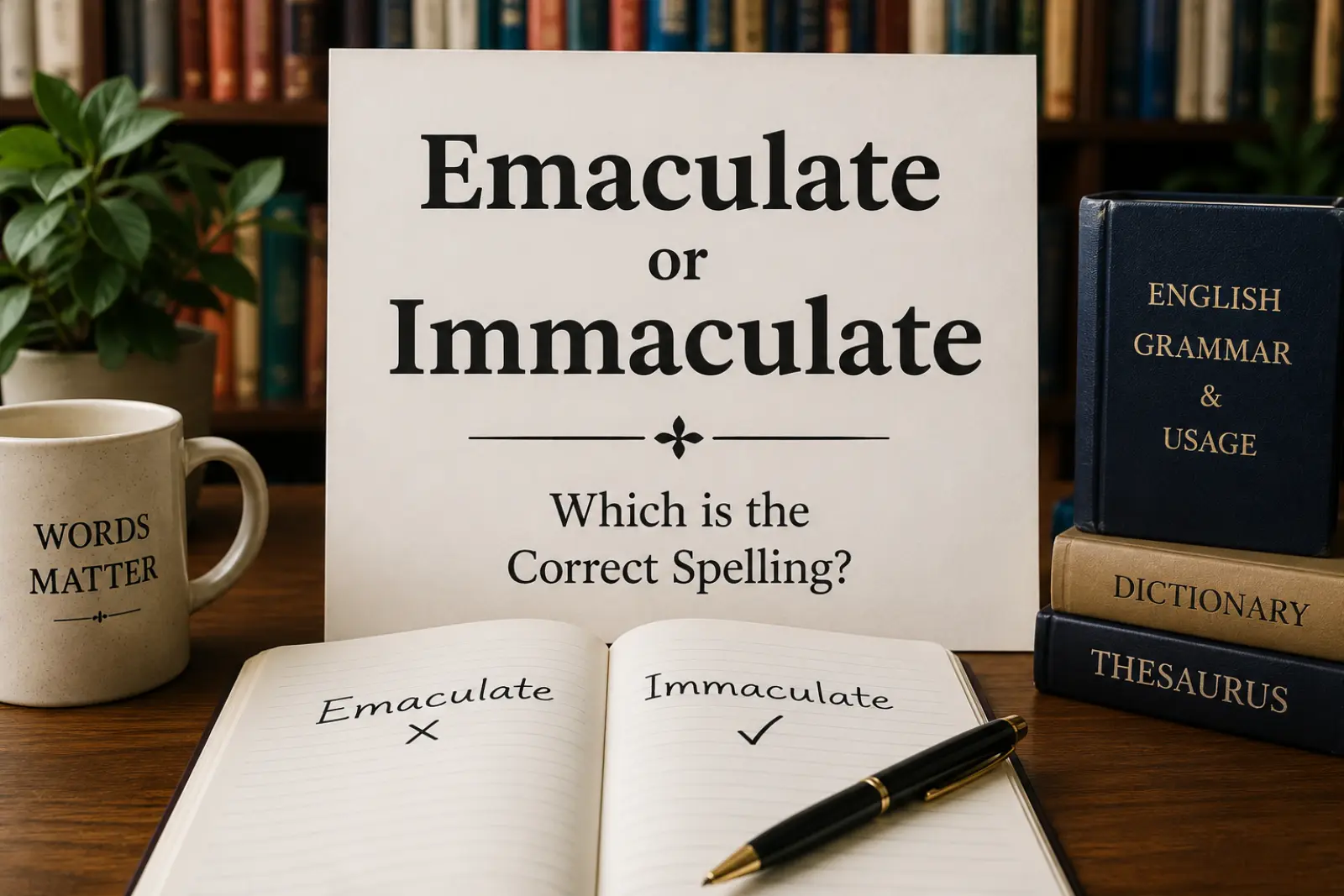
This is a common confusion for English learners and even native speakers. The two words look very similar, and the pronunciation can make the spelling harder to remember. However, there is a clear answer: immaculate is the correct standard English spelling. Emaculate is generally considered a misspelling.
People usually search for emaculate or immaculate to learn the correct spelling, meaning, pronunciation, examples, usage, definition, and grammar difference. You may come across this word in school assignments, workplace emails, online reviews, social media posts, business writing, or everyday conversations.
The word immaculate is useful when you want to describe something that is extremely clean, neat, perfect, or without any flaws. For example, you might describe a spotless room as immaculate or praise someone’s immaculate appearance.
The confusion often happens because the beginning of the word sounds like “im” or “em” when spoken quickly. That can lead people to write emaculate, even though the correct spelling is immaculate.
Understanding this difference matters because spelling errors can affect how professional or polished your writing looks. The good news is that once you learn the simple spelling rule and memory trick, you will probably never confuse these words again.
In this guide, you’ll learn the meaning, pronunciation, examples, usage, grammar rules, common mistakes, expert tips, and simple explanations in easy English.
⭐ Emaculate or Immaculate – Quick Answer
👉 Immaculate = the correct English spelling.
👉 Emaculate = an incorrect or misspelled form of immaculate.
Examples:
- Her room was immaculate. ✅
- He arrived in an immaculate suit. ✅
- The hotel kept its rooms immaculate. ✅
- The car looked immaculate after cleaning. ✅
- She has an immaculate sense of style. ✅
Simple Rule
👉 Always spell it IMMACULATE, with IM at the beginning and two Ms.
Easy memory trick:
IM + MACULATE = IMMACULATE
Think: “I’m immaculate!” The word starts with IM.
📖 What Does Emaculate or Immaculate Mean?
The phrase emaculate or immaculate is a spelling question. The correct word is immaculate.
What Does Immaculate Mean?
Immaculate is an adjective that describes something extremely clean, neat, perfect, or without mistakes or flaws.
Example
The kitchen was immaculate.
This means the kitchen was very clean and tidy.
The word can also describe appearance or quality.
He wore an immaculate white shirt.
Here, immaculate means the shirt looked perfectly clean and neat.
It can also mean flawless or perfect.
She gave an immaculate performance.
This suggests the performance was excellent and had no noticeable mistakes.
Synonyms
Depending on the context, synonyms include:
- Spotless
- Pristine
- Flawless
- Perfect
- Clean
- Neat
- Tidy
- Unblemished
- Faultless
Opposites
Common opposites include:
- Dirty
- Messy
- Untidy
- Flawed
- Imperfect
- Stained
- Damaged
Related Terms
- Immaculately = in a perfectly clean or flawless way
- Immaculateness = the quality of being immaculate
- Immaculate appearance = an extremely neat and polished appearance
- Immaculate condition = perfect or nearly perfect condition
🕰️ The Origin of Emaculate or Immaculate
The correct word immaculate comes from the Latin word immaculatus, meaning unspotted or unstained.
The Latin word is connected to macula, meaning a spot or stain. The prefix im- gives the idea of “not” or “without.”
So, the basic idea behind immaculate is:
Without spots → without stains → perfectly clean or flawless
Over time, the word developed broader meanings. Today, English speakers use immaculate for cleanliness, appearance, quality, and perfection.
You may hear it in everyday speech, professional writing, fashion, sports, business, and online reviews.
🔊 How to Pronounce Emaculate or Immaculate
The correct word is pronounced:
Immaculate → ih-MAK-yuh-lət
It has four syllables:
im – mac – u – late
A simple pronunciation guide is:
👉 ih-MAK-yuh-lut
The main stress is on MAC.
Common Pronunciation Mistake
Some people may pronounce the word as if it begins with “em” because of the spelling confusion.
Remember:
❌ Emaculate
✔ Immaculate
Listen for the “im” beginning.
🇬🇧 British English vs American English Usage
There is no major spelling difference between British and American English for immaculate.
| Feature | British English | American English | Notes |
|---|---|---|---|
| Correct spelling | Immaculate | Immaculate | Same spelling |
| Incorrect form | Emaculate | Emaculate | Misspelling |
| Meaning | Clean, flawless, perfect | Clean, flawless, perfect | Same basic meaning |
| Pronunciation | Similar | Similar | Minor accent differences |
| Formal usage | Common | Common | Used in many contexts |
The word immaculate is standard in both British and American English.
✅ Which One Should You Use?
Always use immaculate in standard English.
Formal Writing
The building was maintained in immaculate condition.
Academic Writing
The researcher presented an immaculate set of results.
However, flawless or precise may sometimes sound more natural in academic contexts.
Workplace Communication
The presentation was immaculate and well organised.
Social Media
Your outfit looks immaculate!
Texting
Your new car looks immaculate!
Quick Usage Table
| Situation | Correct Word | Example |
|---|---|---|
| Clean room | Immaculate | The room is immaculate. |
| Clothing | Immaculate | His suit looked immaculate. |
| Appearance | Immaculate | She looked immaculate. |
| Condition | Immaculate | The car is in immaculate condition. |
| Performance | Immaculate | The team delivered an immaculate performance. |
❌ Common Mistakes With Emaculate or Immaculate
Mistake 1: Writing “Emaculate”
❌ The hotel room was emaculate.
✔ The hotel room was immaculate.
Explanation: Emaculate is a misspelling.
Tip: Remember the word starts with IM.
Mistake 2: Using One “M”
❌ Imac ulate
✔ Immaculate
Explanation: The correct spelling has two Ms.
Tip: Break it into parts: IM + MACULATE.
Mistake 3: Using “Immaculate” for Everything
❌ The maths answer was immaculate.
✔ The maths answer was correct or flawless.
Explanation: Immaculate can describe excellent work, but it often sounds more natural for cleanliness, appearance, or something exceptionally polished.
Mistake 4: Confusing “Immaculate” With “Impatient”
❌ The room was impatient.
✔ The room was immaculate.
Explanation: These words have completely different meanings.
Tip: Immaculate relates to cleanliness or perfection.
Mistake 5: Using “Immaculately” Instead of “Immaculate”
❌ The room was immaculately.
✔ The room was immaculate.
✔ The room was immaculately cleaned.
Explanation: Immaculate is an adjective. Immaculately is an adverb.
🌍 Emaculate or Immaculate in Everyday Examples
Work
Her desk is always immaculate.
School
The student submitted an immaculate project.
Social Media
Your new outfit is immaculate!
Daily Life
The house was immaculate before the guests arrived.
Thank you for keeping the office in immaculate condition.
Text Message
Your car looks immaculate!
Online Content
The hotel received praise for its immaculate rooms.
Conversation
Wow, your kitchen is absolutely immaculate!
🧠 Emaculate or Immaculate in Different Contexts
Home and Cleaning
This is one of the most common uses.
The living room was immaculate.
It means the room was extremely clean and tidy.
Fashion and Appearance
Immaculate can describe someone who looks very neat and well dressed.
He arrived in an immaculate suit.
Business
Businesses may use the word to describe excellent presentation or condition.
The restaurant has an immaculate interior.
Cars
Car enthusiasts often use the word to describe a vehicle in excellent condition.
He keeps his classic car immaculate.
Sports
The word can describe an excellent or flawless performance.
The goalkeeper made an immaculate save.
Writing and Communication
It can describe polished work, although words such as flawless, excellent, or polished may be more natural in some situations.
📈 Emaculate or Immaculate – Google Trends & Usage Data
People search for emaculate or immaculate mainly because the incorrect spelling looks believable. The first vowel sound can cause confusion, especially for English learners.
Common long-tail searches include:
- Emaculate or immaculate which is correct?
- How do you spell immaculate?
- Is emaculate a word?
- Immaculate meaning
- Immaculate pronunciation
- Immaculate examples
- What does immaculate mean?
- How to use immaculate in a sentence
Searches may come from English learners in the US, UK, India, Pakistan, Canada, and Australia.
Voice searches also show common questions such as:
“Is it emaculate or immaculate?”
“How do you spell immaculate?”
“What does immaculate mean?”
The main search intent is simple: people want to confirm the correct spelling and understand how to use the word naturally.
📊 Comparison Table: Emaculate or Immaculate
| Feature | Emaculate | Immaculate |
|---|---|---|
| Correct spelling | ❌ No | ✅ Yes |
| Meaning | Not standard | Extremely clean or flawless |
| Pronunciation | Not standard | ih-MAK-yuh-lut |
| Grammar role | Not standard | Adjective |
| Professional usage | Avoid | Common |
| Academic usage | Avoid | Acceptable |
| Internet usage | Usually a spelling error | Correct |
| Common mistake | Missing “im” | Often misspelled as emaculate |
💼 Emaculate or Immaculate in Professional Life
Correct spelling is especially important in professional communication.
Imagine writing a property description:
❌ This apartment has an emaculate interior.
✔ This apartment has an immaculate interior.
The second version looks professional and polished.
Businesses may use immaculate in:
- Property listings
- Hotel descriptions
- Car sales
- Fashion
- Cleaning services
- Interior design
- Restaurant reviews
- Customer feedback
For example:
The hotel offers immaculate rooms and excellent service.
Using the correct spelling helps your writing look trustworthy and professional.
🎓 Emaculate or Immaculate for Students and Beginners
Beginners often struggle with immaculate because the spelling does not feel obvious from the pronunciation.
The biggest problems are:
- Writing emaculate instead of immaculate
- Forgetting the second m
- Mispronouncing the word
- Confusing the adjective with the adverb immaculately
The best shortcut is to memorise the first part:
IMMA
Then complete the word:
IMMA + CULATE = IMMACULATE
Write it several times:
immaculate
immaculate
immaculate
This simple practice can make the correct spelling easier to remember.
🔍 Common Uses and Characteristics of Immaculate
The word immaculate is commonly used when something is:
- Extremely clean
- Very neat
- Free from stains
- Free from visible flaws
- Perfectly maintained
- Very polished
- Exceptionally well presented
Common phrases include:
- Immaculate condition
- Immaculate appearance
- Immaculate room
- Immaculate home
- Immaculate outfit
- Immaculate performance
- Immaculate record
🧩 Simple Trick to Remember Emaculate or Immaculate
Here is the easiest memory rule:
👉 IMMACULATE starts with IM.
Never write EMACULATE when you mean the standard English word.
Think of It This Way:
Imagine a spotless white shirt.
It is so clean that you say:
“It is IMMACULATE!”
Remember:
I’M + MACULATE → IMMACULATE
The spelling begins with IM and contains two Ms.
🏆 Expert Tips
Tip 1: Remember “IM”
The biggest spelling mistake is changing IM to EM.
Always start with:
IMMA…
Tip 2: Remember Two Ms
The correct spelling is:
IMMACULATE
Not:
IMACULATE
Tip 3: Connect It With “Spotless”
If something is spotless, pristine, or flawless, immaculate may be the word you need.
Tip 4: Learn the Word Family
Knowing related forms can help:
- Immaculate
- Immaculately
- Immaculateness
Tip 5: Proofread Before Publishing
If you are writing a school assignment, business email, website, or social media post, check the spelling before publishing.
🌐 Related Searches People Also Ask
How do you spell immaculate?
The correct spelling is immaculate.
Is emaculate a real word?
Emaculate is generally considered a misspelling of immaculate in standard English.
What does immaculate mean?
It means extremely clean, neat, flawless, or without visible flaws.
How do you pronounce immaculate?
It is commonly pronounced ih-MAK-yuh-lut.
What is an example of immaculate?
The hotel room was immaculate.
Is immaculate a positive word?
Yes. It is usually positive and suggests something is exceptionally clean, neat, or flawless.
What is the opposite of immaculate?
Depending on the context, opposites include dirty, messy, stained, or flawed.
Is immaculate formal English?
Yes. Immaculate is a standard English word that works in both formal and informal contexts.
What is the difference between immaculate and immaculate?
There is no difference. They are the same word; the confusion is usually caused by spelling or pronunciation.
Can immaculate describe a person?
Yes. It can describe someone’s appearance, clothing, or grooming.
❓ FAQs About Emaculate or Immaculate
1. Is it emaculate or immaculate?
The correct spelling is immaculate. Emaculate is a misspelling.
2. What does immaculate mean?
It means extremely clean, neat, flawless, or perfect.
3. How do you spell immaculate correctly?
Spell it I-M-M-A-C-U-L-A-T-E.
4. Does immaculate have two Ms?
Yes. The correct spelling is immaculate, with two Ms.
5. How do you pronounce immaculate?
It is commonly pronounced ih-MAK-yuh-lut.
6. Can immaculate describe a room?
Yes. For example: The bedroom was immaculate.
7. Can immaculate describe clothing?
Yes. You can say: He looked immaculate in his new suit.
8. Is emaculate an incorrect spelling?
Yes. In standard English, use immaculate instead.
9. What is an easy synonym for immaculate?
Spotless is one of the easiest synonyms to remember.
10. What is the easiest way to remember immaculate?
Remember: IM + two Ms = IMMACULATE.
🏁 Final Verdict
The correct answer is immaculate.
❌ Emaculate = incorrect spelling
✅ Immaculate = correct spelling
Immaculate means extremely clean, neat, flawless, or without flaws.
The easiest memory trick is:
👉 IMMACULATE starts with IM and has two Ms.
✅ Conclusion
The confusion between emaculate or immaculate is easy to understand because the words sound similar when spoken quickly. However, only immaculate is the correct standard English spelling.
Use immaculate when you want to describe something that is extremely clean, perfectly neat, or free from flaws. You can talk about an immaculate room, an immaculate outfit, an immaculate car, or even an immaculate performance.
The best way to remember the spelling is to focus on the beginning: IM. Then remember the two Ms.
Final memory trick: IM + MACULATE = IMMACULATE.
Once you remember that simple pattern, you can confidently use immaculate in your schoolwork, professional writing, emails, conversations, and online content.

Camila Green is an English language writer who specializes in confusing word comparisons and spelling explanations. She creates simple, beginner-friendly guides on topics like “niece or neice” and other common English mistakes. Her writing focuses on clarity, real-life examples, and easy learning. At VerrsaPick, she helps readers improve their English with practical and engaging content.