Have you ever written an email, school assignment, or social media post and wondered whether to use afterwards or afterward? You’re not alone. Many English learners and even native speakers get confused because both words have the same meaning but are used differently depending on the type of English.
People usually search for “afterwards or afterward” because they want to know the correct spelling, pronunciation, grammar rules, examples, and whether one is British English or American English. You may see afterwards in UK books and newspapers, while afterward is more common in the US.
The good news is that both words are correct. The difference is mainly regional, not grammatical.
In this guide, you’ll learn the meaning, pronunciation, examples, usage, grammar rules, common mistakes, expert tips, and simple explanations in easy English.
Afterwards or Afterward – Quick Answer
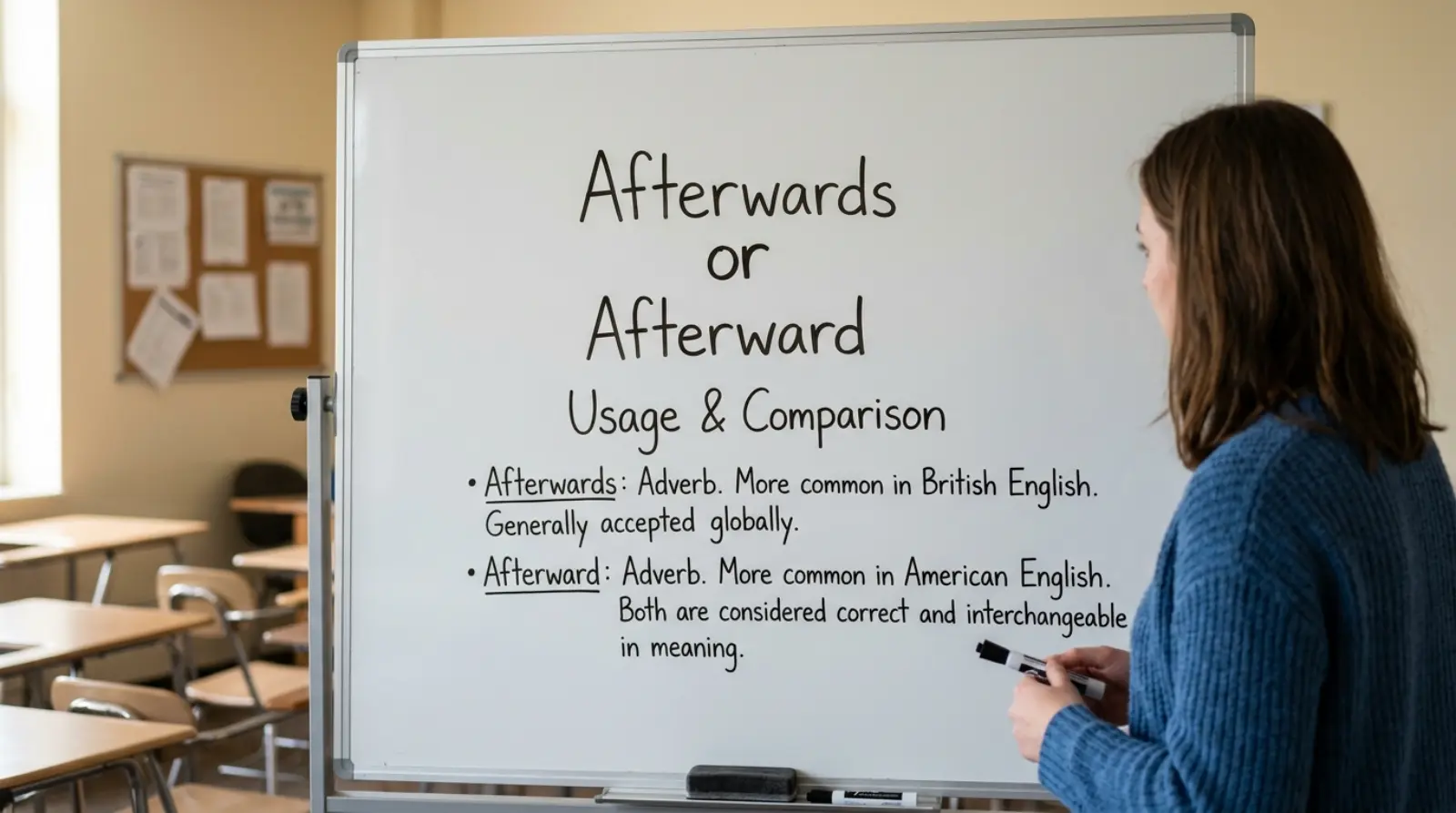
Both “afterwards” and “afterward” are correct.
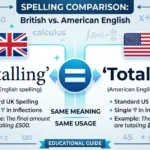
- 👉 Afterwards = Preferred in British English
- 👉 Afterward = Preferred in American English
Both mean later, after that, or at a later time.
Examples
- ✅ We went for coffee afterwards. (British English)
- ✅ We went for coffee afterward. (American English)
- ✅ Finish your homework first; afterwards you can play.
- ✅ She called me afterward to say thank you.
Easy Memory Trick
👉 S = Standard in the UK (afterwardS)
👉 No S = Normal in the US (afterward)
What Does Afterwards or Afterward Mean?
Both words are adverbs that mean at a later time or after something else has happened.
They help show the order of events.
Synonyms
- Later
- Then
- Next
- Subsequently
- Thereafter
- Following that
Opposites
- Before
- Earlier
- Previously
- First
Related Terms
- After
- Later on
- Eventually
- Next
The Origin of Afterwards or Afterward
The word comes from after combined with -ward, meaning “toward a direction or time.”
Over time, British English added an s to many adverbs such as:
- Afterwards
- Towards
- Backwards
American English usually prefers the shorter forms:
- Afterward
- Toward
- Backward
Both forms have existed for hundreds of years.
How to Pronounce Afterwards or Afterward
| Word | Pronunciation |
|---|---|
| Afterwards | AF-ter-werdz |
| Afterward | AF-ter-werd |
Speaking Tip
Say after first, then add word.
The extra s in afterwards is spoken softly.
British English vs American English Usage
| Feature | British English | American English | Notes |
|---|---|---|---|
| Preferred spelling | Afterwards | Afterward | Both correct |
| Meaning | Same | Same | No difference |
| Grammar | Same | Same | Adverb |
| Formal writing | Afterwards | Afterward | Follow your style guide |
Which One Should You Use?
Use afterwards if you are writing for:
- UK readers
- British schools
- IELTS (British style)
- UK newspapers
Use afterward if you are writing for:
- US readers
- American schools
- US businesses
- American websites
Quick Guide
| Audience | Best Choice |
|---|---|
| United Kingdom | Afterwards |
| United States | Afterward |
| Canada | Either |
| Australia | Afterwards |
| International audience | Be consistent |
Common Mistakes With Afterwards or Afterward
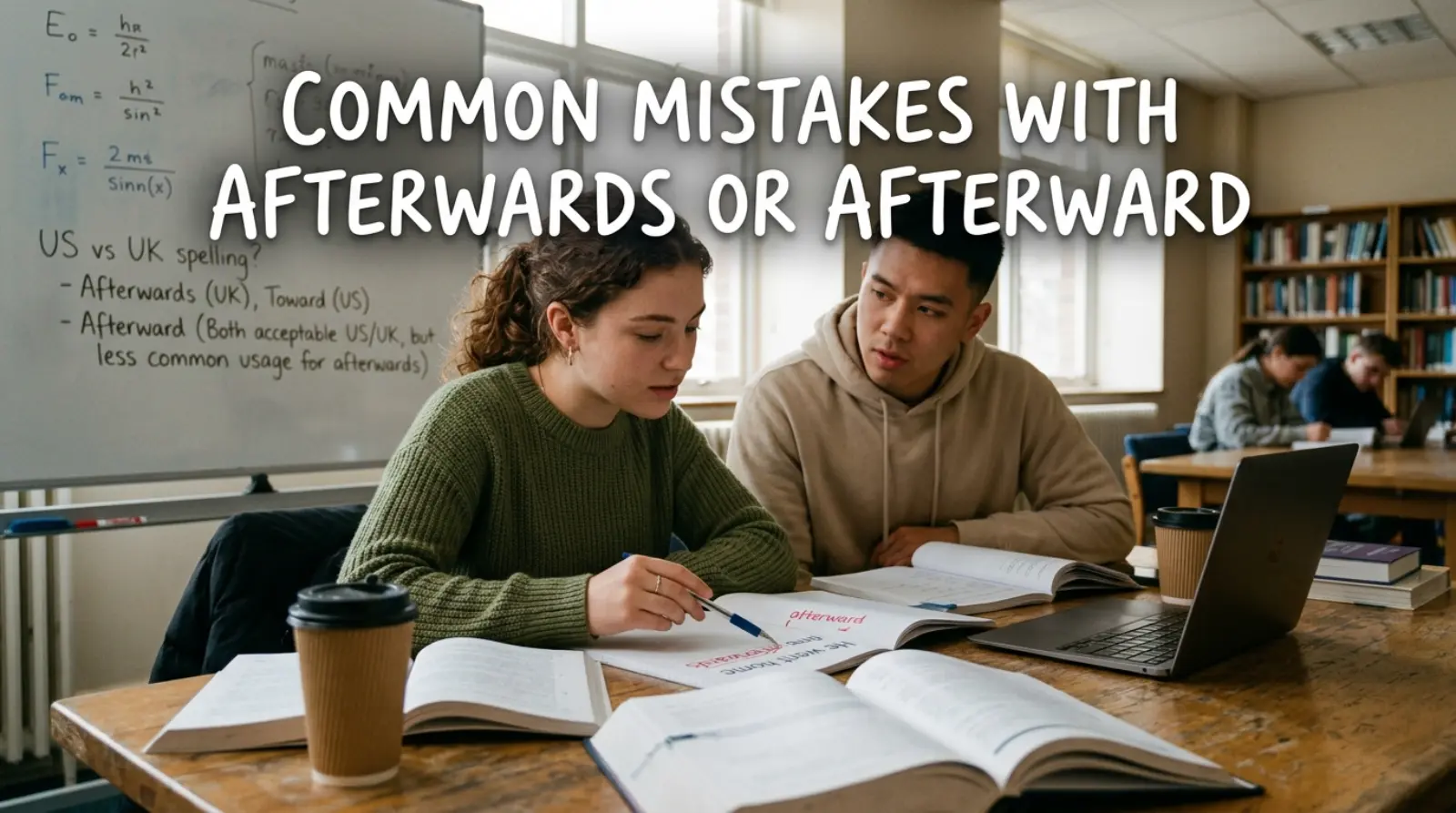
Mistake 1
❌ We went shopping afterwardSly.
✔ We went shopping afterwards.
Mistake 2
❌ Mixing both spellings in one article.
✔ Use one style throughout your writing.
Mistake 3
❌ Afterwards we ate dinner afterward.
✔ Choose one spelling and stay consistent.
Mistake 4
❌ Thinking one is incorrect.
✔ Both are correct.
Mistake 5
❌ Using them as adjectives.
✔ They are adverbs that describe when something happens.
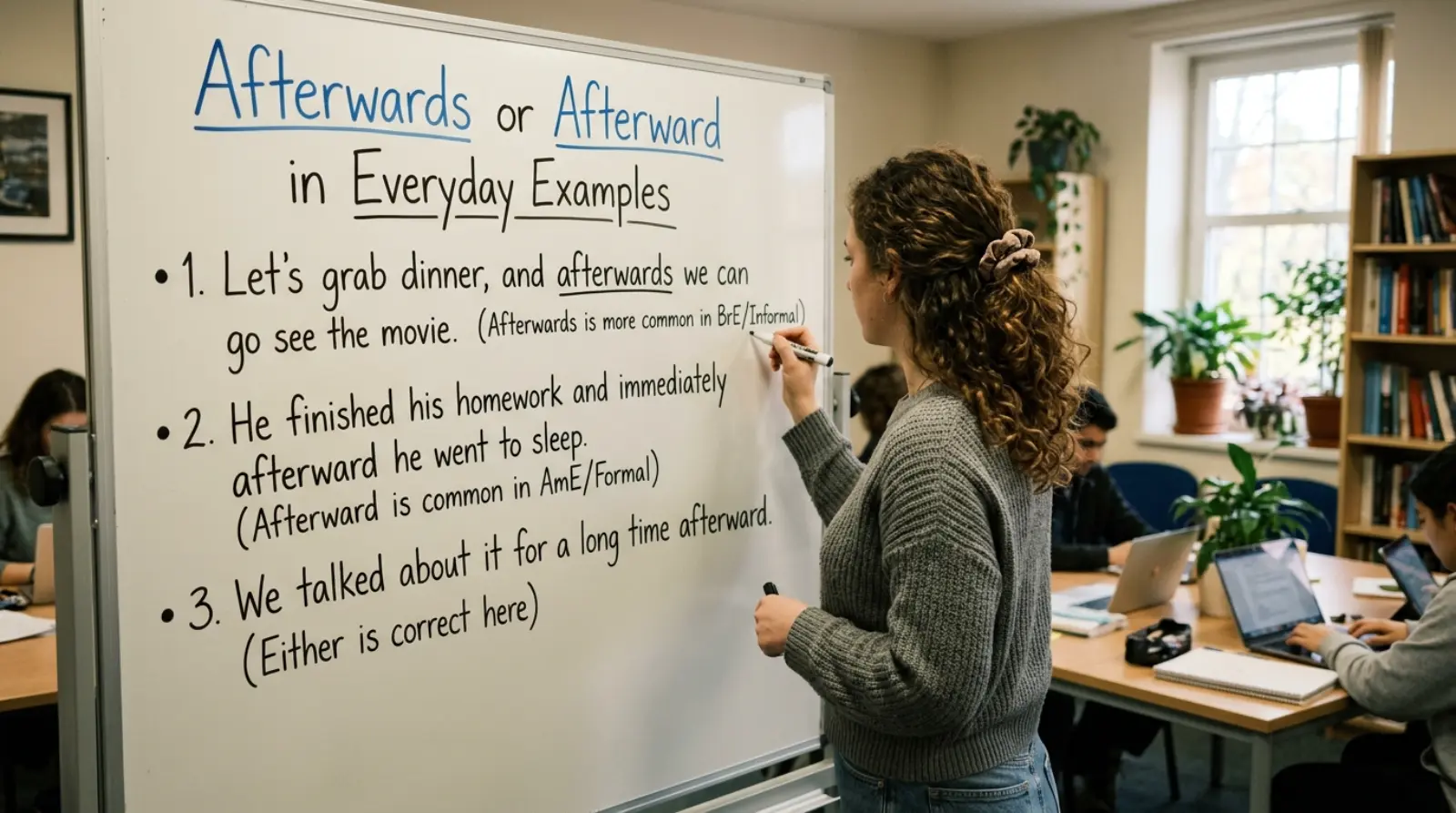
Afterwards or Afterward in Everyday Examples
School
“We played football afterwards.”
Workplace
“We had a meeting and afterward discussed the project.”
“I’ll send the report afterward.”
Social Media
“Movie first, pizza afterwards!”
Daily Conversation
“We’ll talk afterward.”
Text Message
“Call me afterwards.”
Afterwards or Afterward in Different Contexts
Academic Writing
Use the version that matches your school’s preferred English style.
Business Writing
Companies usually follow either British or American English. Stay consistent.
Everyday Conversation
People understand both words.
Online Content
Choose the spelling that fits your target audience for better SEO and readability
Google Trends & Usage
People search this topic because they ask:
- Is afterward or afterwards correct?
- What is the difference between afterward and afterwards?
- Is afterwards British English?
- Which spelling should I use?
The keyword is popular in the UK, US, Canada, Australia, India, and Pakistan, especially among students, writers, bloggers, and English learners.
Comparison Table: Afterwards vs Afterward
| Feature | Afterwards | Afterward |
|---|---|---|
| Meaning | Later | Later |
| Grammar | Adverb | Adverb |
| British English | Preferred | Less common |
| American English | Less common | Preferred |
| Formal writing | Correct | Correct |
| Pronunciation | Almost same | Almost same |
| Correct? | Yes | Yes |
Afterwards or Afterward in Professional Life
Using the correct regional spelling makes your writing look more professional.
Examples:
- UK company: “We’ll contact you afterwards.”
- US company: “We’ll contact you afterward.”
Whether you’re writing reports, emails, or presentations, keep the spelling consistent throughout the document.
Afterwards or Afterward for Students
Many learners think one spelling is wrong. That’s not true.
Remember:
- British English = Afterwards
- American English = Afterward
Learning this simple rule will help you avoid confusion in exams and assignments.
Common Uses
People use these words in:
- Stories
- Emails
- Essays
- Business reports
- Text messages
- Blogs
- News articles
- Everyday conversations
Simple Trick to Remember
Think of it this way:
- 🇬🇧 Britain likes the extra “S” → Afterwards
- 🇺🇸 America keeps it shorter → Afterward
This simple trick helps you choose the right spelling every time.
Expert Tips
- Pick one English style before you start writing.
- Don’t switch between afterward and afterwards in the same document.
- Match your audience—British readers expect afterwards, while American readers usually expect afterward.
- Proofread your writing to keep spelling consistent.
Related Searches People Also Ask
- Is afterward or afterwards correct?
- Why do British people use afterwards?
- Is afterward American English?
- Can I use both spellings?
- What’s the difference between afterward and later?
- Is afterwards formal?
- How do you pronounce afterward?
- Which spelling is better for IELTS?
- Can I use afterward in essays?
- Is afterwards an adverb?
FAQs
Is afterward or afterwards correct?
Yes. Both are correct.
Which is British English?
Afterwards is more common in British English.
Which is American English?
Afterward is preferred in American English.
Do they have different meanings?
No. They mean exactly the same thing.
Can I use either in formal writing?
Yes, as long as you stay consistent.
Which spelling should students use?
Use the spelling required by your teacher or style guide.
Is afterwards more formal?
No. Both are equally acceptable.
Are they adverbs?
Yes. Both are adverbs that show time.
Final Verdict
The answer is simple:
- ✅ Afterwards is preferred in British English.
- ✅ Afterward is preferred in American English.
Easy Memory Rule:
Extra “S” = British English
No “S” = American English
Conclusion
The choice between afterwards or afterward is not about right or wrong—it’s about the variety of English you’re using. Both words have the same meaning and grammar, so readers will understand either one.
If you’re writing for a UK audience, choose afterwards. If you’re writing for an American audience, use afterward. The most important rule is to stay consistent throughout your writing.

Camila Green is an English language writer who specializes in confusing word comparisons and spelling explanations. She creates simple, beginner-friendly guides on topics like “niece or neice” and other common English mistakes. Her writing focuses on clarity, real-life examples, and easy learning. At VerrsaPick, she helps readers improve their English with practical and engaging content.