
Have you ever typed a message, written a school assignment, or sent an email and wondered if you should use through or threw? You’re not alone. These two words sound almost the same, which makes them easy to confuse. Many English learners, students, and even native speakers mix them up because they are homophones—words that sound alike but have different meanings and spellings.
People usually search for through or threw meaning, correct spelling, pronunciation, examples, usage, definition, and grammar difference because using the wrong word can completely change the meaning of a sentence.
You may see these words in school books, business emails, social media posts, text messages, novels, and everyday conversations. Learning the difference will help you write more clearly and avoid common grammar mistakes.
In this guide, you’ll learn the meaning, pronunciation, examples, usage, grammar rules, common mistakes, expert tips, and simple explanations in easy English.
Through or Threw – Quick Answer
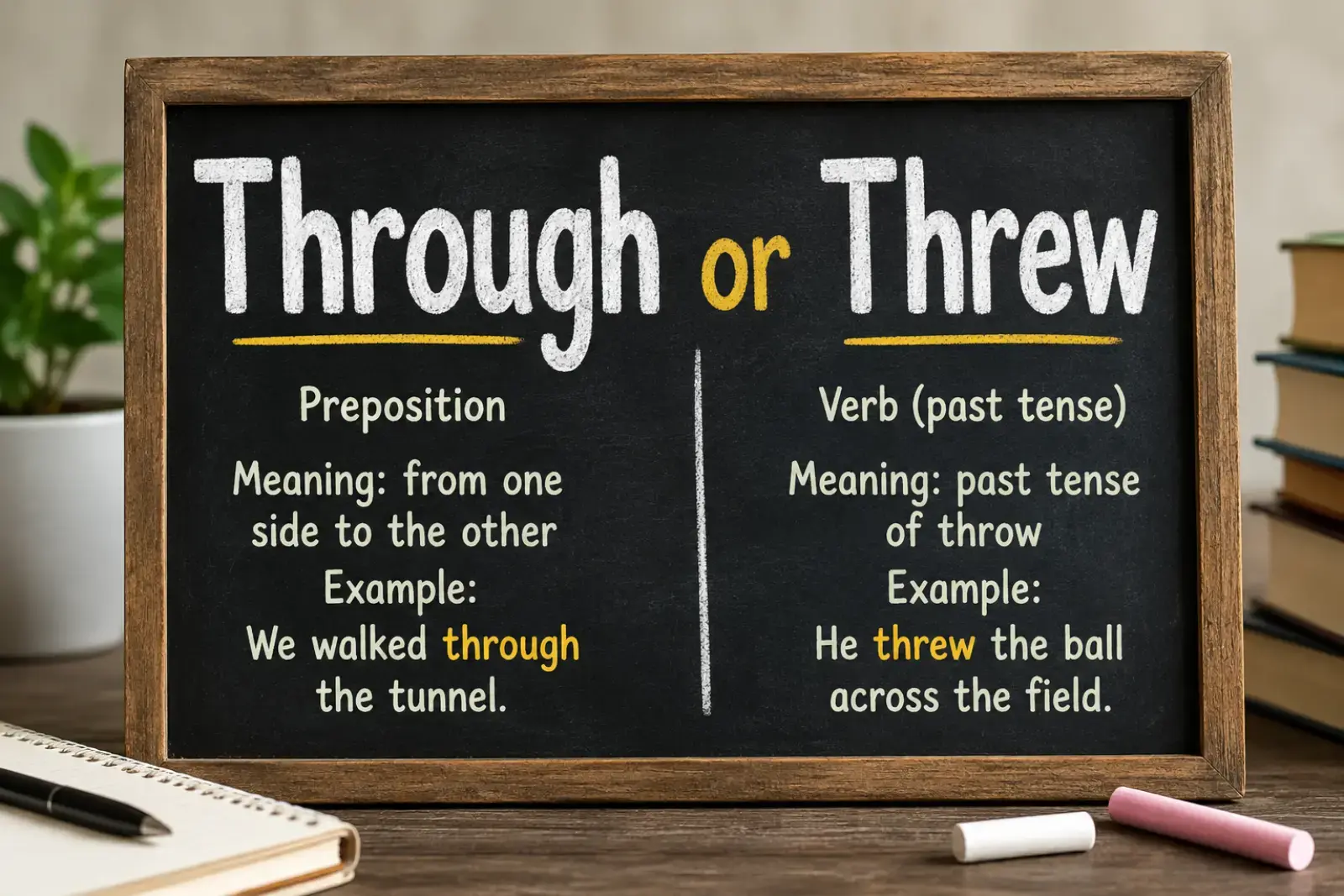
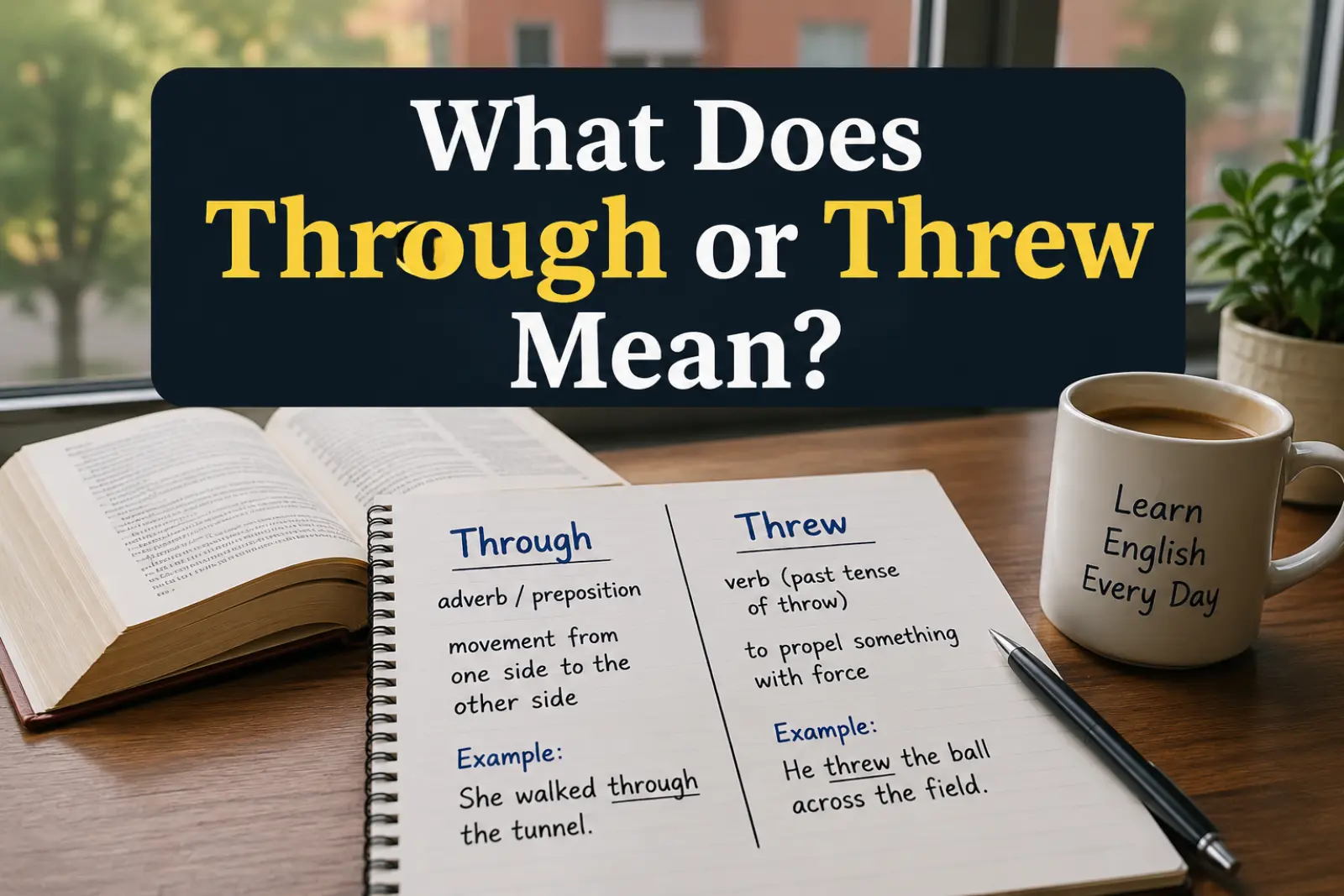
👉 Through = A preposition or adverb meaning from one side to another, finished, or using something as a way.
👉 Threw = The past tense of “throw,” meaning to toss or send something through the air.
Examples
- ✅ She walked through the park.
- ✅ We drove through the tunnel.
- ✅ He threw the ball.
- ✅ Sarah threw her backpack on the chair.
- ✅ We made it through the difficult exam.
Simple Memory Trick
Through = Go through something.
Threw = Throw = Tossed something.
What Does Through or Threw Mean?
What Does “Through” Mean?
Through has several meanings.
It can mean:
- From one side to another
- Finished or completed
- By using something
- During an entire period
Examples
- We walked through the forest.
- I learned English through online videos.
- The meeting is finally through.
- She worked through the night.
Synonyms
- Across
- Via
- Throughout
- By means of
Opposites
- Around
- Outside
- Before
What Does “Threw” Mean?
Threw is the past tense of throw.
It describes the action of tossing, launching, or sending something.
Examples
- He threw the keys on the table.
- She threw the football.
- The child threw a toy.
Related Words
- Throw
- Thrown
- Toss
- Launch

The Origin of Through or Threw
Both words come from Old English.
- Through comes from an old word meaning “from one side to another.”
- Throw developed from a word meaning “to hurl or toss.” The past tense became threw.
Although they have different histories, their pronunciation became very similar over time.
How to Pronounce Through or Threw
| Word | Pronunciation | Sounds Like |
|---|---|---|
| Through | throo | /θruː/ |
| Threw | throo | /θruː/ |
Both words are pronounced exactly the same.
Common Pronunciation Mistake
Many learners think they sound different.
They don’t.
Only the spelling and meaning change.
British English vs American English Usage
| Feature | British English | American English | Notes |
|---|---|---|---|
| Through | ✅ Same | ✅ Same | No difference |
| Threw | ✅ Same | ✅ Same | No difference |
| Pronunciation | Same | Same | Identical |
| Grammar | Same | Same | Standard English |
Which One Should You Use?
Use through when talking about movement, completion, or using something.
Use threw when talking about tossing something.
Quick Guide
| Situation | Correct Word |
|---|---|
| Walked across a tunnel | Through |
| Tossed a ball | Threw |
| Finished work | Through |
| Threw a stone | Threw |
Common Mistakes with Through or Threw
Mistake 1
❌ I threw the tunnel.
✅ I walked through the tunnel.
Why?
You move through a tunnel. You don’t throw it.
Mistake 2
❌ She walked threw the park.
✅ She walked through the park.
Mistake 3
❌ He through the ball.
✅ He threw the ball.
Mistake 4
❌ We are threw with homework.
✅ We are through with homework.
Mistake 5
❌ I got the message threw email.
✅ I got the message through email.
Through or Threw in Everyday Examples
School
- We walked through the school gate.
- The student threw the paper into the bin.
Work
- We finished through all the reports.
- The manager threw away old files.
Social Media
- I found this video through Instagram.
- Someone threw a funny challenge into the chat.
Daily Life
- We drove through heavy rain.
- She threw her jacket on the sofa.
- Please send it through email.
- He accidentally threw the document away.
Through or Threw in Different Contexts
In Writing
Choosing the correct word makes your writing clear and professional.
In Business
Companies often say:
- Contact us through our website.
Rarely:
- He threw the package.
In Communication
Use through for methods.
Use threw for actions.
Google Trends & Usage Data
Many people search for through or threw because they sound exactly alike.
Popular searches include:
- through vs threw
- through meaning
- threw meaning
- through examples
- threw examples
- how to spell through
- through pronunciation
- threw grammar
These searches are common in the US, UK, Canada, Australia, India, and Pakistan, especially among students and English learners.
Comparison Table: Through vs Threw
| Feature | Through | Threw |
|---|---|---|
| Part of Speech | Preposition, Adverb | Verb |
| Meaning | Across, by, finished | Past tense of throw |
| Pronunciation | /θruː/ | /θruː/ |
| Grammar | Not a verb | Verb |
| Professional Writing | Very common | Common |
| Academic Writing | Common | Common |
| Common Mistake | Used instead of threw | Used instead of throug |
Through or Threw in Professional Life
Correct grammar helps you sound more professional.
Examples:
- Submit your request through the online form.
- The worker threw damaged materials away.
Using the wrong word in emails or reports may confuse readers.
Through or Threw for Students
Students often confuse these words because they sound the same.
Easy Trick
Ask yourself:
Is someone tossing something?
- Yes → Threw
Is someone moving across or using something?
- Yes → Through
Common Uses of Through and Threw
Through
- Going across
- Completing something
- Using a method
- During a period
Threw
- Tossing objects
- Sports
- Games
- Everyday actions
Simple Trick to Remember Through or Threw
Think of it this way:
Through = Travel through.
Threw = Throw something.
If the sentence involves movement across something, choose through.
If it involves tossing an object, choose threw.
Expert Tips
- Read your sentence aloud.
- Look for an action of throwing.
- Replace threw with tossed. If it still makes sense, threw is correct.
- If you can replace the word with across or via, use through.
- Practice with short example sentences every day.
Related Searches People Also Ask
Is through and threw the same?
No. They sound the same but have different meanings.
Why are through and threw confusing?
Because they are homophones.
Is threw the past tense of throw?
Yes.
Can through be a verb?
No.
What is the easiest way to remember them?
Think: Throw → Threw.
FAQs
Is through or threw correct?
Both are correct, but they have different meanings.
Which word means tossed?
Threw.
Which word means across?
Through.
Are they pronounced the same?
Yes.
Can I use through in formal writing?
Yes.
Is threw a verb?
Yes.
What part of speech is through?
Usually a preposition or adverb.
Why do people confuse them?
Because they sound identical.
Final Verdict
The difference is simple.
- Through means across, by means of, or finished.
- Threw is the past tense of throw.
The easiest memory rule is:
Throw → Threw
Across → Through
Conclusion
Understanding through or threw is easier than it first seems. Even though both words are pronounced the same, they have completely different meanings. Use through when talking about movement, completion, or a method. Use threw when someone tossed or launched something.
A simple memory trick is to connect threw with throw. If the sentence is about tossing an object, use threw. If it is about moving across, finishing, or using a method, choose through. With regular practice, you’ll be able to use both words confidently in school, work, emails, and everyday conversations.

Camila Green is an English language writer who specializes in confusing word comparisons and spelling explanations. She creates simple, beginner-friendly guides on topics like “niece or neice” and other common English mistakes. Her writing focuses on clarity, real-life examples, and easy learning. At VerrsaPick, she helps readers improve their English with practical and engaging content.