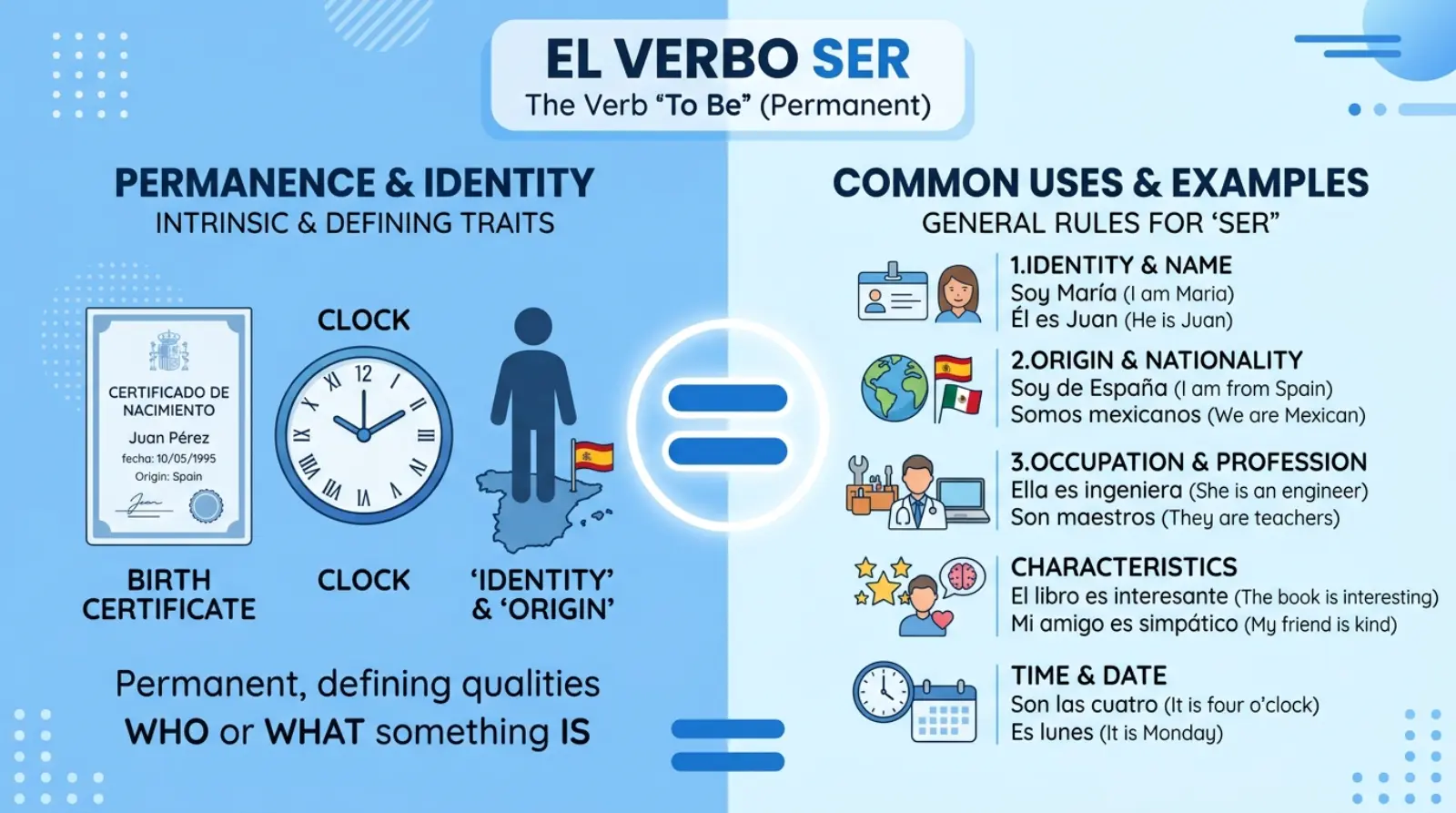
If you are learning Spanish, you have probably heard a simple rule: ser is permanent and estar is temporary. It sounds helpful at first, but then Spanish gives you sentences that seem to break the rule. Suddenly, you may wonder: is ser or estar permanent?
The short answer is that ser is not simply the “permanent” verb, and estar is not simply the “temporary” verb. Both can describe situations that last a long time or a short time. The real difference is what kind of information you are giving about a person, thing, or situation.
This confusion is common for beginners because English often uses the verb to be for both Spanish verbs. In Spanish, however, ser and estar have different jobs.
People usually search for is ser or estar permanent, ser vs estar permanent or temporary, when to use ser or estar, ser and estar examples, ser permanent rule, estar temporary rule, and Spanish ser estar grammar.
You may meet this topic in school, language classes, Spanish apps, online lessons, travel conversations, texting, or daily Spanish practice. Understanding the real difference will help you sound more natural instead of trying to memorize a rule that does not always work.
In this guide, you’ll learn the meaning, pronunciation, examples, usage, grammar rules, common mistakes, expert tips, and simple explanations in easy English.
Is Ser or Estar Permanent? Quick Answer
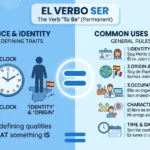
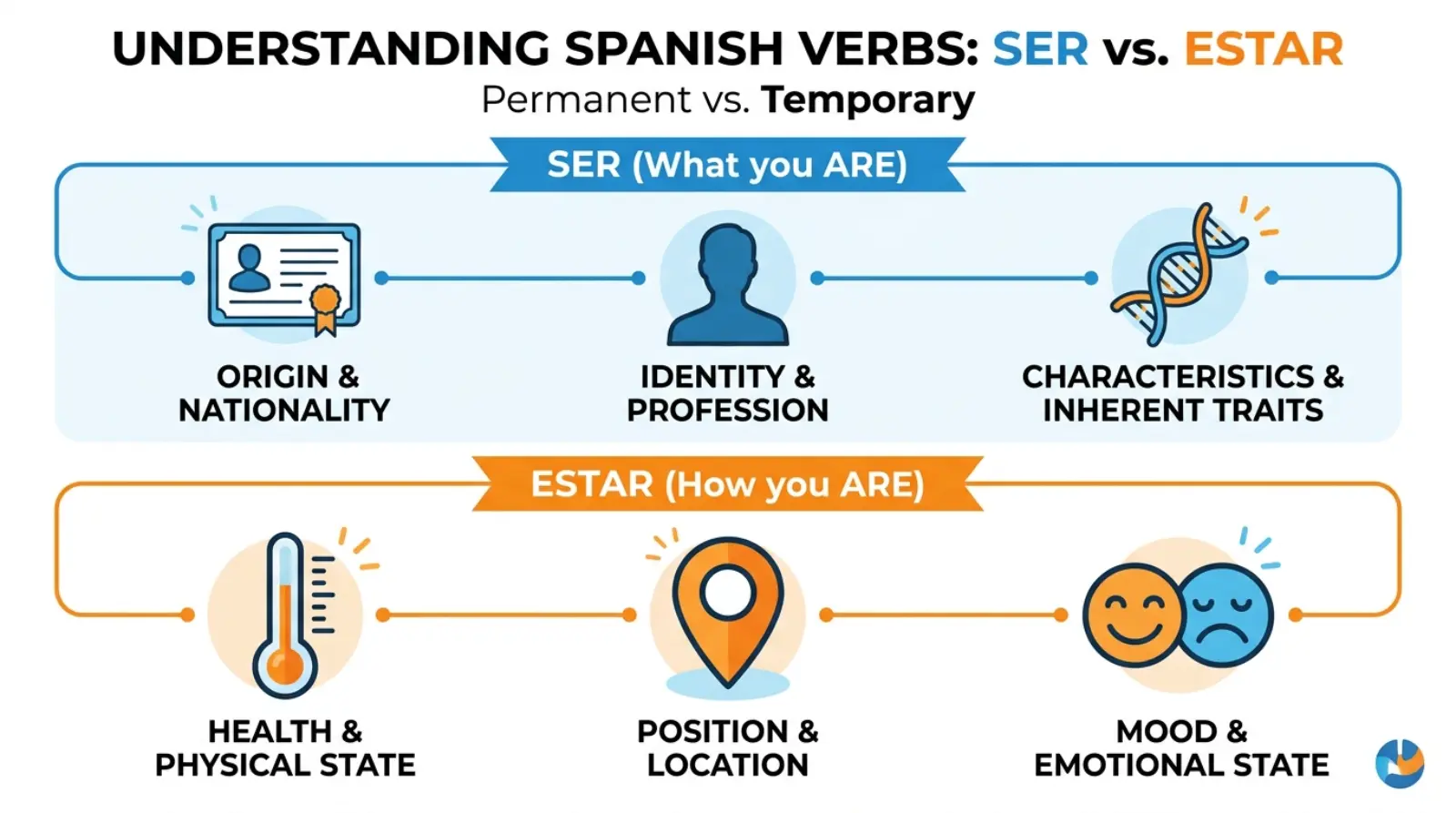
👉 Ser is often used for identity, characteristics, origin, profession, relationships, and other defining information.
👉 Estar is often used for location, temporary states, conditions, feelings, and ongoing situations.
The common memory rule is:
Ser = what something/person is
Estar = how or where something/person is
But permanent vs temporary is only a beginner shortcut.
Examples
- Soy estudiante. = I am a student.
- Soy de México. = I am from Mexico.
- Ella es alta. = She is tall.
- Estoy cansado. = I am tired.
- Está en casa. = He/She is at home.
- Estamos felices. = We are happy.
Simple Rule
👉 Do not ask only, “Is it permanent?”
Instead, ask:
“Am I describing identity/characteristics, or a state/location?”
That question is much more useful.
What Does Is Ser or Estar Permanent Mean?
The phrase is ser or estar permanent comes from a common Spanish-learning idea.
Teachers sometimes explain:
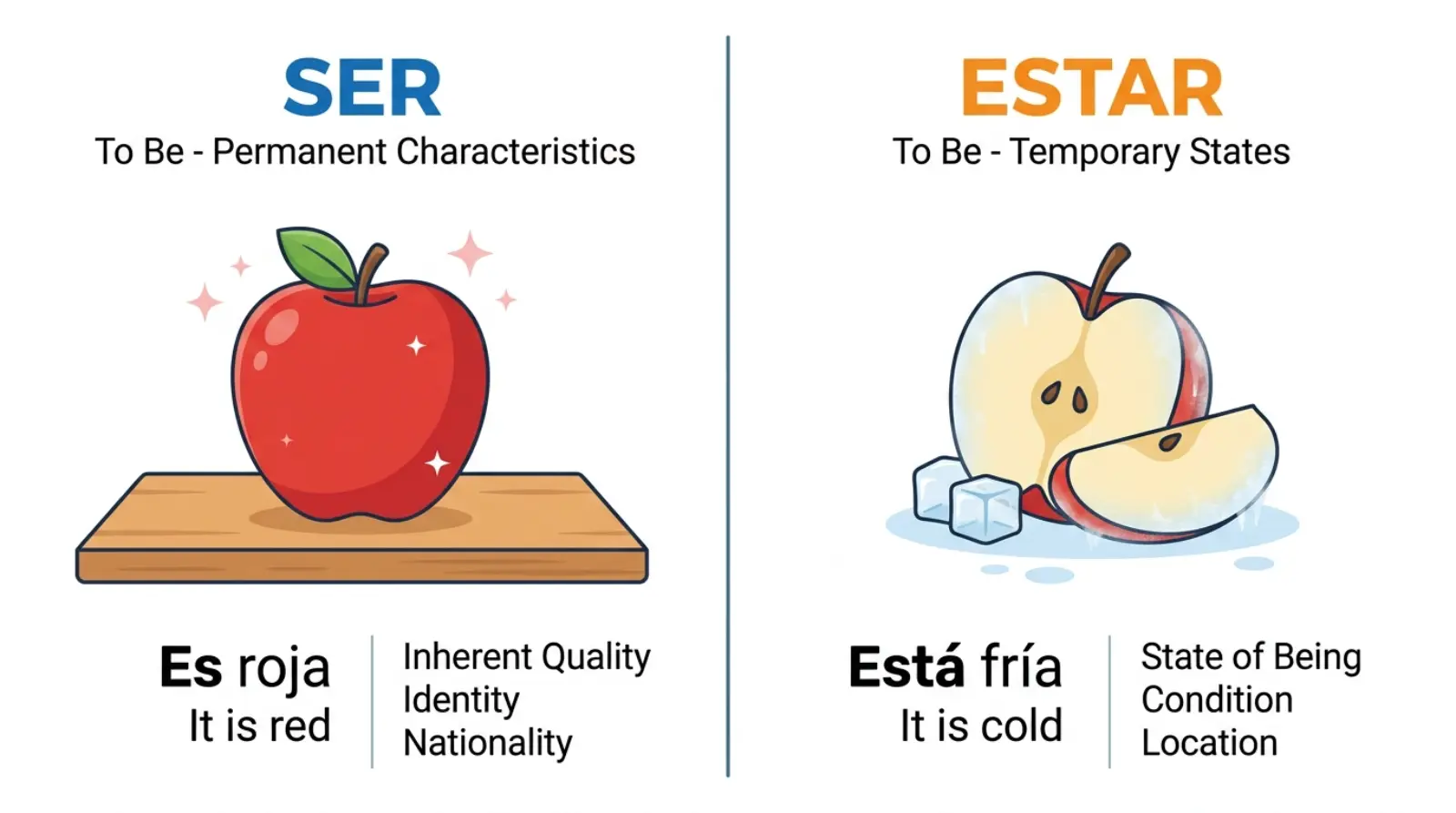
- ser = permanent
- estar = temporary
This can help beginners understand the basic difference, but it is not a complete grammar rule.
For example:
Madrid está en España.
Madrid’s location is not temporary, yet Spanish uses estar for location.
Another example:
Él es joven.
Youth is temporary in a person’s life, but Spanish uses ser because age-related descriptions are generally expressed with ser.
So the better idea is to learn the main uses of each verb.
Ser Is Commonly Used For
- identity
- nationality
- origin
- profession
- personality
- physical characteristics
- relationships
- time and dates
- material
- possession in some structures
Estar Is Commonly Used For
- location
- feelings
- physical conditions
- temporary states
- results or conditions
- ongoing actions with the gerund
The Origin of Ser and Estar
Both ser and estar developed from Latin verbs.
Spanish eventually developed two different verbs where English generally uses one basic verb, to be.
Ser comes mainly from Latin forms related to esse, meaning “to be.”
Estar comes from Latin stare, meaning “to stand” or “to remain.”
Over the history of Spanish, these verbs developed different grammatical roles.
That is why modern Spanish learners need to understand ser vs estar rather than trying to translate every sentence directly from English.
How to Pronounce Ser and Estar
Ser
Ser → sehr
It has one syllable.
Example:
Yo soy. = I am.
Estar
Estar → es-TAR
The stress falls on the second syllable in the infinitive.
Example:
Yo estoy. = I am.
When conjugated, the pronunciation changes naturally:
- soy
- eres
- es
- somos
- son
- estoy
- estás
- está
- estamos
- están
British English vs American English Usage
This topic is about Spanish grammar, so British and American English do not change how ser and estar work.
| Feature | British English | American English | Spanish |
|---|---|---|---|
| Basic English translation | to be | to be | ser / estar |
| Ser meaning | to be | to be | Identity and characteristics |
| Estar meaning | to be | to be | States and locations |
| Permanent rule | Same concept | Same concept | Only a basic shortcut |
| Grammar difference | English uses one main verb | English uses one main verb | Spanish uses two |
The important difference is between English and Spanish, not British and American English.
Which One Should You Use?
Use ser when you are generally identifying or describing what something or someone is.
Examples:
- Soy profesor. — I am a teacher.
- Ella es amable. — She is kind.
- Somos amigos. — We are friends.
- Él es español. — He is Spanish.
Use estar when you are describing a state, condition, location, or ongoing action.
Examples:
- Estoy cansado. — I am tired.
- Ella está feliz. — She is happy.
- Estamos en casa. — We are at home.
- Estoy estudiando. — I am studying.
Common Mistakes With Ser or Estar
Mistake 1: Thinking Ser Always Means Permanent
❌ Ser is only used for things that never change.
✔ Ser is used for identity, origin, profession, characteristics, and several other categories.
For example:
Soy estudiante.
A person may not be a student forever, but ser is still correct.
Mistake 2: Thinking Estar Always Means Temporary
❌ Estar is only used for temporary things.
✔ Estar is also used for location.
La escuela está en Madrid.
The school does not need to move for estar to be correct.
Mistake 3: Using Estar for Profession
❌ Estoy profesor.
✔ Soy profesor.
Profession is normally expressed with ser.
Mistake 4: Using Ser for Feelings
❌ Soy cansado.
✔ Estoy cansado.
A physical or emotional condition is commonly expressed with estar.
Mistake 5: Using Ser for Location
❌ La biblioteca es en la ciudad.
✔ La biblioteca está en la ciudad.
Location normally uses estar.
Mistake 6: Assuming English “To Be” Has One Spanish Equivalent
English:
I am tired.
Spanish:
Estoy cansado.
English:
I am a student.
Spanish:
Soy estudiante.
The English verb is the same, but Spanish chooses ser or estar depending on the meaning.
Ser or Estar in Everyday Examples
Work
Soy ingeniero.
I am an engineer.
Estoy ocupado.
I am busy.
School
Ella es estudiante.
She is a student.
Ella está en clase.
She is in class.
Daily Life
Somos vecinos.
We are neighbors.
Estamos cansados.
We are tired.
Conversations
¿Cómo estás?
How are you?
Estoy bien.
I am fine.
Social Media
Estoy feliz hoy.
I am happy today.
Text Messages
Estoy en casa.
I’m at home.
Ser or Estar in Different Contexts
Identity
Use ser to identify someone or something.
Ella es Ana.
She is Ana.
Nationality and Origin
Use ser.
Soy de Pakistán.
I am from Pakistan.
Personality
Use ser for many personality traits.
Él es amable.
He is kind.
Feelings
Use estar.
Estoy triste.
I am sad.
Location
Use estar.
El libro está en la mesa.
The book is on the table.
Ongoing Actions
Use estar + gerund.
Estoy aprendiendo español.
I am learning Spanish.
Appearance or Condition
Some adjectives can use either verb, but the meaning may change.
For example:
Ella es aburrida.
She is boring.
Ella está aburrida.
She is bored.
This is one reason the permanent/temporary rule is not enough.
Ser or Estar: Comparison Table
| Feature | Ser | Estar |
|---|---|---|
| Identity | ✅ | ❌ |
| Origin | ✅ | ❌ |
| Nationality | ✅ | ❌ |
| Profession | ✅ | ❌ |
| Personality | ✅ | Usually |
| Location | ❌ | ✅ |
| Feelings | Usually ❌ | ✅ |
| Physical condition | Usually ❌ | ✅ |
| Ongoing action | ❌ | ✅ |
| “Permanent” idea | Sometimes | Not a strict rule |
| “Temporary” idea | Not a strict rule | Often useful |
Ser or Estar in Professional Life
Knowing the difference is useful in workplaces where Spanish is spoken.
For example:
Soy gerente.
I am a manager.
But:
Estoy en la oficina.
I am in the office.
And:
Estoy ocupado.
I am busy.
Using the wrong verb can change the meaning or make your Spanish sound unnatural.
For professional communication, focus on the function of the sentence, rather than simply asking whether something is permanent.
Ser or Estar for Students and Beginners
Beginners often struggle because English uses to be for both ideas.
A useful learning system is to memorize groups instead of isolated sentences.
Remember SER with:
DOCTOR
- Description
- Origin
- Characteristics
- Time
- Occupation
- Relationships
Remember ESTAR with:
PLACE
- Position/location
- Life or physical condition
- Action in progress
- Condition
- Emotion
These are learning shortcuts, not complete grammar rules.
Signs and Common Uses of Ser or Estar
Common Ser Patterns
- ser + noun: Soy estudiante.
- ser + adjective: Ella es inteligente.
- ser + origin: Somos de India.
- ser + profession: Él es médico.
- ser + nationality: Ella es canadiense.
Common Estar Patterns
- estar + location: Estoy en casa.
- estar + adjective: Estamos cansados.
- estar + emotion: Ella está feliz.
- estar + gerund: Están trabajando.
Recognizing these patterns can make Spanish grammar much easier.
Simple Trick to Remember Is Ser or Estar Permanent
Think of ser as answering:
“What is it?”
And estar as often answering:
“How is it?” or “Where is it?”
For example:
¿Qué es él?
He is a teacher.
→ Es profesor.
¿Cómo está él?
He is tired.
→ Está cansado.
Think of it this way:
SER = identity
ESTAR = state/location
This is a more useful memory trick than simply saying:
ser = permanent, estar = temporary.
Expert Tips for Learning Ser vs Estar
- Do not depend only on permanent vs temporary.
- Learn common categories such as identity, origin, profession, location, feelings, and conditions.
- Memorize short example sentences.
- Pay attention to adjectives that change meaning with ser and estar.
- Practice asking what is it?, how is it?, and where is it?
- Listen to native Spanish speakers and notice which verb they choose.
- When unsure, check the complete sentence rather than translating word-for-word.
Related Searches People Also Ask
Is ser permanent and estar temporary?
Not exactly. This is a useful beginner shortcut, but it is not a complete Spanish grammar rule.
Is ser or estar used for permanent conditions?
Many characteristics and identities use ser, but “permanent” alone does not determine the verb.
Is estar always temporary?
No. Estar is also used for location and other situations that may last a very long time.
Why is location used with estar?
Spanish generally uses estar to express the location of people and things.
Is age ser or estar?
Age is generally expressed with tener, not ser or estar.
For example:
Tengo veinte años.
I am twenty years old.
Is nationality ser or estar?
Nationality is normally expressed with ser.
Soy mexicano.
Is tired ser or estar?
Use estar:
Estoy cansado.
Is profession ser or estar?
Use ser:
Soy profesor.
Is happy ser or estar?
For the state of feeling happy, use estar:
Estoy feliz.
Is Spanish hard to learn because of ser and estar?
They can be confusing at first because English uses one main verb, to be, for both. Practice with common patterns makes the difference easier.
FAQs
Is ser or estar permanent?
Neither verb simply means permanent. Ser is commonly used for identity and characteristics, while estar is commonly used for states and locations.
What is the easiest way to remember ser and estar?
Think ser = what something is and estar = how or where something is.
Is ser used for personality?
Yes. Many personality traits use ser, such as Ella es amable.
Is estar used for emotions?
Yes. Estar is commonly used for current emotional states, such as Estoy feliz.
Is location ser or estar?
Location is normally expressed with estar.
Can ser describe something that changes?
Yes. Ser is not limited to things that never change.
Can estar describe something that lasts a long time?
Yes. Duration does not automatically determine whether ser or estar is correct.
Why do Spanish learners confuse ser and estar?
English usually uses to be for both meanings, while Spanish divides many of these uses between ser and estar.
Final Verdict
Is ser or estar permanent?
The best answer is: neither one is simply the permanent verb.
👉 Ser is mainly connected with identity, origin, profession, characteristics, and other defining information.
👉 Estar is mainly connected with location, conditions, feelings, and ongoing actions.
The permanent vs temporary rule can help beginners, but it should not be treated as a strict grammar rule.
Conclusion
The question is ser or estar permanent comes from one of the most common Spanish-learning shortcuts: ser is permanent and estar is temporary.
That shortcut is useful at the beginning, but Spanish is more flexible than that.
The better approach is to remember the main uses. Ser often tells us what someone or something is, while estar often tells us how or where someone or something is.
So instead of asking only “Is it permanent?”, ask:
“Am I describing identity, or am I describing a state or location?”
That small change can make ser vs estar much easier to understand.

Camila Green is an English language writer who specializes in confusing word comparisons and spelling explanations. She creates simple, beginner-friendly guides on topics like “niece or neice” and other common English mistakes. Her writing focuses on clarity, real-life examples, and easy learning. At VerrsaPick, she helps readers improve their English with practical and engaging content.