If you are studying chemistry and come across the question “BF3 polar or nonpolar?”, the answer may seem confusing at first. Boron trifluoride, written as BF₃, contains polar B–F bonds, so it is easy to think that the whole molecule must also be polar.
However, a molecule can contain polar bonds and still be nonpolar overall. The key is to look at the molecule’s shape and symmetry. BF₃ has a special structure that causes the bond dipoles to cancel each other.
This question is common in chemistry classes, homework, exams, laboratory discussions, and online searches. Students often want to know whether BF₃ is polar or nonpolar, why it has that polarity, what its Lewis structure looks like, and how its molecular geometry affects the answer.
People usually search for: BF3 polar or nonpolar, BF₃ molecular polarity, BF₃ Lewis structure, BF₃ bond polarity, BF₃ molecular geometry, BF₃ shape, and why BF₃ is nonpolar.
The good news is that the answer becomes much easier once you understand electronegativity, bond dipoles, molecular geometry, and symmetry.
In this guide, you’ll learn the meaning, pronunciation, examples, usage, grammar rules, common mistakes, expert tips, and simple explanations in easy English.
BF3 Polar or Nonpolar – Quick Answer
👉 BF₃ is nonpolar overall.
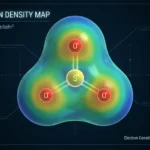
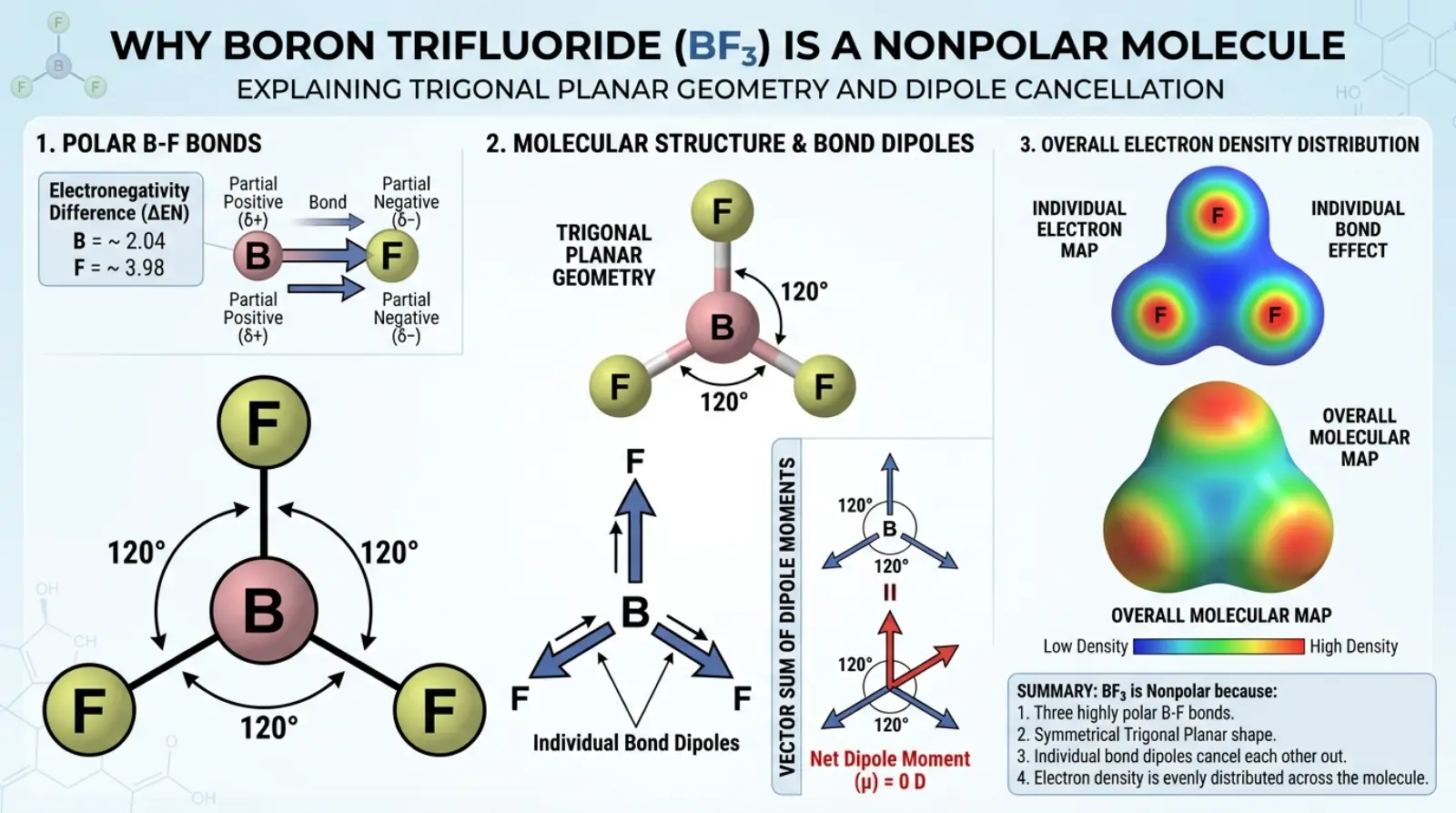
BF₃ contains three polar B–F bonds, because fluorine is much more electronegative than boron. However, the molecule has a trigonal planar shape with three identical B–F bonds arranged symmetrically at about 120°.
The three bond dipoles point toward fluorine and cancel one another.
Simple Explanation
Polar bonds + symmetrical shape = nonpolar molecule
So:
👉 B–F bond = polar
👉 BF₃ molecule = nonpolar
Example
Imagine three people pulling equally on an object from three directions. If the pulls are equal and evenly arranged, the object does not move in one direction.
BF₃ works in a similar way with its bond dipoles.
What Does BF3 Mean?
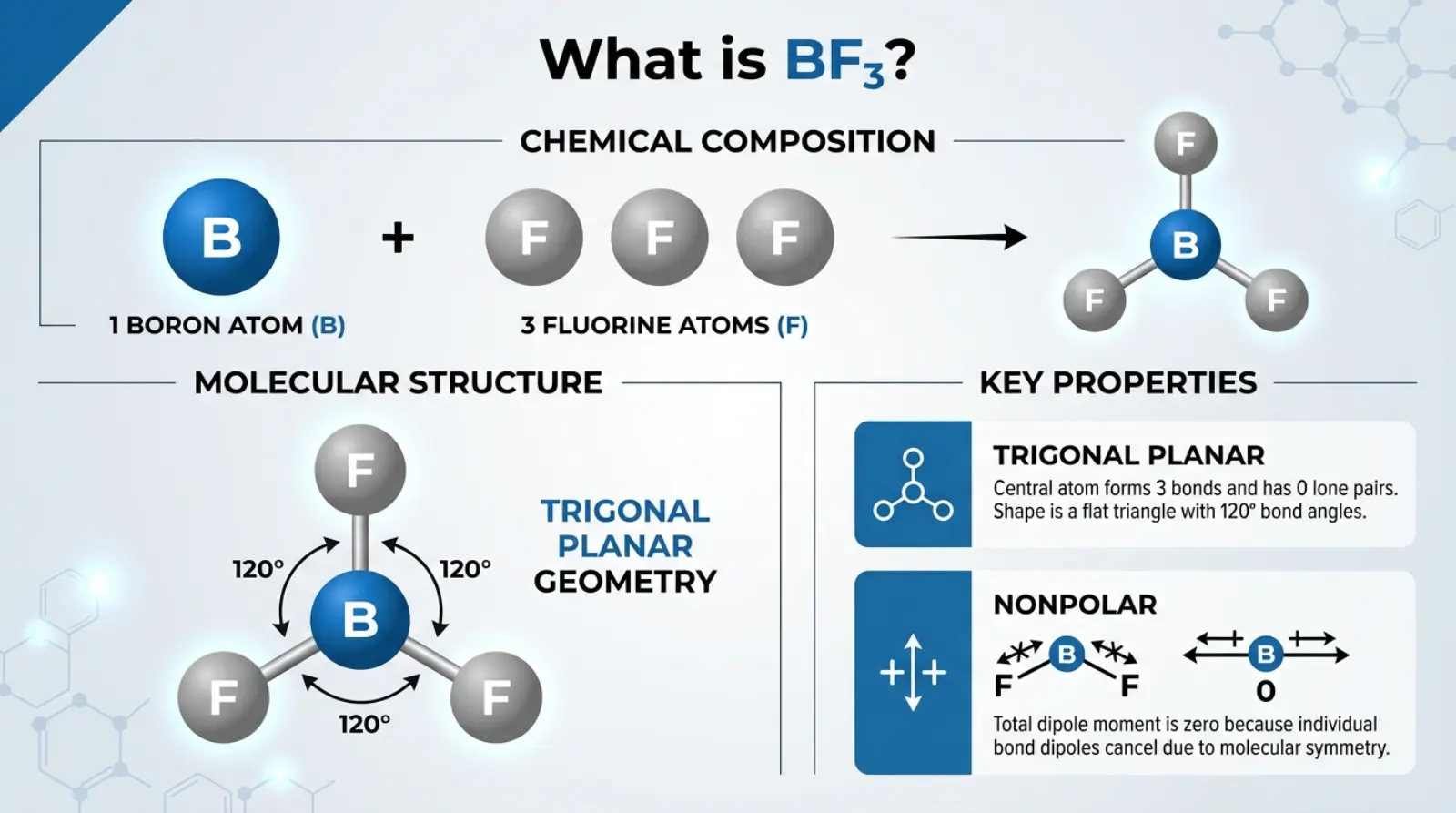
BF₃ is the chemical formula for boron trifluoride.
It contains:
- 1 boron atom
- 3 fluorine atoms
Boron is the central atom, while the three fluorine atoms surround it.
The molecule has a trigonal planar molecular geometry.
The B–F bonds are polar because fluorine attracts bonding electrons more strongly than boron. But because the three bonds are arranged symmetrically, their dipoles cancel.
Therefore, the overall molecule has no net dipole moment and is classified as nonpolar.
Related Terms
Important terms for understanding BF₃ include:
- Electronegativity
- Bond dipole
- Dipole moment
- Molecular geometry
- Trigonal planar
- Lewis structure
- Symmetry
- Polar bond
- Nonpolar molecule
The Origin and Structure of BF3
BF₃ stands for boron trifluoride.
The prefix tri- means three, which tells you that the compound contains three fluorine atoms.
Boron sits in the center and forms three bonds with fluorine atoms. In its common molecular structure, the three fluorine atoms are arranged around boron in a flat, triangular pattern.
This arrangement gives BF₃ its trigonal planar shape and is the main reason its bond dipoles cancel.
How to Understand BF3 Polarity
To determine whether BF₃ is polar or nonpolar, follow three steps.
Step 1: Check the Bonds
Boron and fluorine have different electronegativities.
Fluorine attracts electrons more strongly, making every B–F bond polar.
Step 2: Find the Molecular Shape
BF₃ has three bonding regions around boron and no lone pairs on the central atom in its basic Lewis structure.
Its shape is:
Trigonal planar
The bond angles are approximately:
120°
Step 3: Check the Dipoles
Each B–F bond has a dipole pointing toward fluorine.
Because the three identical dipoles are arranged symmetrically, they cancel.
Therefore:
Net dipole moment = 0
So BF₃ is nonpolar.
BF3 Lewis Structure
The basic Lewis structure of BF₃ has boron in the center.
Each fluorine forms one single bond with boron and has three lone pairs.
A simple representation is:
F — B — F
with the third fluorine bonded to B in a trigonal planar arrangement.
Boron has only six electrons around it in this structure, which is an important exception to the usual octet rule.
This incomplete octet is one reason BF₃ is often discussed in introductory chemistry.
BF3 Molecular Geometry
BF₃ has trigonal planar geometry.
That means:
- Central atom: Boron
- Surrounding atoms: 3 fluorine atoms
- Lone pairs on central boron: 0
- Bond angle: about 120°
- Shape: Trigonal planar
- Overall polarity: Nonpolar
The flat and symmetrical arrangement is critical.
If the three B–F bonds were not arranged symmetrically, their dipoles might not cancel.
British English vs American English Usage
Chemical terminology is essentially the same in British and American English.
| Feature | British English | American English | Notes |
|---|---|---|---|
| Compound name | boron trifluoride | boron trifluoride | Same |
| Formula | BF₃ | BF₃ | Same |
| Molecular shape | trigonal planar | trigonal planar | Same |
| Polarity | nonpolar | nonpolar | Same |
| Bond type | polar B–F bonds | polar B–F bonds | Same |
The science does not change between these English varieties.
Which One Should You Use?
If your question is BF3 polar or nonpolar, the correct classification is:
👉 BF₃ = nonpolar molecule
But do not say that its bonds are nonpolar.
A more accurate explanation is:
BF₃ contains polar B–F bonds, but the molecule is nonpolar because its trigonal planar symmetry causes the bond dipoles to cancel.
This distinction is important in chemistry exams.
Common Mistakes With BF3 Polar or Nonpolar
Mistake 1: Saying BF₃ Has Nonpolar Bonds
❌ BF₃ has nonpolar B–F bonds.
✔ BF₃ has polar B–F bonds.
The molecule is nonpolar because the dipoles cancel.
Mistake 2: Ignoring Molecular Shape
❌ BF₃ is polar because fluorine is more electronegative.
✔ BF₃ is nonpolar because its polar bonds are arranged symmetrically.
Mistake 3: Confusing Bond Polarity With Molecular Polarity
A polar bond does not automatically make the entire molecule polar.
You must consider the complete molecular geometry.
Mistake 4: Calling BF₃ Tetrahedral
❌ BF₃ is tetrahedral.
✔ BF₃ is trigonal planar.
BF₃ has three bonding regions around boron.
Mistake 5: Forgetting Dipole Cancellation
The three B–F dipoles point in different directions. Their vector effects cancel because the molecule is symmetrical.

BF3 in Everyday and Chemistry Examples
Chemistry Class
Is BF₃ polar or nonpolar?
Answer: BF₃ is nonpolar overall.
Homework
A student may write:
BF₃ has polar bonds but is a nonpolar molecule.
That is a strong short answer.
Exam Question
Why is BF₃ nonpolar?
Because its three polar B–F bonds are arranged symmetrically in a trigonal planar shape, causing the bond dipoles to cancel.
Online Chemistry Discussion
“I thought BF₃ was polar because fluorine is very electronegative.”
The missing idea is molecular symmetry.
BF3 in Different Chemistry Contexts
Electronegativity
Fluorine is more electronegative than boron, so the B–F bonds are polar.
Molecular Geometry
BF₃ has trigonal planar geometry.
VSEPR Theory
VSEPR theory predicts the arrangement of electron groups around the central boron atom.
Three bonding regions and no lone pairs give a trigonal planar arrangement.
Dipole Moment
The individual B–F bond dipoles cancel due to symmetry.
Therefore, BF₃ has no overall molecular dipole moment in its ideal trigonal planar form.
BF3 – Comparison Table
| Feature | BF₃ |
|---|---|
| Full name | Boron trifluoride |
| Formula | BF₃ |
| Central atom | Boron |
| Bonding atoms | 3 fluorine atoms |
| B–F bonds | Polar |
| Molecular shape | Trigonal planar |
| Bond angle | ~120° |
| Symmetry | High |
| Net dipole | Zero |
| Overall molecule | Nonpolar |
BF3 in Professional and Laboratory Chemistry
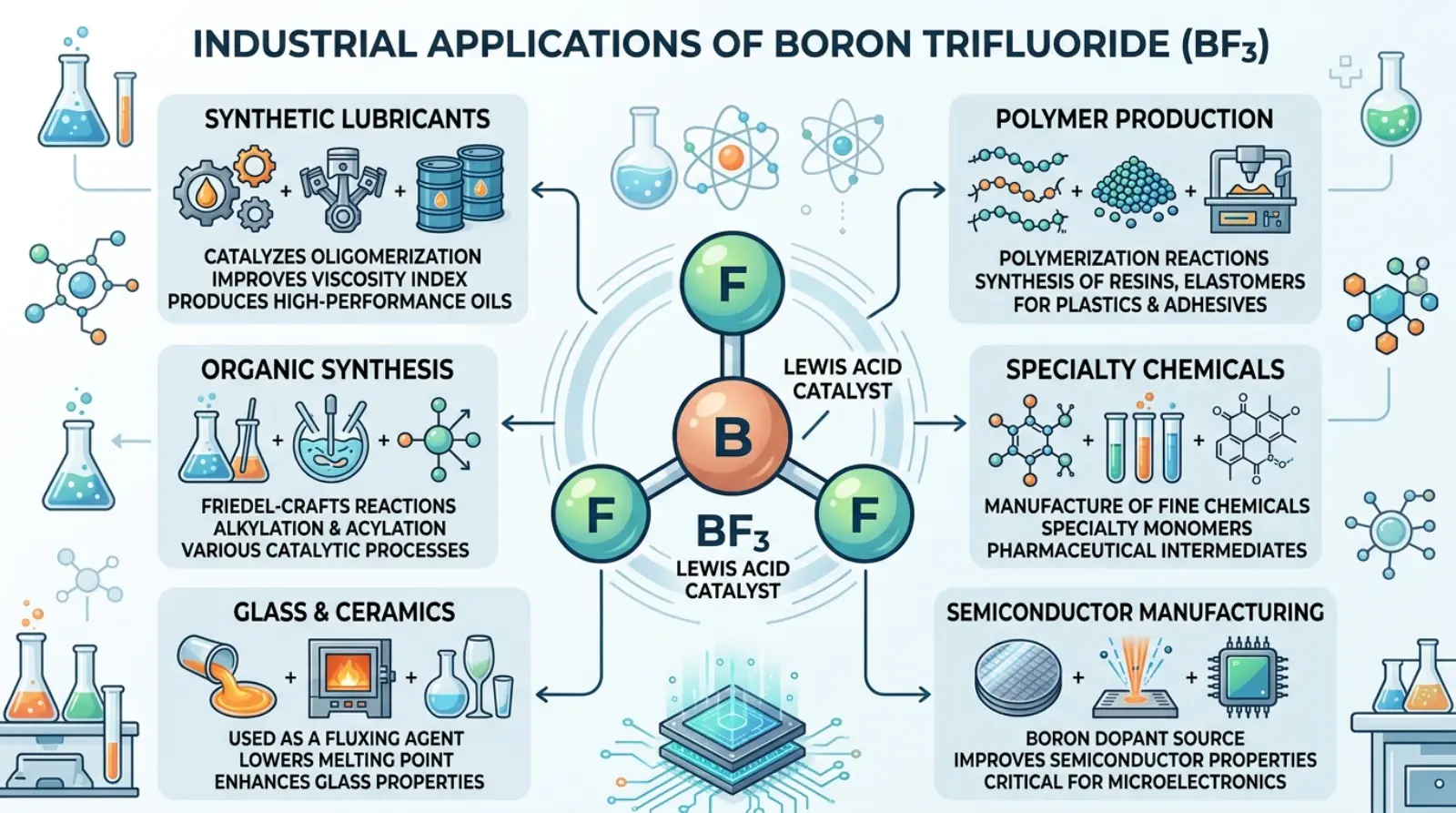
BF₃ is an important chemical compound studied and used in chemistry. Its molecular structure makes it a useful example when learning about Lewis structures, Lewis acids, electron deficiency, molecular geometry, and polarity.
In laboratory or professional chemistry, polarity is only one property used to understand a substance. Chemists also consider reactivity, bonding, electron structure, physical properties, and interactions with other compounds.
BF3 for Students and Beginners
The biggest beginner mistake is using this shortcut:
“Polar bonds = polar molecule.”
That shortcut does not always work.
Instead, use this process:
1. Find polar bonds.
2. Find the molecular shape.
3. Check symmetry.
4. Decide whether dipoles cancel.
For BF₃:
Polar bonds → trigonal planar → symmetrical → dipoles cancel → nonpolar.
Signs and Characteristics of BF3 Polarity
Key characteristics include:
- Three B–F bonds
- Polar B–F bonds
- Trigonal planar shape
- Approximately 120° bond angles
- Symmetrical arrangement
- Dipole cancellation
- Zero net molecular dipole
- Nonpolar overall molecule
These features help you identify BF₃ quickly in chemistry problems.
Simple Trick to Remember BF3 Polar or Nonpolar
Use the three-arrow trick.
Imagine three arrows pointing from boron toward the three fluorine atoms.
Because the arrows are evenly spaced by about 120°, they balance each other.
👉 Three equal directions = cancellation
👉 Cancellation = nonpolar
Think of a perfectly balanced three-way pull.
Expert Tips for BF3 Polarity
- Never decide molecular polarity from electronegativity alone.
- Identify the polarity of each bond first.
- Draw or visualize the Lewis structure.
- Determine molecular geometry using VSEPR theory.
- Look for symmetry.
- Ask whether the bond dipoles cancel.
- Remember that BF₃ has polar bonds but is nonpolar overall.
Related Searches People Also Ask
Is BF3 polar or nonpolar?
BF₃ is nonpolar overall.
Are the B–F bonds polar?
Yes. The B–F bonds are polar because fluorine attracts electrons more strongly than boron.
Why is BF3 nonpolar?
Its three polar bond dipoles cancel because of its symmetrical trigonal planar shape.
What is the shape of BF3?
BF₃ has a trigonal planar molecular shape.
What is the bond angle in BF3?
The B–F bond angles are approximately 120°.
Does BF3 have a dipole moment?
Its ideal symmetrical structure has a net dipole moment of zero.
What is the Lewis structure of BF3?
Boron is in the center with three single B–F bonds, while each fluorine has three lone pairs.
Does BF3 follow the octet rule?
Boron in the common BF₃ Lewis structure has an incomplete octet, with six electrons around it.
FAQs
Is BF3 polar or nonpolar?
BF₃ is nonpolar overall.
Why is BF3 nonpolar?
Its three polar B–F bonds are arranged symmetrically, so their dipoles cancel.
Are BF3 bonds polar?
Yes. Each B–F bond is polar.
What is the shape of BF3?
BF₃ is trigonal planar.
What is the bond angle of BF3?
The bond angles are approximately 120°.
Does BF3 have lone pairs on boron?
In the basic Lewis structure, boron has no lone pairs.
Does BF3 have a net dipole?
No. The symmetrical structure causes the individual bond dipoles to cancel.
Is BF3 linear?
No. BF₃ is trigonal planar, not linear.
Is BF3 symmetrical?
Yes. Its three identical B–F bonds are arranged symmetrically around boron.
What is the easiest way to remember BF3 polarity?
Remember: polar bonds + symmetrical trigonal planar shape = nonpolar molecule.
Final Verdict
BF₃ is nonpolar overall.
The important distinction is:
👉 B–F bonds = polar
👉 BF₃ molecule = nonpolar
Its trigonal planar geometry, 120° bond angles, and symmetry make the three bond dipoles cancel.
Conclusion
The answer to BF3 polar or nonpolar is nonpolar.
BF₃ has three polar B–F bonds because fluorine is more electronegative than boron. However, the molecule has a symmetrical trigonal planar structure. The three bond dipoles point in directions that balance one another, giving the molecule no overall dipole.
When solving polarity questions, do not stop after checking electronegativity. Always look at the molecular shape and symmetry.
The easiest memory trick is:
BF₃ = polar bonds + balanced shape = nonpolar molecule.

Camila Green is an English language writer who specializes in confusing word comparisons and spelling explanations. She creates simple, beginner-friendly guides on topics like “niece or neice” and other common English mistakes. Her writing focuses on clarity, real-life examples, and easy learning. At VerrsaPick, she helps readers improve their English with practical and engaging content.