Have you ever written a sentence like “I am suppose to call you” and then wondered whether suppose to or supposed to is correct? You are not alone. This is one of those English mistakes that happens because the words sound very similar when people speak quickly.
You may see this confusion in school assignments, emails, text messages, social media posts, workplace conversations, and everyday English. Many learners hear “supposed to” as something closer to “suppose to,” so they leave out the -d when writing it.
The good news is that the rule is simple. standard English, when you mean expected to, required to, or intended to, the correct phrase is supposed to.
People usually search for: suppose to or supposed to meaning, correct spelling, pronunciation, examples, usage, definition, and grammar difference. They may also ask, “Is it suppose to or supposed to?” or “How do I use supposed to in a sentence?”
Understanding this small difference can make your writing clearer and more professional. It is especially useful when writing schoolwork, business emails, applications, reports, or messages where correct grammar matters.
In this guide, you’ll learn the meaning, pronunciation, examples, usage, grammar rules, common mistakes, expert tips, and simple explanations in easy English.
Suppose to or Supposed to – Quick Answer
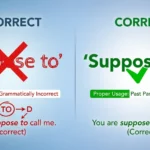
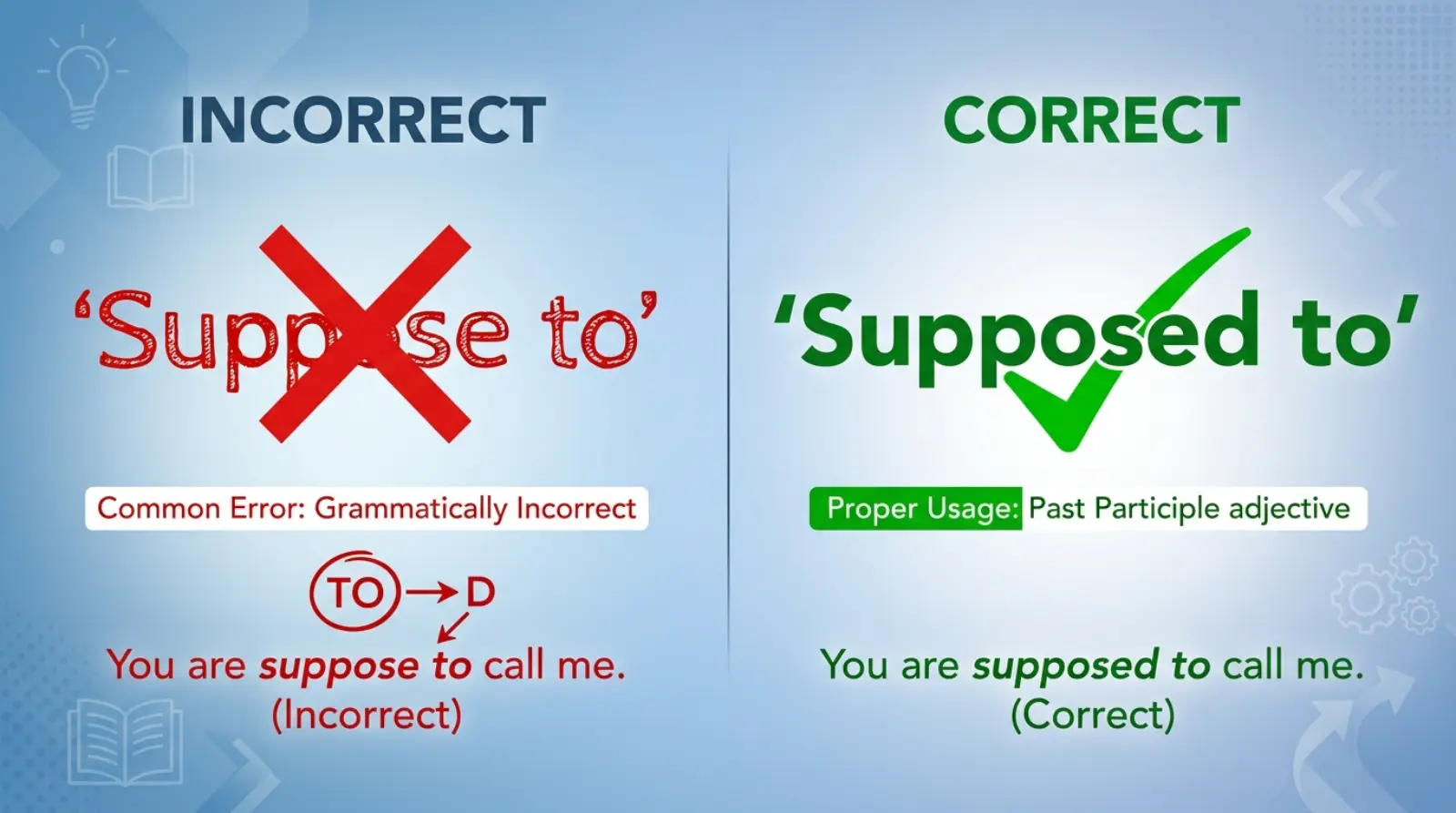
👉 Supposed to = correct when you mean “expected to,” “meant to,” or “required to.”
Suppose to = usually incorrect when it is intended to mean “expected to.”
Examples:
- I am supposed to finish this work today. ✅
- You are supposed to arrive at 9 a.m. ✅
- We were supposed to meet yesterday. ✅
- She is supposed to call me later. ✅
- They are supposed to follow the rules. ✅
❌ I am suppose to finish this work today.
Simple Rule
👉 Remember the -d in supposed to.
Think: suppose → supposed → supposed to
What Does Suppose to or Supposed to Mean?
Supposed to is a common English phrase used when something is expected, planned, intended, or required.
For example:
You are supposed to wear a seat belt.
This means wearing a seat belt is expected or required.
It can also describe a plan:
We were supposed to go shopping.
This means the plan was to go shopping, although the plan may not have happened.
Synonyms
Depending on the sentence, supposed to can mean:
- expected to
- meant to
- required to
- intended to
- scheduled to
- should
Related Terms
Some related expressions include:
- be supposed to
- suppose
- expected to
- meant to
- should
- supposedly
Be careful with supposedly. It has a different meaning and is often used when something is claimed to be true but may not actually be true.
The Origin of Suppose and Supposed
The word suppose comes from Latin roots that entered English through French. Over time, English developed several uses of the verb suppose, including meanings related to assuming, believing, or considering something.
The form supposed is simply the past participle of suppose.
English later developed the common construction be supposed to, which is now widely used to express expectations, duties, plans, or intentions.
So, when you write “I am supposed to…”, the word supposed is doing an important grammatical job. The -d should not be dropped.
How to Pronounce Suppose to or Supposed to
This is where much of the confusion begins.
Supposed to is often pronounced quickly in natural speech. The final sounds can become less clear, making it sound similar to “suppose to.”
A simple pronunciation guide is:
supposed to → suh-POHZD tuh
In fast speech, the phrase may sound closer to:
suh-POHZ-tuh
That does not mean the spelling changes.
Common Pronunciation Mistake
Some learners hear:
“I’m supposed to go.”
as something like:
“I’m suppose to go.”
Remember: speech can become shorter, but spelling stays “supposed to.”
British English vs American English Usage
There is no major spelling difference between British and American English here. Both use supposed to.
| Feature | British English | American English | Notes |
|---|---|---|---|
| Correct form | supposed to | supposed to | Same |
| Meaning | expected/intended/required | expected/intended/required | Same |
| Pronunciation | Similar | Similar | May sound reduced in speech |
| Formal writing | supposed to | supposed to | Same |
| Informal texting | supposed to | supposed to | “suppose to” may appear as a mistake |
Whether you are writing for readers in the US, UK, Canada, Australia, India, or Pakistan, use supposed to in standard English.
Which One Should You Use?
Use supposed to when you are talking about an expectation, rule, plan, responsibility, or intention.
Examples
- Employees are supposed to arrive on time.
- You are supposed to submit the form today.
- I was supposed to call my friend.
- The train is supposed to arrive at six.
- We are supposed to keep this information private.
Quick Usage Table
| Situation | Example |
|---|---|
| Rule | Students are supposed to follow the rules. |
| Duty | I am supposed to finish this task. |
| Plan | We were supposed to meet at noon. |
| Expectation | She is supposed to arrive soon. |
| Intended purpose | This button is supposed to open the door. |
Common Mistakes With Suppose to or Supposed to
Mistake 1: Dropping the “d”
❌ I am suppose to study tonight.
✔ I am supposed to study tonight.
Why? The standard phrase is be supposed to.
Tip: Always check for the -d after suppose.
Mistake 2: Writing “suppose” after “am”
❌ You are suppose to be here.
✔ You are supposed to be here.
The verb form follows are, so use supposed.
Mistake 3: Using “supposed” without “to”
❌ I am supposed finish the report.
✔ I am supposed to finish the report.
The normal construction is:
be + supposed + to + verb
Mistake 4: Confusing “suppose” with “supposed to”
Suppose can be used as a normal verb:
I suppose you are right.
But supposed to is used for expectation, duty, or intention:
I am supposed to call you.
Mistake 5: Thinking pronunciation controls spelling
❌ I write “suppose to” because that is how it sounds.
✔ Write supposed to in standard English.
Suppose to or Supposed to in Everyday Examples
Work
I am supposed to send the report before lunch.
School
Students are supposed to bring their books.
Social Media
Aren’t we supposed to post the results today?
Daily Life
I’m supposed to clean the kitchen this evening.
We were supposed to receive the documents yesterday.
Text Message
I’m supposed to meet him at 7.
Online Content
This update is supposed to make the app faster.
Conversation
You’re supposed to turn left at the next street.
These examples show why supposed to is so common in everyday English.
Suppose to or Supposed to in Different Contexts
Education
Teachers often use supposed to when explaining rules and expectations:
You are supposed to complete all five questions.
Workplace
It can describe responsibilities:
I’m supposed to attend the meeting at 10.
Communication
It can explain plans:
We were supposed to talk yesterday.
Technology
It can describe what a device or feature is designed to do:
This feature is supposed to save battery life.
Social Media
People may use it casually:
This video is supposed to be funny.
The phrase remains grammatically the same across these contexts.
Comparison Table: Suppose to vs Supposed to
| Feature | Suppose to | Supposed to |
|---|---|---|
| Standard grammar | ❌ Usually incorrect | ✅ Correct |
| Meaning “expected to” | ❌ No | ✅ Yes |
| Meaning “required to” | ❌ No | ✅ Yes |
| Meaning “intended to” | ❌ No | ✅ Yes |
| Formal writing | ❌ Avoid | ✅ Use |
| Academic writing | ❌ Avoid | ✅ Use |
| Workplace writing | ❌ Avoid | ✅ Use |
| Texting | May appear as a mistake | ✅ Correct |
| Main issue | Missing -d | Standard form |
Suppose to or Supposed to in Professional Life
Correct grammar matters more in professional writing because small mistakes can affect how polished your message looks.
Compare:
❌ “You are suppose to submit the document today.”
with:
✅ “You are supposed to submit the document today.”
The second sentence is clear and grammatically correct.
Use supposed to in:
- business emails
- reports
- school assignments
- professional messages
- instructions
- workplace documents
- applications
You do not need complicated English to sound professional. Using simple phrases correctly is often enough.
Suppose to or Supposed to for Students and Beginners
Beginners often struggle with this phrase because the -d is easy to miss when speaking.
Here is the easiest pattern to learn:
I am supposed to + verb
Examples:
- I am supposed to study.
- I am supposed to work.
- I am supposed to call.
- I am supposed to wait.
Now change the subject:
- He is supposed to study.
- She is supposed to call.
- They are supposed to wait.
- We are supposed to leave.
The structure stays the same.
Grammar Formula
Subject + be + supposed to + base verb
For example:
She + is + supposed to + arrive.
Signs and Common Uses of Supposed To
You will often see supposed to when a sentence talks about:
- a responsibility
- a rule
- an expectation
- a planned event
- an intended action
- a scheduled activity
- something that should happen
A useful clue is that supposed to is often followed by a base verb:
supposed to go
supposed to call
supposed to finish
supposed to arrive
supposed to study
Simple Trick to Remember Suppose to or Supposed to
Here is the easiest memory trick:
Think of “supposed” as having a job.
When you use be supposed to, give supposed its d.
am supposed to
is supposed to
are supposed to
was supposed to
were supposed to
Think of it this way:
If you can replace the phrase with “expected to,” you almost certainly need supposed to.
I am supposed to leave.
means:
I am expected to leave.
So remember:
Expected to = Supposed to
Expert Tips for Avoiding the Mistake
- Memorize the whole phrase, not just the word: “supposed to.”
- Watch for be verbs such as am, is, are, was, and were.
- Check the -d when proofreading.
- Do not spell based on pronunciation.
- Use supposed to + base verb.
- In formal writing, always choose supposed to, not suppose to.
A quick proofreading question can help:
“Do I mean expected to, required to, or intended to?”
If yes, write supposed to.
Related Searches People Also Ask
People searching for this grammar question may also wonder:
- Is it suppose to or supposed to? — The correct phrase is usually supposed to.
- How do you spell supposed to? — Spell it s-u-p-p-o-s-e-d t-o.
- Is suppose to grammatically correct? — Not when it is meant to express expectation or duty.
- Why does supposed to sound like suppose to? — Natural speech often reduces the sounds.
- What does supposed to mean? — It can mean expected, required, intended, or planned.
- Can I say I suppose? — Yes. “I suppose” is a separate and correct expression.
- What is the difference between suppose and supposed? — “Suppose” is a verb; “supposed” is its past participle and is used in phrases such as “be supposed to.”
- Is supposed to formal English? — Yes, it is standard English and works in formal and informal situations.
- Can supposed to mean should? — Often, yes, depending on context.
- What comes after supposed to? — Usually a base verb, such as “supposed to go” or “supposed to study.”
FAQs About Suppose to or Supposed to
Is “suppose to” correct?
Usually, no. When you mean “expected to,” “required to,” or “intended to,” use supposed to.
Is it “I am suppose to” or “I am supposed to”?
The correct form is I am supposed to.
Why do people say “suppose to”?
Because supposed to is often pronounced quickly, and the d may not be clearly heard.
What does “supposed to” mean?
It can mean something is expected, required, planned, or intended.
Is “supposed to” formal?
Yes. Supposed to is standard English and is suitable for school, work, emails, and professional writing.
Can “suppose” be correct?
Yes. For example:
I suppose you are right.
Here, suppose means “think” or “assume.” It is different from be supposed to.
What is the grammar pattern?
The common pattern is:
Subject + be + supposed to + base verb
Example:
They are supposed to arrive soon.
How can I remember the correct spelling?
Remember this shortcut:
Expected to = supposed to
If the meaning is “expected to,” keep the d.
Final Verdict
Supposed to is the correct choice when you mean expected to, required to, planned to, or intended to.
❌ suppose to — incorrect for this meaning
✅ supposed to — correct
Easiest Memory Rule
👉 If you mean “expected to,” use “supposed to.”
Conclusion
The confusion between suppose to or supposed to is very common because the phrase supposed to often sounds like “suppose to” in normal conversation.
But the spelling is simple: when you mean something is expected, required, planned, or intended, use supposed to.
For example:
I am supposed to finish my homework.
We are supposed to meet at six.
She was supposed to call me.
The word suppose is also a real English word, but it has a different use:
I suppose you are correct.
So don’t let pronunciation trick you. supposed to, keep the -d.
Final memory trick: Expected to = Supposed to.

Camila Green is an English language writer who specializes in confusing word comparisons and spelling explanations. She creates simple, beginner-friendly guides on topics like “niece or neice” and other common English mistakes. Her writing focuses on clarity, real-life examples, and easy learning. At VerrsaPick, she helps readers improve their English with practical and engaging content.