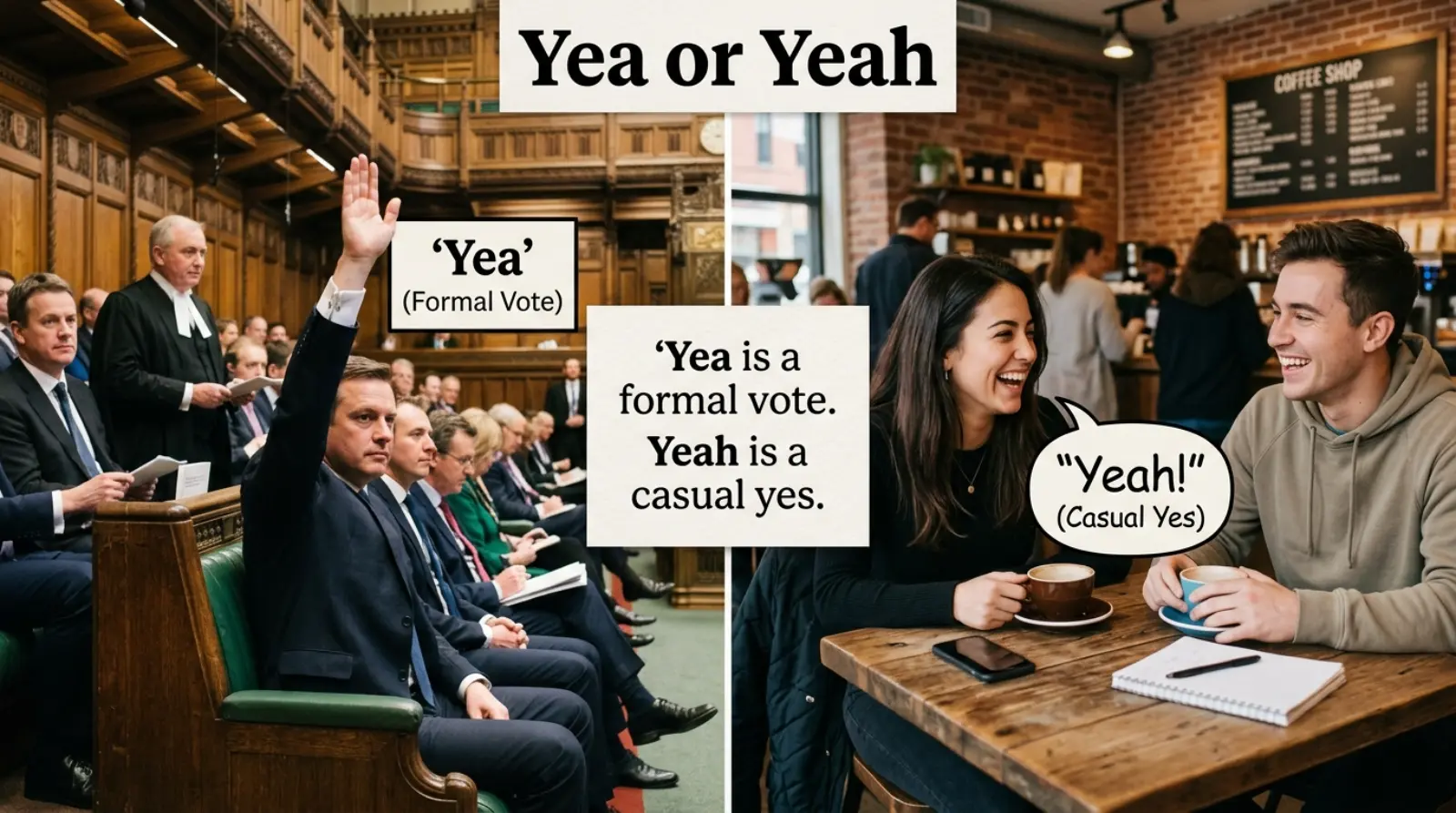
Have you ever typed a quick reply and stopped at yea or yeah? You are not alone. These two words look almost the same, but they can have very different meanings and uses. The confusion becomes even stronger because people often use yeah in texting, while yea appears in older, formal, or voting-related language.
Imagine someone asks, “Do you want to come with us?” You might answer, “Yeah!” But if you see the word “yea” in a formal vote, historical text, or phrase like “yea or nay,” it has a different role.
Understanding this small difference can help you write more clearly at school, at work, online, and in everyday conversations. It can also prevent awkward mistakes in emails, essays, social media posts, and text messages.
People usually search for yea or yeah meaning, correct spelling, pronunciation, examples, usage, definition, grammar difference, and the difference between yea and yeah.
The good news is simple: yeah is the common informal word for yes, while yea is a different word with older or specific uses.
In this guide, you’ll learn the meaning, pronunciation, examples, usage, grammar rules, common mistakes, expert tips, and simple explanations in easy English.
Yea or Yeah – Quick Answer
👉 Yeah = an informal way to say yes.
👉 Yea = an old-fashioned or formal word meaning yes, especially in voting or the phrase yea or nay.
Examples
- “Yeah, I can help you.” ✅
- “Yeah, that sounds great.” ✅
- “The vote was 80 yeas and 20 nays.” ✅
- “Yea or nay?” ✅
Simple Rule
👉 Use yeah in normal conversations and texting.
👉 Use yea mainly for voting, historical language, or expressions such as yea or nay.
Easy memory trick:
Yeah sounds like everyday yes. Yea belongs to formal or old-style yes.
What Does Yea or Yeah Mean?
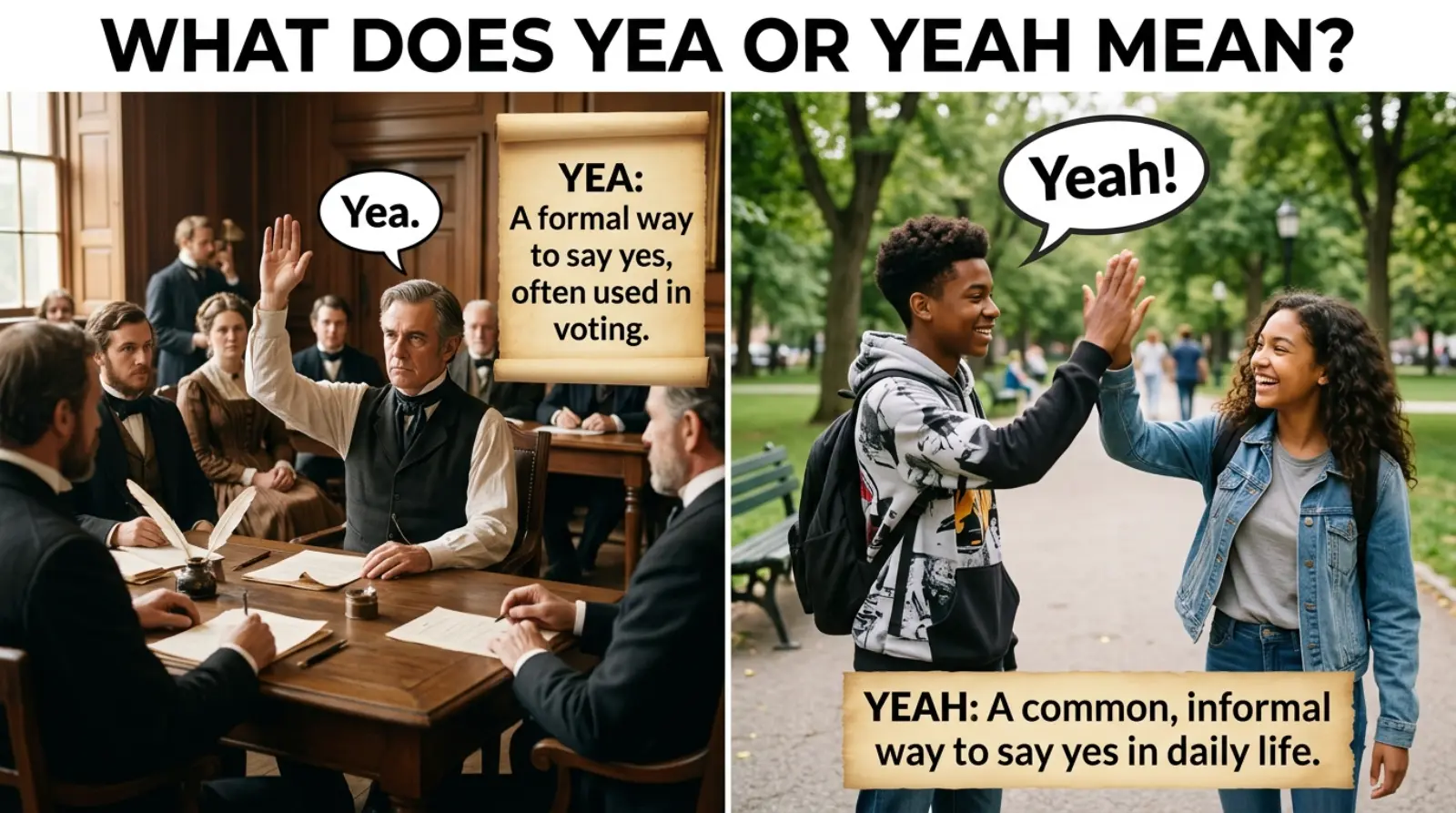
Yeah is an informal English word that means yes. It is very common in conversations, text messages, social media, and casual writing.
For example:
“Are you ready?”
“Yeah!”
Yea can also mean yes, but it is much less common in modern everyday English. It is often connected with voting or older forms of English.
For example:
“All in favor, say yea.”
You may also see yea in the expression yea or nay, meaning yes or no.
Synonyms
For yeah:
- yes
- sure
- okay
- yep
- absolutely
- definitely
For yea:
- yes
- affirmative
- in favor
Opposites
The main opposite of both words is no or nay, depending on the context.
Related Terms
You may also see:
- yep
- yup
- yeah
- yes
- nay
- no
- aye
- affirmative
The Origin of Yea or Yeah
Yea is the older word. It comes from Old English and has been used for centuries as a way of expressing agreement or affirmation.
It became especially familiar in formal voting language. The phrase yea or nay has been used to describe a vote for or against something.
Yeah developed as an informal spoken form of yes. It became common in modern English and is now widely used in everyday speech.
Today, yeah is far more natural in casual communication.
How to Pronounce Yea or Yeah
Both yea and yeah are generally pronounced like “yah.”
Yea
Pronunciation: YEE / YAY, depending on the word or context represented.
In the voting expression yea or nay, it is commonly pronounced like “yay.”
Yeah
Pronunciation: yah
Example:
“Yeah, I understand.”
Common Pronunciation Mistake
Do not assume that the spelling alone tells you the exact sound. Yea can be connected with older or formal language, while yeah represents the casual spoken form of yes.
British English vs American English Usage
Both British and American English use yeah in informal speech.
Yea is understood in both varieties, but modern speakers do not normally use it as their everyday replacement for yes.
| Feature | British English | American English | Notes |
|---|---|---|---|
| Yeah | Common | Common | Informal |
| Yea | Uncommon | Uncommon | Often formal or historical |
| Everyday yes | Yes/yeah | Yes/yeah | Context matters |
| Yea or nay | Used | Used | Formal or traditional expression |
| Texting | Yeah | Yeah | Very common |
Which One Should You Use?
The right choice depends on your situation.
Use yeah when:
- Talking with friends
- Sending text messages
- Replying on social media
- Writing casual messages
- Having an informal conversation
Example:
“Yeah, I’ll be there at seven.”
Use yea when:
- Talking about a formal vote
- Using the phrase yea or nay
- Writing about historical language
- Reproducing traditional wording
Example:
“The final vote included 45 yeas.”
For professional writing
In most workplace emails, yes is safer than yeah.
Instead of:
“Yeah, I agree with the proposal.”
Use:
“Yes, I agree with the proposal.”
This sounds clearer and more professional.
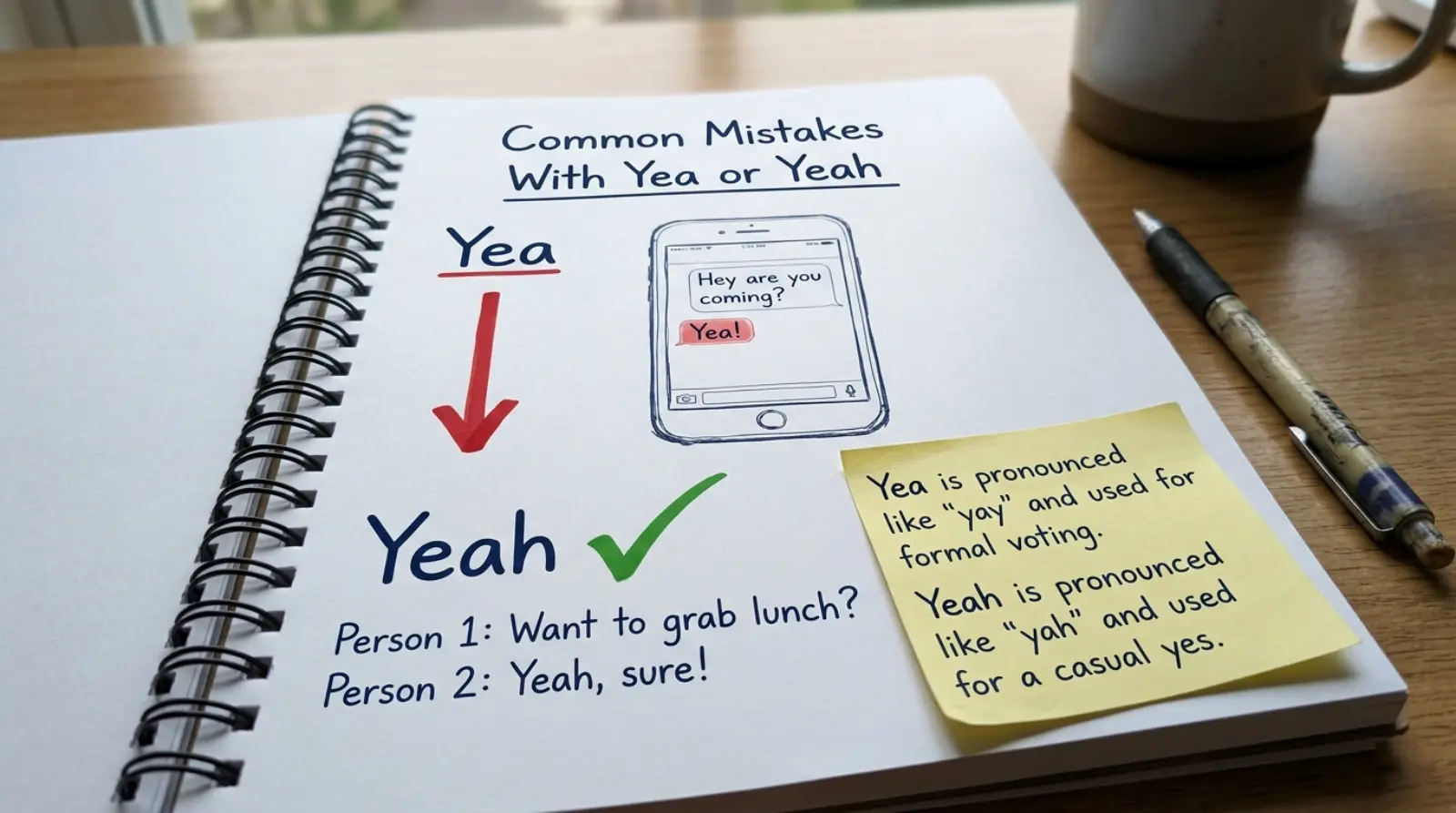
Common Mistakes With Yea or Yeah
Mistake 1: Using yea as everyday yes
❌ “Yea, I’ll call you tonight.”
✔ “Yeah, I’ll call you tonight.”
Why?
Yeah is the natural informal choice in modern conversation.
Tip: Use yeah for casual yes.
Mistake 2: Writing yeah in a formal vote
❌ “The committee recorded 25 yeah votes.”
✔ “The committee recorded 25 yea votes.”
Why?
Formal voting language traditionally uses yea and nay.
Mistake 3: Thinking yea and yeah are always interchangeable
❌ “Yea and yeah have exactly the same use.”
✔ They can both express agreement, but their contexts are different.
Tip: Think about the situation before choosing the word.
Mistake 4: Using yeah in formal academic writing
❌ “Yeah, the research supports this idea.”
✔ “Yes, the research supports this idea.”
Tip: Choose yes for formal writing.
Mistake 5: Confusing yea with yay
Yea and yay are not always the same.
Yea can mean yes or indicate agreement.
Yay expresses excitement or happiness.
Example:
- “Yea, the proposal passed.”
- “Yay! We won!”
Yea or Yeah in Everyday Examples
Work
“Yeah, I received your email.”
For a formal email, use:
“Yes, I received your email.”
School
“Yeah, I understand the lesson.”
In an essay, yes is usually better.
Social Media
“Yeah, this picture is amazing!”
This casual use sounds natural.
Text Messages
“Yeah, I’m coming.”
This is one of the most common uses of yeah.
Online Content
“Yeah, that explanation makes sense.”
Formal Voting
“The final count was 60 yeas and 15 nays.”
Conversation
“Do you like this movie?”
“Yeah, it’s really good.”
Yea or Yeah in Different Contexts
Yea or Yeah in Texting
Yeah is the clear winner in texting.
People use it to say yes, show agreement, confirm information, or respond casually.
Examples:
- “Yeah, sure.”
- “Yeah, I know.”
- “Yeah, that works.”
- “Yeah! Let’s go.”
Yea or Yeah in Business
For business communication, yes is usually more professional.
Use yeah in relaxed conversations with coworkers when the tone allows it.
Use yea mainly when discussing a vote or formal decision.
Yea or Yeah on Social Media
Yeah is extremely natural on social platforms.
Examples:
- “Yeah, this is so true.”
- “Yeah, I totally agree.”
- “Yeah, that looks amazing.”
Yea or Yeah in Grammar Learning
Beginners often confuse these words because they sound similar. The easiest solution is to remember their roles:
Yeah → casual yes
Yea → formal/traditional yes
Yea or Yeah – Google Trends and Usage
People commonly search for yea or yeah because both words are pronounced similarly and can sometimes express agreement.
Online communication has made yeah especially common. Texting, social media, chat apps, comments, and casual conversations all favor short informal words.
Searchers in the US, UK, Canada, Australia, India, and Pakistan may encounter both terms while reading English content.
Common long-tail questions include:
- Is yea the same as yeah?
- Is yea a word?
- What does yeah mean?
- What does yea mean?
- Is yea or yeah correct?
- How do you pronounce yea?
- How do you pronounce yeah?
- Should I use yea or yeah?
- Is yeah formal English?
- What is the difference between yea and yay?
Comparison Table: Yea or Yeah
| Feature | Yea | Yeah |
|---|---|---|
| Basic meaning | Yes/agreement | Yes |
| Modern everyday use | Rare | Very common |
| Texting | Rare | Very common |
| Social media | Uncommon | Common |
| Formal voting | Common | Not standard |
| Professional writing | Rare | Informal |
| Academic writing | Rare | Informal |
| Pronunciation | Often “yay” | “yah” |
| Historical use | Strong | Modern |
| Casual conversation | Uncommon | Natural |
Yea or Yeah in Professional Life
Choosing the right word can affect how your message sounds.
In a professional email, yes is usually the strongest choice because it is clear and neutral.
For example:
Casual:
“Yeah, I can finish this today.”
Professional:
“Yes, I can finish this today.”
Formal voting:
“The board recorded 12 yeas and 3 nays.”
This small difference helps your writing match the situation.
Yea or Yeah for Students and Beginners
Beginners often struggle because English contains many words that sound alike but have different uses.
Here is the easiest shortcut:
Yeah = everyday conversation
Yea = formal/traditional agreement
If you are writing an essay, school assignment, or formal email, yes is usually the safest option.
If you are texting a friend, yeah sounds natural.
Common Uses of Yea or Yeah
Yeah is commonly used to:
- Agree with someone
- Answer yes
- Confirm information
- Show understanding
- Respond casually
- Express enthusiasm
Yea is commonly used to:
- Record a vote
- Show formal agreement
- Appear in yea or nay
- Reproduce older language
- Appear in historical or traditional writing
Simple Trick to Remember Yea or Yeah
Think of three levels:
YES → formal and neutral
YEA → voting and traditional
YEAH → casual conversation
Think of it this way:
Imagine three rooms.
In a classroom or office, you say yes.
In a formal vote, you might hear yea.
With your friends, you say yeah.
That simple picture can help you remember the difference.
Expert Tips for Choosing the Right Word
- Use yeah for casual conversation.
- Use yes for professional and academic writing.
- Use yea for formal voting language.
- Remember the expression yea or nay.
- Do not confuse yea with yay.
- Read the whole sentence before choosing the word.
- When unsure in formal writing, choose yes.
Related Searches People Also Ask
Is yea the same as yeah?
Not exactly. Both can express agreement, but yeah is the normal informal word, while yea has more specific formal or traditional uses.
Is yeah a proper word?
Yes. Yeah is a standard informal English word meaning yes.
Is yea a real English word?
Yes. Yea is an English word commonly associated with formal voting and traditional language.
Is yea or yeah correct?
Both can be correct. The correct choice depends on the context.
Is yeah formal English?
No. Yeah is mainly informal. Yes is better for formal writing.
How do you pronounce yeah?
Yeah is usually pronounced like yah.
How do you pronounce yea?
In the common voting sense, yea is pronounced like yay.
What does yea or nay mean?
It means yes or no, especially when discussing a formal decision or vote.
Can I use yeah in an essay?
It is usually better to use yes in an academic essay because it sounds more formal.
What is the difference between yea and yay?
Yea can mean yes or agreement. Yay expresses happiness, excitement, or celebration.
Final Verdict
Yeah is the best choice for casual conversations, texting, social media, and informal messages.
Yea is mainly used for formal voting, traditional expressions, and older styles of English.
For formal writing, choose yes.
The easiest rule:
Yeah = casual yes
Yea = voting/traditional yes
Yes = formal and safe
Conclusion
The difference between yea or yeah becomes much easier once you connect each word with its typical setting.
Use yeah when you are chatting with friends, sending a text, commenting online, or having a relaxed conversation. Use yea when talking about votes or using traditional expressions such as yea or nay.
If you are writing for school, work, or a professional audience, yes is normally the better choice.
The final memory trick is simple: Yeah belongs in everyday chat, yea belongs with votes, and yes works almost everywhere.

Camila Green is an English language writer who specializes in confusing word comparisons and spelling explanations. She creates simple, beginner-friendly guides on topics like “niece or neice” and other common English mistakes. Her writing focuses on clarity, real-life examples, and easy learning. At VerrsaPick, she helps readers improve their English with practical and engaging content.