When you describe a color, you may stop and wonder: Should I write grey or gray? Both spellings look familiar, and both appear in dictionaries, books, websites, and everyday writing. So, which one is actually correct?
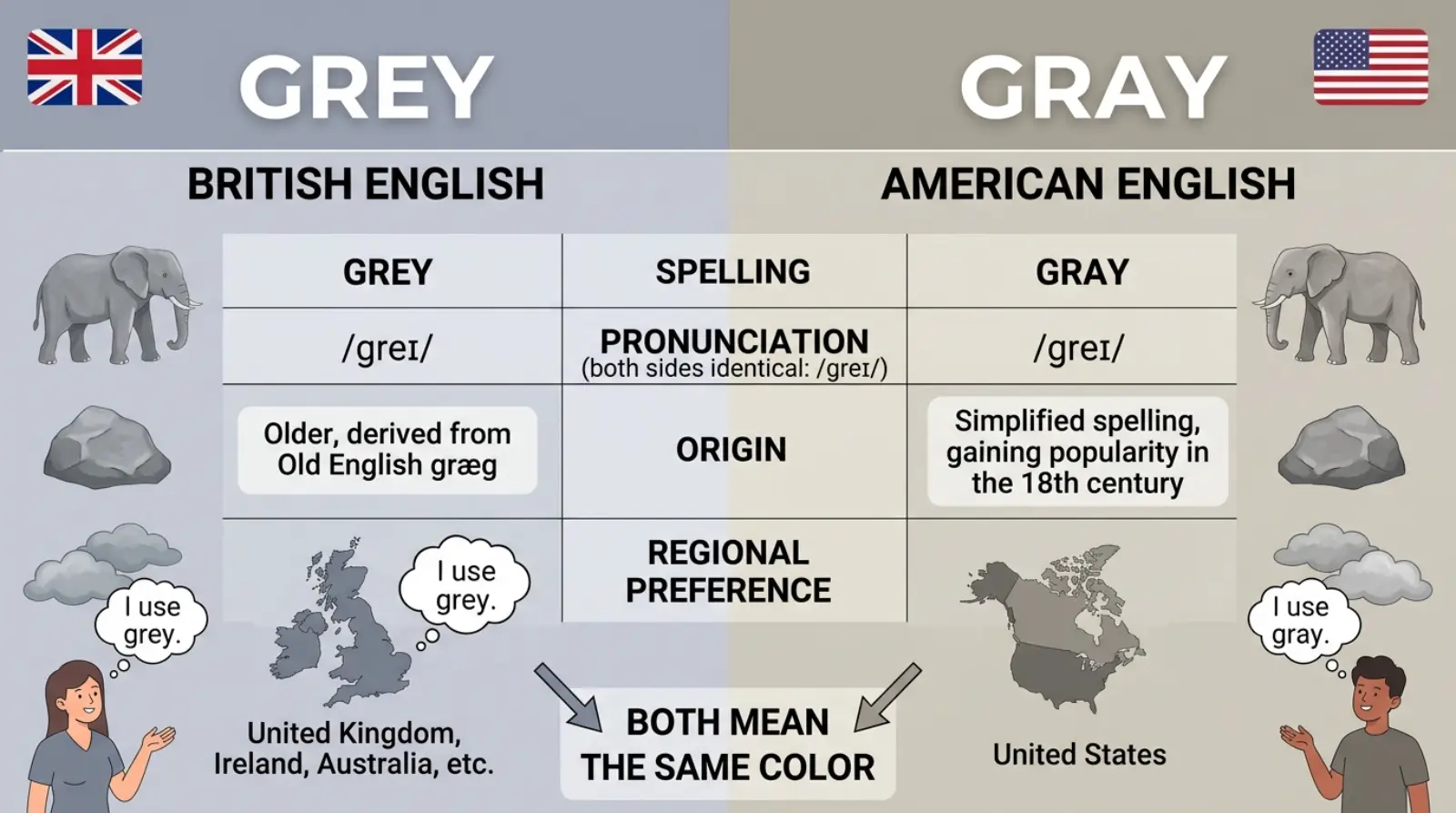
The good news is simple: grey and gray are both correct spellings for the color. The main difference is regional. Gray is more common in American English, while grey is more common in British English and several other varieties of English.
This small spelling difference can be confusing for students, bloggers, writers, and English learners. You may see gray eyes in an American article but grey eyes in a British book. The meaning does not change.
People usually search for the grey or gray spelling, correct spelling, color definition, pronunciation, examples, usage, and difference between American and British English. Understanding this difference can help you feel more confident when writing emails, school assignments, articles, captions, and professional content.
You may also notice both spellings on social media, product descriptions, clothing websites, design platforms, and online searches. Neither spelling means a different color. They both describe the color between black and white.
In this guide, you’ll learn the meaning, pronunciation, examples, usage, grammar rules, common mistakes, expert tips, and simple explanations in easy English.
Grey or Gray for Color – Quick Answer
👉 Gray = correct spelling, mainly used in American English.
👉 Grey = correct spelling, mainly used in British English.
Both words describe the same color.
Examples
- The wall is gray. ✅
- She wore a grey dress. ✅
- He has gray eyes. ✅
- The sky looked grey today. ✅
- I bought a gray jacket. ✅
Simple Rule
👉 American English → gray
👉 British English → grey
The easiest trick is to remember A = American = gray.
What Does Grey or Gray Mean?
Grey and gray mean the same color. It is usually seen between black and white.
The color can be light, dark, silver-like, or slightly mixed with other colors.
For example:
- light gray
- dark gray
- charcoal gray
- silver-gray
- gray-blue
- grey-green
The word can also describe things that look dull, cloudy, or lacking bright color.
Related Terms
Some related color words include:
- silver
- charcoal
- ash
- slate
- stone
- smoky
- neutral
- monochrome
Synonyms and Related Color Ideas
There is no perfect synonym for gray or grey in every situation, but words such as silver, charcoal, ash, and slate can describe similar shades.
The Origin of Grey and Gray
The spelling difference developed from different English language traditions.
Grey is the older and more traditional spelling associated with British English. Gray became the preferred spelling in American English.
The two spellings come from the same color word and have the same basic meaning.
Over time, American English developed many spelling preferences that differ from British English. The grey/gray difference is one example.
You can see the same regional pattern in other words, such as:
- colour / color
- favourite / favorite
- centre / center
So, grey vs gray is mainly a regional spelling difference, not a difference in meaning.
How to Pronounce Grey or Gray
Both grey and gray have the same pronunciation.
Pronunciation
Grey → gray
A simple pronunciation guide is:
/ɡreɪ/
It sounds like day, say, and play.
Easy Speaking Trick
Start with the gr sound and then say ay.
gr + ay = gray
The pronunciation does not change because of the spelling.
British English vs American English Usage
The main difference is spelling.
| Feature | British English | American English | Notes |
|---|---|---|---|
| Common spelling | Grey | Gray | Both are correct |
| Meaning | Color | Color | Same meaning |
| Pronunciation | /ɡreɪ/ | /ɡreɪ/ | Same |
| Formal writing | Grey | Gray | Follow local style |
| Academic writing | Grey | Gray | Use one style consistently |
| Everyday use | Grey | Gray | Regional preference |
For a British audience, grey will usually look more natural.
For a US audience, gray is usually the better choice.
Which One Should You Use?
Choose the spelling based on your audience and writing style.
- Writing for the US: Use gray.
- Writing for the UK: Use grey.
- Writing for Canada: Both can appear, but grey is commonly used.
- Writing for Australia: Grey is generally preferred.
- Writing for international readers: Either is understandable.
- School or workplace writing: Follow the English style your institution uses.
For a US-focused website, I recommend gray because it matches common American usage.
Quick Examples
| Situation | Best choice |
|---|---|
| American blog | Gray |
| British blog | Grey |
| US school assignment | Gray |
| UK school assignment | Grey |
| American product description | Gray |
| British product description | Grey |
Common Mistakes With Grey or Gray
Mistake 1: Thinking One Spelling Is Always Wrong
❌ Grey is always incorrect.
✔ Grey is correct in British English and other varieties.
Tip: Remember that regional English can use different spellings.
Mistake 2: Thinking Gray and Grey Are Different Colors
❌ Gray is a darker color than grey.
✔ Gray and grey can describe the same color.
The spelling does not determine the shade.
Mistake 3: Mixing Styles in One Article
❌ The article uses gray in one paragraph and grey in another without a reason.
✔ Choose one spelling and stay consistent.
Consistency makes your writing look cleaner.
Mistake 4: Changing the Pronunciation
❌ Pronouncing grey and gray differently.
✔ Both are pronounced /ɡreɪ/.
Mistake 5: Assuming British and American English Must Use the Same Spelling
English has many regional differences.
✔ British English → grey
✔ American English → gray
Grey or Gray in Everyday Examples
Work
The office has gray walls.
School
My teacher asked us to use a grey pencil.
Social Media
Loving this soft gray outfit!
Daily Life
The sky turned grey before the rain.
Please choose the gray option from the list.
Text Message
I think the grey shirt looks better.
Online Content
This gray shade works well with white.
Conversation
Is that jacket gray or black?
Grey or Gray in Different Contexts
Education
Students may see both spellings in English books. The correct choice depends on the English variety being taught.
Business
Companies should keep spelling consistent in websites, product pages, brochures, and documents.
For an American business:
Available in black, white, and gray.
For a British business:
Available in black, white, and grey.
Fashion
Both spellings are common in clothing descriptions.
Examples include:
- gray sweater
- grey coat
- charcoal gray pants
- light grey dress
Design and Technology
Designers often use terms such as gray background, grey interface, and gray scale depending on their preferred English style.
Writing and Grammar Learning
For English learners, this is a useful example of regional spelling. It teaches an important lesson: different English-speaking countries can use different spellings for the same word.
Grey or Gray – Comparison Table
| Feature | Grey | Gray |
|---|---|---|
| Correct? | Yes | Yes |
| Meaning | Color between black and white | Color between black and white |
| Pronunciation | /ɡreɪ/ | /ɡreɪ/ |
| Main usage | British English | American English |
| Professional use | Yes | Yes |
| Academic use | Yes | Yes |
| Social media | Yes | Yes |
| Common US spelling | Less common | More common |
| Common UK spelling | More common | Less common |
Grey or Gray in Professional Life
Spelling can affect how polished your writing looks.
Imagine an American company using British spelling across an otherwise American-style website. The wording may still be understood, but the style could look inconsistent.
For professional writing, choose the spelling that matches your audience.
US audience:
Our new gray collection is available now.
UK audience:
Our new grey collection is available now.
The important point is not to treat one spelling as universally correct. Match your English style to your readers.
Grey or Gray for Students and Beginners
Beginners often struggle because both spellings appear in real English.
That confusion is completely normal.
The easiest rule is:
American English = gray
British English = grey
If you are learning American English, focus on gray.
If your school teaches British English, focus on grey.
You do not need to memorize two different meanings because there are not two different meanings.
Common Uses of Grey or Gray
You will commonly see these words in:
- clothing descriptions
- interior design
- weather descriptions
- hair descriptions
- eye color
- animals
- art
- photography
- websites
- technology
- school writing
- business documents
- social media captions
Examples:
- gray hair
- grey eyes
- gray clouds
- grey stone
- gray sweater
- grey building
- gray background
Simple Trick to Remember Grey or Gray
Here is the easiest memory trick:
A = American = Gray
Think of the letter A in American.
👉 American → gray
For British English, remember:
👉 British → grey
Think of it this way:
If you are writing for readers in the United States, choose gray.
If you are writing for readers in the United Kingdom, choose grey.
The color stays the same. Only the spelling changes.
Expert Tips for Choosing Grey or Gray
Here are a few simple writing tips:
- Know your audience. US readers usually expect gray.
- Stay consistent. Do not switch between grey and gray without a reason.
- Check your style guide. Businesses and schools may have a preferred English variety.
- Do not change the pronunciation. Both words sound the same.
- Remember the A trick. American = gray.
- Do not worry when you see the other spelling. It is not automatically a spelling mistake.
Related Searches People Also Ask
Is gray or grey correct for color?
Both are correct. Gray is mainly American English, while grey is mainly British English.
Is grey a color?
Yes. Grey is a color between black and white.
Is gray American spelling?
Yes. Gray is the standard spelling commonly used in American English.
Is grey British spelling?
Yes. Grey is the spelling commonly used in British English.
Do grey and gray mean the same thing?
Yes. They have the same meaning and refer to the same color.
Is gray pronounced differently from grey?
No. Both are pronounced /ɡreɪ/.
Which spelling should I use in the US?
Use gray for American English.
Which spelling should I use in the UK?
Use grey for British English.
Is grey or gray better for SEO?
Neither is automatically better. Use the spelling that matches your target audience and naturally cover both variations when useful.
Can I use grey in American English?
Yes, people will understand it, but gray is the normal American spelling.
FAQs About Grey or Gray for Color
Is grey or gray the correct spelling?
Both are correct. The choice mainly depends on the variety of English.
Which is more common in American English?
Gray is more common in American English.
Which is more common in British English?
Grey is more common in British English.
Are grey and gray different colors?
No. They describe the same basic color.
How do you pronounce gray?
Gray is pronounced /ɡreɪ/, like the sound in day.
How do you spell the color in the USA?
The usual American spelling is gray.
How do you spell the color in the UK?
The usual British spelling is grey.
Should students use grey or gray?
Students should follow the English style taught by their school or teacher.
Final Verdict: Grey or Gray for Color?
Grey and gray are both correct.
The main difference is regional:
👉 Gray = American English
👉 Grey = British English
Both words have the same meaning and pronunciation.
If your website targets the United States, use gray as your main spelling. If you are writing for a British audience, use grey.
Conclusion
The grey or gray question looks tricky at first, but the answer is actually simple. You are not choosing between two different colors. You are choosing between two regional spellings of the same color.
American English generally uses gray, while British English generally uses grey. Both are accepted English spellings.
The best memory trick is easy:
A = American = Gray.
So, when you are writing for US readers, choose gray. When you are following British English, choose grey. Most importantly, stay consistent throughout your writing.

Camila Green is an English language writer who specializes in confusing word comparisons and spelling explanations. She creates simple, beginner-friendly guides on topics like “niece or neice” and other common English mistakes. Her writing focuses on clarity, real-life examples, and easy learning. At VerrsaPick, she helps readers improve their English with practical and engaging content.