Have you ever paused while writing because you weren’t sure whether to use later or latter? You’re not alone. These two words look almost the same, but they have different meanings and are used in different situations. Because they are spelled similarly and sound somewhat alike, many English learners confuse them.
People usually search for later or latter meaning, later vs latter difference, correct usage, pronunciation, examples, and grammar rules to avoid making mistakes in school, work, emails, or everyday conversations.
You may hear these words in classrooms, business meetings, books, social media posts, news articles, and online discussions. For example, you might say, “I’ll call you later,” but if someone gives you two choices, you may say, “I prefer the latter.”
The good news is that once you understand one simple rule, you’ll know exactly which word to use.
In this guide, you’ll learn the meaning, pronunciation, examples, usage, grammar rules, common mistakes, expert tips, and simple explanations in easy English.
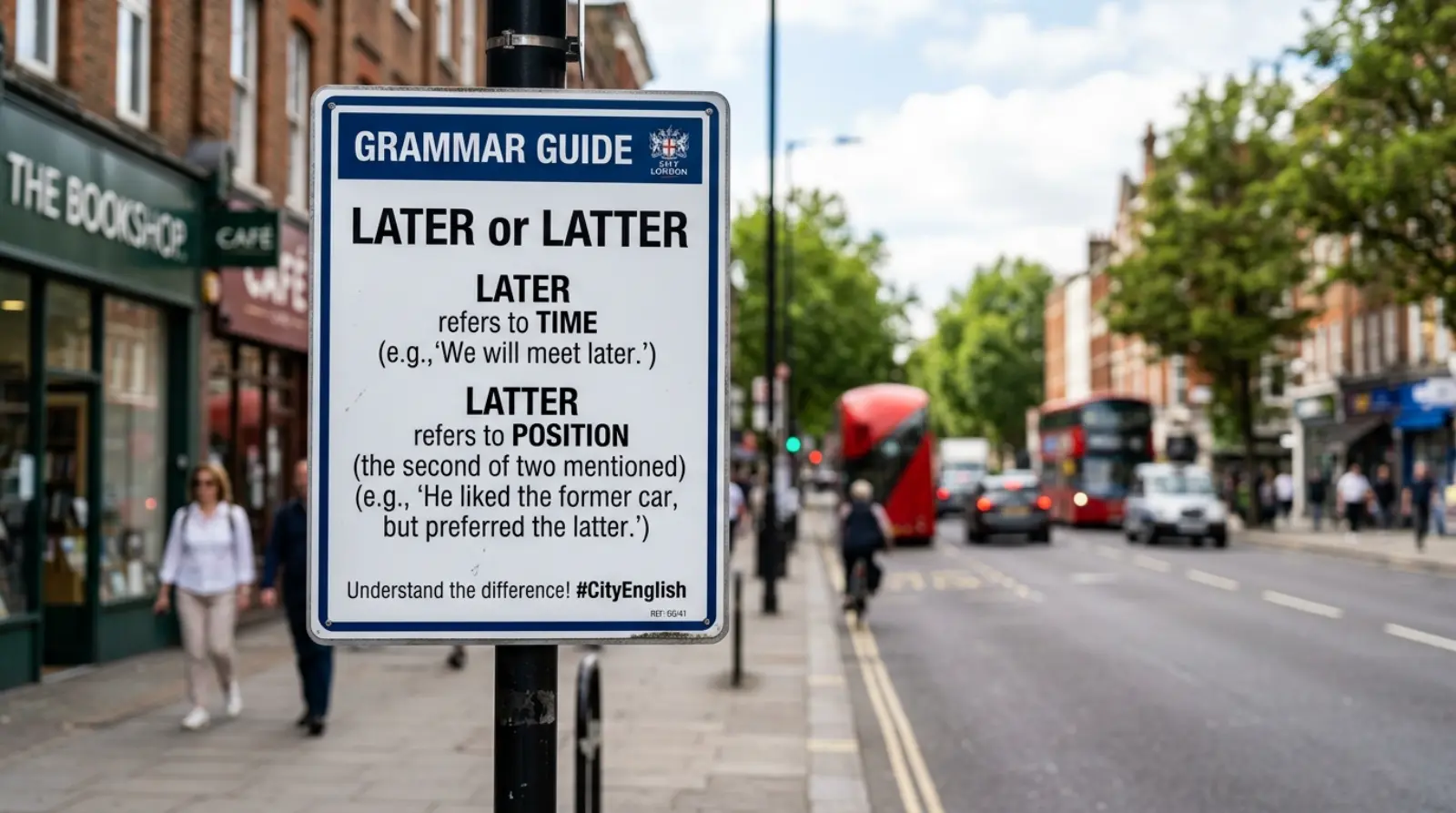
Later or Latter – Quick Answer
| Word | Meaning |
|---|---|
| Later | At a future time or after now. |
| Latter | The second of two people, things, or ideas already mentioned. |
Examples
- ✅ I’ll finish the work later.
- ✅ We can discuss it later today.
- ✅ Tea and coffee are both available. I prefer the latter.
- ✅ Between reading and writing, the latter is easier for me.
Simple Rule
👉 Later = Time
👉 Latter = Second of Two Choices
Easy Memory Trick
- Later has time in its meaning.
- Latter has two Ts, helping you remember it refers to the second of two items.
What Does Later or Latter Mean?
Although these words are similar in spelling, they have completely different meanings.
Later Meaning
Later is an adverb or adjective that refers to a future time.
Examples
- I’ll see you later.
- We can meet later this week.
- She arrived later than expected.
Synonyms
- Afterwards
- Soon
- Eventually
- Subsequently
Opposites
- Earlier
- Before
- Now
- Immediately
Latter Meaning
Latter is an adjective.
It refers to the second of two things already mentioned.
Examples
- I enjoy both football and cricket, but I prefer the latter.
- Between tea and coffee, the latter keeps me awake.
Synonyms
- Second
- Last-mentioned
- Final (of two)
The Origin of Later or Latter
Both words come from Old English.
- Later comes from a word meaning “more late” or “afterward.”
- Latter developed from a word meaning “the second” or “the one mentioned last.”
Although they share similar roots, their meanings changed over time.
How to Pronounce Later or Latter
Later
Pronunciation: LAY-ter
IPA: /ˈleɪ.tər/
Latter
Pronunciation: LAT-er
IPA: /ˈlæt.ər/
Speaking Tip
- Later sounds like the word late.
- Latter has a short “a” sound.
British English vs American English Usage
| Feature | British English | American English | Notes |
|---|---|---|---|
| Later | Same spelling | Same spelling | Same meaning |
| Latter | Same spelling | Same spelling | Same meaning |
| Usage | Very common | Very common | No grammar difference |
Which One Should You Use?
Use Later when talking about:
- Future time
- Something happening afterward
- Delayed actions
- Future meetings
Use Latter when talking about:
- The second of two options
- Comparing two ideas
- Referring back to the second item
Quick Usage Table
| Situation | Correct Word |
|---|---|
| Call me tomorrow | ✅ Later |
| The second choice | ✅ Latter |
| Meet after lunch | ✅ Later |
| The last-mentioned option | ✅ Latter |
Common Mistakes With Later or Latter
Mistake 1
❌ I’ll call you latter.
✅ I’ll call you later.
Why? You’re talking about future time.
Mistake 2
❌ Between pizza and pasta, I prefer the later.
✅ Between pizza and pasta, I prefer the latter.
The second option is latter.
Mistake 3
❌ We can finish this latter.
✅ We can finish this later.
Use later for time.
Mistake 4
❌ The later of the two books was better.
✅ The latter of the two books was better.
Latter refers to the second item.
Mistake 5
❌ See you latter!
✅ See you later!
This is one of the most common mistakes.
Later or Latter in Everyday Examples
School
“We’ll review this chapter later.”
Workplace
“Let’s continue the meeting later.”
Daily Life
“I’ll do the shopping later.”
Conversations
“I liked both movies, but the latter was more exciting.”
Emails
“We’ll discuss the details later this week.”
Social Media
“I’ll reply later.”
Later or Latter in Different Contexts
Education
Teachers often compare two ideas and refer to the latter one.
Business
Managers may postpone meetings until later in the day.
Academic Writing
Latter is common when comparing two subjects without repeating names.
Everyday Communication
Later is much more common because people often talk about future time.
Google Trends & Usage
Many learners search for later or latter because the words look similar.
Popular searches include:
- Later vs latter
- Difference between later and latter
- Later meaning
- Latter examples
- How to use latter
- Later in a sentence
- Latter pronunciation
- Later or latter grammar
This topic is commonly searched in the United States, United Kingdom, India, Pakistan, Canada, and Australia.
Comparison Table: Later vs Latter
| Feature | Later | Latter |
|---|---|---|
| Part of Speech | Adverb, adjective | Adjective |
| Meaning | Future time | Second of two |
| Pronunciation | LAY-ter | LAT-er |
| Grammar Role | Time | Comparison |
| Everyday Usage | Very common | Less common |
| Common Mistake | Used instead of latter | Used instead of later |
Later or Latter in Professional Life
Using the correct word makes your writing more professional.
Examples:
- We’ll review the proposal later.
- We considered two marketing plans and selected the latter.
- Please respond later today.
- Of the two candidates, the latter had more experience.
Later or Latter for Students
Many students confuse these words because they look alike.
Easy Tips
- Later = Time
- Latter = Second choice
- Read the whole sentence before deciding.
- Ask yourself if you’re talking about time or comparison.
Common Uses of Later and Latter
Later
- Later today
- Later this week
- See you later
- Come back later
- Talk later
Latter
- The latter option
- The latter example
- The latter choice
- The latter point
- The latter part
Simple Trick to Remember Later or Latter
Think of it this way:
- Later = Late = Time
- Latter = Two Ts = Two Choices
Memory shortcut:
Later = Future
Latter = Second
Expert Tips
- Replace later with afterward. If the sentence still makes sense, it’s correct.
- Replace latter with the second one. If it fits, use latter.
- In formal writing, latter avoids repeating the second item.
- Proofread carefully because spell check may not catch this mistake.
- Practice with comparison sentences to master latter.
Related Searches People Also Ask
- What is the difference between later and latter?
- Is it see you later or see you latter?
- What does latter mean?
- How do you use latter in a sentence?
- When should I use later?
- Is latter only used for two things?
- Can later be an adjective?
- Why do people confuse later and latter?
- How can I remember later vs latter?
- Is “the latter” formal English?
FAQs
Is it “see you later” or “see you latter”?
See you later is correct.
What does latter mean?
It means the second of two people or things already mentioned.
Can later refer to time?
Yes. It always refers to a future or later time.
Is latter used for more than two things?
No. It usually refers only to the second of two items.
Which word is more common?
Later is much more common in everyday English.
Can I use latter in conversation?
Yes, especially when comparing two choices.
Why are later and latter confusing?
Because they look similar but have different meanings.
How do I remember the difference?
Remember: Later = Time. Latter = Second choice.
Final Verdict
Here’s the simple answer:
- Later refers to future time.
- Latter refers to the second of two things.
The easiest memory rule is:
Later = Late = Time
Latter = Two Ts = Two Choices
Conclusion
Understanding later or latter is easy once you connect each word with its purpose. Use later whenever you’re talking about time or something happening afterward. Use latter only when referring to the second of two people, ideas, or things already mentioned.
A final memory trick: If you’re talking about “when,” choose later. If you’re talking about “which of the two,” choose latter.

Camila Green is an English language writer who specializes in confusing word comparisons and spelling explanations. She creates simple, beginner-friendly guides on topics like “niece or neice” and other common English mistakes. Her writing focuses on clarity, real-life examples, and easy learning. At VerrsaPick, she helps readers improve their English with practical and engaging content.