Have you ever written labour in an email only to see your spell checker change it to labor? Or perhaps you read a British article using labour and an American website using labor, leaving you wondering which spelling is actually correct.
The good news is that both words are correct. The difference is not about grammar but about British English and American English spelling. Knowing which version to use helps your writing look natural and professional, especially if you’re writing for an international audience.
People usually search for:
- Labour vs labor
- Is labour or labor correct?
- Labour meaning
- Labor meaning
- British vs American spelling
- Labour pronunciation
- Labor examples
You may see these words in school, workplaces, hospitals, legal documents, newspapers, business writing, social media, and online articles. Understanding the difference helps you avoid confusion and write confidently.
In this guide, you’ll learn the meaning, pronunciation, examples, usage, spelling differences, common mistakes, expert tips, and simple explanations in easy English.
Labour vs Labor – Quick Answer
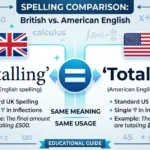
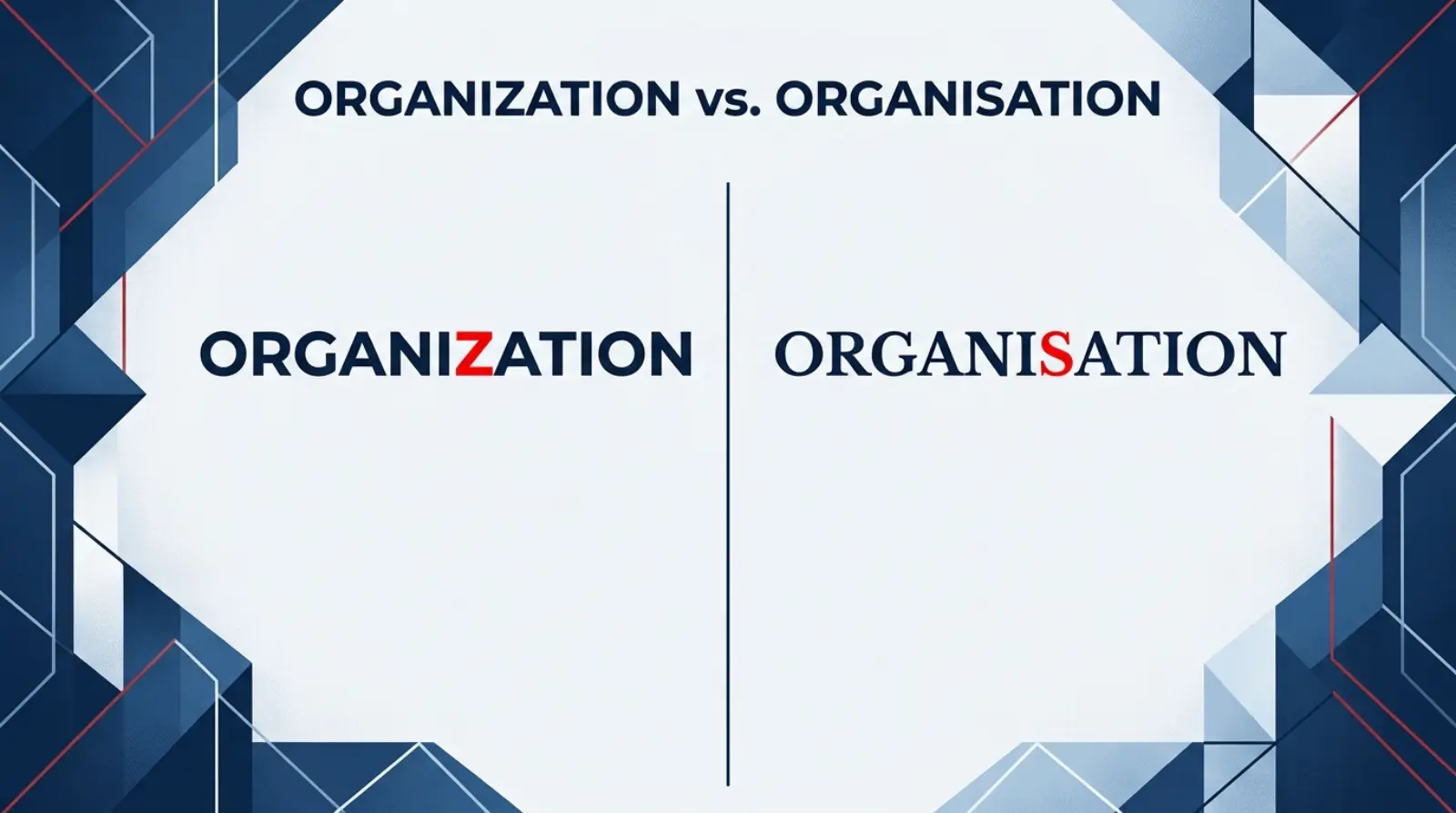
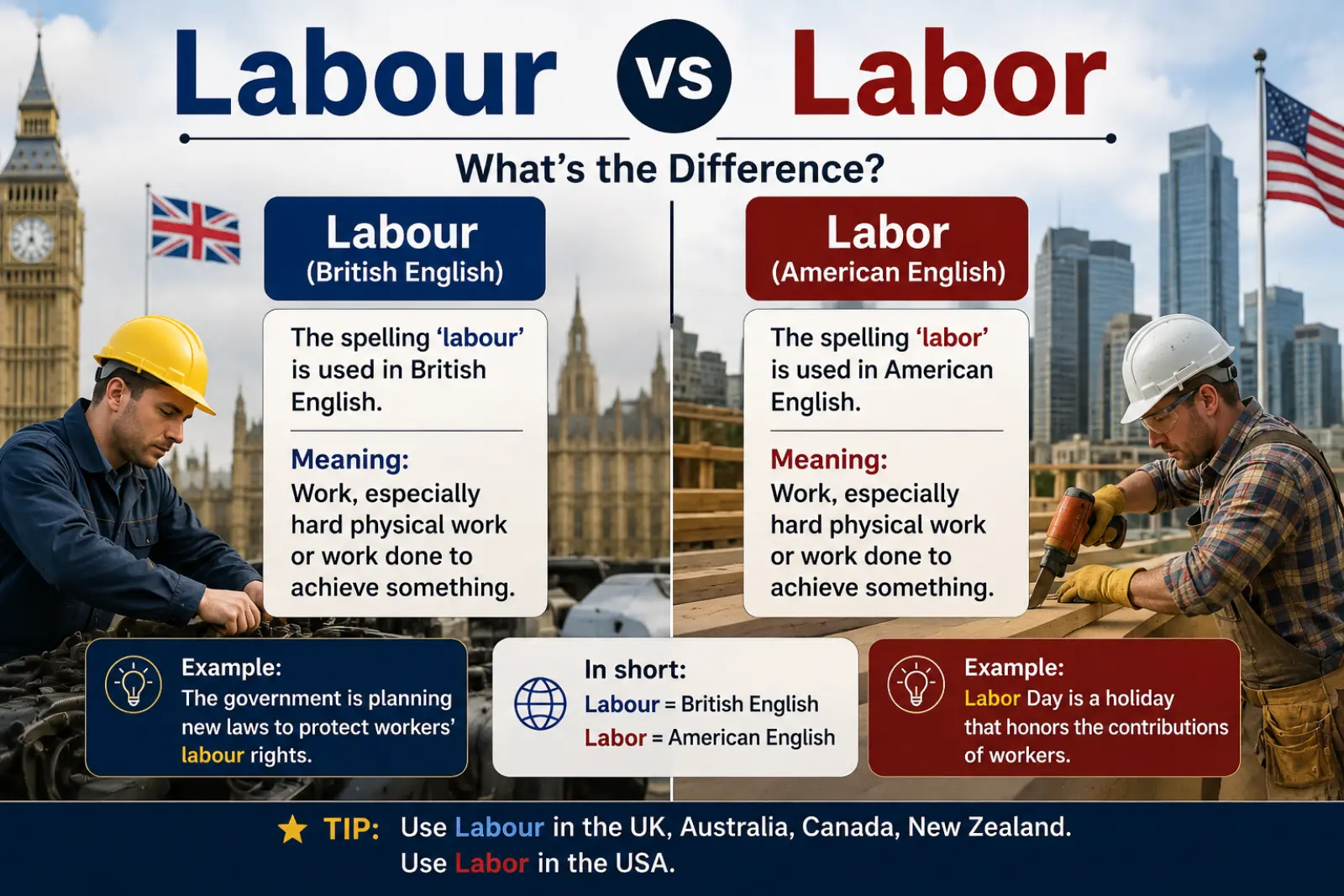
👉 Labour = Correct in British English, Canadian English (in many contexts), Australia, and New Zealand.
👉 Labor = Correct in American English.
Both words have the same meaning.
Examples
- 🇬🇧 The government introduced new labour laws.
- 🇺🇸 The government introduced new labor laws.
- 🇬🇧 She went into labour last night.
- 🇺🇸 She went into labor last night.
Simple Rule
👉 UK = Labour
👉 US = Labor
What Does Labour vs Labor Mean?
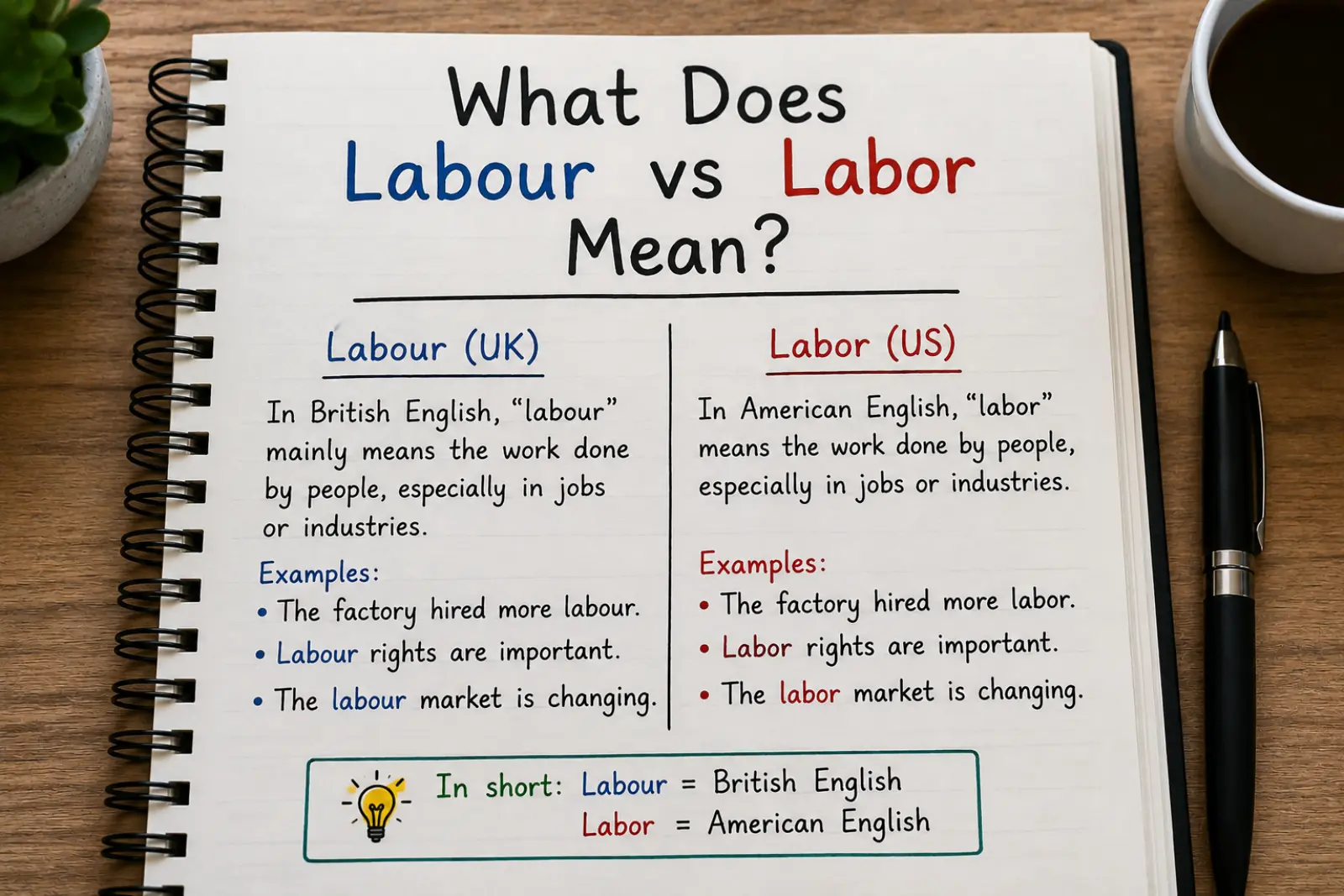
Both labour and labor refer to physical or mental work. They can also describe the process of childbirth or workers as a group.
Common Meanings
- Work or effort
- Employment or workforce
- Childbirth (going into labour/labor)
Synonyms
- Work
- Effort
- Employment
- Workforce
- Toil
Opposites
- Rest
- Relaxation
- Leisure
- Idleness
Related Terms
- Worker
- Employment
- Industry
- Workforce
- Occupation
- Productivity
The Origin of Labour vs Labor
The word comes from the Latin labor, meaning “work” or “effort.” It later entered Old French as labour before becoming part of English.
When American English spelling became standardized in the 1800s, many words ending in -our were simplified to -or.
Examples include:
- Labour → Labor
- Colour → Color
- Honour → Honor
- Favourite → Favorite
How to Pronounce Labour and Labor
Both words are pronounced almost the same.
Phonetic: LAY-ber
Syllables
La-bour / La-bor
The spelling changes, but the pronunciation remains nearly identical.
British English vs American English Usage
| Feature | British English | American English | Notes |
|---|---|---|---|
| Correct spelling | Labour | Labor | Both correct |
| Pronunciation | Similar | Similar | Minor accent differences |
| Meaning | Same | Same | No meaning change |
| Professional writing | Labour | Labor | Follow your audience |
Which One Should You Use?
Choose the spelling based on your readers.
Use Labour if you’re writing for:
- United Kingdom
- Australia
- New Zealand
- Most British publications
Use Labor if you’re writing for:
- United States
- American schools
- US businesses
- American websites
Quick Usage Table
| Audience | Correct Spelling |
|---|---|
| UK | Labour |
| USA | Labor |
| Australia | Labour |
| Canada | Usually Labour* |
| International | Match your audience |
Common Mistakes with Labour vs Labor
Mistake 1
❌ Mixing both spellings in one article.
✅ Use one spelling consistently.
Mistake 2
❌ Using labour for an American audience.
✅ Use labor in US English.
Mistake 3
❌ Using labor in British academic writing.
✅ Use labour instead
Mistake 4
❌ Thinking one spelling is wrong.
✅ Both are correct depending on the country.
Mistake 5
❌ Changing spelling halfway through a report.
✅ Stay consistent from beginning to end.
Labour vs Labor in Everyday Examples
School
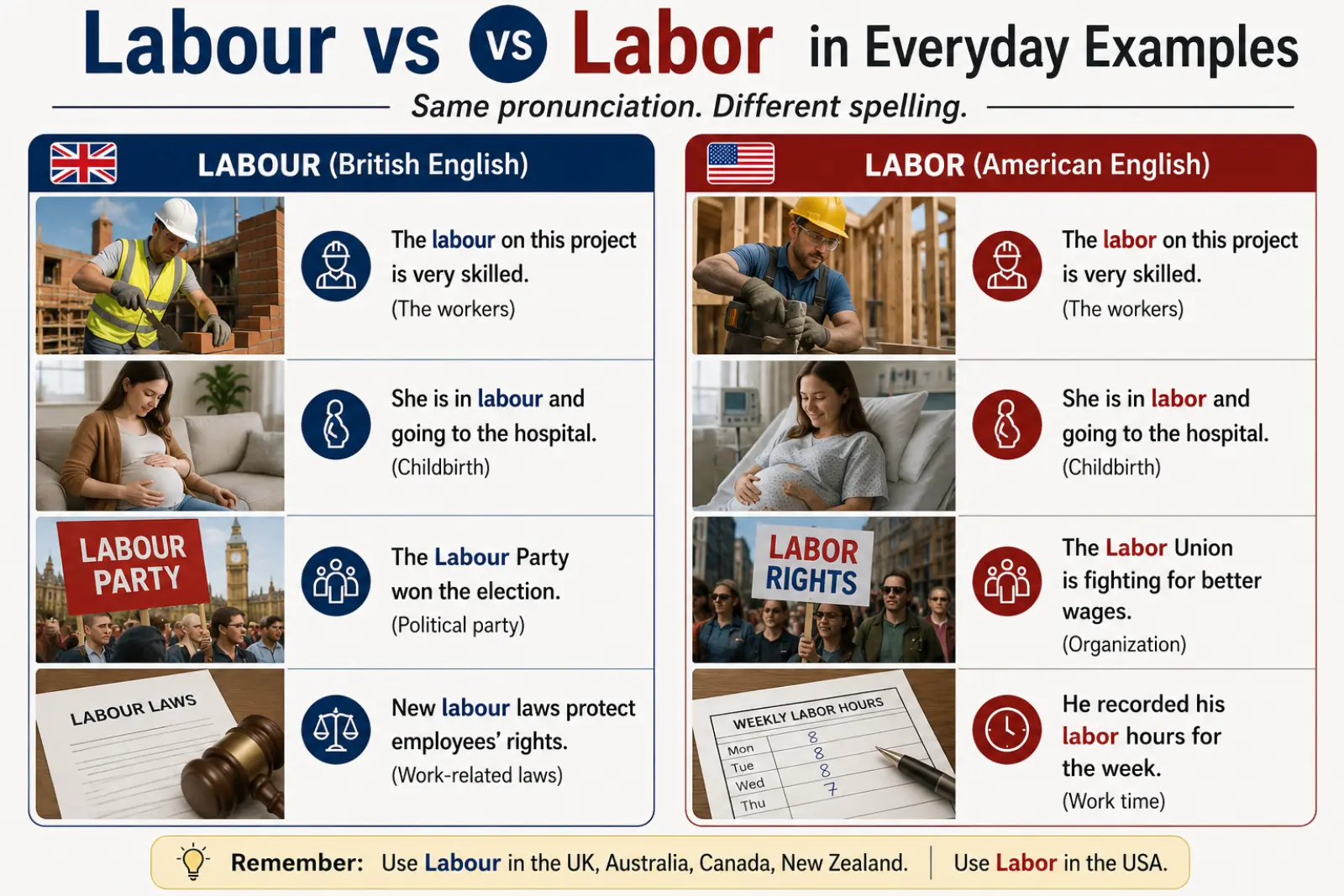
British students study labour markets.
American students study labor markets.
Workplace
The company reduced labor costs. (US)
The company reduced labour costs. (UK)
Healthcare
She went into labour. (UK)
She went into labor. (US)
Emails
Please review the latest labor report. (US)
Please review the latest labour report. (UK)
Conversations
Manual labour can be physically demanding.
Manual labor can be physically demanding.
Labour vs Labor in Different Contexts
Business
Companies discuss labor or labour costs, employee productivity, and workforce planning.
Healthcare
The word also means the process of giving birth.
Economics
Economists study labour markets, employment rates, and workforce trends.
Law
Governments create labour or labor laws to protect workers.
Education
Students learn both spellings when studying British and American English.
Labour vs Labor – Google Trends & Usage Data
People search labour vs labor because they notice different spellings in books, websites, and news articles.
Popular searches include:
- Labour meaning
- Labor meaning
- Labour vs labor difference
- Labor spelling
- British vs American English
The keyword is frequently searched in the United States, United Kingdom, Canada, Australia, India, and Pakistan, where learners regularly compare English spelling styles.
Comparison Table
| Feature | Labour | Labor |
|---|---|---|
| Correct spelling | ✅ UK | ✅ US |
| Meaning | Work, childbirth | Work, childbirth |
| Pronunciation | Same | Same |
| Professional writing | UK | US |
| Academic writing | UK | US |
| Modern usage | Very common | Very common |
Labour vs Labor in Professional Life
Using the correct spelling shows attention to detail.
Examples:
- A UK company should write labour costs.
- A US company should write labor costs.
- International businesses should choose one style and stay consistent.
Labour vs Labor for Students or Beginners
Many beginners think one spelling is wrong.
The truth is simple:
- Labour = British English
- Labor = American English
The meaning never changes.
Common Uses of Labour and Labor
These words are commonly used in:
- Employment
- Business reports
- Healthcare
- Economics
- Government
- Construction
- Manufacturing
- Human resources
Simple Trick to Remember Labour vs Labor
Memory Rule
Think of it this way:
- UK loves “u” → Labour
- US removes “u” → Labor
This trick also works for:
- Colour → Color
- Honour → Honor
- Neighbour → Neighbor
Expert Tips
- Decide whether you’re using British or American English before writing.
- Never mix both spellings in the same article.
- Follow your client’s style guide.
- Use spell-check based on your chosen language setting.
- Stay consistent throughout your document.
Related Searches People Also Ask
- Is labour or labor correct?
- Why do Americans spell labor without a “u”?
- Is labour used in Canada?
- What is the difference between labour and labor?
- Is labor only used in the US?
- How do you pronounce labour?
- Does labour mean childbirth?
- What are labor laws?
- What is manual labour?
- Which spelling should I use for SEO?
FAQs
Is labour the correct spelling?
Yes, in British English.
Is labor the correct spelling?
Yes, in American English.
Do labour and labor have different meanings?
No. They mean the same thing.
Which spelling is used in the UK?
Labour.
Which spelling is used in the US?
Labor.
Is pronunciation different?
No. The pronunciation is almost the same.
Can I mix both spellings?
No. Use one style consistently.
Which spelling is better for international readers?
Use the spelling that matches your target audience or the style guide you are following.
Final Verdict
Both labour and labor are correct.
- 🇬🇧 Labour = British English
- 🇺🇸 Labor = American English
The meaning and pronunciation are the same. The only difference is regional spelling.
Conclusion
The choice between labour and labor depends entirely on your audience. If you’re writing for readers in the UK, Australia, or other countries that follow British English, use labour. If your audience is in the United States, use labor.
Neither spelling is more correct than the other—they simply follow different English writing standards. Staying consistent throughout your writing is the key to looking professional and trustworthy.
Final memory trick: UK keeps the “u” in labour, while the US drops the “u” and writes labor.

Camila Green is an English language writer who specializes in confusing word comparisons and spelling explanations. She creates simple, beginner-friendly guides on topics like “niece or neice” and other common English mistakes. Her writing focuses on clarity, real-life examples, and easy learning. At VerrsaPick, she helps readers improve their English with practical and engaging content.