Have you ever written a sentence and suddenly stopped at dryer or drier? These two words look almost identical, but they have different meanings and uses. The confusion is common because both are connected to the word dry.
You may see dryer when talking about laundry, hair, or a machine that removes moisture. You may see drier when comparing two things and saying that one has less moisture than another.
This small spelling difference can matter in school assignments, workplace writing, emails, product descriptions, social media posts, and everyday conversations. Choosing the wrong form can make a sentence sound confusing.
People usually search for:
- dryer or drier
- dryer vs drier
- is it drier or dryer?
- how to spell drier
- how to spell dryer
- drier meaning
- dryer meaning
- drier pronunciation
- dryer pronunciation
- difference between dryer and drier
- is dryer a word?
- is drier correct English?
The good news is that there is a simple rule. Once you understand whether you are talking about comparison or a machine/object, the choice becomes much easier.
In this guide, you’ll learn the meaning, pronunciation, examples, usage, grammar rules, common mistakes, expert tips, and simple explanations in easy English.
Dryer or Drier – Quick Answer
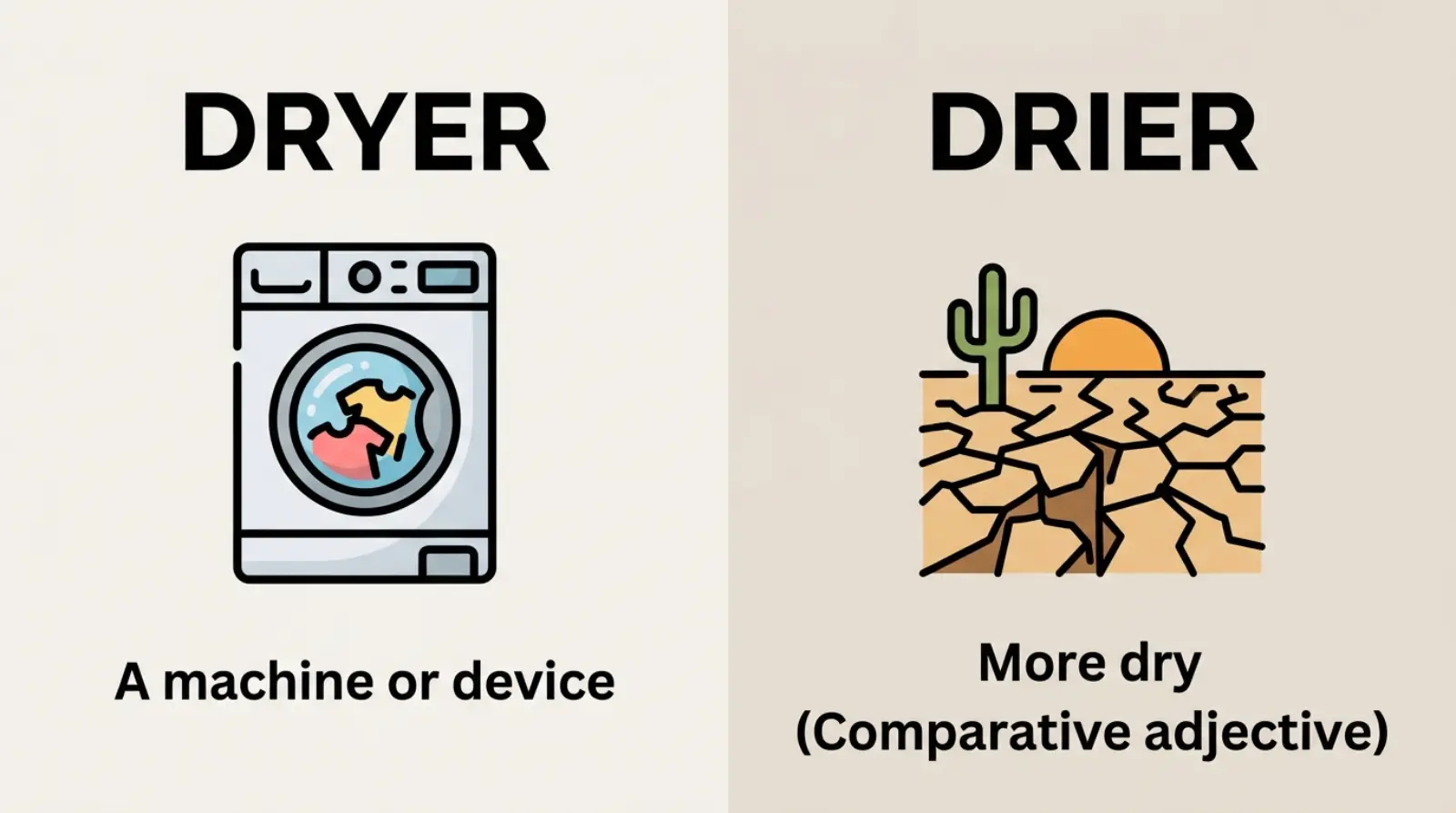
👉 Dryer = usually a machine or device that makes something dry, such as a clothes dryer or hair dryer.
👉 Drier = the comparative form of dry, meaning “more dry” or “less wet.”
Examples
- I put my clothes in the dryer. ✅
- My hair dryer stopped working. ✅
- This towel is drier than that one. ✅
- The desert is drier than the rainforest. ✅
- The clothes became drier after an hour. ✅
Simple Rule
Use dryer when you mean a device or machine.
Use drier when you mean more dry.
Memory trick:
👉 Dryer = device
👉 Drier = comparison
What Does Dryer or Drier Mean?
Dryer Meaning
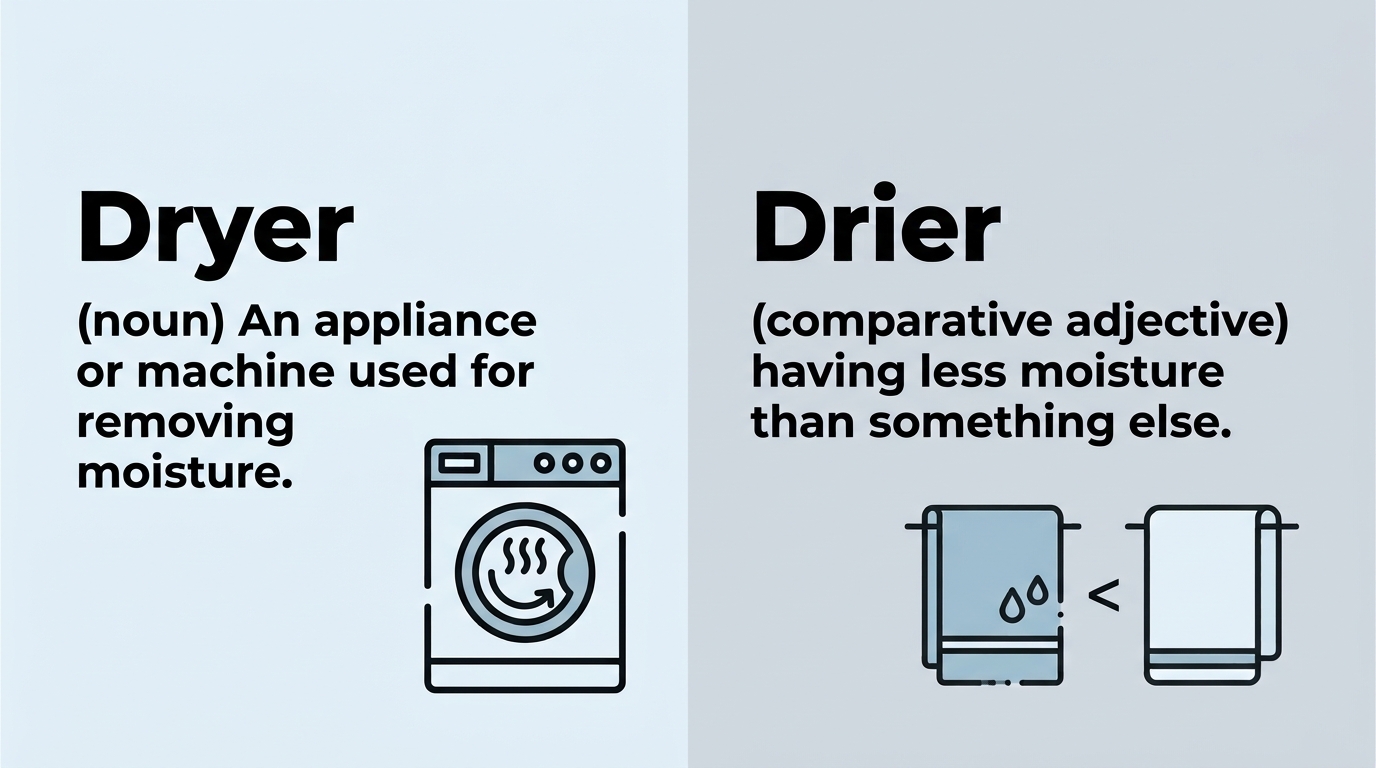
Dryer is commonly a noun that describes a device used to remove moisture.
Examples include:
- clothes dryer
- tumble dryer
- hair dryer
- hand dryer
- food dryer
For example:
I need to buy a new clothes dryer.
The word dryer can also appear as an adjective in some contexts, but the machine meaning is the most common reason people search for this spelling.
Drier Meaning
Drier is the comparative form of dry.
It means that something has less moisture than something else.
For example:
Today is drier than yesterday.
Here, drier compares two conditions.
Synonyms
Depending on the context:
Drier:
- less wet
- more arid
- less humid
- more dehydrated
Dryer:
- drying machine
- drying device
- clothes dryer
- hair dryer
Opposites
The opposite of drier can be:
- wetter
- damper
- more humid
The opposite of a dryer depends on the context, but a device that adds moisture may be called a humidifier or steamer.
The Origin of Dryer or Drier
Both words come from the basic English word dry, which has very old Germanic roots.
English developed different forms of dry over time. The comparative form became drier, meaning “more dry.”
The word dryer developed from dry plus the ending -er, and it became widely used as a noun for something that dries another object.
This creates an important spelling difference:
dry + -er → dryer when referring to a drying device.
dry → drier when forming the comparative adjective.
That distinction helps explain why both spellings are correct.
How to Pronounce Dryer or Drier
In everyday English, dryer and drier are often pronounced very similarly.
A simple pronunciation guide is:
Dryer → DRY-er
Drier → DRY-er
The exact sound can vary slightly by accent.
Easy Speaking Trick
Say dry first, then add a light -er sound:
dry + er → dryer/drier
Because the pronunciation can be nearly identical, listening alone may not tell you which spelling is correct. You need to look at the meaning and grammar.
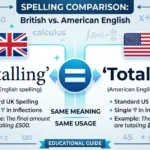
British English vs American English Usage
Both dryer and drier are used in British and American English, but there are some vocabulary differences around machines.
| Feature | British English | American English | Notes |
|---|---|---|---|
| Comparative of dry | drier | drier | Same standard form |
| Laundry machine | tumble dryer | clothes dryer | Vocabulary differs |
| Hair device | hair dryer | hair dryer | Common in both |
| Meaning “more dry” | drier | drier | Same |
| Device that dries | dryer | dryer | Common noun |
| Pronunciation | Similar | Similar | Accent may vary |
British English commonly uses tumble dryer, while American English commonly uses clothes dryer.
Which One Should You Use?
Choose dryer when you are naming a device.
- The dryer is running.
- Put the towels in the dryer.
- I bought a new hair dryer.
- The clothes dryer is broken.
Choose drier when comparing dryness.
- This towel is drier than that one.
- The air is drier today.
- My skin feels drier in winter.
- This region is drier than the coast.
Quick Usage Table
| Meaning | Correct Word | Example |
|---|---|---|
| Drying machine | dryer | The dryer is full. |
| Hair device | dryer | Where is my hair dryer? |
| More dry | drier | This shirt is drier. |
| Less wet | drier | The ground is drier today. |
| Comparing climates | drier | Arizona is drier than many states. |
Common Mistakes With Dryer or Drier
Mistake 1: Using “dryer” for a comparison
❌ This towel is dryer than that one.
✔ This towel is drier than that one.
Explanation: You are comparing the dryness of two towels.
Correction tip: If you can replace the word with “more dry,” use drier.
Mistake 2: Using “drier” for the machine
❌ Put the clothes in the drier.
✔ Put the clothes in the dryer.
Explanation: You are talking about a machine.
Correction tip: Think dryer = device.
Mistake 3: Assuming one spelling is wrong
❌ “Drier” is incorrect.
✔ Both drier and dryer are correct words.
They simply have different common meanings.
Mistake 4: Confusing “drier” with “dryest”
The correct superlative is generally driest, not “driest” confused with the machine spelling.
Examples:
✔ This is the driest month of the year.
✔ This towel is drier than the other one.
Mistake 5: Writing “more drier”
❌ This room is more drier than the other.
✔ This room is drier than the other.
Why? The comparative form already contains the idea of “more.”
Mistake 6: Forgetting the context
❌ I bought a new drier for my clothes.
✔ I bought a new dryer for my clothes.
Ask yourself whether the word refers to a thing or a comparison.
Dryer or Drier in Everyday Examples
Work
The warehouse air is drier in winter.
The office needs a new hand dryer.
School
The desert climate is drier than the rainforest climate.
Daily Life
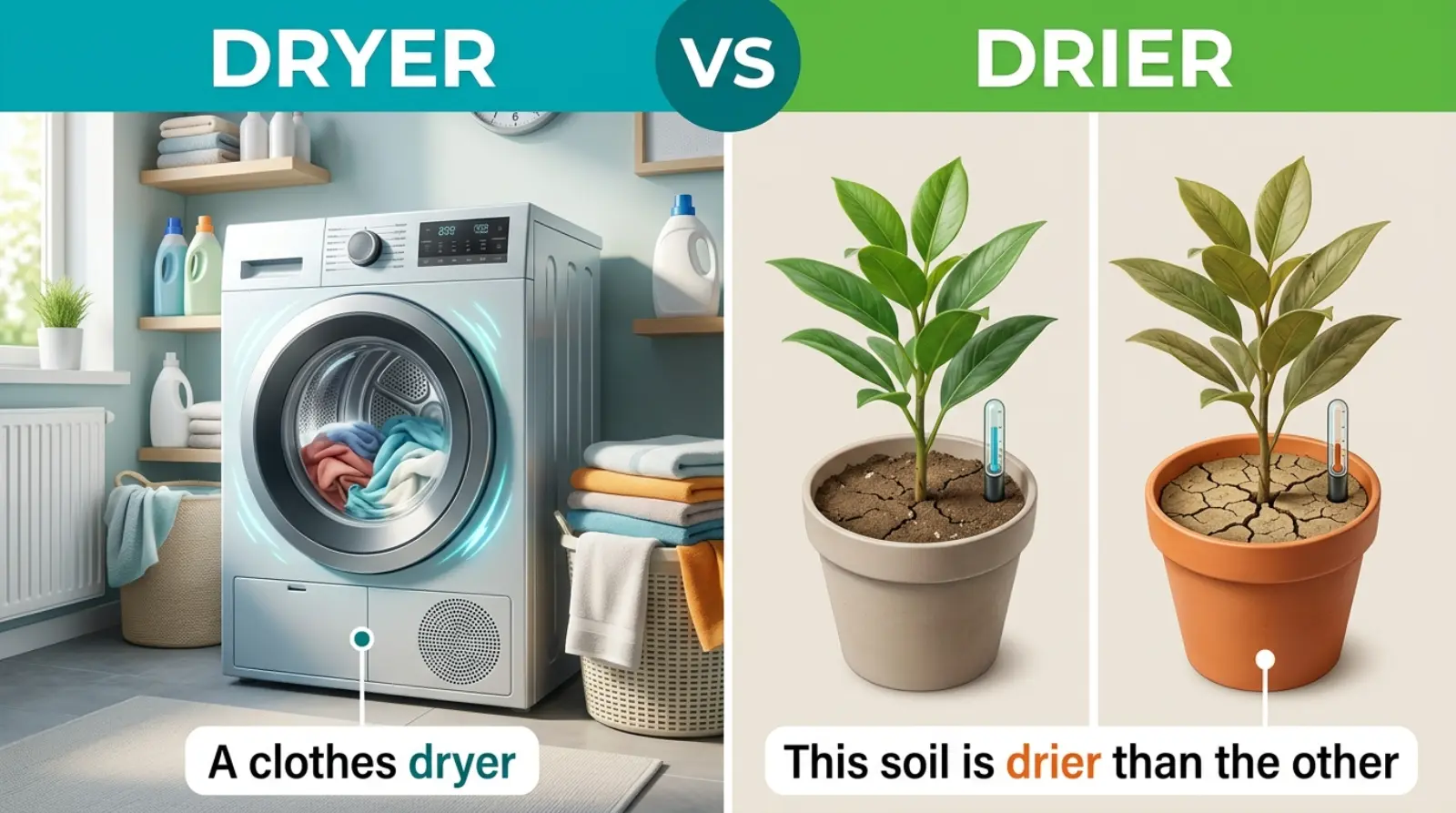
My clothes are still wet. I need to use the dryer.
The dryer in the laundry room needs repair.
Text Message
Is the dryer free?
Social Media
My hair is much drier after swimming.
Online Content
A dryer can remove moisture from clothes quickly.
Conversation
Which towel is drier?
These examples show why context is more important than pronunciation.
Dryer or Drier in Different Contexts
Laundry
When discussing laundry machines, use dryer.
The dryer finished the cycle.
The British term tumble dryer is also common.
Hair Care
Use hair dryer for the electrical device.
I forgot to pack my hair dryer.
When describing hair with less moisture, use drier.
My hair feels drier after using heat.
Weather and Climate
Use drier when comparing weather conditions.
This summer is drier than last summer.
You may also see words such as dry climate, arid climate, humidity, and moisture.
Food
A food dryer or dehydrator is a device.
We used a food dryer to remove moisture.
But:
These apples are drier than the fresh ones.
Skin
Use drier when comparing skin conditions.
My skin becomes drier during cold weather.
Here, drier is not a machine.
Dryer or Drier – Google Trends and Search Behavior
People commonly search dryer or drier because the two forms can sound almost identical.
Searchers may encounter both words while shopping for appliances, writing schoolwork, checking grammar, or describing weather and skin.
Long-tail searches include:
- dryer or drier difference
- dryer vs drier grammar
- is it drier or dryer
- drier meaning in English
- dryer meaning in English
- clothes dryer spelling
- drier comparative form
- how to use drier in a sentence
- how to use dryer in a sentence
These searches show an important pattern: people usually need either a spelling answer or a grammar explanation.
Dryer or Drier Comparison Table
| Feature | Dryer | Drier |
|---|---|---|
| Main meaning | A drying device | More dry |
| Grammar role | Usually noun | Comparative adjective |
| Example | The dryer is running. | The towel is drier. |
| Refers to machine | ✅ Yes | ❌ No |
| Used for comparison | Usually no | ✅ Yes |
| Professional writing | Yes, when relevant | Yes, when comparing |
| Academic writing | Yes, for a device | Yes, for comparison |
| Common mistake | Using it for comparisons | Using it for machines |
| Pronunciation | Similar to drier | Similar to dryer |
Dryer or Drier in Professional Life
Correct word choice can make workplace writing clearer.
A maintenance report might say:
The clothes dryer requires servicing.
A weather report might say:
The region experienced a drier-than-average summer.
A product description could say:
This hair dryer has three heat settings.
Using drier instead of dryer in the first example could make the sentence confusing.
Dryer or Drier for Students and Beginners
This spelling difference can feel difficult because English uses the same -er letters for different purposes.
The easiest approach is to identify the job of the word.
Ask:
Is it a machine?
👉 Dryer
Ask:
Does it mean more dry?
👉 Drier
This method is much easier than trying to memorize isolated spellings.
Common Uses of Dryer or Drier
Dryer
Common phrases include:
- clothes dryer
- tumble dryer
- hair dryer
- hand dryer
- dryer sheet
- dryer cycle
- dryer lint
- dryer vent
Drier
Common phrases include:
- drier weather
- drier climate
- drier air
- drier skin
- drier soil
- drier conditions
- drier clothes
- drier surface
Notice the pattern: dryer often names a thing, while drier describes a comparison.
Simple Trick to Remember Dryer or Drier
Here is the easiest rule:
👉 Dryer = device
👉 Drier = more dry
Think of it this way:
Imagine a washing machine has finished.
You put your wet clothes into the dryer.
After the machine runs, the clothes become drier.
So one sentence can contain both:
The dryer made my clothes drier.
That sentence is a perfect memory trick.
Expert Tips for Dryer or Drier
- Look at the meaning before choosing the spelling.
- Use dryer for a machine or drying device.
- Use drier as the comparative form of dry.
- Replace drier with “more dry” to test the sentence.
- Do not write “more drier.”
- Remember that the two words can sound almost identical.
- In appliance writing, check whether you mean the machine.
- In weather, climate, skin, soil, or moisture comparisons, drier is usually the right choice.
Related Searches People Also Ask
Is it dryer or drier?
Both are correct. Dryer commonly means a drying device, while drier means more dry.
Is drier the comparative form of dry?
Yes. Drier is the standard comparative form of dry.
Is dryer a real word?
Yes. Dryer is commonly used for a machine or device that dries something.
Is “more drier” correct?
No. Normally say drier, not “more drier.”
Is “drier” a word?
Yes. It is the comparative form of dry.
How do you spell clothes dryer?
The standard spelling is clothes dryer.
How do you spell hair dryer?
The standard spelling is hair dryer.
How do you use drier in a sentence?
You can say, “This towel is drier than the other one.”
Do dryer and drier sound the same?
They can sound very similar, depending on the speaker’s accent.
What is the difference between dryer and drier?
Dryer usually names a drying device. Drier means more dry.
Final Verdict
The difference between dryer or drier is simple:
👉 Dryer = a machine or device that dries something.
👉 Drier = more dry or less wet.
For example:
The dryer made my clothes drier.
This one sentence gives you the whole rule.
Conclusion
Choosing between dryer or drier can seem tricky because the words are so similar. But their meanings are different.
When you mean a machine, such as a clothes dryer or hair dryer, use dryer.
When you compare two things and mean “more dry,” use drier.
If you remember only one thing, remember this:
Dryer is the device. Drier describes something that is more dry.

Camila Green is an English language writer who specializes in confusing word comparisons and spelling explanations. She creates simple, beginner-friendly guides on topics like “niece or neice” and other common English mistakes. Her writing focuses on clarity, real-life examples, and easy learning. At VerrsaPick, she helps readers improve their English with practical and engaging content.