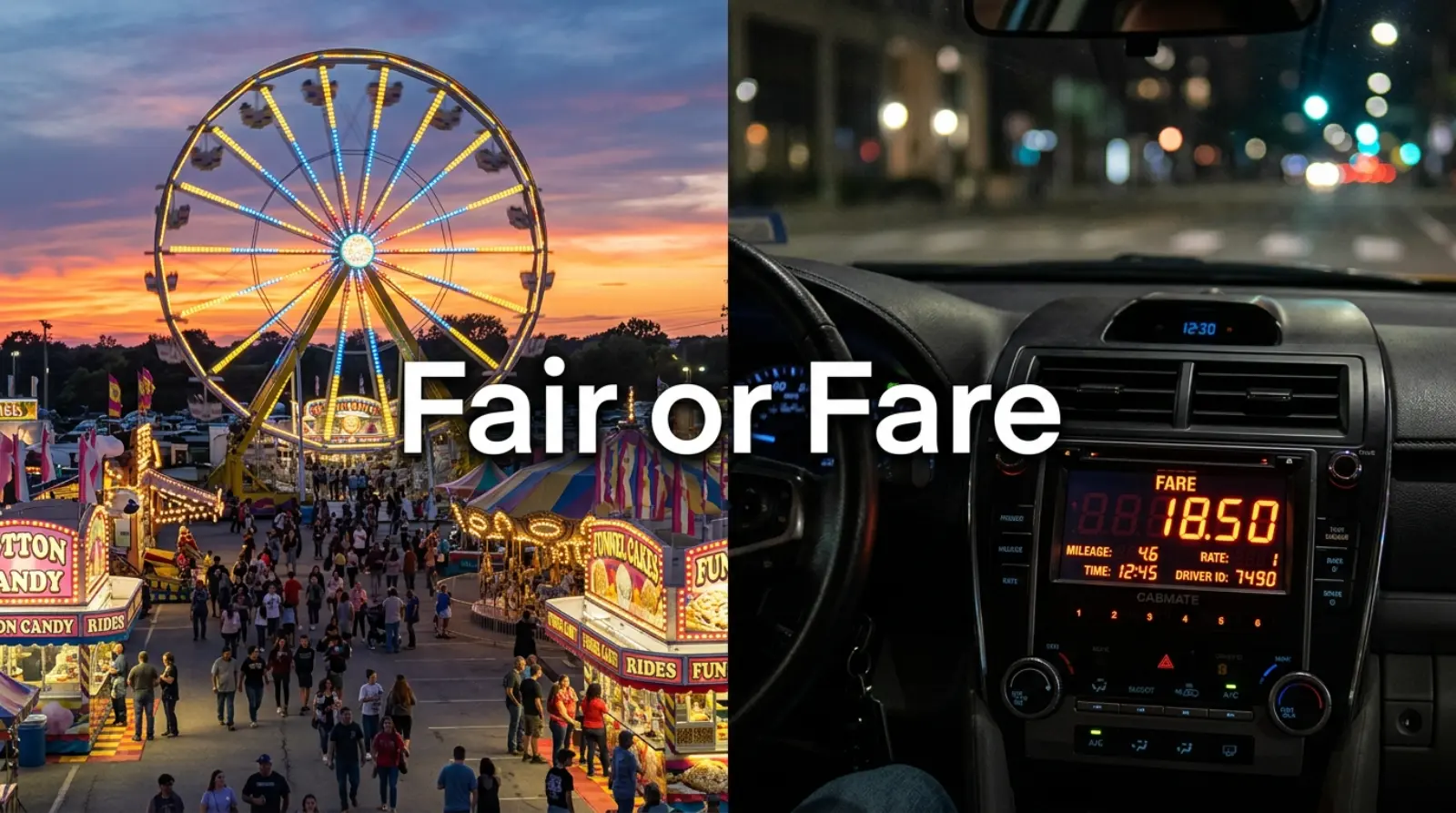
Have you ever stopped while writing and wondered whether to use fair or fare? You’re not alone. These two words sound exactly the same, but they have very different meanings. Because they are homophones (words that sound alike but have different spellings and meanings), many English learners and even native speakers mix them up.
People usually search for “Fair or Fare” because they want to know the correct spelling, meaning, pronunciation, grammar rules, and examples. You may see these words in school assignments, emails, travel bookings, news articles, social media posts, advertisements, and everyday conversations.
Using the wrong word can change the meaning of your sentence. For example, “bus fair” is incorrect because the correct phrase is bus fare. Likewise, saying “fair competition” is correct because fair means honest or equal.
Whether you’re a student, writer, traveler, or someone learning English, understanding the difference between these two words will improve your communication and help you avoid common mistakes.
In this guide, you’ll learn the meaning, pronunciation, examples, grammar rules, common mistakes, expert tips, and simple explanations in easy English.
Fair or Fare – Quick Answer
👉 Fair = Just, honest, reasonable, or light-colored. It can also mean a public event or festival.
👉 Fare = The money paid for transportation or the food served to someone.
Examples
- ✅ The teacher was fair to every student.
- ✅ The bus fare increased this year.
- ✅ We visited the county fair.
- ✅ Air fare is expensive during holidays.
- ✅ She believes in fair competition.
Simple Memory Trick
- Fair = Fairness
- Fare = Fee for travel
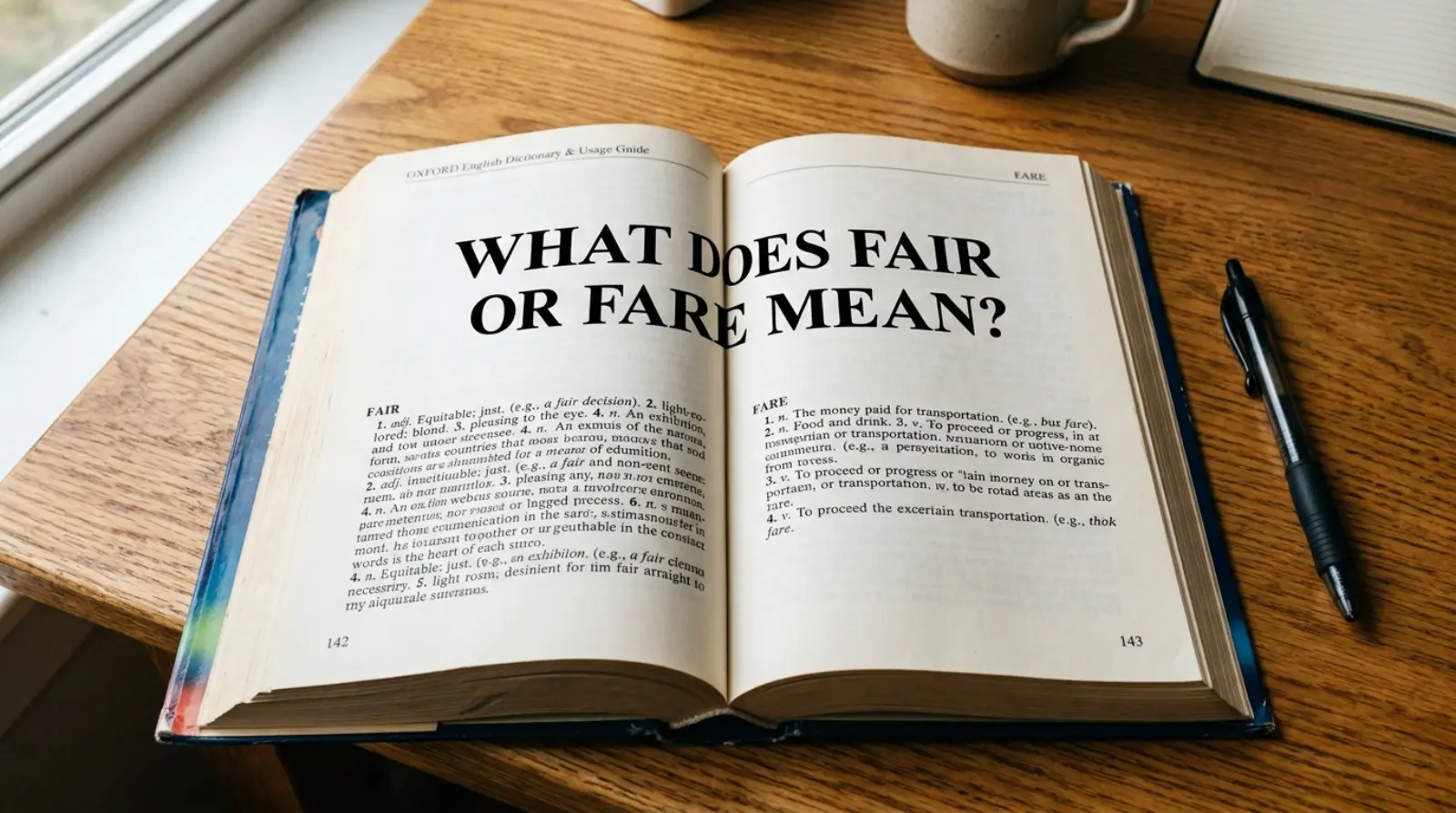
What Does Fair or Fare Mean?
Although fair and fare sound the same, they have different meanings and are never interchangeable.
Fair Meaning
The word fair usually means:
- Honest
- Equal
- Reasonable
- Light in color
- A public exhibition or festival
Synonyms
- Honest
- Just
- Equal
- Reasonable
- Unbiased
Fare Meaning
The word fare usually means:
- The cost of travel
- Food or meals
- To perform or succeed (as a verb)
Synonyms
- Ticket price
- Travel cost
- Meal
- Food
- Charge
Opposites
| Fair | Fare |
|---|---|
| Unfair | Free ride (depending on context) |
| Biased | No direct opposite |
The Origin of Fair or Fare
Fair comes from Old English and originally meant “beautiful,” “pleasant,” or “just.”
Fare also comes from Old English and meant “to travel” or “to journey.” Over time, it also came to mean the price paid for transportation and food served to guests.
Today, both words remain common in everyday English.
How to Pronounce Fair or Fare
Both words are pronounced exactly the same.
Pronunciation: fair
They are single-syllable words.
Speaking Tip
Because they sound identical, always rely on the sentence’s meaning to choose the correct spelling.
British English vs American English Usage
| Feature | British English | American English | Notes |
|---|---|---|---|
| Spelling | Fair / Fare | Fair / Fare | Same |
| Pronunciation | Nearly identical | Nearly identical | Same meaning |
| Grammar | Same | Same | No difference |
Which One Should You Use?
Choose fair when talking about:
- Honesty
- Equality
- Justice
- Festivals
- Light complexion
Choose fare when talking about:
- Bus fare
- Train fare
- Taxi fare
- Airfare
- Meals
- How someone performs
Quick Usage Table
| Situation | Correct Word |
|---|---|
| Fair competition | Fair |
| Bus ticket price | Fare |
| Honest decision | Fair |
| Airline ticket cost | Fare |
| County fair | Fair |
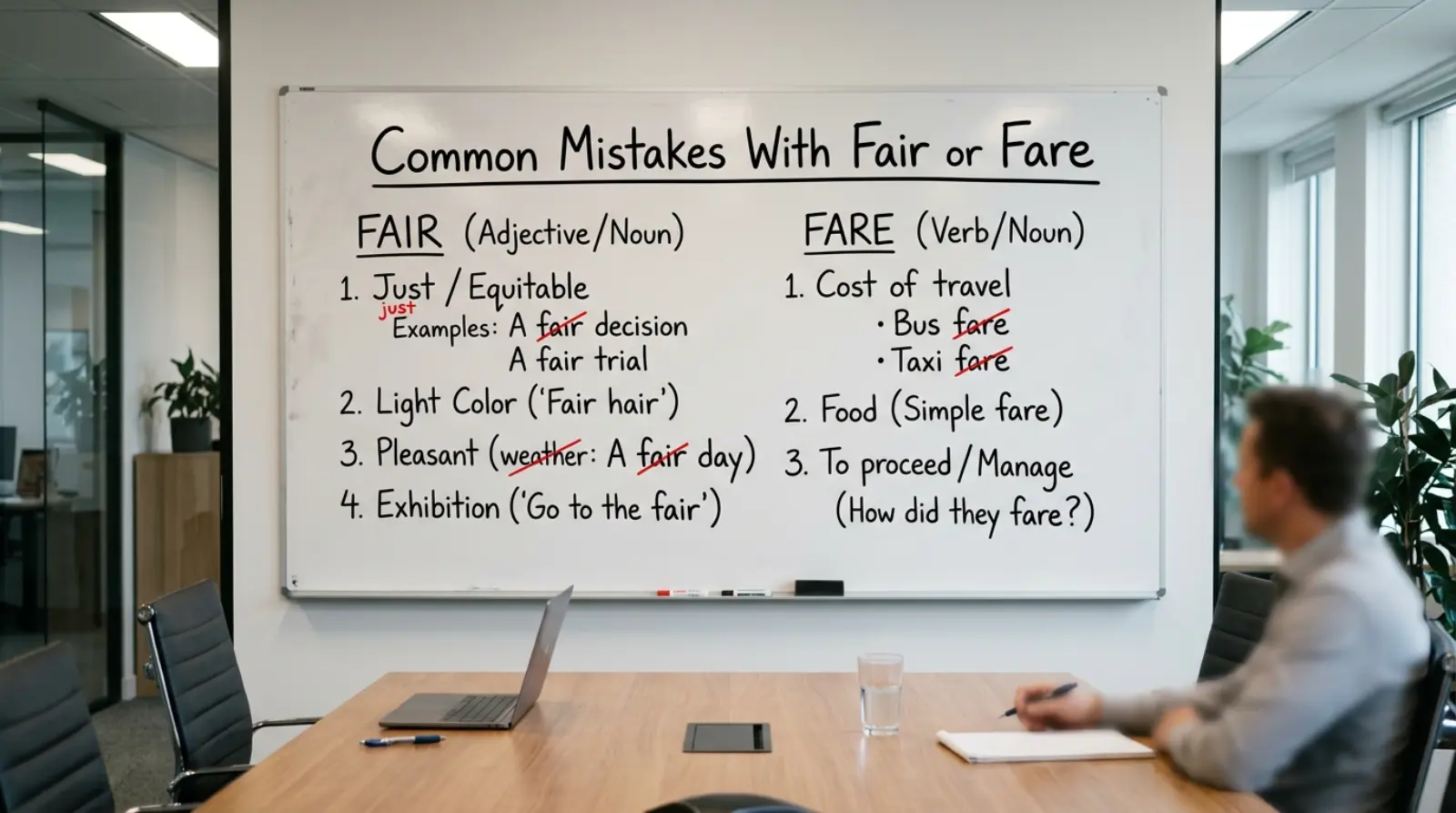
Common Mistakes With Fair or Fare
Mistake 1
❌ Bus fair
✔ Bus fare
Tip: Travel costs always use fare
Mistake 2
❌ Fare decision
✔ Fair decision
Tip: Honest or equal always uses fair.
Mistake 3
❌ Fair ticket price
✔ Fare ticket price
Tip: Money for transportation is fare.
Mistake 4
❌ The judge gave a fare ruling.
✔ The judge gave a fair ruling.
Mistake 5
❌ Air fair
✔ Airfare (or air fare)
Fair or Fare in Everyday Examples
School
The teacher gave everyone a fair chance.
Workplace
Our manager treats all employees fairly.
Travel
The train fare costs $12.
Social Media
People want fair rules for online communities.
Emails
Please check the airline fare before booking.
Daily Conversation
We had a great time at the local fair.
Fair or Fare in Different Contexts
Education
Teachers encourage fair treatment for all students.
Business
Companies should offer fair prices and transparent policies.
Travel
Passengers compare airline fares before booking flights.
Law
Judges are expected to make fair decisions.
Festivals
A county fair often includes rides, food, games, and entertainment.
Google Trends & Usage Data
People frequently search for Fair or Fare because these words sound the same but have different meanings.
Popular searches include:
- Fair vs Fare
- Bus fare meaning
- Fair meaning
- Airfare or air fair
- Fair examples
- Fare examples
- Fair pronunciation
This topic is commonly searched in the US, UK, India, Pakistan, Canada, and Australia by students, English learners, travelers, and writers.
Comparison Table: Fair vs Fare
| Feature | Fair | Fare |
|---|---|---|
| Meaning | Honest, equal, festival | Travel cost, food, perform |
| Part of Speech | Adjective, noun | Noun, verb |
| Pronunciation | Fair | Fair |
| Common Usage | Fair play | Bus fare |
| Academic Writing | Very common | Common |
| Travel Industry | Rare | Very common |
| Common Mistake | Used instead of fare | Used instead of fair |
Fair or Fare in Professional Life
Using the correct word improves professional communication.
Examples:
- Offer fair workplace policies.
- Compare airline fares before business travel.
- Write clearly in reports and emails.
- Avoid spelling mistakes in presentations.
Correct word choice makes your writing more accurate and professional.
Fair or Fare for Students or Beginners
Many learners confuse these words because they sound identical.
Remember:
- Fair relates to fairness and equality.
- Fare relates to travel costs and meals.
Reading example sentences regularly is one of the best ways to remember the difference.
Common Uses Related to Fair or Fare
Fair
- Fair play
- Fair decision
- Fair chance
- Fair weather
- County fair
Fare
- Bus fare
- Taxi fare
- Train fare
- Airfare
- Daily fare (food)
Simple Trick to Remember Fair or Fare
Easy Memory Rule
Fair = Fairness
Fare = Fee for transportation
Think of it this way:
If you’re paying money to travel, think of the word fee. Both fee and fare relate to payment.
If you’re talking about honesty or equality, choose fair.
Expert Tips
- Read the whole sentence before choosing the word.
- Ask yourself: “Am I talking about honesty or travel?”
- Learn common phrases like bus fare, fair play, airfare, and fair treatment.
- Practice with real-life examples to improve your memory.
- Proofread your writing before submitting it.
Related Searches People Also Ask
- What is the difference between fair and fare?
- Is it bus fare or bus fair?
- What does fair mean in English?
- What is airfare?
- Can fare mean food?
- Why are fair and fare confusing?
- Are fair and fare homophones?
- How do I remember fair vs fare?
- Is county fair correct?
- What is a fair decision?
FAQs
Is it fair or fare for a bus ticket?
Use fare because it means the cost of transportation.
What does fair mean?
Fair means honest, equal, or reasonable.
Can fare be used as a verb?
Yes. For example: “How did you fare in the exam?”
Are fair and fare pronounced the same?
Yes. They are homophones.
Is airfare one word?
Yes. Airfare is commonly written as one word.
Which word is used for honesty?
Use fair.
Which word relates to travel costs?
Use fare.
Why do people confuse fair and fare?
Because they sound exactly alike but have different meanings and spellings.
Final Verdict
The difference is simple:
- Fair = Honest, equal, or a public event.
- Fare = Travel cost, food, or how someone performs.
The easiest memory trick is:
Fair = Fairness
Fare = Fee for travel
Conclusion
Understanding Fair or Fare is easier once you connect each word to its meaning. Use fair when talking about honesty, equality, or festivals. Use fare when referring to transportation costs, meals, or someone’s performance.
Whenever you’re unsure, remember this simple rule:
If you’re paying to travel, it’s “fare.” If you’re talking about justice or equality, it’s “fair.”

Camila Green is an English language writer who specializes in confusing word comparisons and spelling explanations. She creates simple, beginner-friendly guides on topics like “niece or neice” and other common English mistakes. Her writing focuses on clarity, real-life examples, and easy learning. At VerrsaPick, she helps readers improve their English with practical and engaging content.