
Have you ever wondered if you should use withdraw or withdrawal? You’re not alone. These two words look very similar, but they have different jobs in English. Many students, English learners, and even native speakers mix them up when writing emails, school assignments, bank forms, or business documents.
People usually search for withdraw vs withdrawal meaning, correct usage, grammar difference, pronunciation, and examples because both words are common in everyday life. You may hear them when talking about money, school applications, sports, medical treatment, or personal decisions.
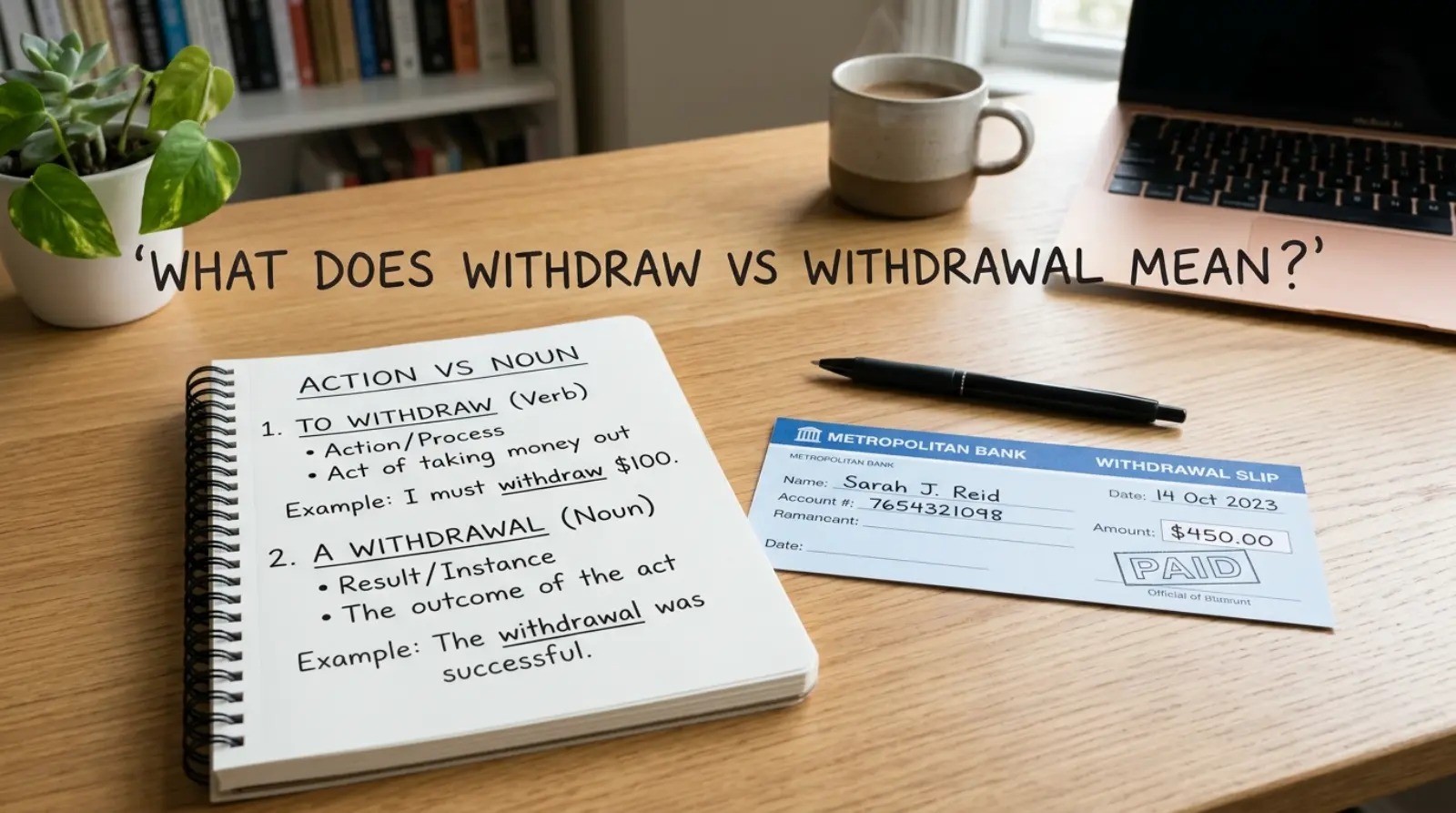
The easiest way to remember them is that withdraw is a verb (an action), while withdrawal is a noun (a thing or event). Knowing the difference helps you write more clearly and avoid common grammar mistakes.
In this guide, you’ll learn the meaning, pronunciation, examples, usage, grammar rules, common mistakes, expert tips, and simple explanations in easy English.
Withdraw vs Withdrawal – Quick Answer
👉 Withdraw = A verb that means to remove, take back, or leave.
👉 Withdrawal = A noun that refers to the act of withdrawing or the amount taken out.
Examples
- ✅ I want to withdraw money from my bank account.
- ✅ She decided to withdraw from the competition.
- ✅ The ATM allows cash withdrawals.
- ✅ His withdrawal from the course surprised everyone.
- ✅ The doctor explained the medicine withdrawal symptoms.
Simple Rule
Withdraw = Action
Withdrawal = Result or event
What Does Withdraw vs Withdrawal Mean?
Withdraw
Withdraw means to:
- Remove something
- Take money out
- Leave an activity
- Stop participating
Examples:
- Withdraw cash
- Withdraw an application
- Withdraw from a meeting
Withdrawal
Withdrawal means:
- The act of taking something out
- A bank transaction
- Leaving a group or event
- Physical or emotional symptoms after stopping something
Synonyms
- Remove
- Take back
- Cancel
- Pull out
- Exit
Related Terms
- Deposit
- Refund
- Cancellation
- Removal
- Transaction
The Origin of Withdraw vs Withdrawal
The word withdraw comes from Old English and originally meant “to pull back.”
Later, the noun withdrawal developed to describe the action or result of withdrawing. Today, both words are widely used in banking, education, healthcare, sports, and business.
How to Pronounce Withdraw and Withdrawal
Withdraw
Pronunciation:
with-DRAW
Phonetic:
/wɪðˈdrɔː/
Withdrawal
Pronunciation:
with-DRAW-uhl
Phonetic:
/wɪðˈdrɔːəl/
Easy Tip
Say withdraw first, then simply add “al” to form withdrawal.
British English vs American English
| Feature | British English | American English | Notes |
|---|---|---|---|
| Withdraw | Same | Same | Standard verb |
| Withdrawal | Same | Same | Standard noun |
| Pronunciation | Slight accent difference | Slight accent difference | Meaning stays the same |
Which One Should You Use?
Choose withdraw when describing an action.
Examples:
- Withdraw money
- Withdraw an application
- Withdraw support
Choose withdrawal when referring to the action itself or its result.
Examples:
- Cash withdrawal
- Withdrawal symptoms
- Course withdrawal
| Situation | Correct Word |
| Taking money | Withdraw |
| Cash transaction | Withdrawal |
| Leaving a class | Withdraw |
| Medical condition | Withdrawal |
Common Mistakes
Mistake 1
❌ I made a withdraw.
✅ I made a withdrawal.
Mistake 2
❌ My withdrawal money today.
✅ I withdrew money today.
Mistake 3
❌ I need a cash withdraw.
✅ I need a cash withdrawal.
Mistake 4
❌ She withdrawal from school.
✅ She withdrew from school.
Mistake 5
❌ Withdraw is a noun.
✅ Withdraw is a verb.

Withdraw vs Withdrawal in Everyday Examples
Banking
“I need to withdraw $100.”
“The withdrawal was successful.”
School
“He withdrew from the class.”
“Course withdrawal is allowed before Friday.”
Workplace
“The company decided to withdraw the offer.”
“The withdrawal of the proposal surprised everyone.”
Healthcare
“The doctor monitored withdrawal symptoms.”
Daily Conversation
“I’m going to withdraw some cash.”
Withdraw vs Withdrawal in Different Contexts
Banking
Withdraw means taking money from an account.
Withdrawal is the completed transaction.
Education
Students may withdraw from a class.
The withdrawal is recorded by the school.
Healthcare
Doctors use withdrawal when discussing symptoms after stopping medication or certain substances.
Business
Companies may withdraw products from the market.
The withdrawal can affect customers and sales.
Google Trends & Usage Data
Searches for withdraw vs withdrawal increase during school admissions, tax season, banking activities, and healthcare discussions.
People from the United States, United Kingdom, Canada, Australia, India, and Pakistan frequently search for this grammar difference.
Popular searches include:
- Withdraw meaning
- Withdrawal meaning
- Cash withdrawal
- Withdraw from college
- Withdrawal symptoms
- Withdraw vs withdrawal grammar
Comparison Table
| Feature | Withdraw | Withdrawal |
| Part of speech | Verb | Noun |
| Meaning | Action | Event or result |
| Formal writing | Yes | Yes |
| Banking | Withdraw money | Cash withdrawal |
| School | Withdraw from class | Course withdrawal |
| Healthcare | Rare | Common |
| Everyday English | Very common | Very common |
Withdraw vs Withdrawal in Professional Life
In business writing, using the correct form is important.
Examples:
- “The customer wishes to withdraw the complaint.”
- “The withdrawal request has been approved.”
Correct grammar makes emails, reports, and legal documents easier to understand.
For Students and Beginners
A simple grammar trick:
- Withdraw = Verb = Action
- Withdrawal = Noun = Thing
If you can replace the word with action, choose withdraw.
If you’re talking about the event, use withdrawal.
Common Uses
Withdraw
- Money
- Applications
- Support
- Products
- Teams
Withdrawal
- Bank transactions
- Medical symptoms
- School records
- Business reports
- Financial documents
Simple Trick to Remember
Think of it this way:
Withdraw ends without -al, so it’s an action.
Withdrawal ends in -al, making it the name of the action.
Easy memory rule:
Do = Withdraw
Thing = Withdrawal
Expert Tips
- Ask yourself if you’re describing an action or a thing.
- Remember that withdraw changes to withdrew in the past tense.
- Use withdrawal after words like cash, course, application, or symptoms.
- Proofread business emails for this common mistake.
Related Searches People Also Ask
People often search for:
- What is the difference between withdraw and withdrawal?
- Is withdraw a verb?
- Is withdrawal a noun?
- How do you use withdraw in a sentence?
- What is cash withdrawal?
- What are withdrawal symptoms?
- Withdraw meaning in banking
- Withdraw from school meaning
- Withdraw pronunciation
- Withdrawal examples
FAQs
Is withdraw a verb?
Yes. It describes an action.
Is withdrawal a noun?
Yes. It names the action or result.
Which word is used in banking?
Both. You withdraw money, and the transaction is a withdrawal.
Can I withdraw from school?
Yes. Students may withdraw from classes or programs.
What are withdrawal symptoms?
They are physical or emotional effects after stopping certain medicines or substances.
Which word is more common?
Both are common but used in different grammar situations.
Can withdrawal refer to emotions?
Yes. It can describe social or emotional withdrawal.
How can I remember the difference?
Think: Withdraw = Action. Withdrawal = Result.
Final Verdict
The difference is simple. Withdraw is the verb that means to remove, leave, or take back. Withdrawal is the noun that refers to the act, event, or result of withdrawing. If you remember verb vs noun, you’ll almost always choose the correct word.
Conclusion
Understanding withdraw vs withdrawal makes your English clearer in school, work, banking, and everyday conversations. Use withdraw when someone is doing the action, and use withdrawal when talking about the action itself or its result. The easiest memory trick is: Withdraw does; withdrawal is.

Camila Green is an English language writer who specializes in confusing word comparisons and spelling explanations. She creates simple, beginner-friendly guides on topics like “niece or neice” and other common English mistakes. Her writing focuses on clarity, real-life examples, and easy learning. At VerrsaPick, she helps readers improve their English with practical and engaging content.