
Have you ever said something like “I have showed you this before” and then suddenly felt unsure? Or maybe you wrote “I have shown the results” and wondered if it is really correct?
This confusion is very common among English learners. Even native speakers sometimes mix up showed or shown because both come from the same verb “show,” but they are used in different situations.
People usually search for:
- “showed or shown meaning”
- “correct usage of showed and shown”
- “difference between showed and shown”
- “grammar rules of show”
- “examples of showed vs shown”
You will see this confusion in:
- school writing ✏️
- workplace emails 💼
- social media captions 📱
- daily conversations 💬
- English exams 📚
- online grammar searches 🌐
The emotional problem is simple: you know the meaning, but you are not sure which form is correct in a sentence. That is why this topic is so important for beginners.
In this guide, you’ll learn the meaning, pronunciation, examples, usage, grammar rules, common mistakes, expert tips, and simple explanations in easy English.
⭐ Showed or Shown – Quick Answer
👉 Showed = past simple form (completed action in the past)
👉 Shown = past participle (used with have/has/had)
Simple Explanation:
👉 Showed = I showed you yesterday (simple past)
👉 Shown = I have shown you already (perfect tense)
📌 Examples
- I showed him the photo yesterday. ✅
- She showed me her house. ✅
- I have shown you this before. ✅
- They had shown great results. ✅
🧠 Easy Memory Trick
👉 “Showed = yesterday (simple past)”
👉 “Shown = helper verbs (have/has/had)”
📖 What Does Showed or Shown Mean?
The verb “show” means:
👉 to display
👉 to present
👉 to make something visible
👉 to explain something by example
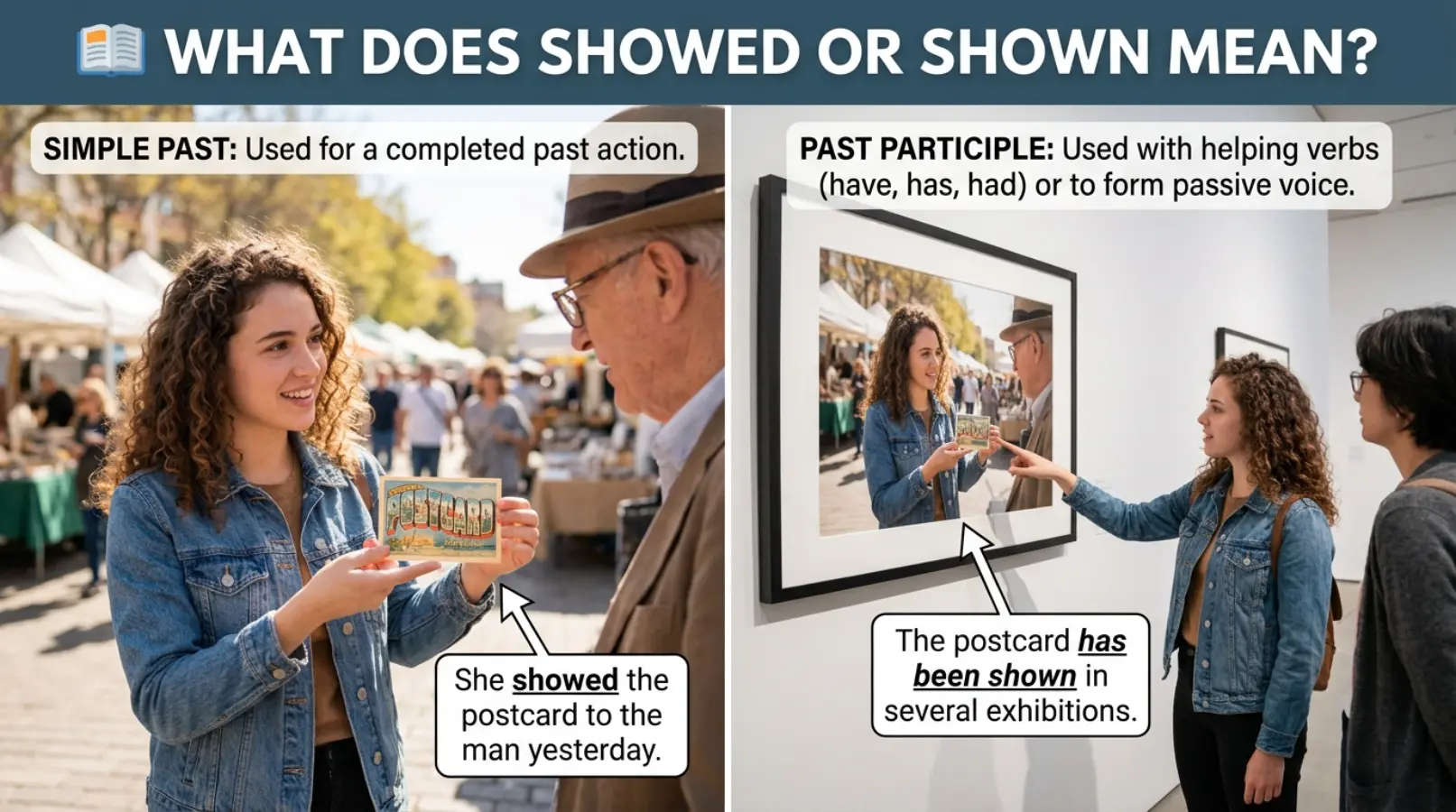
🔹 Showed (Past Simple)
Used when action is finished in the past.
- I showed my work.
- He showed his ID.
🔹 Shown (Past Participle)
Used with helping verbs like:
- have
- has
- had
- I have shown my work.
- She has shown interest.
🔹 Synonyms
- displayed
- presented
- revealed
- demonstrated
- exhibited
🔹 Opposites
- hid
- concealed
- covered
- ignored
🔹 Related Terms
- show
- showing
- showcase
- demonstration
🔹 Common Variations
- show (base form)
- showed (past)
- shown (past participle)
- showing (continuous)
🕰️ Origin of Showed / Shown
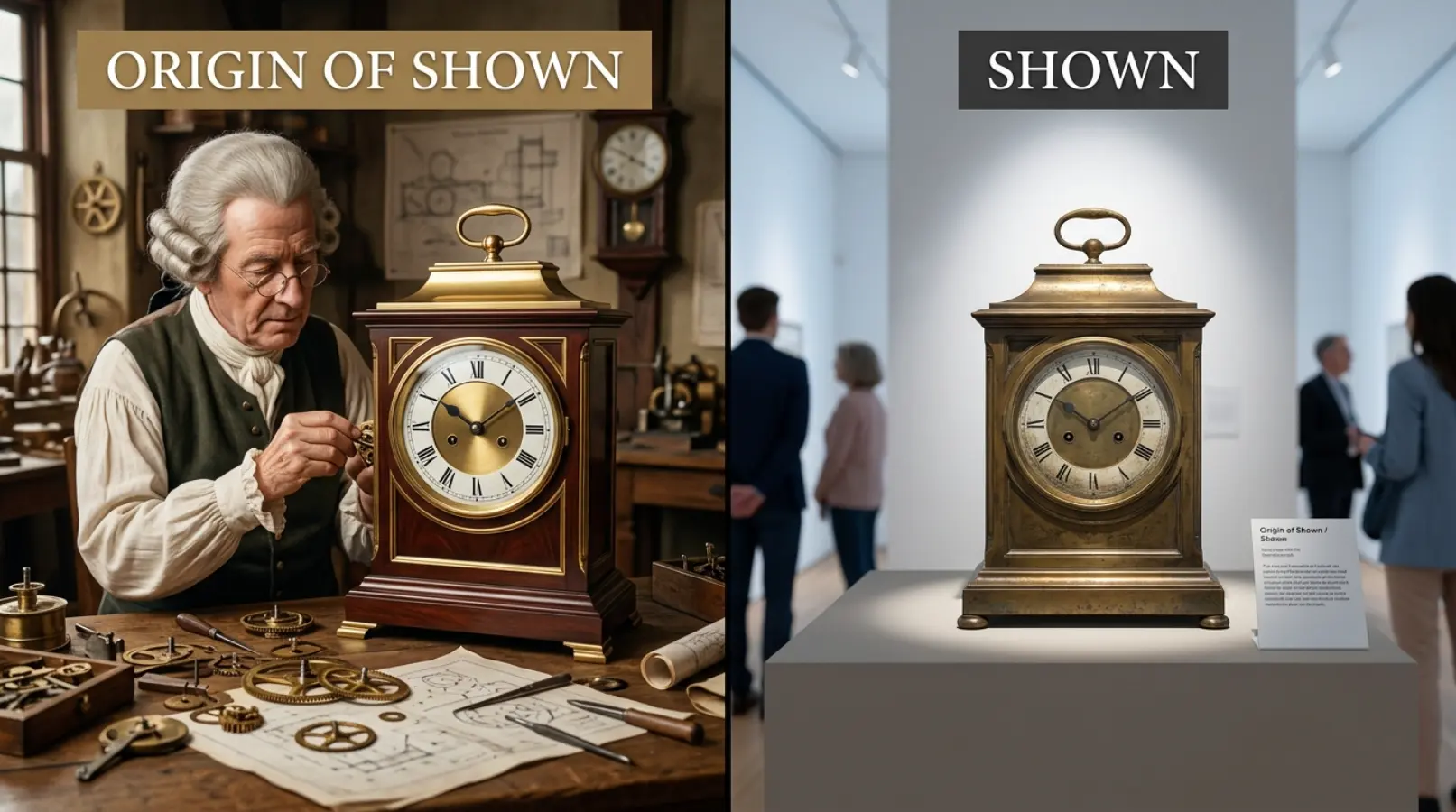
The word “show” comes from Old English “sceawian”, meaning:
👉 “to look at” or “to see”
Over time, English simplified it into:
- show (modern form)
- showed (past)
- shown (past participle)
This structure became part of standard English grammar rules used worldwide today.
🔊 How to Pronounce Showed or Shown
Showed
👉 Pronunciation: shohd
Shown
👉 Pronunciation: shohn
Syllables
- showed → 1 syllable
- shown → 1 syllable
Common Mistakes
❌ “show-ed” (too slow)
✔ “shohd” (smooth sound)
❌ “sho-own”
✔ “shohn” (short and clean)
Speaking Tip
👉 Say both like short, smooth words—no breaks.
🇬🇧 British English vs American English Usage
Good news: there is no difference in meaning or usage.
| Feature | British English | American English | Notes |
|---|---|---|---|
| Showed | showed | showed | same |
| Shown | shown | shown | same |
| Meaning | same | same | universal |
| Usage | grammar rules same | grammar rules same | no difference |
✅ Which One Should You Use?
👉 Use both depending on sentence structure.
Use “showed” when:
- talking about past actions
- no helping verb
Use “shown” when:
- using have/has/had
- perfect tense
Quick Examples:
- I showed the picture yesterday.
- I have shown the picture already.
❌ Common Mistakes with Showed or Shown
Mistake 1
❌ I have showed you this.
✔ I have shown you this.
👉 After “have,” use “shown”
Mistake 2
❌ She shown me the way yesterday.
✔ She showed me the way yesterday.
👉 “Shown” is not past simple
Mistake 3
❌ He has showed interest.
✔ He has shown interest.
👉 Perfect tense rule
Mistake 4
❌ I shown the result.
✔ I showed the result.
👉 Past action needs “showed”
Mistake 5
❌ They have showed the report.
✔ They have shown the report.
👉 Must use past participle
Mistake 6
❌ She showeded the document.
✔ She showed the document.
👉 No double “-ed”
Mistake 7
❌ I showned it before.
✔ I showed it before.
👉 Wrong invented form
🌍 Showed or Shown in Everyday Examples
🏢 Work
- The manager showed the report.
- The data has shown improvement.
🏫 School
- The teacher showed the diagram.
- Students have shown progress.
📱 Social Media
- He showed his new phone.
- The post has shown huge engagement.
🏠 Daily Life
- I showed him my room.
- She has shown kindness.
📧 Emails
- I showed the attachment.
- We have shown the results.
💬 Conversations
- “I showed you already!”
- “You have shown me that before.”
🧠 Showed or Shown in Different Contexts
🎓 Education
- Students learn: show → showed → shown
💼 Business
- Reports have shown growth
💻 Technology
- System logs have shown errors
📱 Social Media
- Content has shown trends
🧠 Psychology
- Studies have shown behavior patterns
💬 Communication
- He showed respect in conversation
📈 Showed or Shown – Google Trends & Usage
People search this topic because:
- English verb forms are confusing
- learners mix past tense and perfect tense
- grammar rules feel hard
- exams require correct usage
Countries with high searches:
- 🇺🇸 US
- 🇬🇧 UK
- 🇮🇳 India
- 🇵🇰 Pakistan
- 🇨🇦 Canada
- 🇦🇺 Australia
Popular search phrases:
- showed vs shown difference
- when to use shown in sentence
- showed or shown grammar rules
- shown meaning in English
- how to use showed correctly
📊 Comparison Table: Showed vs Shown
| Feature | Showed | Shown |
|---|---|---|
| Correctness | correct | correct |
| Meaning | past action | past participle |
| Grammar role | simple past | perfect tense |
| Usage | yesterday actions | have/has/had |
| Popularity | very common | very common |
| Academic use | yes | yes |
| Professional use | yes | yes |
| Common mistake | used with “have” | used alone wrongly |
💼 Showed or Shown in Professional Life
Correct usage is very important in:
- emails 📧
- reports 📊
- presentations 📈
- business communication 💼
Example:
❌ The report has showed growth
✔ The report has shown growth
👉 Small grammar mistakes can reduce professionalism.
🎓 Showed or Shown for Students or Beginners
Beginners struggle because:
- English has irregular verbs
- tense rules are confusing
- both words sound similar
Easy Trick:
👉 “Have/Has = shown”
👉 “Yesterday = showed”
🔍 Signs and Common Usage Patterns
- used in storytelling
- used in reports
- used in exams
- used in conversations
- used in social media captions
🧩 Simple Trick to Remember Showed or Shown
👉 Think:
- “Yesterday = showed”
- “Have/has = shown”
Think of it this way:
👉 “Showed is a story from the past, shown is a result that continues now.”
🏆 Expert Tips
- Always check helping verbs first
- Learn verb patterns (show → showed → shown)
- Practice 5 sentences daily
- Read English news articles
- Use grammar check tools when writing emails
🌐 Related Searches People Also Ask
- how to use showed in sentence
- shown meaning and usage
- difference between showed and shown
- showed or shown examples
- grammar rule of show verb
- is shown past tense
- why use shown instead of showed
- correct use of showed and shown
- irregular verbs list English
- past participle of show
❓ FAQs
1. What is correct: showed or shown?
Both are correct but used in different grammar rules.
2. When do we use showed?
Use showed for simple past actions.
3. When do we use shown?
Use shown with have, has, or had.
4. Is shown past tense?
No, it is past participle.
5. What is the base verb?
The base verb is “show.”
6. Can I say “I have showed”?
No, correct is “I have shown.”
7. What is the difference in meaning?
No difference in meaning, only grammar usage differs.
8. Is showed correct English?
Yes, in simple past sentences.
9. Is shown formal or informal?
It is used in both formal and informal English.
10. Why do people confuse them?
Because both come from the same verb and sound similar.
🏁 Final Verdict
👉 Both words are correct but used differently:
- Showed = past action
- Shown = perfect tense
Easy Rule:
👉 “Yesterday = showed, Have/has = shown”
✅ Conclusion
The confusion between showed or shown is very common, but the rule is simple once you understand it. English grammar uses “showed” for past actions and “shown” when using helping verbs like have or has.
👉 Final memory trick: “Have shown, yesterday showed.”

Camila Green is an English language writer who specializes in confusing word comparisons and spelling explanations. She creates simple, beginner-friendly guides on topics like “niece or neice” and other common English mistakes. Her writing focuses on clarity, real-life examples, and easy learning. At VerrsaPick, she helps readers improve their English with practical and engaging content.